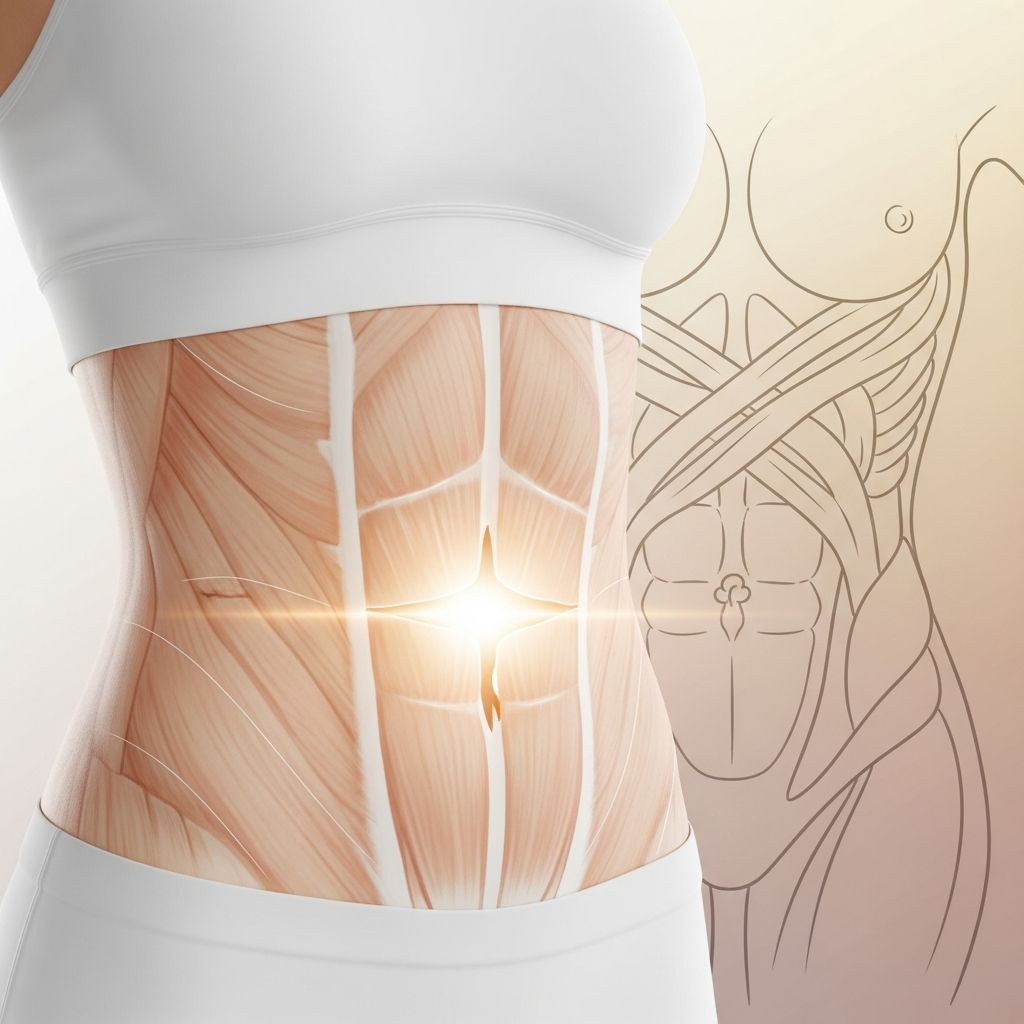
Diastasis recti involves the separation of the rectus abdominis muscles along the midline, weakening the abdominal wall and potentially causing pain or instability. This condition affects people beyond postpartum women, including men, due to factors like obesity or chronic strain.
Understanding the Anatomy of Abdominal Separation
The rectus abdominis consists of two vertical muscle bands connected by the linea alba, a fibrous connective tissue. When this tissue stretches excessively, the muscles separate, leading to diastasis recti, defined as a gap wider than 2-3 cm. This weakening impacts core stability, posture, and daily function, often presenting as a midline bulge during strain.
Unlike a hernia, diastasis recti lacks a fascial defect, but it shares symptoms like bulging and discomfort. Proper diagnosis via physical exam—lying supine and lifting the head to check for separation—is crucial before starting any recovery plan.
Risk Factors and Who Develops It
Pregnancy is a primary trigger, with hormonal changes and uterine growth stretching the abdominal wall, especially in later trimesters. Multiple pregnancies, large babies, or twins heighten risk. However, non-pregnant individuals face dangers from obesity, which elevates intra-abdominal pressure.
- Obesity and Weight Fluctuations: Rapid gain stretches tissues, mimicking pregnancy effects.
- Improper Workouts: High-impact moves like crunches strain the midline without engaging deep muscles.
- Chronic Strain: Coughing, constipation, or heavy lifting increases pressure over time.
- Genetics and Age: Weaker connective tissues predispose some to easier separation.
Men are not immune; significant weight gain or labor-intensive jobs contribute similarly.
Recognizing Symptoms in Daily Life
Symptoms vary from subtle to debilitating. A common sign is a soft pooch or bulge above or below the navel, visible when contracting abs or standing. Many report lower back pain from poor core support, impacting posture and movement.
| Symptom | Description | Impact |
|---|---|---|
| Abdominal Bulge | Midline protrusion during strain | Cosmetic concern, instability |
| Back Pain | Lower lumbar discomfort | Reduced mobility, poor posture |
| Core Weakness | Difficulty stabilizing torso | Challenges in lifting or exercising |
| Pelvic Issues | Incontinence or dysfunction | Affects bladder control |
Severe cases involve radiating pain or exercise intolerance, signaling need for intervention. Early recognition prevents complications like hernias or chronic dysfunction.
Self-Assessment: Check for Separation at Home
Lie on your back with knees bent, feet flat. Place fingers above and below the navel along the midline. Lift head slightly while exhaling; feel for a gap. If fingers sink more than two finger-widths with soft tissue underneath, diastasis may be present. Consult a professional for confirmation, as self-tests have limits.
Core Restoration: Safe Exercises to Start
Physical therapy is first-line treatment, focusing on deep transverse abdominis activation over superficial crunches. Begin postpartum or post-diagnosis with 8-12 weeks of consistent practice for measurable gap reduction.
Breathing and Activation Basics
- Diaphragmatic Breathing: Inhale deeply to expand belly, exhale drawing navel to spine. 10 reps, 3x daily. Builds intra-abdominal pressure control.
- Pelvic Tilts: On back, tilt pelvis to flatten spine. Hold 5 seconds, 10-15 reps. Improves lumbar alignment.
Progressive Strengthening Moves
- Heel Slides: From supine, slide one heel out while engaging core; alternate. 10 per side.
- Bird Dog: On all fours, extend opposite arm/leg slowly. Hold 5-10 seconds, 8 reps/side. Enhances stability.
- Dead Bug: Arms/legs up, lower opposite arm/leg without arching back. 10 reps/side.
Avoid planks, sit-ups, or twists initially; they worsen separation. Progress under guidance as gap closes.
Advanced Therapies for Stubborn Cases
When exercises plateau, non-invasive options like electromagnetic muscle stimulation (e.g., Emsculpt) build strength without surgery. Sessions contract muscles thousands of times, aiding reconnection.
Surgery suits severe separations (>4-5 cm) with hernias or pain unresponsive to therapy. Abdominoplasty sutures muscles and removes excess skin. Recovery takes 4-6 weeks; risks include infection or recurrence.
Prevention Strategies for Long-Term Core Health
Maintain healthy weight, use proper lifting form (engage core, bend knees), and incorporate prenatal core work if pregnant. Postpartum, delay intense abs until 6-8 weeks cleared by doctor.
- Strengthen transverses early with breathwork.
- Monitor weight post-pregnancy.
- Choose low-strain exercises like walking/swimming.
Frequently Asked Questions
Can diastasis recti heal without treatment?
Yes, mild cases may resolve naturally within months postpartum, but persistent symptoms warrant exercises or therapy.
Is surgery always needed for diastasis recti?
No, conservative management succeeds for most; surgery is for severe, symptomatic cases.
How long until I see exercise results?
Improvements in 3-9 weeks with daily targeted practice, per small studies.
Can men get diastasis recti?
Absolutely, from weight gain or strain; symptoms mirror women’s.
Are crunches safe with diastasis recti?
No, they bulge the midline; opt for deep core activation instead.
Building a Sustainable Recovery Plan
Combine exercises with nutrition for tissue repair—prioritize protein, collagen sources. Track progress weekly via self-checks. Partner with pelvic floor therapists for holistic care, addressing interconnected issues like incontinence. Patience yields results; 70-80% improve non-surgically.
Functional gains extend beyond aesthetics: better posture, pain-free movement, confidence in physicality. Start small, stay consistent.
References
- Understanding Diastasis Recti: Causes, Symptoms, and Effective Treatment — Eternal Wellness Medical Spa. 2023. https://eternalwellnessmedicalspa.com/blog/diastasis-recti/
- Diastasis Recti Rehabilitation — NCBI Bookshelf, StatPearls. 2023-10-28. https://www.ncbi.nlm.nih.gov/books/NBK573063/
- Understanding Diastasis Recti: Symptoms & Treatment — Look Natural. 2023. https://www.looknatural.com/blog/diastasis-recti-what-you-need-to-know
- How to Treat Diastasis Recti with Treatments and Symptoms — Henry Mayo Newsmagazine. 2021-06-01. https://www.henrymayo.com/news-publications/news/2021/how-to-treat-diastasis-recti/
- What is diastasis recti and how can I treat it? — OSF HealthCare. 2023. https://www.osfhealthcare.org/blog/what-is-diastasis-recti-and-how-can-i-treat-it