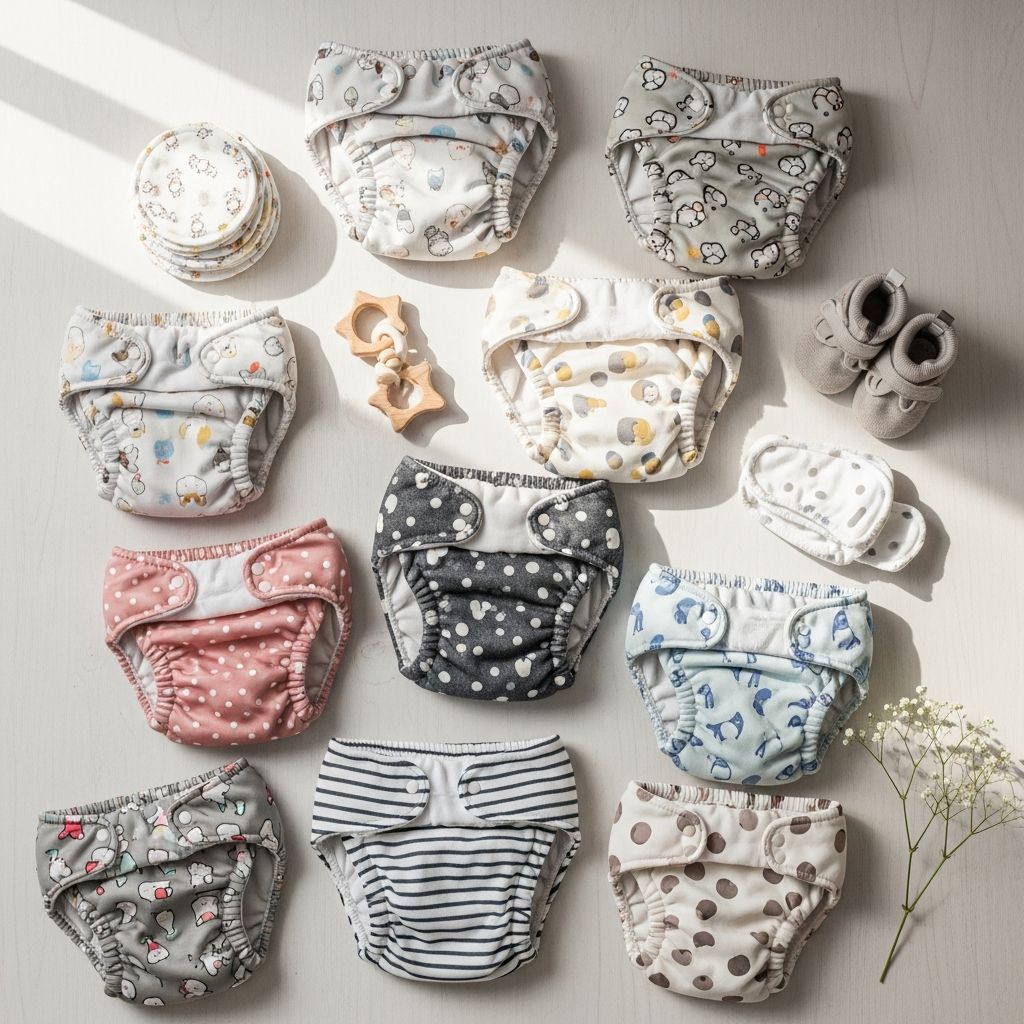
Diaper covers are one of those baby items that manage to be both incredibly practical and irresistibly cute. Whether you are committed to cloth diapering or you simply want a stylish way to hide disposable diapers under a dress or romper, the right covers can help prevent leaks, protect clothes, and add personality to your baby’s outfits.
This guide walks you through what diaper covers are, how they work, which materials and styles to consider, and how to keep them clean and cozy on your baby.
What Exactly Is a Diaper Cover?
A diaper cover is a reusable outer layer designed to go over an absorbent diaper—such as a flat, prefold, or fitted diaper—or even over disposables when you want extra leak protection. The cover itself usually is not very absorbent; its main job is to provide a waterproof or water-resistant barrier to keep moisture and messes inside.
| Component | Primary Role | Examples |
|---|---|---|
| Inner diaper | Absorbs urine and contains solids | Flats, prefolds, fitteds, inserts |
| Diaper cover | Prevents leaks, keeps clothing dry | PUL wrap, wool cover, fleece soaker |
Why Parents Love Diaper Covers
Cloth diaper covers have become popular for both environmental and practical reasons. They are reusable, can be paired with simple absorbent layers, and often last through more than one child when cared for properly.
Key Benefits at a Glance
- Leak protection: Waterproof fabrics like laminated polyester (PUL) or coated nylon create a barrier between the wet diaper and your baby’s clothes, which greatly reduces leaks when fitted correctly.
- Cost-effectiveness: Because covers can often be wiped and reused through multiple changes if not soiled, you need fewer of them than inner diapers, helping reduce long-term diapering costs.
- Customizable absorbency: You can pair one cover with different inserts, flats, prefolds, or fitted diapers depending on whether it is daytime, naptime, or overnight.
- Eco-friendlier option: Reusable diapers and covers significantly cut down on the number of disposable diapers that end up in landfills.
- Comfort & breathability: Natural fibers such as cotton or wool can allow more airflow and may help keep baby’s skin cooler than some fully plastic-based systems.
Common Types of Diaper Covers
Not all covers fit or fasten in the same way. Understanding the basic styles will help you choose what works best for your routine and your baby’s stage.
Wrap-Style Covers
Wrap-style covers open flat like a disposable diaper and fasten at the front with snaps or hook-and-loop (Velcro).
- Easy to put on wiggly babies since they adjust like a regular diaper.
- Prefolds can be folded into thirds and laid inside, or you can use a fastened flat or fitted diaper underneath.
- Many have interior flaps or double gussets around the legs to help catch leaks.
Pull-On Covers
Pull-on covers look more like soft, waterproof underwear and must be pulled up over a fastened inner diaper.
- Ideal over fitted diapers or prefolds secured with a fastener.
- Often loved for toddlers and active babies who are constantly on the move.
- Can be trickier to change after a messy diaper since they need to be pulled down over the legs.
Hybrid & All-in-Two Systems
Some covers are designed to snap in specific inserts—these are often called hybrid or all-in-two (AI2) systems.
- The cover can sometimes be reused with a fresh insert if it is not wet or soiled.
- Gives the simplicity of a system diaper while still letting you replace only the absorbent layer.
Materials Used in Diaper Covers
The fabric of a cover affects waterproofing, breathability, feel, and how you launder it. Here are the most common options.
Polyester with PUL or TPU
PUL (polyurethane laminate) and TPU (thermoplastic polyurethane) are thin waterproof coatings bonded to polyester fabric.
- Very effective at preventing leaks when seams and elastics are intact.
- Can often be wiped and reused between changes if only the insert is wet.
- Dries quickly after washing.
Wool Covers
Wool is a natural fiber that can be both breathable and surprisingly leak-resistant when properly lanolized (treated with lanolin).
- Allows more airflow, helping keep skin cooler and possibly reducing moisture-related irritation.
- Can absorb some moisture while still feeling dry to the touch.
- Requires special washing and lanolin treatments but does not need frequent washing unless soiled.
Fleece & Other Fabrics
Some covers use fleece or other modern synthetic fabrics.
- Fleece can provide a water-resistant barrier that still breathes.
- Soft against skin and often budget-friendly.
- May not be as reliably leak-proof as fully laminated fabrics for very heavy wetters.
How Many Diaper Covers Do You Need?
The number of covers you need depends on whether you use cloth full-time and how often you plan to wash. Because covers can sometimes be reused between changes, you typically need fewer covers than inner diapers.
| Cloth Use | Suggested Covers | Notes |
|---|---|---|
| Part-time (at home only) | 4–6 covers | Wash every 2–3 days; reuse covers if only damp. |
| Full-time, newborn | 6–8 covers | Newborns soil diapers more often; expect some covers to get messy. |
| Full-time, older baby | 4–6 covers | Fewer messy diapers as solids become more predictable. |
Remember that you will also need a stash of inner diapers such as prefolds, flats, or fitteds. Flats and prefolds are generally the most economical options and dry quickly.
Choosing the Right Size and Fit
A well-fitted cover is essential for preventing leaks and keeping your baby comfortable. Poor fit—either too tight or too loose—is one of the most common causes of leaks.
Newborn vs One-Size Covers
- Newborn covers: Designed specifically for tiny babies; usually fit from about 2.5–3 kg to 5–6 kg. These can be easier to fit on small waists and skinny legs.
- One-size covers: Have rows of snaps at the front that allow you to adjust rise and waist as your baby grows; many fit from roughly 4–5 kg to toddlerhood, though the exact range varies by brand.
Signs of Good Fit
- The cover fully contains the inner diaper—no absorbent fabric peeking out at the legs or back.
- Elastics sit gently in the underwear line at the legs without leaving deep marks.
- You can slide a finger comfortably between the cover and baby’s waist, but it is not gaping.
- No obvious gaps at the back when baby is lying or sitting.
Styling: Making Diaper Covers Part of the Outfit
One of the joys of diaper covers is how they can double as a fashion statement.
- Under dresses and tunics: Use a bright or patterned cover instead of plain bloomers to make diaper changes easier and outfits more fun.
- With T-shirts or bodysuits: In warm weather, pair a short-sleeve top with a colorful cover for a simple, breathable outfit.
- Photo days and special events: Choose seasonal prints or elegant neutrals for holidays, birthdays, or milestone photos.
Leak Prevention Tips
Even the best cover can leak if something is off with fit or absorbency. A few simple checks can dramatically reduce problems.
- Use enough absorbency: If diapers are totally saturated when you change them, add an extra insert or move to a more absorbent style, such as fitted diapers with a cover for night.
- Check for tucked-in fabric: Ensure no inner diaper or insert is sticking out of the cover; exposed fabric can wick moisture to clothing.
- Adjust rise and waist snaps: For one-size covers, experiment with different snap settings to eliminate leg or back gaps as baby grows.
- Use double gussets for messy diapers: Covers with inner gussets around the legs can help contain runny newborn stools.
Washing and Caring for Diaper Covers
Caring correctly for your covers helps them stay waterproof and comfortable longer. In general, you will wash covers more gently than the absorbent diapers inside them.
Daily Use
- If the cover is only slightly damp, hang it to air-dry and reuse at the next change.
- If it is visibly soiled or smells strongly, place it in your diaper pail or wet bag to be washed.
Laundry Tips
- Rinse off any solid messes before washing.
- Wash in warm water with a cloth-diaper-safe detergent, avoiding fabric softeners that can affect absorbency and waterproof layers.
- Line dry when possible to preserve elastics and laminates; if you use a dryer, opt for low heat.
- For wool covers, follow wool-specific instructions including occasional lanolin treatments.
Budgeting for Cute Diaper Covers
Building a stash of adorable covers does not have to be expensive, especially when you consider how many times each cover can be reused.
- Prioritize a base set of solid-colored or neutral covers that match most outfits.
- Add a few special prints for fun photos or holidays.
- Because flats and prefolds cost less than many modern cloth diapers, pairing them with covers can be one of the most budget-friendly diapering methods.
Health and Skin Considerations
While diaper covers themselves are not a medical device, how you use them can influence your baby’s skin environment. Prolonged moisture and friction are known contributors to diaper dermatitis, often called diaper rash.
- Change wet diapers promptly to reduce the time skin stays in contact with moisture and irritants.
- Ensure covers are not too tight at the waist or legs to avoid chafing.
- Talk with your pediatrician if rashes are frequent or severe; they can advise on barrier creams and care routines.
Frequently Asked Questions (FAQs)
Can I use diaper covers over disposable diapers?
Yes. Many parents use a cover over disposables during naps, car rides, or nighttime for extra leak protection, or simply to add a cute layer.
How often do I need to wash diaper covers?
If the cover is only damp from urine and not soiled, you can usually air it out and reuse it once or twice before washing. Wash immediately when visibly dirty or smelly.
Are wool covers too warm for summer?
Not necessarily. Wool is breathable and can help regulate temperature; many families use thin wool covers year-round, though your climate and your baby’s comfort should guide you.
Do I need special detergent for diaper covers?
You do not usually need a special brand, but you should use a detergent without fabric softeners, and follow manufacturer recommendations to protect waterproof layers and elastic.
Will one-size covers really fit from infancy to toddlerhood?
Many one-size covers work well across a wide weight range thanks to adjustable snaps, but some very small newborns may get a better fit in newborn-specific covers at first.
References
- PROs & CONs of Different Diaper Types — Blueberry & Me. 2023-08-01. https://blueberrydiapers.com/pages/pros-cons-of-different-diaper-types
- Diaper Covers – What Are They and How Do I Use Them? — Stout House WV. 2023-06-15. https://stouthousewv.com/blogs/cloth-basics/what-are-diaper-covers-and-how-do-i-use-them
- What Are Cloth Diaper Covers and How Do They Work? — Finn & Emma. 2022-10-10. https://www.finnandemma.com/blogs/news/what-are-cloth-diaper-covers-and-how-do-they-work
- Picking Out the Right Cloth Diaper for Your Newborn — Babee Greens. 2022-09-20. https://babeegreens.com/blogs/blog/picking-out-the-right-cloth-diaper-for-your-newborn
- Baby Diaper Covers: A Complete Guide — IBEX Packaging. 2023-03-05. https://ibexpackaging.com/baby-diaper-covers/
- Diaper Covers: The Best Budget-Friendly Diaper Option — Rig n Gig. 2023-04-18. https://rigngig.com/blogs/cloth-diapering-101/cloth-diapering-101-diaper-covers
- Baby Diaper Covers Explained — Thinking About Cloth Diapers. 2021-11-12. https://www.thinking-about-cloth-diapers.com/baby-diaper-covers.html
- Diaper rash — Mayo Clinic. 2023-01-21. https://www.mayoclinic.org/diseases-conditions/diaper-rash/symptoms-causes/syc-20371636