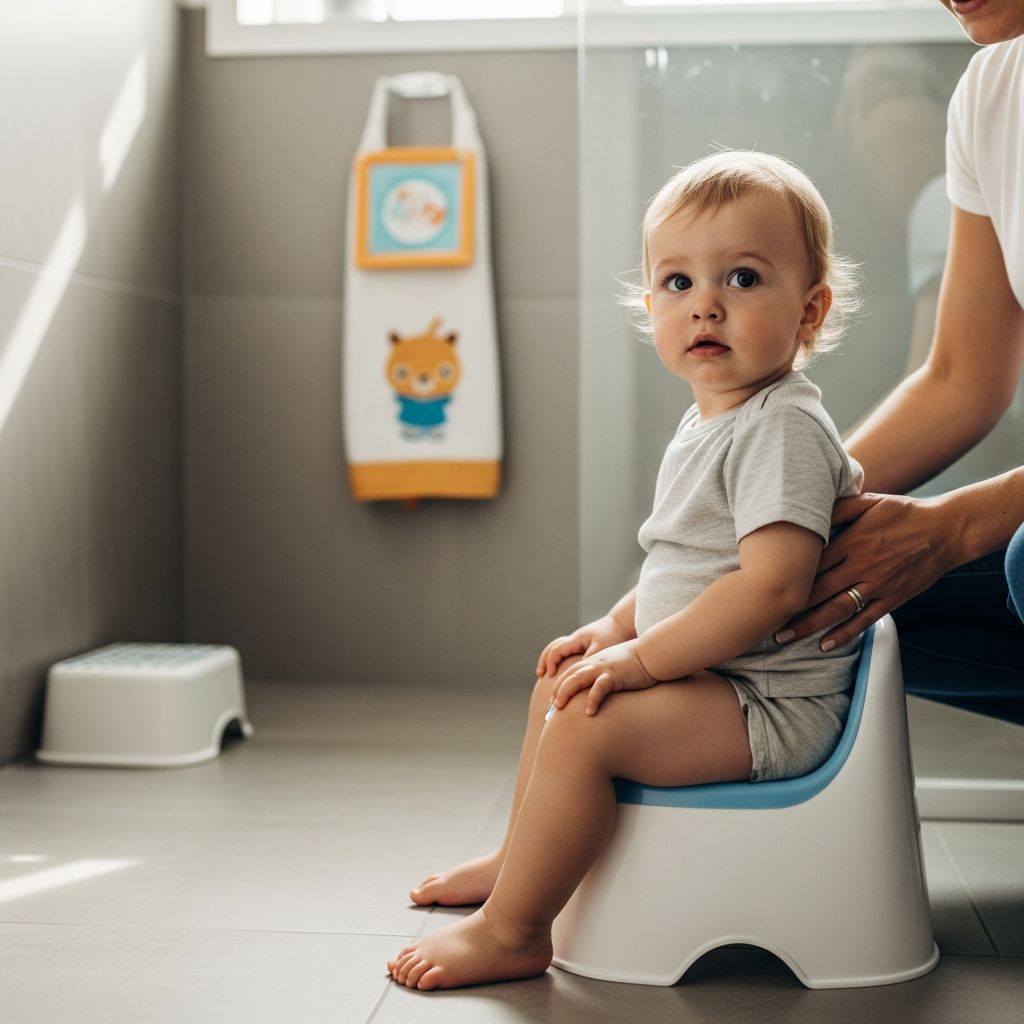
Few phrases spike a parent’s stress like, “All children must be potty trained by the start of the school year.” Suddenly, a milestone that should unfold at your child’s pace comes with a firm calendar date and a lot of pressure. This guide is designed to help you navigate that pressure thoughtfully, protect your child’s emotional well-being, and still work toward the practical goal of using the toilet at daycare.
Instead of rushing into a power struggle with your toddler—or with the school—use this article as a roadmap for realistic expectations, a step-by-step plan, and honest conversations with caregivers. Your child’s development, not the daycare’s deadline, should drive the process as much as possible.
Understanding Daycare Potty Rules
Every daycare or preschool sets its own toilet-training expectations, which often reflect staffing realities more than child development. Some centers accept children in diapers at any age, while others require full daytime toilet independence before a child can move into a new classroom or start a preschool program.
Common daycare or preschool potty policies include:
- Requiring children to be out of diapers during the day by a certain age or classroom level.
- Expecting toddlers to verbalize the need to go or follow a bathroom routine with minimal prompting.
- Limiting staff help with wiping or clothing, especially in older classrooms.
- Moving children to a younger room or delaying enrollment start if they are not yet trained.
These rules can feel harsh, but they reflect the reality that one teacher cannot fully manage individualized toileting routines for an entire class. When you understand why the policy exists, it becomes easier to plan, negotiate, and advocate without hostility.
Is Your Child Actually Ready?
A date on the calendar does not guarantee that a child’s body, brain, and emotions are ready for toilet training. The most successful transitions happen when readiness comes first and the grown-ups work around that, not the other way around.
Look for these signs that your child may be ready to begin daytime potty training:
- Stays dry for about two hours at a time or wakes dry from some naps.
- Shows clear interest in the bathroom, toilet, or other people’s bathroom habits.
- Is able to walk steadily, sit down, and stand up independently or with minimal help.
- Can follow simple one- or two-step directions like “Let’s go to the bathroom and pull down your pants.”
- Notices being wet or dirty and may ask for a change or react with discomfort.
- Has more predictable bowel movements, often around similar times each day.
- Uses some words or gestures to communicate needs or discomfort.
On the other hand, some factors can make toilet training harder or slower, such as a new sibling, a recent move, a new school, or other big transitions. If several of these are happening at once, you may need to give more time, not less, no matter what the daycare expects.
When the Deadline Is Sooner Than Your Child’s Readiness
The hardest scenario is when the school’s deadline shows up before your child’s signs of readiness. As a parent, this can feel like a test of your competence, even though it is really a mismatch between policy and development. Before panicking, step back and separate what you can control from what you cannot.
You can control:
- The tone and pressure you use at home.
- How clearly you communicate with teachers or administrators.
- The routines and practice opportunities you build into your day.
- Whether you seek out alternative program options if the fit is poor.
You cannot fully control:
- The pace of your child’s nervous system and bladder/bowel control.
- A daycare’s licensing rules, staffing levels, or hard enrollment policies.
- Whether a child regresses during major life changes, even if they were previously trained.
Recognizing that this is not a referendum on your parenting frees you to make calmer, more child-centered decisions. From there, you can make a realistic plan instead of defaulting to panic-training.
Planning Backward From the Start Date
Once you know the program’s expectations and your child’s current abilities, it helps to plan backward from the daycare start date. Think in terms of phases rather than one giant leap from diapers to total independence.
| Timeframe | Main Focus | Parent Actions |
|---|---|---|
| 8–6 weeks before | Introduce concept | Read simple potty books, let child explore toilet, practice sitting fully clothed. |
| 6–4 weeks before | Body awareness | Offer potty at predictable times, point out dry/wet diapers, start easy phrases like “pee/poop.” |
| 4–2 weeks before | Practice in underwear | Use training pants at home, short diaper-free blocks, gently guide to potty when accidents happen. |
| 2–0 weeks before | Consistent routine | Shift to daytime underwear where possible, create a simple rewards or praise system, align with daycare routine. |
This timeline is just an example, not a guarantee. Some kids may fly through these stages in two weeks; others will need many months. The goal is not to rush but to give yourself a structure so every week feels purposeful, not frantic.
Creating a Home–Daycare Potty Plan
Children learn fastest when the adults in their world are consistent. That does not mean doing the exact same things at home and school, but it does mean working from the same philosophy and overall expectations. A simple written potty plan can help everyone stay aligned.
Consider including in your shared plan:
- Words you use: Decide on a few simple terms for pee, poop, and going to the bathroom, and share them with teachers.
- Physical supports: Describe what your child uses at home (small potty, seat reducer, step stool) and what will be available at daycare.
- Schedule cues: Agree on key times to offer the potty (on arrival, before snack, after nap, before going outside, etc.).
- Accident response: Make sure home and daycare are on the same page about staying calm, not shaming, and simply cleaning up.
- Rewards and praise: Decide together whether to use stickers, small charts, or just enthusiastic verbal praise so your child hears similar messages everywhere.
Sending extra clothes, underwear, socks, and a wet-bag or plastic bag system for soiled items makes the plan easier to follow in a busy classroom. The more practical you are about the mess, the less emotionally loaded it becomes.
Daily Routines That Support Toilet Learning
Consistency beats intensity. Instead of marathon “boot camp” days that leave everyone exhausted, build bathroom visits into daily routines so the potty becomes a normal, low-drama part of life.
Helpful routine anchors for offering the toilet include:
- Right after your child wakes up in the morning.
- Before leaving the house, and again upon arriving somewhere.
- After meals or snacks, when digestion often stimulates the bowels.
- Before starting a favorite activity (like going outside or screen time).
- Before naps and bedtime.
Framing these visits as invitations rather than demands—“Let’s try to go before we read our story”—helps your child feel included in a routine instead of controlled by it.
Supporting Independence at Daycare
Many daycare policies are less about being perfectly trained and more about being safe and reasonably independent in a group setting. Focusing on practical self-help skills can bring your child closer to meeting those expectations, even if they still need reminders or occasional help.
Skills to practice at home include:
- Pulling pants and underwear up and down with minimal help.
- Climbing on and off the toilet or potty safely using a step stool if needed.
- Flushing the toilet and washing hands with soap afterwards.
- Using a simple phrase like “I have to go” to get an adult’s attention.
- Learning to pause a favorite activity and transition to the bathroom without a meltdown every time.
Loose clothing with elastic waistbands, no complicated belts, and easy-to-remove shoes can make an enormous difference in a busy classroom. Often, meeting the daycare’s practical requirements is as much about wardrobe as it is about bladder control.
Talking to Daycare About Your Child’s Progress
Good communication with caregivers can turn a rigid-sounding policy into a more flexible, collaborative process. Instead of waiting until the last week, start the conversation early and check in periodically as your child moves along the toilet-learning journey.
When speaking with teachers or administrators, it can help to:
- Share specific updates like “He stays dry most mornings now, but poops are still unpredictable.”
- Ask what level of help is realistic in the classroom and what they see during the day.
- Clarify what “potty trained” actually means to them—no diapers at all, or mostly trained with occasional accidents?
- Request a trial period where your child attends while still working toward full independence, if possible.
Most caregivers want children to succeed and are willing to problem-solve, especially if they see that the family is engaged and respectful of the classroom’s constraints.
Protecting Your Child’s Confidence
Amid deadlines, policies, and applications, it is easy to forget that this milestone belongs to your child. The long-term goal is not just a dry pair of pants at school, but a child who feels capable, respected, and in tune with their own body.
To protect that confidence:
- Avoid labeling your child as “stubborn,” “lazy,” or “behind” in front of them.
- Stay calm about accidents, emphasizing that learning takes time and the grown-ups are there to help.
- Do not compare your child harshly to siblings, classmates, or friends.
- Watch for signs of anxiety, withholding, or constipation, and slow down if necessary.
A child who associates toileting with shame or power struggles may develop long-term resistance, so it is worth leaning toward empathy, even if that sometimes means adjusting timelines or school plans.
When the Deadline Can’t Be Met
Sometimes, even with everyone’s best efforts, the child simply is not ready by the program’s cutoff date. This does not mean you failed. It means that real development does not always line up with institutional convenience. In these cases, it helps to broaden your options instead of doubling down on pressure.
Possible paths if the deadline cannot be met include:
- Asking whether your child can remain in a younger classroom that allows diapers while continuing to practice skills.
- Exploring alternative programs or caregivers with more flexible toileting policies for this year and revisiting the original program later.
- Delaying the start date by a few months if your family’s schedule and finances allow.
- Continuing gentle, low-pressure practice at home so progress continues even if the school plan changes.
Sometimes the most child-centered choice is to change the environment rather than trying to force the child to adapt faster than their body and emotions can handle.
Daycare Potty Training FAQs
What if my child is mostly trained at home but has constant accidents at daycare?
This is very common. The daycare environment is more stimulating, more distracting, and less predictable than home, so children forget to listen to their bodies. Ask teachers how often bathroom reminders are offered, and consider practicing “checking in” with their body at transition times at home so the skill transfers more easily to school.
Is it okay to use rewards like stickers or small treats?
Simple, short-term rewards can be helpful for some children, especially to encourage sitting on the toilet or trying again after a setback. Choose something small and sustainable, and focus more heavily on verbal praise and pride in effort rather than treating every bathroom success like a performance.
Should I move straight to underwear or use pull-ups for daycare?
It depends on your child and the center’s rules. Some daycares prefer pull-ups during the early stages for hygiene and speed, while others encourage underwear to increase body awareness. If your child is close to trained, underwear with a backup set of clothes may work well; if they are just starting, pull-ups can prevent constant outfit changes while you build skills.
What if the daycare’s approach clashes with my parenting style?
Values and philosophies sometimes collide. If the center uses shame, threats, or unrealistic expectations around toileting, and is not open to respectful dialogue, it may be worth considering whether this is truly the right environment for your family. A good fit between your home values and caregiver practices matters more than sticking with a particular school name.
Can I “crash train” in a weekend to meet the deadline?
Some children do make big leaps during a focused weekend, especially if they were already close to ready. However, intensive training cannot override a child’s basic developmental stage. Use such weekends to give extra practice and confidence, but plan for ongoing support and expect that real mastery may still take weeks or months.
Key Takeaways for Stressed Parents
- Daycare potty rules are about logistics as much as development; understanding them helps you plan instead of panic.
- Readiness signs and emotional safety matter more than any arbitrary date; pushing too hard can backfire.
- A simple, shared plan between home and daycare—plus calm, predictable routines—supports your child far more than pressure or bribes alone.
- If the deadline and your child’s development cannot meet in the middle, it is okay to adjust the school plan rather than treating your child’s body as the problem to fix.
Potty training in the shadow of a daycare deadline is stressful, but it does not have to be a crisis. With realistic expectations, clear communication, and an unwavering focus on your child’s well-being, you can navigate this season in a way that leaves your child—not just the enrollment paperwork—ready for what comes next.