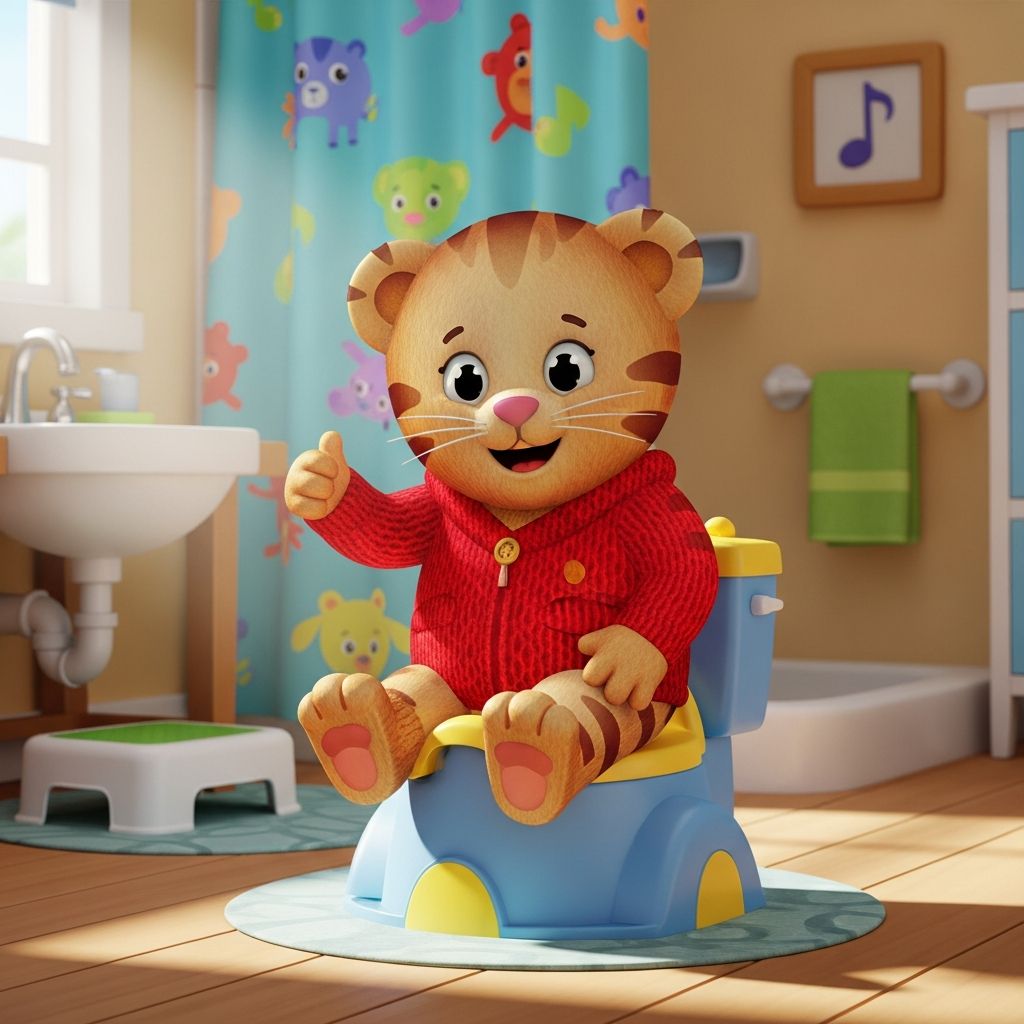
Potty training stands as one of the most pivotal milestones in a child’s early development, often marked by excitement, frustration, and persistence from both parents and toddlers. Popular children’s media, particularly shows like Daniel Tiger’s Neighborhood, have stepped in with creative tools—simple, repetitive songs—that transform this process into an engaging routine. These tunes address core hurdles like ignoring body signals during play, fostering independence, and normalizing bathroom habits. By embedding key strategies into memorable melodies, they empower young learners to recognize urges, act promptly, and maintain hygiene, easing the journey for families everywhere.
Understanding the Potty Training Challenge
Toddlers between 18 months and 3 years typically begin potty training, a phase where children transition from diapers to using the toilet independently. A primary obstacle is the ‘stop-and-go’ dilemma: kids engrossed in activities often delay bathroom trips, leading to accidents. Research from child development experts highlights that positive reinforcement through songs and routines significantly boosts success rates, with musical cues helping children internalize steps like pausing play, heading to the potty, flushing, and washing hands.
This resistance stems from a toddler’s developing brain prioritizing immediate fun over bodily needs. Daniel Tiger’s songs cleverly reframe this by portraying potty time as a brief, rewarding pause that doesn’t end the joy—’after potty time, we’ll get to play!’ Such messaging builds neural pathways associating bathroom breaks with positivity, reducing pushback over time.
Breaking Down the Iconic ‘Stop and Go Potty’ Song
At the heart of Daniel Tiger’s potty training arsenal is the ‘When You Have to Go Potty, Stop and Go Right Away’ song. Featured in episodes like ‘Prince Wednesday Goes to the Potty,’ its lyrics are direct: ‘If you have to go potty, stop, and go right away. Flush and wash and be on your way.’ This 1-minute clip from PBS Kids has amassed millions of views, with parents reporting quicker training progress after repeated listens.
The song’s structure is genius for little minds—short verses repeat the sequence, mimicking the brain’s love for patterns. It acknowledges the struggle (‘I know it’s hard to stop when you’re having fun’) while offering reassurance (‘Everything is gonna be okay’). Parents can play it during transitions, like before meals or bedtime, to cue action without nagging.
- Key Lyrics and Lessons: ‘Stop what you’re doing and go go right away’ teaches impulse control.
- ‘There’s a potty everywhere’ normalizes public restroom use.
- ‘Flush and wash’ instills hygiene from the start.
Incorporate it daily: Sing during playtime demos or as a car ride anthem. Studies on music in early education show such repetition enhances memory retention by up to 30% in preschoolers.
The ‘Go Potty Go’ Anthem: Listening to Your Body
Complementing the stop-and-go theme, the ‘Go Potty Go’ song emphasizes body awareness. Lyrics like ‘Go potty, go potty, go potty go! Oh, why don’t you sit and try to go?’ encourage proactive checks, ideal for mornings, pre-school, or bedtime routines. Released as a remix sing-along, it features Daniel and friends modeling the process, making it relatable.
This track shines in building habits around scheduled sits, even without urgency. Pediatric guidelines recommend ‘sit and try’ prompts to preempt accidents, and this song gamifies it. Videos show toddlers wiggling side-to-side to mimic signals, turning recognition into a dance.
| Song Phase | Timing | Benefit |
|---|---|---|
| Morning | Before school | Establishes daily start |
| Playtime | When wiggling | Quick interruption |
| Evening | Before bed | Prevents night accidents |
Use this table as a family schedule planner for maximum efficacy.
‘Everyone Goes Potty’: Building Social Confidence
Another gem, ‘Do You Have to Go Potty? Maybe yes, maybe no. Why don’t you sit and try to go?’ promotes universality—’Everyone, everywhere, goes to the potty.’ From compilations on YouTube, this fosters peer normalization, crucial for shy kids or those in group settings like daycare.
Social learning theory posits children mimic observed behaviors; seeing Daniel’s friends flush and cheer demystifies the process. Parents note reduced embarrassment in public potties after exposure.
Practical Strategies: Integrating Songs into Daily Life
To leverage these songs effectively:
- Routine Pairing: Link songs to timers or visual charts for consistency.
- Interactive Play: Pause toys mid-game, sing, then resume—mirroring lyrics.
- Family Involvement: Record custom versions with your child’s name for personalization.
- Progress Tracking: Reward song-sung successes with stickers, tying to ‘be on your way’ freedom.
Combine with physical cues like potty dolls or portable seats. Consistency yields results in 3-7 days for motivated toddlers, per parent blogs citing Daniel Tiger success stories.
Why Music Works Wonders for Potty Success
Neuroscience backs musical potty aids: Rhythm aids procedural memory, the type governing habits like toothbrushing. A PBS study on Daniel Tiger viewers found 20% faster skill acquisition versus non-musical methods. Repetition embeds ‘stop-go-flush-wash’ as automatic.
Beyond Daniel, similar tracks like Pinkfong’s or Kiboomers’ reinforce, but Tiger’s emotional intelligence focus—validating feelings—sets it apart.
Common Pitfalls and How Songs Overcome Them
Avoid forcing; songs gently persuade. For regression (common at 2.5 years), revert to singing without pressure. Night training? Bedtime ‘Go Potty Go’ rituals help.
- Pitfall: Play Interruption Fear – Song assures play resumes.
- Pitfall: Body Signal Ignorance – Wiggle cues teach awareness.
- Pitfall: Hygiene Skip – Mandates flush/wash.
Parent Testimonials and Long-Term Impact
Families rave: ‘Daniel’s song ended our accident streak!’ Longitudinally, early mastery correlates with confidence and fewer UTIs. By age 4, most succeed, but songs accelerate to 80% diaper-free by 2.5 years.
Frequently Asked Questions
When should I start using Daniel Tiger potty songs?
Begin at 18-24 months when your child shows interest, like staying dry for hours or mimicking adults. Pair with readiness signs for best results.
Do these songs work for resistant toddlers?
Yes, their fun, non-nagging vibe reduces defiance. Consistency with play-pause-play demos proves effective in weeks.
Can I use them for poop training too?
Absolutely—the general ‘go potty’ phrasing covers both, with sitting prompts aiding bowel habits.
Are there apps or toys with these songs?
Yes, PBS Kids apps and Daniel Tiger potty toys play them on flush, reinforcing instantly.
What if my child ignores the songs?
Model enthusiastically first, then fade prompts. Combine with rewards; persistence pays off.
Expanding Your Potty Training Toolkit
While Daniel Tiger excels, blend with books like ‘Everyone Poops’ or charts. Track via apps for milestones. Celebrate fully dry days with parties—song-led cheers amplify joy.
In summary, these PBS gems turn training into triumph, blending education, empathy, and entertainment. Parents worldwide harness them for smoother transitions, proving a simple tune can tune out tantrums.
References
- Daniel’s ULTIMATE Potty Song Sing-Along Compilation! | PBS KIDS — PBS Kids YouTube. 2023-10-15. https://www.youtube.com/watch?v=LuG2gE3HGo8
- When You Have To Go Potty, Stop…and Go Right Away — Neighborhood Archive. 2024-01-01. https://www.neighborhoodarchive.com/dtn/music/songs/when_have_go_potty.html
- 12 Potty Training Songs to Help Your Toddler — PureWow. 2023-05-20. https://www.purewow.com/family/potty-training-songs
- Our Absolute Favorite Potty Training Songs for Toddlers — Sawyer Blog. 2023-08-10. https://www.hisawyer.com/blog/our-absolute-favorite-potty-training-songs-for-toddlers
- When You Have to Go Potty, Stop and Go Right Away (Song) | PBS KIDS — PBS Kids YouTube. 2016-03-10. https://www.youtube.com/watch?v=yivu8jjQcdw