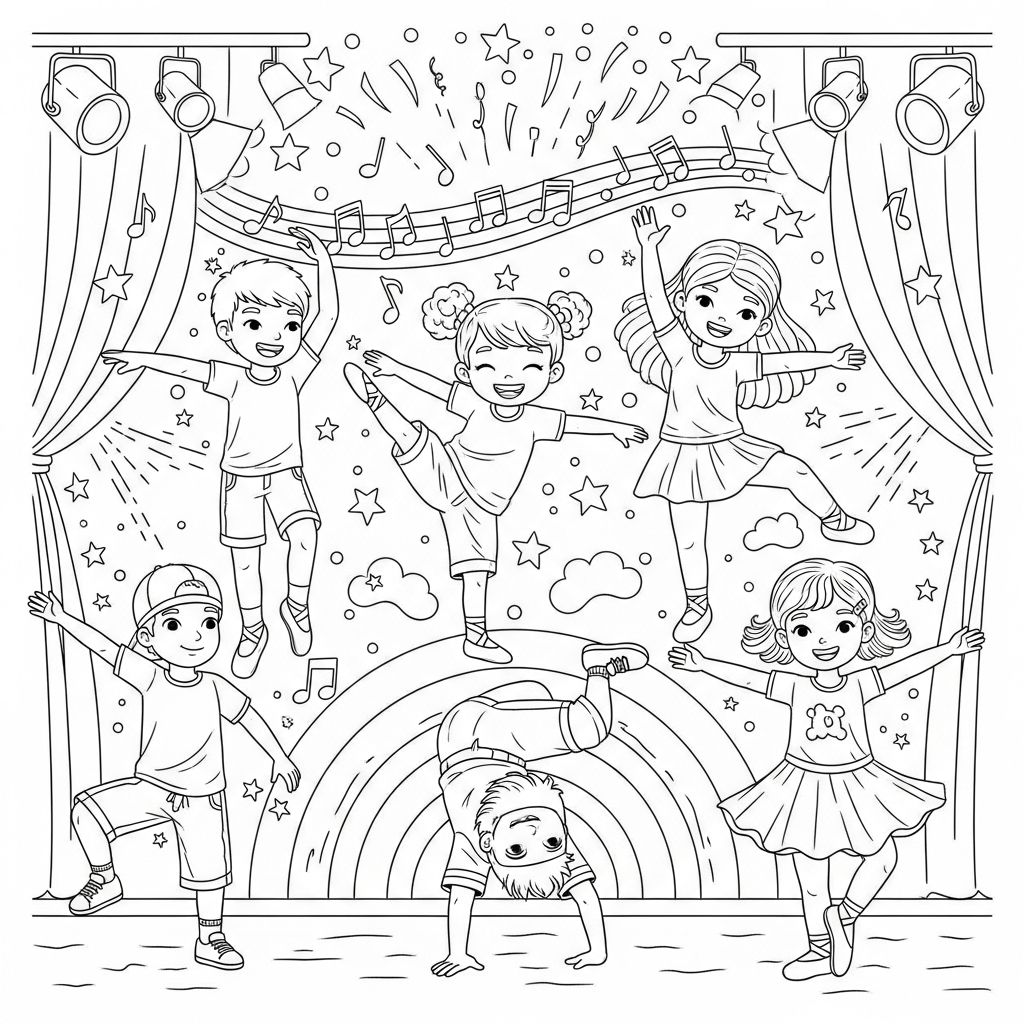
Dance and coloring are two activities many children naturally enjoy. When you combine them in dance-themed coloring pages, you get a simple, low-cost way to nurture creativity, movement, and emotional expression all at once. This guide shares fresh ideas for using dance coloring pages with kids at home, in classrooms, or in activity groups, along with practical tips and answers to common questions.
Why Dance Coloring Pages Are So Engaging
Children are often fascinated by motion, rhythm, and bright colors. Dance coloring pages bring all three together in a format even very young kids can enjoy. They can imagine twirling, leaping, or stepping to the beat while choosing colors for costumes, backgrounds, and stages.
Coloring itself is more than a pastime. Health professionals note that focused coloring can calm the brain, support relaxation, and reduce stress by engaging attention in a gentle, repetitive task. When the subject is joyful—like dancing—this effect can feel even more uplifting for children and adults.
Benefits of Dance-Themed Coloring for Kids
Dance coloring pages do more than pass the time. They can support several areas of development:
- Fine motor skills: Holding crayons, markers, or colored pencils and staying within lines helps strengthen small hand muscles and hand–eye coordination, skills that underpin handwriting and many school tasks.
- Creativity and imagination: Kids can invent their own dance stories, choose costume colors, and design backgrounds, building their sense of creative decision-making.
- Emotional expression: Dance is widely used as a way to express feelings nonverbally, and dance movement therapy is an established method for supporting emotional and physical integration. Coloring dance scenes gives children another gentle way to explore mood and self-expression.
- Relaxation and focus: Studies of adult coloring show that it can lower anxiety and support mindfulness by drawing attention away from worries and into the present moment. Children often experience similar calming benefits.
- Interest in the arts: Images of ballet, hip-hop, folk dances, and social dances can introduce kids to different artistic traditions and may inspire them to try a dance class.
Popular Dance Styles to Feature on Coloring Pages
Dance coloring pages can depict many types of movement. Offering variety helps children see that there is no single “right” way to dance.
- Ballet: Pointe shoes, tutus, and graceful poses appeal to many children who enjoy elegant and dramatic imagery.
- Hip-hop and street dance: Energetic poses, sneakers, and bold clothing styles invite bright colors and dynamic backgrounds.
- Ballroom and partner dance: Pairs of dancers in formal outfits help children imagine teamwork and coordination.
- Cultural and folk dances: Traditional costumes from around the world can spark conversations about culture, geography, and celebrations.
- Kids dancing for fun: Simple scenes of children jumping, spinning, or clapping along to music feel relatable and joyful.
Ideas for Using Dance Coloring Pages at Home
Dance coloring pages can easily become part of everyday family life with a few thoughtful tweaks.
Create a Mini “Dance Studio” Corner
Set up a small space with:
- A stack of printed dance coloring sheets
- Crayons, washable markers, and colored pencils
- A Bluetooth speaker or small music player
- A clipboard or hard surface for coloring on the floor
Invite your child to choose a page, press play on some gentle music, and color while listening. They can pause and stand up to copy the pose they are coloring, turning the activity into a playful mix of art and movement.
Turn Finished Pages into Simple Crafts
Once a page is colored, it does not have to stay flat in a folder. Try:
- Wall gallery: Tape or frame your child’s favorite dancing figures to make a rotating “dance art” display.
- Homemade greeting cards: Cut out a dancer and glue it onto folded cardstock for birthday or recital cards.
- Bookmarks: Trim narrow strips from the side of a colored page, laminate if possible, and add a hole with ribbon to create bookmarks.
- Door signs: Let children design a “Dancer at Play” sign for their bedroom door using a colored dancer as the main image.
Combine Movement and Coloring
To emphasize the dance aspect, try short movement breaks:
- Ask your child to color for two or three minutes, then stand up and show you how they imagine the dancer would move.
- Have them pose like the character, then notice small details—bent knees, pointed toes—and add those details in their coloring.
- Use a simple timer and alternate “color time” and “dance time” for a fun structured activity.
Classroom and Group Activity Ideas
Teachers, childcare providers, and group leaders can use dance coloring pages as part of lessons or quiet-time activities.
Calm-Down or Transition Activity
Coloring has been described by clinicians as a way to help the brain relax, which can be helpful between high-energy segments of the day. Keeping a set of dance coloring sheets on hand gives students a soothing but engaging option during:
- Morning arrival
- Transition periods between subjects
- Indoor recess on rainy days
- Quiet corners for students who need a sensory break
Connecting Coloring to Dance and Music Lessons
Dance and music both support children’s physical and social development. You can link coloring pages to these areas:
- Music appreciation: Play different genres of music—classical, pop, traditional folk music—and ask students to color how the music “feels” using their chosen scene.
- Rhythm practice: Clap simple rhythms and invite children to shade an area or change color each time the rhythm repeats.
- Dance vocabulary: Introduce basic terms (like leap, spin, stretch, bow) and ask kids to circle parts of the picture that match each word.
Inclusive and Social-Emotional Learning
Dance imagery lends itself well to social-emotional themes like joy, courage, and friendship. Resources used for expressive dance coloring in educational settings emphasize emotional awareness and body language. You can:
- Invite students to choose colors that show how the dancer might be feeling.
- Discuss simple prompts like “What do you think this character is proud of?” or “Who might they be dancing with?”
- Encourage children to draw a friend or family member into the scene to highlight connection.
Table: Simple Ways to Extend a Single Coloring Page
| Goal | Extension Idea |
|---|---|
| Build vocabulary | Label parts of the costume (shoes, skirt, jacket, hat) and parts of the body (arm, knee, ankle) around the dancer. |
| Practice counting | Count how many stars, hearts, or musical notes you can add in the background, then write the number at the top. |
| Support storytelling | Write a short sentence under the picture explaining where the dancer is and what song is playing. |
| Encourage cultural awareness | Choose a country, look up a traditional dance, and color the outfit using colors associated with that country’s flag. |
| Reinforce shapes and patterns | Fill the background with stripes, polka dots, or zigzags and name the shapes together. |
Tips for Printing and Presenting Dance Coloring Pages
To make the most of your pages, a few small choices can improve the experience for kids:
- Use slightly thicker paper where possible: Cardstock or heavy printer paper is more durable and resists bleed-through from markers.
- Offer a variety of tools: Crayons are forgiving for younger children; older kids may enjoy the precision of fine-tip markers or colored pencils.
- Provide both simple and detailed designs: Large, open shapes suit preschoolers, while school-age children often enjoy more intricate backgrounds or costume details.
- Display finished work: Hanging up completed pages or adding them to a binder shows children that their effort is valued and encourages persistence.
Supporting Different Ages and Abilities
Dance coloring pages can be adapted to suit a wide range of children, including those with different motor abilities or attention spans.
- Toddlers and preschoolers: Choose large figures with minimal small details, offer thick crayons, and keep sessions brief. Focus on fun, not staying in the lines.
- Early elementary ages: Introduce simple challenges, like using three colors in each outfit or creating a pattern on the stage floor.
- Older children: Encourage shading, blending colors, and adding their own background scenery, such as an audience, lights, or musical instruments.
- Children who find fine-motor tasks difficult: Offer adapted grips, larger drawing tools, and pages with wider outlines that are easier to see and stay within.
Health and Well-Being Aspects
Coloring can be a small but meaningful part of a family’s or classroom’s approach to emotional well-being. Health systems that discuss coloring for stress relief emphasize its capacity to create a sense of calm by occupying the mind in a focused yet low-stakes activity. When combined with positive themes like music and dancing, it may help children associate relaxation with the arts and movement, rather than only with screens or passive activities.
Dance itself has documented benefits for coordination, strength, and social connection, especially in group settings. Although a coloring page is not physical exercise, it can serve as a bridge—helping hesitant children warm up to the idea of moving, or reinforcing the joy they already feel about dance classes or school performances.
Frequently Asked Questions (FAQs)
Q: What age are dance coloring pages best for?
A: Dance coloring pages can be used with children as young as three, provided the designs are simple and printed large. Older kids up to early teens may enjoy more detailed scenes that include stage lights, crowds, and complex costumes.
Q: How can I keep my child interested if they usually lose focus quickly?
A: Try pairing short coloring bursts with movement. Let your child color for a few minutes, then stand up to copy the dancer’s pose or invent a short move. You can also set small goals, such as finishing just the shoes or the background, instead of the whole page at once.
Q: Are there educational benefits, or is this just for fun?
A: Beyond enjoyment, dance coloring pages support fine motor skills, color recognition, early writing-related skills, and emotional regulation. When combined with music or simple writing prompts, they can also reinforce vocabulary, rhythm awareness, and storytelling.
Q: How often should I offer coloring as a calming activity?
A: There is no strict rule, but many families and educators keep coloring pages available daily so children can choose them when they feel overwhelmed or need quiet time. Because coloring is low-risk and flexible, it can fit into routines before bedtime, after school, or during transitions.
Q: Can dance coloring be helpful for shy children?
A: Yes. Some children feel nervous about dancing in front of others, but enjoy imagining and coloring dance scenes. Over time, talking about the characters they color and how those dancers feel on stage can gently build confidence and open up conversations about performing or participating in group activities.
References
- Mental health benefits of coloring — Mayo Clinic Health System. 2021-03-18. https://www.mayoclinichealthsystem.org/hometown-health/speaking-of-health/coloring-is-good-for-your-health
- Music and Dance Coloring Pages — Crayola. 2024-01-01 (accessed date). https://www.crayola.com/music-and-dance
- Ballet Dance Coloring Pages for Kids — Magic Kids Color. 2023-06-01 (accessed date). https://www.magickidscolor.com/ballet-dance-coloring-pages/
- Dance Coloring Pages for Social-Emotional Learning (Expressive Dance Coloring Pages) — Teachers Pay Teachers (resource description). 2024-02-01 (accessed date). https://www.teacherspayteachers.com/Product/Expressive-Dance-Coloring-Pages-10-Joyful-Children-Dancing-Printables-for-SEL-13700122
- Music and Dance Free Coloring Pages — Crayola main collection description. 2024-01-01 (accessed date). https://www.crayola.com/music-and-dance