Last names beginning with the letter D have a strong, grounded sound and appear in many cultures around the world. From classic English surnames to elegant French and energetic Irish names, D surnames carry stories of occupation, place, ancestry, and personality.
This fully original guide explores what D last names can mean, how they developed, and how to choose or use them for your baby, your family, or even characters in your writing. You will find examples, practical tips, and FAQs to help you navigate the world of D surnames with confidence.
Why D Surnames Feel So Strong and Memorable
The letter D creates a firm, decisive sound at the beginning of a surname, which is one reason so many D last names feel solid, traditional, and dependable. Whether short and punchy or longer and lyrical, these names often stand out in speech and on paper.
- Audible impact: Names that start with a hard consonant like D tend to be easier to hear in conversation and public settings.
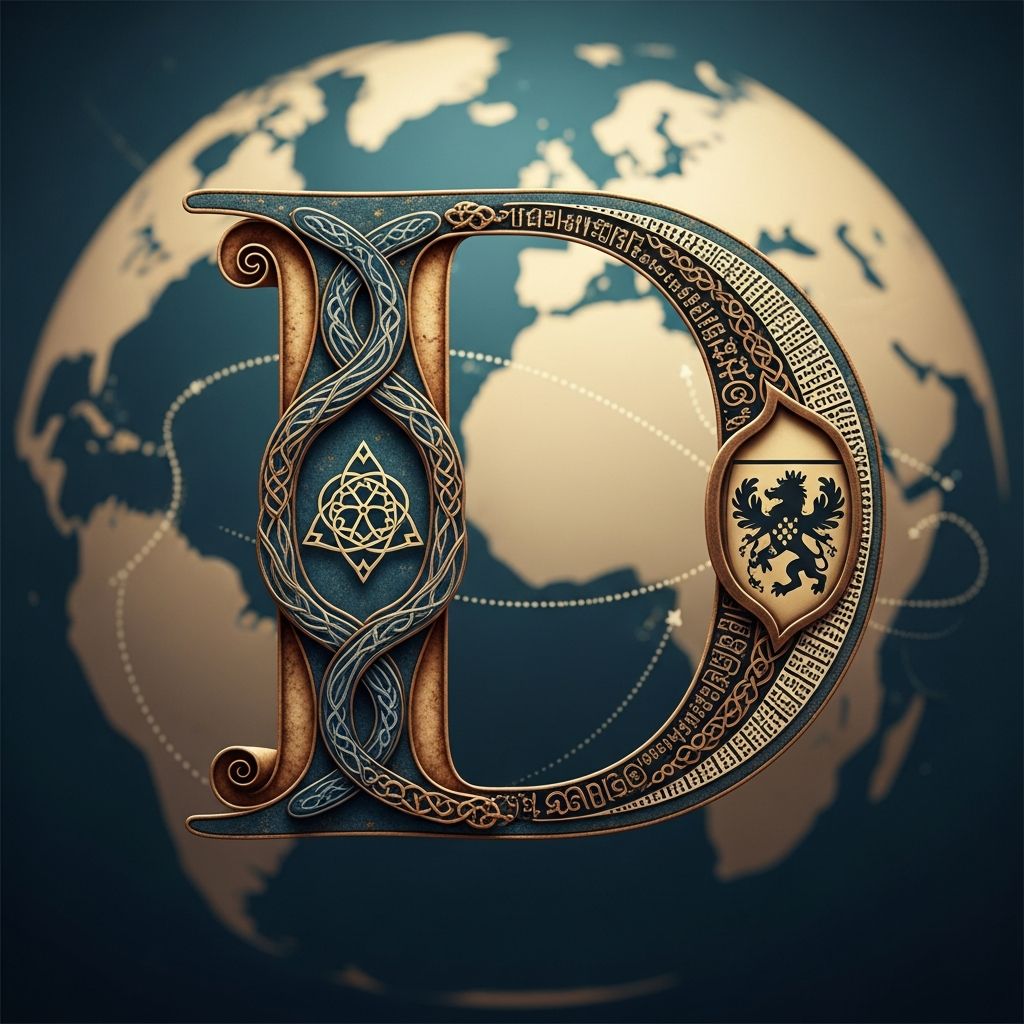
- Visual balance: The shape of the letter D is simple but bold, which can look appealing in signatures, monograms, and logo designs.
- Familiar yet varied: Many cultures use D surnames, so you can find options that feel classic, modern, rare, or international.
Major Origin Types of D Surnames
Most D surnames fall into a few big categories of origin. Understanding these can help you decode a family name or decide what kind of meaning you would like a chosen surname to carry.
Patronymic and Ancestral D Surnames
Patronymic surnames are based on a parent or ancestor’s given name. Many D last names signal “son of,” “descendant of,” or simply carry the ancestor’s first name directly into the family surname.
- Names formed from given names such as Daniel, David, Donald, or Dominic.
- Variations influenced by language and spelling changes over centuries.
- Helpful clues for tracing a particular line of your family tree back to a specific ancestor.
Occupational D Surnames
Occupational surnames evolved from the work a person did in a community. These names often appeared when record-keeping expanded and individuals needed identifiers beyond a single given name.
- Some D surnames come from trades like miller, weaver, carpenter, or merchant translated into local languages and dialects.
- Others reflect roles within an estate or town, such as steward, keeper, or messenger.
- Occupational roots can be an engaging doorway into social history and everyday life for your ancestors.
Place-Based and Geographic D Surnames
Many last names beginning with D originated from locations: towns, villages, landscapes, or even houses and estates. These place-based surnames may include prepositions like “de,” “da,” or “di,” meaning “of” or “from.”
- Surnames that reference rivers, valleys, hills, or woods.
- Names indicating origin from a certain estate, region, or town.
- Useful hints if you are trying to connect a family line to a particular country or region.
Descriptive and Nickname D Surnames
Some D surnames began as nicknames based on appearance, personality, or notable traits. Over time, these descriptive labels hardened into permanent family names.
- Names rooted in physical qualities like height, hair color, or build.
- Surnames reflecting temperaments, such as bravery, calmness, or quick wit.
- These names can be playful reminders that everyday observations once shaped identity.
Examples of D Surnames by Style and Feel
There are thousands of surnames starting with D, and no single list can capture them all. Instead of trying to cover every name, this section focuses on types and examples that illustrate the variety and flavor that D surnames offer.
Classic and Familiar D Surnames
Certain D surnames appear again and again in English-speaking countries and beyond. These names feel strong, time-tested, and recognizable across generations.
- Davis – A patronymic name meaning “son of David,” associated with the Hebrew root for “beloved.”
- Dawson – Another name built on David, often interpreted as “son of Daw” or “son of David.”
- Dixon – A patronymic form of Dick (a nickname for Richard), generally understood as “son of Dick.”
- Duncan – A name with Scottish roots, often linked to meanings involving “brown warrior” or “dark warrior.”
- Douglas – Originally a Scottish place-based surname tied to a river name sometimes translated as “dark stream” or “black water.”
Gentle and Soft-Sounding D Surnames
If you prefer a calmer, more flowing name, look for surnames where the D is followed by vowels or soft consonants. These names can sound melodic and refined, especially when paired with shorter first names.
- Day – Short and bright, this surname has Old English roots and may connect to a word for “day” or to a given name used historically.
- Dean – Often linked to a church official or to a person living in a valley, this name feels simple but dignified.
- Dale – A topographic surname for someone who lived in or near a valley.
- Dover – A name tied to coastal geography, often associated with a harbor town or crossing point.
Bold and Dramatic D Surnames
Certain D surnames feel adventurous or dramatic, making them popular choices for fictional heroes, historical dramas, or families who like a bit of flair. These names may have rugged roots in landscape or battle.
- Drake – Can derive from an Old English word for “dragon” or “drake,” giving it a powerful, almost mythic tone.
- Draper – Originally an occupational name for a cloth merchant, now often chosen for its crisp sound.
- Duran – Found in multiple languages, sometimes linked to endurance or steadfastness.
- Delgado – A surname from Spanish-speaking cultures, traditionally connected with slenderness or delicacy in form.
International and Multicultural D Surnames
D surnames appear across Europe, the Americas, Asia, and Africa, often shaped by small particles such as “de,” “da,” “di,” “du,” and “d’.” These little words usually mean “of” or “from” and point to older place or family connections.
- De Luca – A surname found in Italian families, typically meaning “of Luca” or “from the family of Luca.”
- Da Silva – Common in Portuguese-speaking countries, often linked to woodlands or forested areas.
- D’Angelo – An Italian name that can be interpreted as “of Angelo” or “from the family of Angelo.”
- Di Marco – Another Italian-style patronymic meaning “of Marco” or “from Marco’s line.”
Table: Sample D Surnames by Origin Type
The following table offers a small, original selection of D surnames categorized by likely origin type. It is not exhaustive, but it shows the range of styles you can explore.
| Surname | Likely Origin Type | Brief Meaning Summary |
|---|---|---|
| Davis | Patronymic | Descendant or child of David, tied to the idea of “beloved.” |
| Dawson | Patronymic | Name rooted in David, often read as “son of Daw/David.” |
| Douglas | Place-based | Originally linked to a Scottish area or river known as the “dark stream.” |
| Dale | Topographic | Indicates someone who lived in a valley or hollow. |
| Dean | Occupational / Topographic | Connected either to a church dean or to someone living in a valley. |
| Drake | Nickname / Descriptive | May relate to the word for “dragon” or “drake,” giving a bold image. |
| Delgado | Descriptive | Comes from a word meaning slender or delicate in form. |
| De Luca | Patronymic / Locational | Means “of Luca,” linking the bearer to the family of a man named Luca. |
How to Choose a D Surname for a Baby or Name Change
Sometimes families want to revive an old D surname from their tree, while others prefer to choose a new last name for marriage, blending, or personal reasons. Writers and game creators also frequently select D surnames for characters. A thoughtful process can make your choice feel meaningful and lasting.
Clarify What Matters Most
Before settling on a surname, think through what you value most about a name. This will help you narrow your options and avoid later regrets.
- Do you care most about sound, meaning, heritage, or uniqueness?
- Are there specific cultures or languages you want to honor?
- Is it important that the surname be easy for others to spell and pronounce?
Check Flow with First and Middle Names
A surname should work well with the rest of a person’s name. Try saying the full name aloud several times and imagine how it will appear in different settings.
- Pair long D surnames with short first names to keep the full name from feeling heavy.
- Use softer or vowel-rich first names to balance sharp or consonant-heavy D last names.
- Write the full name in different styles (formal, casual, initials) to see how it looks.
Research Meaning and Cultural Context
Even if you love a name’s sound, take time to understand its background. Meanings and associations may shift across cultures, so thoughtful research shows respect and prevents unintended messages.
- Look into the surname’s history in its original language or region.
- Check for any strong political, historical, or pop culture connections you may wish to avoid.
- Ask family members if the name appears in your own ancestry, which can add emotional significance.
Using D Surnames in Stories, Games, and Creative Work
D surnames are popular in fiction because they can signal character traits, social status, or origin with just a few letters. When chosen carefully, a last name can become as iconic as a character’s first name.
Match the Surname to the Setting
Think about where and when your story is set. A futuristic sci-fi world might favor streamlined or invented surnames, while a historical drama will need names that fit the period.
- For historical or fantasy stories, look for older D surnames tied to land, titles, or medieval trades.
- For contemporary settings, choose familiar D surnames that will feel believable to modern readers.
- For speculative worlds, you can blend real D surname patterns with invented elements.
Signal Personality Through Sound
The sound of a surname subtly shapes how audiences feel about a character. You can use this to your advantage when casting a story or building a game roster.
- Sharp, crisp names like Drake or Dunn can suit warriors, detectives, or strong-willed leads.
- Softer names like Daley or Dee may work well for gentle, creative, or introspective characters.
- Complex, multi-part surnames can suggest nobility, mystery, or foreignness, depending on your context.
Tips for Researching Your Own D Surname
If your family already carries a D surname, learning about it can be an engaging journey into personal and cultural history. You may discover migration routes, language changes, and unexpected connections along the way.
- Start with oral history: Talk with older relatives about where your family came from, how the name has been spelled, and any stories attached to it.
- Collect documents: Look at birth certificates, marriage records, immigration papers, and older family Bibles or letters.
- Consider spelling variants: Many surnames have multiple historic spellings, especially after immigration or translation between languages.
- Use maps: Once you know the likely region of origin, explore its geography and history to understand why your surname arose there.
Frequently Asked Questions About D Surnames
1. Are D surnames more common in certain countries?
Yes. D surnames are especially frequent in English-speaking countries, parts of Europe such as Scotland, Ireland, Italy, Portugal, and France, and regions influenced by those languages. However, they also appear in many other cultures through translation, migration, and colonial history.
2. Can I choose a D surname that is not from my own culture?
People adopt surnames from cultures different from their own for marriage, personal identity, or creative reasons. If you are choosing a surname outside your heritage, treat it with respect: understand its meaning, context, and significance so that you do not unintentionally misuse or misrepresent it.
3. Does a D surname always indicate a particular heritage?
Not always. Over time, migration, colonization, adoption, and name changes have mixed surnames across borders. A D surname can provide clues about heritage, but it is not absolute proof, and many families with the same surname originate from unrelated regions or lineages.
4. How can I find out what my D surname means?
The best approach is to combine multiple methods: talk to relatives, look at historical records, consult reliable name dictionaries, and study the language and geography associated with the name. When several sources point toward a similar origin story, you can usually feel more confident in the explanation.
5. Is it better to choose a rare or common D surname?
There is no universally “better” choice. Common D surnames can feel friendly and easy for others to remember, while rare ones can feel distinctive and memorable. Consider your own priorities: privacy, ease of use, cultural connection, and whether you prefer to stand out or blend in.
Final Thoughts on D Last Names
Surnames starting with D offer a wide spectrum of meanings and moods, from warrior-like Scottish names and gentle valley-based surnames to elegant multi-part names from Romance languages. Whether you inherited your D surname or are searching for one to adopt or use in creative work, understanding its roots can make it feel richer and more personal.
As you explore, remember that a surname is not only a label. It is also a story—of geography, language, and family journeys over time—and D surnames, with their bold first letter and diverse backgrounds, tell some especially compelling tales.