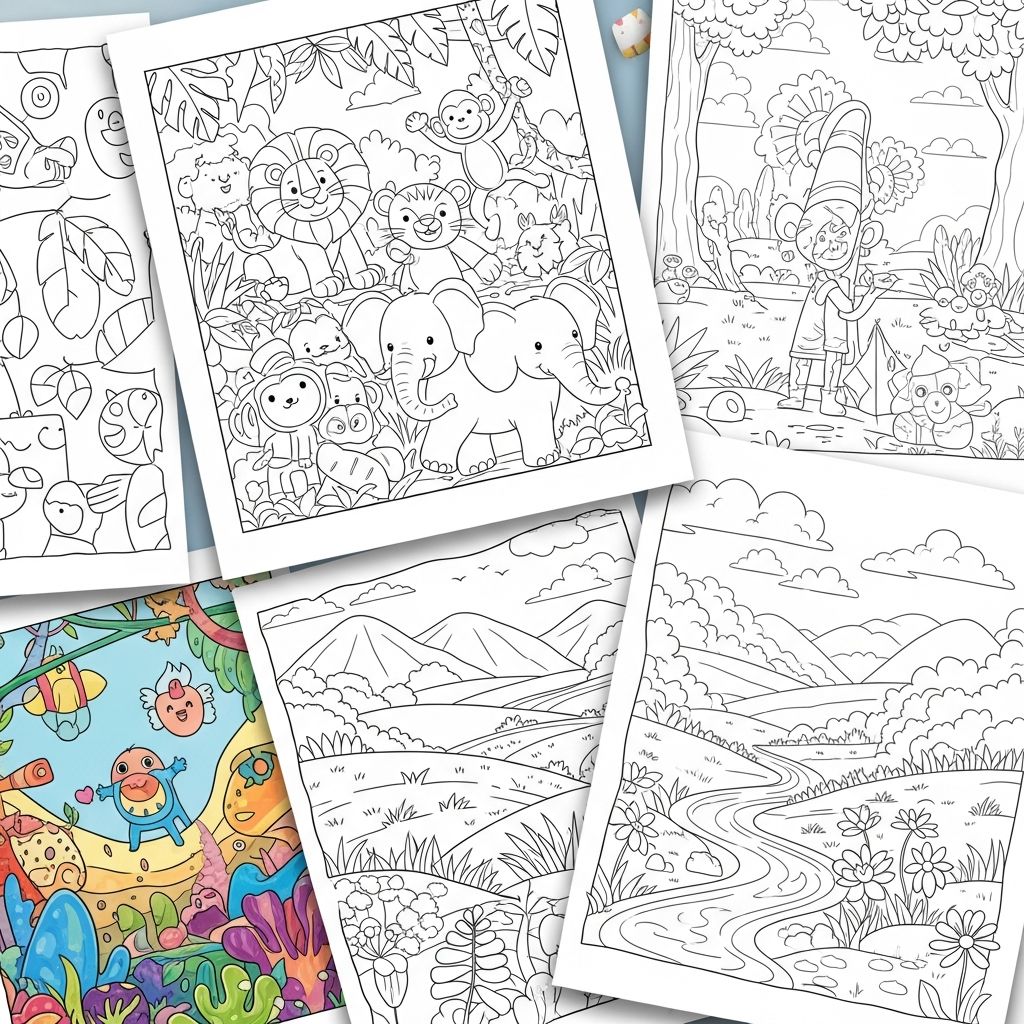
Sweet animal scenes, smiling food characters, rainbows, and magical creatures: cute coloring pages are often a child’s first gateway into art. Beyond keeping kids busy, they can nurture creativity, focus, emotional skills, and confidence when used thoughtfully. Coloring is widely recognized by educators as a simple way to support early development while children feel like they are just playing.
This guide explores how to make the most of cute coloring pages at home or in the classroom, from choosing age-appropriate designs to turning printed pictures into learning games, calm-down tools, and shared family moments.
Why Cute Coloring Pages Matter for Growing Minds
Cute designs—like baby animals, friendly monsters, or smiling planets—draw children in, making it easier to introduce skill-building activities without pressure. Research and expert guidance highlight several key benefits of coloring for young children.
| Benefit | What Kids Practice | How Cute Pages Help |
|---|---|---|
| Fine motor skills | Hand strength, pencil grip, finger control | Small details (eyes, cheeks, patterns) encourage careful, controlled coloring. |
| Focus & persistence | Staying with a task, finishing what they start | Completing a page gives a clear, visible goal and sense of accomplishment. |
| Creativity | Imagination, experimentation, risk-taking | Whimsical characters invite unusual color choices and stories. |
| Emotional regulation | Calming, self-soothing, expressing feelings | Repetitive coloring movements can reduce stress, similar to mindfulness. |
| Early learning | Colors, shapes, letters, numbers, concepts | Themes (seasons, animals, holidays) turn pages into gentle teaching tools. |
Developmental Benefits: What the Research Shows
Experts and educational organizations point to multiple ways coloring supports early development when it is offered regularly and without pressure.
1. Strengthening Little Hands and Fingers
Holding crayons or pencils, staying inside lines, and filling small spaces all build the tiny muscles needed for writing, buttoning clothes, using scissors, and tying shoes. Scholastic notes that coloring and drawing are powerful ways to improve fine motor skills as children coordinate their eyes and hands.
- Thick crayons and chunky markers are ideal for toddlers and preschoolers.
- As kids grow, thinner colored pencils help refine control for handwriting.
- Small details—stars, cheeks, stripes—challenge older kids just enough to keep them engaged.
2. Building Concentration and Task Completion
Staying with a coloring page from start to finish trains sustained attention, a skill linked with better performance in school tasks and daily routines. As pictures become more detailed, children gradually increase the time they can focus without needing constant redirection.
- Start with simple outlines for younger children to avoid frustration.
- Offer short coloring sessions and slowly lengthen them as focus improves.
- Celebrate “I finished!” moments to reinforce effort and persistence.
3. Encouraging Creativity and Imagination
Coloring gives children a low-stakes space to make choices and experiment with ideas. They can color a unicorn blue, give a kitten rainbow fur, or create patterns on a cupcake. This playful experimentation feeds creative thinking and problem-solving skills.
- Invite kids to add their own details—backgrounds, speech bubbles, accessories.
- Ask open questions such as, “What is this character’s favorite food?” or “Where are they going?”
- Encourage storytelling about the finished picture to build language and narrative skills.
4. Supporting Emotional Health and Calm
Coloring can act as a simple form of relaxation. Research on adults and children shows that coloring, especially structured designs, can reduce anxiety and bring a sense of calm similar to mindfulness exercises. The predictable, rhythmic movement of filling shapes often helps kids unwind after school or before bed.
- Offer coloring as part of a calm-down corner with soft lighting and limited noise.
- Let children choose colors that match their mood and talk about why they picked them.
- For big feelings, invite kids to “color the feeling” using scribbles or bold colors.
5. Reinforcing Learning in a Gentle Way
Coloring pages can introduce letters, numbers, shapes, animals, and everyday concepts in a low-pressure format. When a page is themed—such as farm animals, weather, emotions, or space—it becomes a visual aid that makes abstract ideas easier to understand.
- Pair an alphabet coloring page with saying the letter sound and naming objects that start with it.
- Use numbered objects (e.g., three balloons) to reinforce counting.
- Talk about science and nature while coloring plants, animals, or planets.
Choosing the Right Cute Coloring Pages by Age
Not all coloring pages suit every age. Matching the complexity and theme of pages to a child’s developmental stage keeps the activity enjoyable and confidence-building.
Toddlers (1–3 years)
At this age, scribbling is developmentally appropriate. Focus on exploration rather than neatness.
- Features to look for: very simple shapes, thick outlines, large open areas, bold cute images (smiley faces, big animals).
- Best tools: jumbo crayons, washable markers, or easy-grip pencils.
- Adult role: stay close, name colors, and model gentle strokes without taking over.
Preschoolers (3–5 years)
Preschoolers are ready for slightly more detailed pages and can begin to match colors intentionally.
- Features to look for: simple scenes, clear faces, a few separate objects (e.g., three cupcakes, a rainbow, small animals).
- Skills built: color recognition, early counting, shape identification, simple storytelling.
- Try themes: seasons, emotions (happy, sad, excited faces), family members, pets.
Early Elementary (5–8 years)
Kids in this age range can handle more intricate designs and enjoy adding their own flair.
- Features to look for: medium detail, patterned clothing, backgrounds ready to fill in.
- Skills built: sustained focus, patience, planning which parts to color first.
- Try themes: fantasy worlds, cute robots, sports scenes, favorite foods with faces.
Older Kids (8+ years)
Older children may enjoy complex, decorative, or stylized cute pages that feel less “babyish” but still playful.
- Features to look for: intricate patterns, mandala-style animal faces, detailed backgrounds.
- Skills built: stress relief, fine detail work, color planning, and design.
- Offer options that feel more grown-up, such as cute but sophisticated florals or character scenes.
Creative Ways to Use Cute Coloring Pages
Once printed, coloring pages can be transformed into many different activities that go beyond sitting at a table with crayons.
1. Story Starters and Mini-Books
Turn a single cute page into the start of a story:
- Invite your child to name the character and invent a short story about what is happening.
- Staple several colored pages together to create a mini storybook with dictated or written captions.
- Use the finished pages as prompt cards for bedtime stories or class circle-time.
2. Learning Games with Color
Use coloring to sneak in learning in a playful way.
- Ask children to “color by instruction”, such as “Color all the stars yellow and all the hearts blue” to practice color and shape recognition.
- Draw letters or numbers inside parts of the page and have kids say them aloud as they color.
- For early readers, write simple words near objects (cat, sun, hat) and read together.
3. Calm-Down and Mindfulness Moments
Coloring can become a simple mindfulness practice for children.
- Create a “peace basket” with cute pages, a small set of pencils, and a timer.
- When emotions run high, invite your child to take a “color break” instead of a traditional time-out.
- Encourage noticing: “Let’s see how many different greens we can use on this forest page.”
4. Decorations and Gifts
Giving colored pages a purpose increases motivation and pride.
- Frame favorite cute animals or characters to display in bedrooms or playrooms.
- Fold finished pages into greeting cards for relatives and friends.
- Use designs as homemade gift wrap or bookmarks.
5. Collaborative Family or Classroom Posters
Cooperative coloring projects encourage social skills and communication.
- Print or draw a large scene with many cute characters.
- Assign each person a section to color, then assemble into a big community poster.
- Talk about sharing materials, taking turns, and complimenting others’ choices.
Practical Tips for Parents and Educators
Thoughtful setup makes coloring time smoother and more rewarding for children and adults.
Setting Up a Simple Coloring Station
- Keep supplies within reach: crayons, markers, pencils, sharpeners, scrap paper.
- Use shallow containers or cups to organize colors so kids can see their options.
- Have a “ready-to-print” folder of cute pages sorted by theme or difficulty.
- Display finished work at eye level to show that their effort matters.
Encouraging Without Controlling
To keep coloring joyful and confidence-building, focus on process rather than perfection.
- Comment on effort and choices (“You worked a long time on those tiny hearts”) instead of neatness.
- Avoid correcting color choices—even if the sky is purple and the grass is orange.
- Ask children if they would like help before stepping in.
Balancing Screen Time with Hands-On Art
In a digital age, coloring offers a valuable break from screens and heavy thumb use, strengthening other hand muscles and coordination. Building a daily habit of a few minutes of coloring can create a predictable, restful routine.
- Pair coloring time with quiet music or audiobooks instead of video.
- Use coloring as a transition activity between school and homework or before bed.
- Allow children to occasionally color on tablets, but prioritize paper-based activities for motor skill development.
Frequently Asked Questions (FAQs)
At what age can my child start using coloring pages?
Most children can begin simple scribbling around 12–18 months when offered large, safe crayons and very basic shapes. At this stage, the goal is exploration, not staying in the lines.
Do coloring pages limit creativity compared with blank paper?
Both have value. Pre-drawn cute pages give structure and build specific skills like control and focus, while blank paper encourages free invention. Offering a mix of the two supports well-rounded creativity.
How long should kids spend coloring each day?
There is no strict rule, but many families find 10–30 minutes works well, depending on age and interest. It is better to stop while your child is still enjoying the activity than to push them to finish every page.
My child gets frustrated when they color outside the lines. What can I do?
Normalize mistakes by saying that lines are only guides and that everyone colors outside sometimes. Offer pages with thicker outlines, praise effort, and consider switching to less detailed images until their control improves.
Are digital coloring apps as good as printed coloring pages?
Digital coloring can be fun and convenient, but paper pages offer unique benefits for fine motor skill development, hand strength, and sensory feedback from real tools. Using both is fine, as long as children still get plenty of hands-on practice.
References
- The Benefits of Coloring and Drawing — Scholastic Parents. 2018-04-18. https://www.scholastic.com/parents/school-success/learning-toolkit-blog/benefits-coloring-and-drawing.html
- The Developmental Benefits of Coloring + FREE Coloring Pages — Yogi Beans / Yoremi Kids. 2022-03-15. https://www.yoremikids.com/news/benefits-of-coloring-pages-printable
- The Science of Coloring: Research-Backed Benefits for Child Development — Monkey Pen. 2023-06-10. https://monkeypen.com/blogs/news/research-benefits-of-coloring-for-child-development
- How Coloring Sheets Can Enhance Children’s Creativity and Learning — POSPaper. 2021-11-02. https://www.pospaper.com/blogs/news/how-coloring-sheets-can-enhance-childrens-creativity-and-learning
- How Coloring Helps Child Development — GrowFit Camp. 2020-08-05. https://growfit.camp/how-coloring-helps-child-development/
- Benefits of Coloring for Preschool Age Kids — All Saints Play. 2022-09-01. https://www.allsaintsplay.com/blog/benefits-of-coloring-for-kids
- Why Coloring is Important for Child Development — Coloring Rugs. 2023-04-12. https://coloringrugs.com/blogs/coloring/why-coloring-is-important-for-child-development