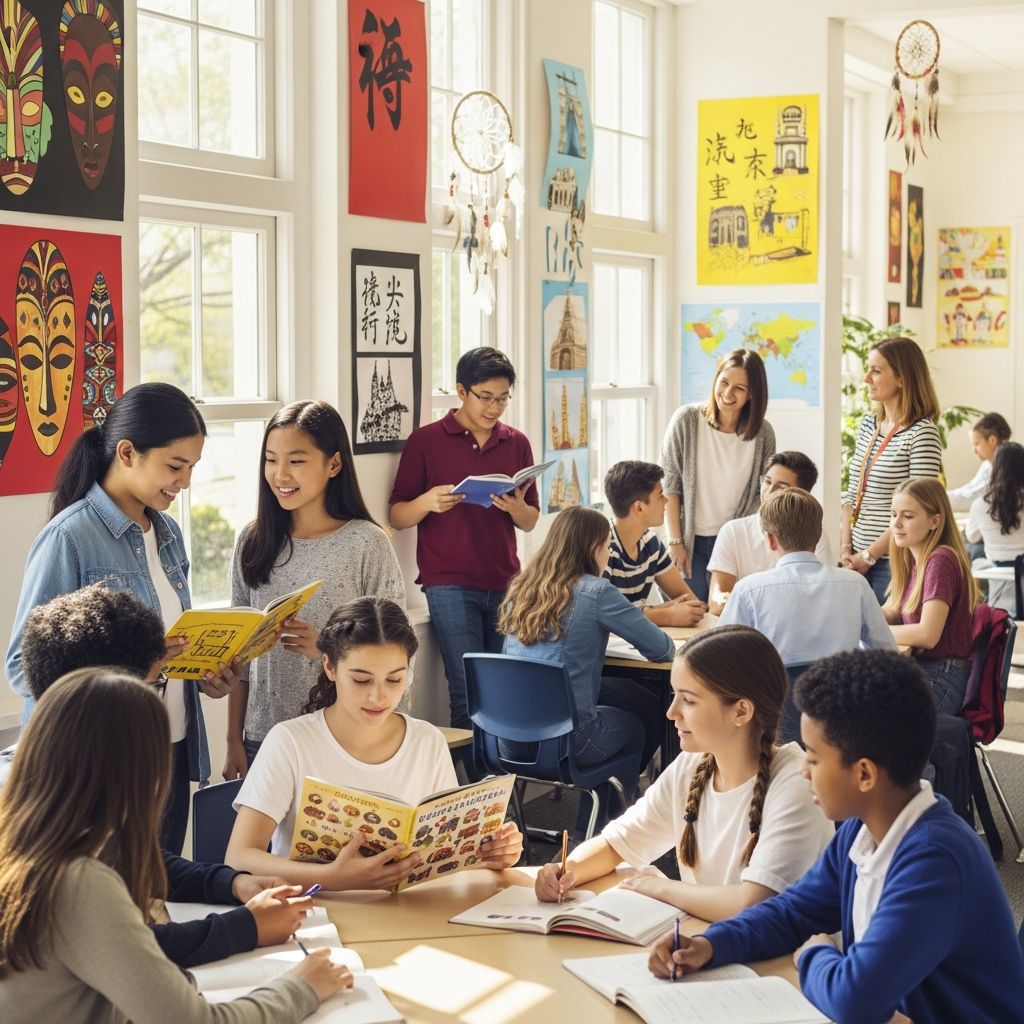
Cultural diversity awareness in schools is not a one-time lesson; it is a continuous commitment to helping students recognize, understand, and value the many cultures that shape their world. When schools embrace diversity as a strength, students learn empathy, reduce stereotypes, and build the social skills they need to thrive in a global society.
What Is Cultural Diversity Awareness?
Cultural diversity awareness is the ability to notice, understand, and appreciate the differences and similarities among people from various cultural backgrounds. It goes beyond surface-level celebrations and asks educators and students to reflect on language, values, traditions, belief systems, and lived experiences.
In schools, cultural diversity awareness means creating learning environments where every student sees their identity reflected positively and where they are encouraged to explore cultures beyond their own in respectful, thoughtful ways.
- Recognizing that every student has a cultural identity that shapes how they see the world.
- Understanding that diversity includes race, ethnicity, language, religion, family structure, ability, and more.
- Actively challenging stereotypes and biased assumptions that can harm students.
Why Cultural Diversity Matters in Education
Promoting cultural diversity awareness in schools benefits all students, not only those from minority or underrepresented backgrounds. It supports academic success, strengthens social and emotional skills, and prepares young people for a multicultural world.
- Improved sense of belonging: When students see their cultures respected, they feel safer and more engaged.
- Reduced prejudice: Exposure to accurate, respectful information about different cultures challenges stereotypes.
- Stronger critical thinking: Learning about multiple perspectives teaches students to question assumptions and analyze complex issues.
- Real-world readiness: Understanding diversity prepares students for diverse workplaces, communities, and relationships.
Key Roles in Promoting Diversity Awareness
Building cultural diversity awareness in schools is a shared responsibility. Teachers, administrators, staff, students, and families all have important roles to play. When these groups work together, diversity becomes part of the school culture rather than a once-a-year event.
| Stakeholder | Primary Responsibilities |
|---|---|
| Teachers | Integrate diverse content, use inclusive language, manage bias in the classroom, and model respect. |
| Administrators | Set policies, allocate resources, provide training, and ensure recruitment and discipline practices are equitable. |
| Support Staff | Create welcoming spaces, support inclusive events, and reinforce respectful behavior. |
| Families | Share cultural knowledge, participate in school events, and support inclusive values at home. |
| Students | Show curiosity and respect, stand up against bullying, and share their own experiences and traditions. |
Strategy 1: Make the Curriculum Culturally Responsive
One of the most powerful ways to promote cultural diversity awareness is to review the curriculum and ensure that it reflects a wide range of voices, histories, and perspectives. This goes beyond adding a single “multicultural” unit and instead weaves diversity throughout the year.
Include Multiple Perspectives in Content
Every subject offers opportunities to feature diverse contributors and viewpoints. Literature can highlight authors from different countries and backgrounds, while social studies can explore world histories, migration stories, and the impact of global interdependence.
- Use novels, picture books, and articles written by authors from varied cultural backgrounds.
- Introduce historical figures, scientists, and innovators from different regions and communities.
- Challenge single-story narratives by discussing whose voices are missing and why.
Connect Lessons to Students’ Lives
When students see connections between schoolwork and their own experiences, learning becomes more meaningful. Culturally responsive teaching encourages students to bring their home languages, traditions, and community knowledge into classroom discussions and projects.
- Invite students to share stories, objects, or traditions that relate to a unit of study.
- Offer choices in assignments so students can explore cultural topics that interest them.
- Use open-ended questions that allow for multiple cultural viewpoints.
Strategy 2: Create an Inclusive Classroom Environment
The physical environment sends strong messages about who belongs. Classrooms that visibly celebrate many cultures help normalize diversity and make students feel recognized and valued. This includes the images on the walls, the books in the library corner, and even the labels and languages used.
Use the Room as a “Mirror and Window”
Students should see themselves reflected in the environment (mirror) and also have chances to look into other cultures and experiences (window). Visuals and materials can be chosen intentionally to create both effects.
- Display posters and artwork that represent a range of races, languages, family types, and abilities.
- Build a classroom library that includes characters from many cultures in everyday stories, not only in “issue” books.
- Incorporate multiple languages in labels, greetings, and classroom routines when appropriate.
Set Clear Norms for Respect
An inclusive environment depends on shared expectations. Establish and practice norms that emphasize respect, listening, and curiosity rather than judgment. These norms should be revisited regularly and co-created with students when possible.
- Post class agreements about how to talk about differences and disagreements.
- Teach and model how to ask respectful questions about unfamiliar customs or beliefs.
- Address biased comments, stereotypes, and teasing immediately and use them as teachable moments.
Strategy 3: Celebrate Cultures Thoughtfully and Respectfully
Celebrating cultural events, holidays, and traditions can be a fun and engaging way to promote diversity awareness, but it must be done carefully. The goal is to honor cultures in meaningful ways rather than reducing them to costumes, food, or stereotypes.
Plan Inclusive Cultural Events
Whole-school events and classroom projects can highlight cultural diversity throughout the year. Rather than focusing only on widely recognized holidays, schools can invite families and community members to share celebrations that matter to them.
- Host multicultural nights where families share stories, music, and traditions.
- Invite guest speakers or cultural organizations to lead workshops, performances, or demonstrations.
- Rotate featured cultures across the year so no group is treated as an “exotic” exception.
Avoid Stereotypes and Tokenism
It is important to avoid presenting any culture as if it were a single, unchanging way of life. Students should understand that cultures are diverse inside themselves and that people within the same group may live, dress, worship, and speak differently.
- Present multiple examples and stories from within each culture.
- Explain that traditions can vary by region, family, generation, and personal preference.
- Ask students to reflect on and challenge media stereotypes about different groups.
Strategy 4: Teach Skills for Respectful Dialogue
Cultural diversity awareness is not only about information; it is also about skills. Students need guided practice in how to talk about identity, bias, and difference in ways that are honest but respectful. These communication skills also support conflict resolution and collaboration more broadly.
Model and Practice Empathy
Empathy helps students consider how their words and actions affect others. Classroom activities can guide students to listen deeply and imagine experiences that are different from their own without assuming they completely understand.
- Use role plays and scenarios to explore how it feels to be excluded or stereotyped.
- Teach sentence starters such as “I wonder…”, “I notice…”, and “I feel…” to support thoughtful conversations.
- Encourage reflective journaling after discussions on identity, fairness, or current events.
Address Bias and Bullying Directly
Students need to see that the school takes discrimination seriously. Clear policies, consistent responses, and restorative practices communicate that biased language and actions are not acceptable and that everyone has a role in creating a safe environment.
- Teach students how to be upstanders by safely challenging hurtful comments or seeking adult help.
- Discuss real-world examples of bias in age-appropriate ways to build awareness.
- Use restorative circles or conferences to repair harm when incidents occur.
Strategy 5: Partner With Families and the Community
Families and community members are powerful partners in promoting cultural diversity awareness. They bring lived experiences, languages, and traditions that cannot be found in textbooks alone. Genuine partnerships help ensure that school practices are respectful and relevant.
Invite Families to Share Their Expertise
Inviting families to participate as co-educators helps students see their communities as sources of knowledge and pride. This participation can happen in many formats, both in person and virtually.
- Invite caregivers to speak about cultural traditions, careers, or migration stories.
- Ask families to contribute songs, recipes, or folktales for classroom projects.
- Offer flexible ways to participate so families with different schedules and languages can contribute.
Build Ongoing Community Connections
Schools can strengthen cultural awareness by connecting with local organizations, cultural centers, and advocacy groups. These partnerships can support field trips, student projects, and professional learning for staff.
- Collaborate with community centers, museums, or cultural associations for events and lessons.
- Highlight local role models from diverse backgrounds in career days or mentorship programs.
- Seek feedback from community partners on how the school can better serve diverse students.
Ongoing Reflection and Professional Development
Promoting cultural diversity awareness requires educators to reflect on their own identities, assumptions, and practices. Ongoing professional development helps staff recognize unconscious bias, understand systemic inequities, and learn new strategies for inclusive teaching.
- Encourage staff to participate in workshops on cultural competency, anti-bias education, and inclusive pedagogy.
- Create spaces for educators to discuss challenges, share resources, and support each other.
- Review school policies through an equity lens, examining discipline, grading, and placement practices.
Measuring Progress in Diversity Awareness
To know whether efforts are working, schools can look for signs of growth in both climate and outcomes. Data, surveys, and student feedback help leaders adjust strategies and celebrate progress.
| Area | Examples of Evidence |
|---|---|
| Student Experience | Survey results on belonging, respect, and safety; focus group comments about classroom climate. |
| Curriculum & Instruction | Lesson plans showing diverse materials; observations of inclusive teaching practices. |
| School Climate | Reduction in bias-based incidents; restorative practices used to address conflicts. |
| Family Engagement | Increased participation in events; diversity of families represented in advisory groups. |
FAQs on Cultural Diversity Awareness in Schools
How early should schools start teaching cultural diversity awareness?
Schools can begin introducing cultural diversity concepts in early childhood settings using simple, age-appropriate activities. Young children naturally notice differences, and guided conversation helps them learn that differences are normal, interesting, and worthy of respect.
What if a teacher feels unprepared to lead discussions about culture?
Teachers do not need to be experts in every culture to start this work. It is enough to be open, willing to learn, and committed to treating all cultures with respect. Seeking training, collaborating with colleagues, and inviting family or community voices can all support teachers in building confidence.
Can focusing on diversity cause division among students?
When handled thoughtfully, diversity education reduces division rather than creating it. The key is to emphasize shared human experiences, mutual respect, and the idea that multiple truths and perspectives can exist at the same time.
How can schools avoid turning cultural awareness into a one-day event?
Instead of isolating diversity into a single project or heritage month, schools can weave it into daily lessons, classroom routines, and ongoing traditions. Regular reflection on curriculum, environment, and school policies helps keep the focus active all year.
What are simple first steps for schools just getting started?
Schools can begin by examining classroom materials, adding more diverse books and visuals, and creating clear norms around respect and inclusion. From there, forming a small diversity team, surveying students and families, and planning a few well-designed events can build momentum.
Promoting cultural diversity awareness in schools is an evolving process rather than a finished project. By committing to inclusive curriculum, respectful dialogue, supportive environments, and strong partnerships with families and communities, schools can help every student feel seen, heard, and valued.