Children’s artwork floods homes with color, imagination, and pride, but managing the volume can challenge any space. Thoughtfully displaying these treasures not only honors young artists but also infuses living areas with personality and warmth. This guide explores innovative, budget-friendly strategies to exhibit, rotate, and preserve kids’ creations without overwhelming your decor.
Why Showcasing Kids’ Art Matters
Displaying children’s art boosts their confidence and encourages ongoing creativity. It turns everyday walls into dynamic galleries that evolve with family life. Parents often struggle with clutter, yet simple systems allow seamless rotation of pieces, ensuring fresh displays while archiving favorites. These methods blend functionality with aesthetics, making art a central feature of home design.
Wall-Based Display Innovations
Transform blank walls into interactive showcases using versatile materials and hardware.
- Chalkboard Accent Walls: Paint a section blackboard paint for erasable drawings. Kids sketch directly, creating ever-changing exhibits that require no paper or storage. Ideal for playrooms or kitchens, this low-maintenance option sparks daily inspiration.
- Washi Tape Galleries: Use colorful adhesive tapes to outline frames on walls. Secure artwork inside with removable hooks or tape. This playful, non-permanent method suits renters and allows geometric patterns or eclectic clusters.
- Pegboard Panels: Install customizable pegboards painted in soft hues. Hang clips, hooks, or shelves to support paper art, sculptures, or mixed media. Versatile for any room, it organizes tools alongside creations.
Framing and Gallery Techniques
Elevate simple drawings to museum quality with professional presentation.
| Method | Best For | Pros | Cons |
|---|---|---|---|
| Multi-Opening Frames | Multiple small pieces | Space-saving, cohesive look | Fixed layout |
| Clipboards on Walls | Rotating larger works | Easy swaps, inexpensive | Requires wall space |
| Floating Shelves | 3D art and framed items | Displays variety, adds depth | Dust collection |
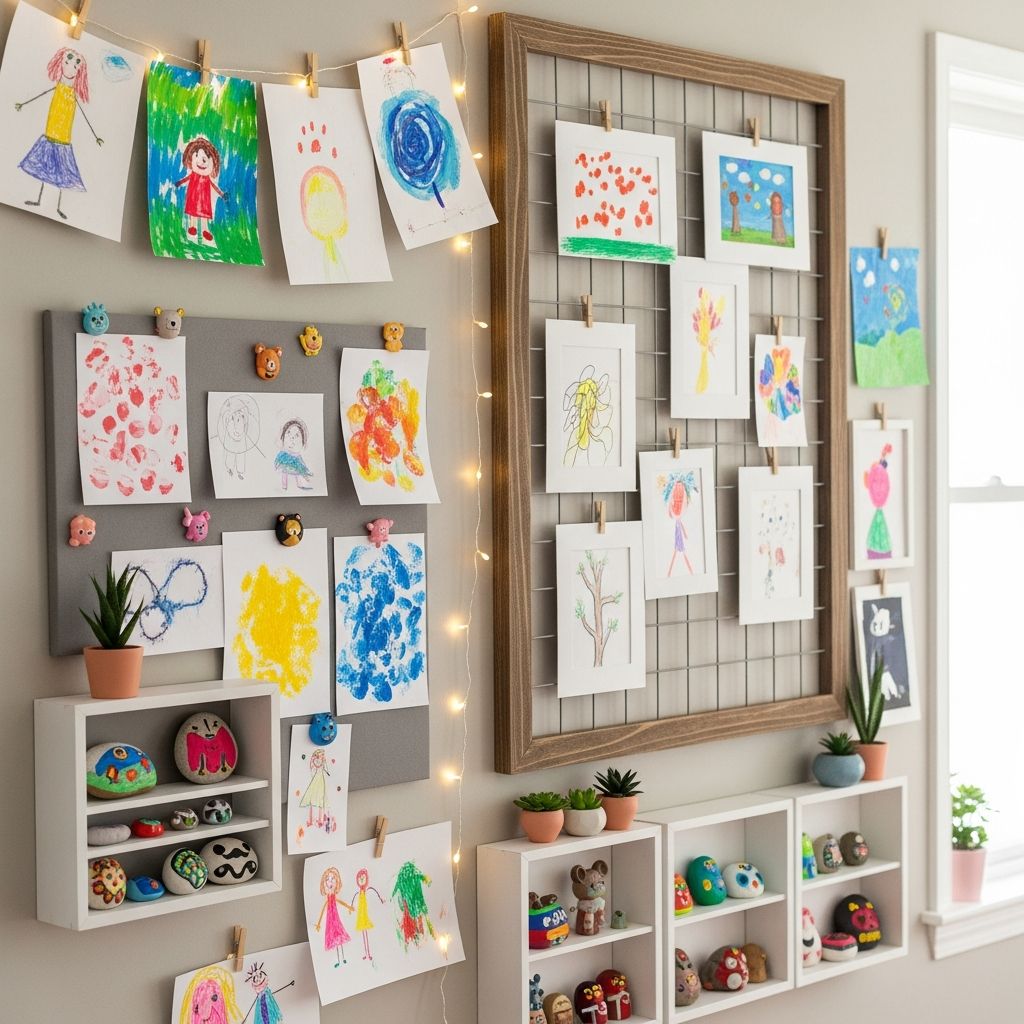
Gallery walls using hinged deep-set frames hold dozens of pieces behind glass, protecting them while allowing quick updates. Lean unframed sketches in thrifted frames against walls for casual charm in bedrooms or entryways.
Functional and Multi-Use Displays
Incorporate art into daily life for practical beauty.
- Wire and Clip Systems: Stretch tension wires across walls with alligator clips. This sleek setup, inspired by gallery designs, keeps floors clear and suits modern interiors. Affordable rods from home stores make it accessible.
- Clothes Hanger Hooks: Repurpose wooden pant hangers with built-in clips. Suspend one or cluster several for a whimsical mobile effect. Perfect for nurseries or laundry rooms.
- Book Cover Wraps: Wrap journals or binders in large painted paper rolls. These functional desk accessories double as art displays, adding whimsy to offices or studies.
Three-Dimensional and Crafty Showcases
Go beyond paper with dedicated spots for sculptures and prints.
Stack books on mantels to elevate clay figures or handprints. Use plate hangers for ceramic pieces on walls. For holidays, decoupage small artworks onto wooden ornaments, creating heirloom gifts for relatives.
Digital and Archival Solutions
When walls fill up, shift to tech-savvy preservation.
- Custom Coffee Table Books: Scan artworks and compile into professional volumes via print services. Include dates and ages for nostalgic flips through creative milestones. Opt for large formats to mimic art catalogs.
- Digital Frames and Apps: Load e-frames with scanned images for slideshows. Cloud storage apps organize thousands of files, searchable by child or theme.
- Custom Wallpaper: Mosaic favorite pieces into panoramic wall coverings. Professional services print durable, washable designs for immersive room features.
Room-Specific Display Strategies
Tailor setups to each space’s vibe and function.
Kitchen and Mudroom: Magnetic strips or fridge galleries with poster-backed clusters rotate weekly favorites.
Bedrooms: Framed watercolors or leaning sketches personalize rest areas.
Bathrooms: Laminated placemats from art double as table protectors; small frames on shelves add cheer.
Living Rooms: String lines with mini pegs create subtle, changeable vignettes.
DIY Projects to Try Today
Engage kids in building their displays for double the fun.
- Painted Frames: Source old frames, let children decorate with paints or collage. Hang as a family achievement.
- Shower Curtain Kits: Attach clear pockets to vinyl curtains for waterproof, swapable art in utility spaces.
- Collage Boards: Glue mixed media onto corkboards, framing the chaos into cohesive panels.
Frequently Asked Questions (FAQs)
What are the easiest ways to display kids’ artwork without damaging walls?
Use washi tape, clipboards, or tension wires for renter-friendly, removable options that protect surfaces.
How do I rotate artwork without hurting my child’s feelings?
Implement a ‘featured wall’ system with weekly spotlights, photographing discards for digital albums to preserve memories.
What’s the best way to store excess kids’ art?
Scan and digitize, then use archival boxes or custom books. Limit physical keepers to 20 top pieces per year.
Can I turn kids’ art into wearable items?
Yes, upload scans to custom print sites for T-shirts, tote bags, or mugs, creating fun family apparel.
How do I display 3D kids’ crafts stylishly?
Employ plate hangers, floating shelves, or bell jars to spotlight sculptures like pros.
Benefits of Rotating Displays
Regular curation prevents overload, motivates new work, and lets each piece shine briefly. Involve kids in selections to teach decision-making and value art’s lifecycle. Over time, this habit fosters appreciation for creativity in your family dynamic.
These strategies ensure every scribble finds a spotlight, blending chaos into charm. Start small—pick one idea and expand as confidence grows. Your home becomes a living portfolio of joy and growth.
References
- Child Development and Creative Expression — American Academy of Pediatrics. 2023-05-15. https://publications.aap.org/pediatrics/article/151/5/e2022058172/190000/Arts-Exposure-and-Child-Development
- The Role of Art in Child Emotional Development — Harvard Graduate School of Education. 2024-02-10. https://www.gse.harvard.edu/ideas/usable-knowledge/24/02/art-child-development
- Creative Play and Cognitive Growth — National Institute of Child Health and Human Development. 2022-11-08. https://www.nichd.nih.gov/publications/pubs/documents/creativity_play_2022.pdf
- Home Environment and Child Creativity — Journal of Environmental Psychology (Peer-reviewed). 2023-07-20. https://doi.org/10.1016/j.jenvp.2023.102145