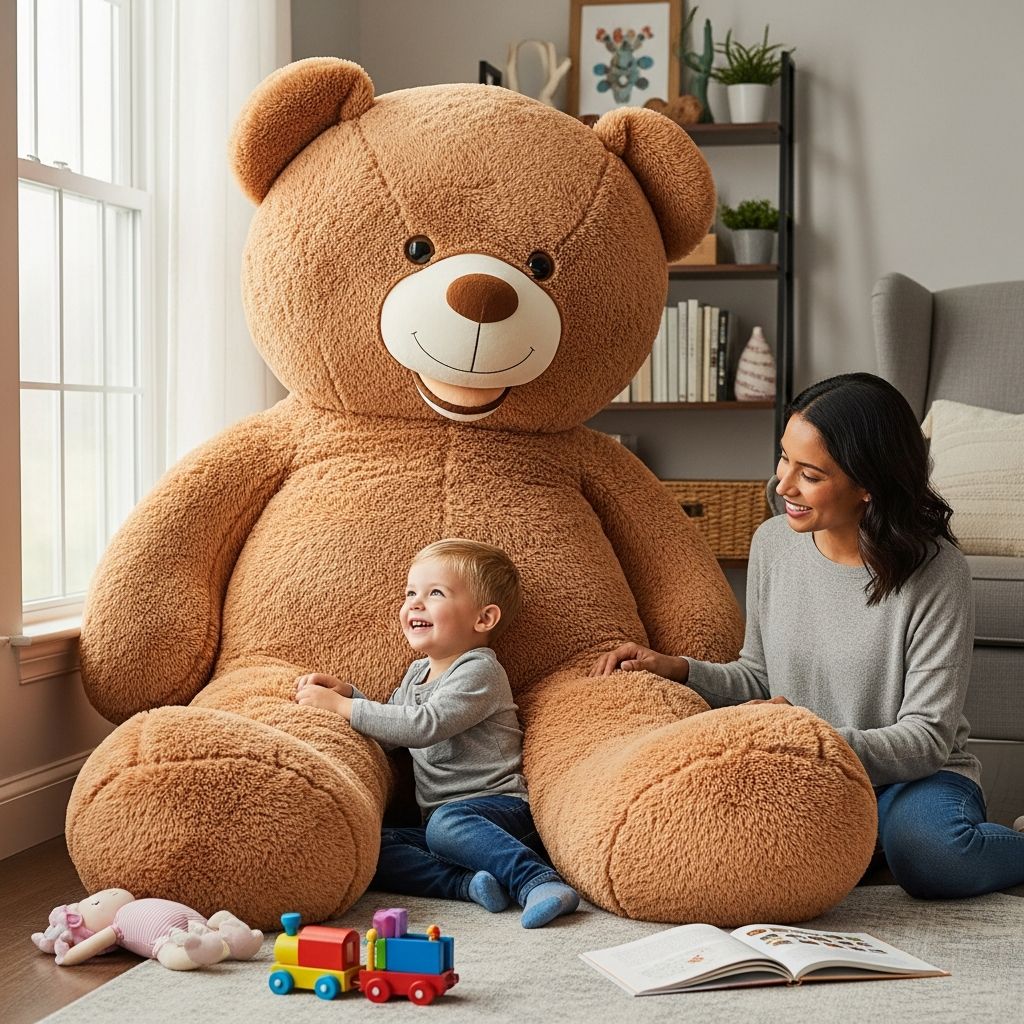
The return of Costco’s enormous teddy bear has once again filled social feeds with photos of kids disappearing into mountains of plush fur and parents trying to wedge the bear into their cars and living rooms.
Beyond the laughs, this outsize toy has become a surprisingly useful lens on modern parenting, kids’ emotional needs, and how families really live with the things they buy.
The Mega Plush Phenomenon
Oversized toys are not new, but few products have captured family attention like the warehouse-club teddy that’s taller than most adults and dramatically cheaper than similar novelty bears from specialty shops.
Its sheer size makes it more than a toy: it’s a prop for photos, a piece of temporary furniture, and a conversation starter about what parents are willing to do to light up their kids’ faces.
Why Children Gravitate to Giant Bears
- Visual impact: Kids are instantly drawn to objects that dominate their field of view, and a bear that’s bigger than they are feels magical and slightly unreal.
- Sensory comfort: Deep pressure and full-body hugs from soft objects can feel calming for many children, especially those who crave extra sensory input.
- Imaginative scale: An object this large turns a bedroom into a stage; the bear can be a guardian, a mountain, a spaceship passenger, or a character in endless pretend games.
What This Bear Says About Modern Parenting
The excitement around the giant bear often reflects parents’ desire to create intense, memorable moments in childhood, especially in a culture where experiences and “wow” purchases are widely shared online.
At the same time, it reveals common tensions: wanting to delight children without encouraging clutter, overspending, or unrealistic expectations for constant mega-surprises.
Emotional Payoff vs. Practical Reality
| Aspect | Emotional Upside | Practical Challenge |
|---|---|---|
| First impression | Huge joy, laughter, and a sense of wonder when kids first see and climb onto the bear. | Transporting it home can be awkward, and some cars simply cannot fit it safely. |
| Daily life | Can become a cozy reading spot or cuddle corner parents share with their children. | Takes up serious floor space and can make small rooms feel cramped or messy. |
| Long-term use | May serve as a comforting constant through moves, milestones, and tough days. | As kids grow, interest can fade, leaving parents responsible for donating, storing, or discarding a very large item. |
The Psychology of Oversized Comfort Objects
Psychologists often describe beloved stuffed toys, blankets, or dolls as “transitional objects” that help kids feel safe when parents are not right next to them, especially at bedtime.
A huge teddy bear can amplify this effect by feeling like a full-body shield, which can be particularly helpful for children who experience nighttime fears or separation anxiety.
How a Giant Bear Can Support Development
- Emotional regulation: Hugging something large and soft can give children a way to work through feelings, from sadness to excitement, in a nonverbal, embodied way.
- Social practice: Kids often talk to stuffed toys, rehearse conversations, and act out conflicts, which helps them process social situations from school or siblings.
- Role-playing empathy: Caring for a “huge friend” – feeding it pretend meals, tucking it into bed – lets kids practice nurturing behaviors they see from adults.
Space, Money, and Sustainability
Even parents who love the idea of a giant bear often pause when they imagine where it will live after the novelty wears off.
The toy’s popularity also raises questions about responsible consumption, from the materials used to make it to what happens when a family no longer has room for an object that can’t just be tossed in a donation bag.
Questions to Ask Before Buying
- Do we have a specific spot for it, or will it float around the house and become a tripping hazard?
- Is this purchase crowding out other experiences or essentials we value more, such as outings, books, or activities?
- Do we have a plan for cleaning, maintaining, and eventually re-homing or recycling it responsibly?
Making a Giant Bear Work for Your Home
Families who do make room for the mega plush often find it becomes less of a toy and more of a flexible piece of kid-friendly furniture.
With a little planning and some rules, the bear can turn into a long-term asset rather than a short-lived impulse buy.
Creative Uses That Add Value
- Reading nook anchor: Place the bear in a corner with a small bookshelf and lamp to create a dedicated reading zone where kids sit in its lap or lean against its belly with a book.
- Calm-down corner: In a quiet space, pair the bear with soft lighting, a few sensory tools, and headphones so children have a place to decompress when overwhelmed.
- Sleepover star: During sleepovers or cousin visits, the bear can serve as an extra “seat,” a movie-night lounge, or a playful barrier in room setups.
Safety, Hygiene, and House Rules
A toy this big interacts with your home differently than a typical stuffed animal, which makes some proactive safety and cleaning strategies important.
Parents who set expectations early tend to avoid the most common frustrations, like kids jumping from furniture onto the bear or using it as a hiding spot for snacks and small objects.
Practical Guidelines to Consider
- Placement matters: Keep the bear away from stairwells, doors that need to fully open, and areas where adults walk at night to reduce tripping risks.
- No launching pad: Make it clear that the bear is for hugging and sitting, not for jumping off furniture, which could still cause injuries even with a soft landing.
- Cleaning routine: Schedule regular vacuuming, spot cleaning, or steam cleaning to minimize dust and allergens, especially if anyone in the house has asthma or allergies.
When a Giant Bear Helps – and When It Doesn’t
For some families, the bear becomes a beloved part of daily life and a symbol of a particular season in childhood; for others, it turns into visual clutter that adds stress instead of easing it.
The key is to match the decision to your family’s temperament, home size, and current priorities rather than the pressure of a limited-time deal or viral trend.
Signals It Might Be a Good Fit
- Your child consistently uses plush toys for comfort and imaginative play, not just as decorations.
- You have a clear plan for where it will sit and how it will be used (reading corner, playroom, basement lounge).
- You feel excited, not anxious, when you imagine seeing it in your space every day.
Signals It Might Not Be the Right Time
- Your home already feels crowded, and adding a bear would force you to move or remove key furniture.
- Your child quickly loses interest in large, visually striking toys after a day or two.
- You are trying to reduce consumption, emphasize experiences, or live more minimally.
Turning the Hype Into a Teaching Moment
The buzz around the giant bear can also become a low-stakes way to teach kids about decision-making, budgeting, and patience.
Instead of an automatic “yes” or “no,” some parents use the bear as a prompt for ongoing conversations about wants, needs, and long-term thinking.
Ideas for Thoughtful Conversations With Kids
- Talk together about where the bear would live and what it might replace, such as another toy or some floor space used for building blocks.
- Agree on a waiting period, such as a few weeks, to see whether the desire for the bear lasts or fades.
- Explore the idea of donating older toys to make space, helping children see that every new object has a “cost” in room and attention.
Alternatives for Small Spaces or Smaller Budgets
Families who love the idea of a cozy, larger-than-usual cuddly toy but cannot justify the full warehouse-sized version still have options.
Scaled-down bears, beanbag chairs, or foam loungers covered in washable fabric can offer similar comfort and imaginative possibilities in a more manageable footprint.
Comfort-Focused Options to Consider
- A medium-sized bear that still feels big to a child but doesn’t overwhelm a bedroom.
- A high-quality beanbag or floor cushion that doubles as seating for adults and kids.
- A thick, plush blanket and pillow set that can be stored away when not in use.
Frequently Asked Questions
Is the giant teddy bear worth the space it takes up?
It depends on how your child plays and how much room you have; families who intentionally use it as a reading spot or calm-down corner often feel the footprint is justified.
If your home is already tight on space, the bear may quickly shift from delight to daily frustration, so measuring and planning its location in advance is crucial.
How long do kids usually stay interested in such a big toy?
Most children are thrilled at first, and interest typically stabilizes into periodic use as a backdrop for play, a lounging spot, or a cuddle companion.
Engagement tends to last longer when parents intentionally weave the bear into routines like story time, bedtime, or weekend movie nights.
What’s the best way to clean a giant teddy bear?
Manufacturers usually recommend regular vacuuming with an upholstery attachment, prompt spot cleaning of stains, and occasional deeper cleaning using steam or gentle surface products.
Establishing rules about no food, markers, or outdoor shoes on the bear can significantly reduce the need for intensive cleaning sessions.
Can a giant bear actually help with anxiety or sleep issues?
For some children, the physical presence and deep pressure of a large cuddly object can feel soothing and make it easier to wind down at night, especially alongside a consistent bedtime routine.
However, it works best as part of broader emotional support rather than a stand-alone solution, and parents should consult a pediatrician if anxiety or sleep problems are ongoing.
What should we do when our child outgrows the bear?
Many families choose to donate gently used bears to community centers, schools, or organizations that accept large toys, ensuring it continues to bring comfort and fun.
Others repurpose the bear as seating in a playroom or reading area, keeping it as a nostalgic piece that still serves a functional role in the home.
Bringing the Bear Home – Or Not
The return of the giant Costco teddy bear taps into something deeper than a seasonal sale: it reminds parents how powerful it can be to say yes to moments of joy, while also challenging them to think clearly about what fits their real lives.
Whether you ultimately decide to welcome this mega plush into your home or simply enjoy it from afar, the conversation it sparks about comfort, connection, and intentional consumption can be valuable all on its own.