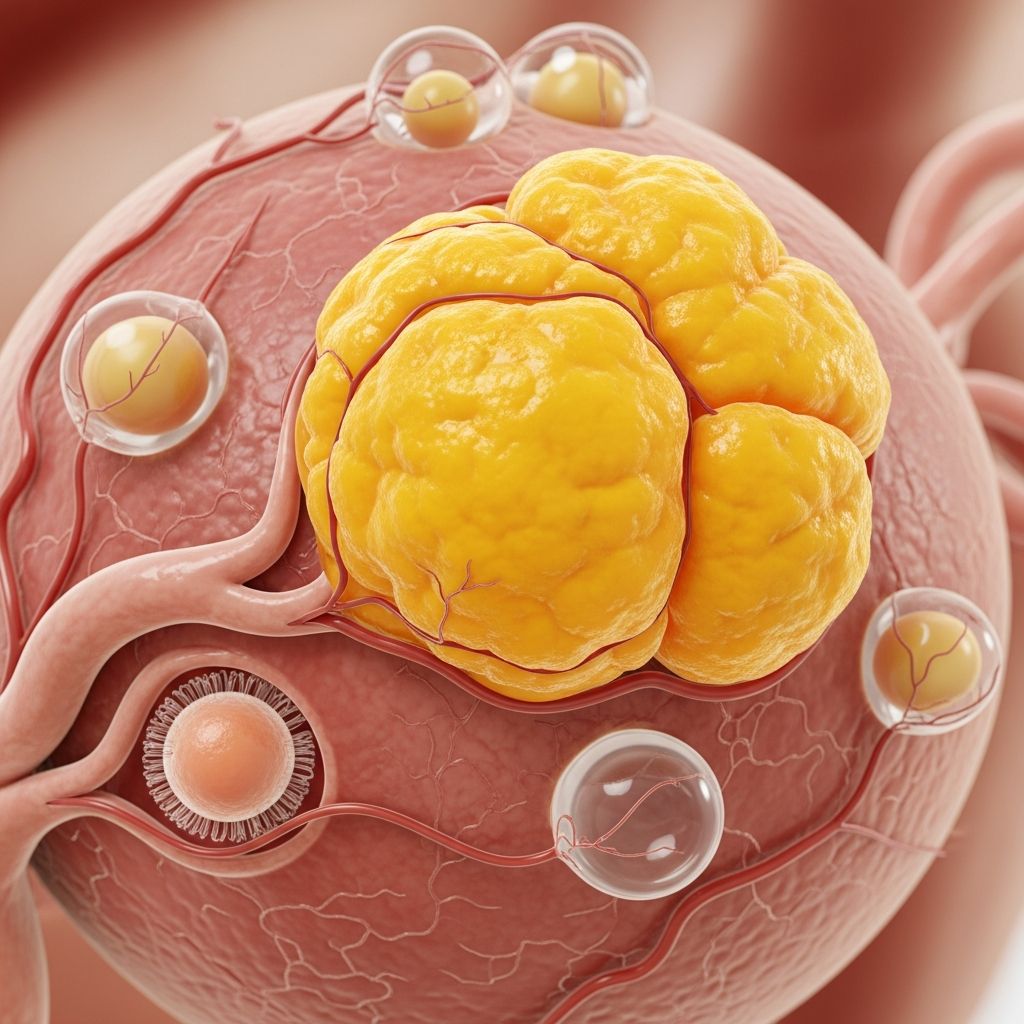
The corpus luteum stands as a remarkable temporary endocrine gland in the ovary, emerging right after ovulation to orchestrate critical hormonal changes that bridge the gap between conception and sustained pregnancy. This structure ensures the uterine environment is primed for implantation and growth by secreting progesterone, a hormone indispensable for reproductive health.
Understanding Ovarian Dynamics and Corpus Luteum Origin
In the intricate dance of the menstrual cycle, the ovaries host multiple follicles, each nurturing an immature egg during the follicular phase. A surge in luteinizing hormone (LH) from the pituitary gland triggers ovulation, where the dominant follicle ruptures, expelling the egg into the fallopian tube for potential fertilization. The leftover follicular cells transform rapidly, undergoing proliferation, vascularization, and maturation to form the corpus luteum—a vibrant, yellowish mass rich in lutein pigments.
This transformation is not instantaneous; it progresses through distinct stages. Initially, a corpus hemorrhagicum appears due to post-rupture bleeding, evolving into the fully functional corpus luteum within days. Its development coincides with heightened expression of enzymes like P450scc, which convert cholesterol into pregnenolone and subsequently progesterone, fueling its endocrine prowess. Without this shift, the reproductive cycle could not support early embryonic development.
Hormonal Symphony: Progesterone and Beyond
The corpus luteum’s primary mission is progesterone production, peaking in the luteal phase to thicken the endometrium, promote vascularization, and inhibit uterine contractions that might dislodge a potential embryo. This hormone also suppresses further ovulation by curbing gonadotropin-releasing hormone (GnRH), LH, and follicle-stimulating hormone (FSH) release.
Complementing progesterone, the corpus luteum secretes moderate estrogen levels and, during pregnancy, relaxin. Relaxin softens pelvic ligaments and inhibits contractions, facilitating implantation and later delivery. These hormones collectively create a nurturing uterine bed, essential if fertilization occurs.
- Progesterone: Prepares endometrium for implantation, maintains pregnancy.
- Estrogen: Supports endometrial growth, inhibits gonadotropins.
- Relaxin: Relaxes uterine muscles, aids pelvic preparation.
Luteal Phase: The Critical 14-Day Window
Spanning about 14 days post-ovulation, the luteal phase hinges on the corpus luteum’s vitality. Progesterone levels rise sharply, transforming the uterine lining into a nutrient-rich, vascular haven. If no pregnancy ensues, declining LH triggers regression: the structure shrinks, progesterone plummets, and menstruation follows as the endometrium sheds.
In pregnancy, human chorionic gonadotropin (hCG) from the implanting embryo rescues the corpus luteum, dubbing it the corpus luteum graviditatis. It persists for 8-10 weeks until the placenta assumes progesterone production. This handover is pivotal; premature luteal demise risks miscarriage.
| Phase | Duration | Key Events | Corpus Luteum Role |
|---|---|---|---|
| Follicular | ~14 days | Follicle growth, estrogen rise | Not yet formed |
| Ovulatory | 1-2 days | LH surge, egg release | Forms from ruptured follicle |
| Luteal | ~14 days | Progesterone peak, endometrium prep | Hormone secretion, pregnancy support |
| Menstrual | 3-7 days | Shedding if no pregnancy | Regresses to corpus albicans |
What Occurs Without Fertilization?
This programmed obsolescence sustains menstrual rhythmicity, preventing perpetual luteal dominance. In non-pregnant cycles, its brief lifespan underscores nature’s efficiency in reproductive timing.
Supporting Conception: The Pregnancy Lifeline
Upon fertilization, the zygote journeys to the uterus, implanting around day 6-10 post-ovulation. hCG sustains the corpus luteum, ensuring progesterone flows until placental sufficiency. This early support averts immune rejection and nourishes the embryo via decidualized endometrium.
Deficient luteal function correlates with infertility; supplemental progesterone bolsters outcomes in assisted reproduction. The corpus luteum’s endurance marks pregnancy’s first endocrine milestone.
Potential Complications: Cysts and Insufficiency
While typically benign, the corpus luteum can form cysts from hemorrhage or fluid accumulation, often resolving spontaneously but sometimes causing pelvic pain or bleeding. Larger cysts (>3cm) may rupture, necessitating monitoring.
Luteal phase defect—insufficient progesterone—impairs implantation, mimicking short luteal phases or low hormone levels. Symptoms include spotting or irregular cycles; treatments involve progesterone therapy. Ectopic pregnancies heighten cyst risks.
- Persistent corpus luteum cyst: May indicate ongoing hormone production.
- Hemorrhagic cyst: Blood-filled, usually self-resolves.
- Luteal phase defect: Progesterone supplementation often prescribed.
Diagnostic Approaches and Clinical Relevance
Ultrasound visualizes the corpus luteum as a 1-3cm vascular structure post-ovulation. Blood tests measure progesterone (>10 ng/mL confirms ovulation) and hCG for pregnancy viability. In fertility evaluations, luteal phase biopsies historically assessed endometrial receptivity, though less common now.
For IVF, monitoring ensures luteal support, as gonadotropins suppress natural production. Awareness empowers proactive reproductive health management.
Everyday Implications for Reproductive Wellness
Tracking basal body temperature or ovulation kits reveals luteal phase adequacy, aiding conception timing. Lifestyle factors—stress reduction, balanced nutrition, avoiding smoking—optimize corpus luteum function. Consult healthcare providers for persistent irregularities.
In summary, the corpus luteum exemplifies reproductive precision, its transient existence pivotal from cycle regulation to embryonic safeguarding. (Word count: 1628)
Frequently Asked Questions
What exactly is the corpus luteum?
A temporary glandular structure in the ovary that forms post-ovulation, producing progesterone to support the uterine lining.
How long does the corpus luteum last?
About 14 days in non-pregnant cycles; up to 10 weeks in pregnancy until placental takeover.
Can a corpus luteum cyst harm pregnancy?
Most resolve harmlessly, but monitoring is advised if symptomatic.
What if the corpus luteum fails early?
It may cause luteal phase defect, leading to infertility or miscarriage; progesterone supplements help.
Does the corpus luteum produce estrogen too?
Yes, alongside progesterone and relaxin, aiding uterine preparation.
References
- What is the corpus luteum? — Instituto Bernabeu. 2023. https://www.institutobernabeu.com/en/blog/what-is-the-corpus-luteum/
- Corpus Luteum: Anatomy, Functions, and More — WebMD. 2024-01-15. https://www.webmd.com/women/what-is-corpus-luteum
- Corpus luteum — Wikipedia. 2025-12-01. https://en.wikipedia.org/wiki/Corpus_luteum
- Corpus Luteum: Development, Anatomy & Function — Cleveland Clinic. 2024-05-20. https://my.clevelandclinic.org/health/body/21849-corpus-luteum
- Corpus luteum: Function, formation, and cysts — Medical News Today. 2023-11-10. https://www.medicalnewstoday.com/articles/320433
- The Menstrual Cycle — UCSF Health. 2024. https://www.ucsfhealth.org/education/the-menstrual-cycle
- Corpus luteum: location and function — Kenhub. 2024-09-05. https://www.kenhub.com/en/library/anatomy/corpus-luteum
- Form and function of the corpus luteum during the human menstrual cycle — Ultrasound in Obstetrics & Gynecology. 2013-10-01. https://obgyn.onlinelibrary.wiley.com/doi/full/10.1002/uog.1891