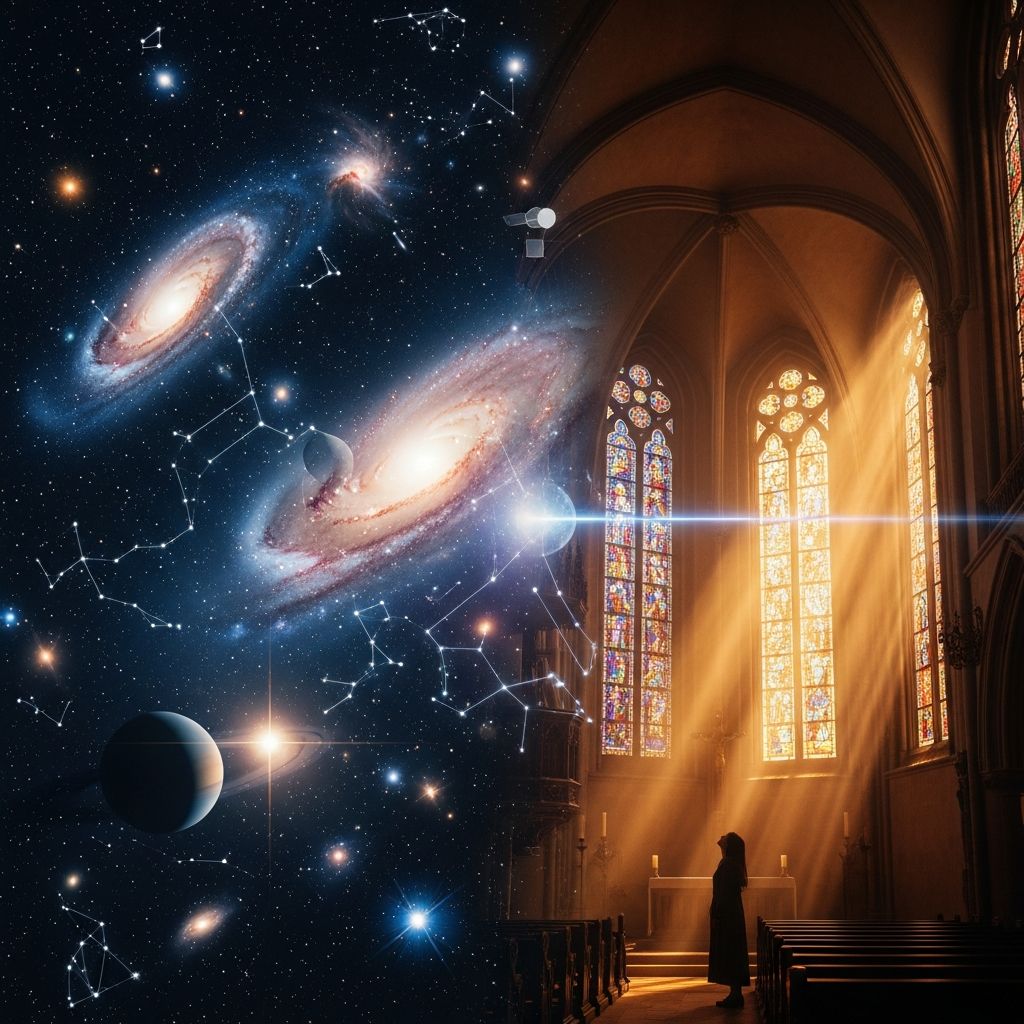
In 1997, audiences watched a scientist sit in front of a radio telescope, listening for a whisper from the stars. That film, Contact, adapted from Carl Sagan’s novel and directed by Robert Zemeckis, became one of the most thoughtful science fiction movies ever released. Decades later, its exploration of belief, evidence, and human connection still feels startlingly current.
This article revisits Contact through a fresh lens: not as nostalgia, but as a living conversation about how we approach science, spirituality, politics, and love in a noisy world.
The Film at a Glance
| Aspect | Details |
|---|---|
| Title | Contact |
| Release year | 1997 |
| Director | Robert Zemeckis |
| Source material | 1985 novel by astronomer Carl Sagan |
| Main cast | Jodie Foster (Dr. Ellie Arroway), Matthew McConaughey (Palmer Joss) |
| Core themes | Evidence vs. faith, political power, personal loss, cosmic wonder |
Why Contact Stands Apart from Typical Sci-Fi
Contact is science fiction, but not in the usual sense of laser battles or dystopian futures. Instead, it focuses on:
- Process over spectacle – The plot turns on how humanity detects, interprets, and responds to a signal from space, emphasizing scientific method and institutional politics.
- Human reactions – The alien message is less important than what it reveals about fear, hope, and belief among people on Earth.
- Emotional realism – Grief, ambition, doubt, and love drive the characters more than special effects.
Instead of asking, “What do the aliens want?” the film asks, “What do we want from the universe, and from one another?”
Ellie Arroway: A Scientist Driven by Loss and Curiosity
Jodie Foster’s character, Dr. Eleanor “Ellie” Arroway, is a radio astronomer working on the Search for Extraterrestrial Intelligence (SETI). Her life is defined by two forces:
- Personal loss – As a child, Ellie loses both her parents. That early rupture leaves her looking outward, seeking connection in the cosmos.
- Radical curiosity – She devotes her career to listening for signals from distant stars, despite limited funding and skepticism from peers.
Historically, SETI research has combined long-term patience with technological innovation. Real-world projects like the Allen Telescope Array and earlier radio searches show how scientists comb radio frequencies for narrow-band signals that could indicate technological activity. The film fictionalizes some details but captures the persistence and uncertainty baked into real SETI work.
Palmer Joss: Faith, Charisma, and Cultural Power
Matthew McConaughey’s Palmer Joss is a spiritual writer and public intellectual whose influence extends into politics and media. He is not a conventional religious figure; instead, he represents:
- Postmodern spirituality – Open to science, skeptical of institutions, grounded in personal experience of the divine.
- Media-age religion – His popularity resembles real-world religious broadcasters and authors who shape public opinion without holding formal office.
- Ethical critique – Palmer repeatedly challenges whether scientific progress alone can answer questions of meaning or morality.
The relationship between Ellie and Palmer becomes a microcosm of a larger cultural debate: can people who ground their lives in evidence and those who ground their lives in faith truly understand each other?
Science and Faith: An Unfinished Conversation
Carl Sagan devoted much of his public life to making science accessible while also engaging thoughtfully with philosophical and religious questions. In Contact, that legacy appears in the nuanced way the film treats belief.
Key tensions the film explores
- Evidence vs. experience – Ellie demands empirical proof; Palmer argues that not all meaningful truths can be captured in data.
- Burden of proof – Who must provide evidence: the scientist claiming to have met aliens, or the society that distrusts her story?
- Public trust – The film anticipates contemporary debates about expertise, misinformation, and who gets to define “truth” in the public square.
Modern discussions in the philosophy of science and religion echo these questions, emphasizing that scientific knowledge and religious belief often answer different kinds of questions: “How does it work?” versus “What does it mean?” Universities and research centers continue to host dialogues on these topics, reflecting ongoing public interest.
How Real Is the Science in Contact?
Contact takes its science more seriously than many Hollywood films. While it compresses timelines and simplifies politics, several core elements have strong roots in real research.
SETI and the search for signals
- Radio astronomy – Real SETI projects analyze radio signals for narrow-band patterns unlikely to arise naturally.
- Prime numbers and patterns – Using prime number sequences as a hypothetical alien “calling card” reflects a reasonable assumption: mathematics is universal, so an intelligent signal might encode something all civilizations could recognize.
- International collaboration – In reality, large observatories and space missions involve cross-border partnerships, though political tensions can complicate this, as seen historically in Cold War–era space science.
Wormholes and theoretical physics
The mode of travel depicted in the film draws on theoretical work in general relativity on wormholes — hypothetical tunnels connecting distant points in spacetime. Physicist Kip Thorne and others explored the mathematics of traversable wormholes in the late 1980s, showing what constraints would be required in principle, even if such structures remain speculative.
By weaving this research into its plot, Contact presents far-out ideas that still connect to legitimate scientific inquiry, helping audiences encounter advanced physics without a textbook.
Robert Zemeckis’s Direction: Intimacy on a Cosmic Canvas
Robert Zemeckis, known for films like Forrest Gump and Back to the Future, brings a distinctive blend of emotional storytelling and technical innovation to Contact.
- Grounded spectacle – Visual effects support the story rather than overwhelm it. The iconic “signal received” moments are staged not as explosions but as eerie, methodical discoveries.
- Human-scale framing – Major set pieces often center on faces and reactions, reminding viewers that cosmic events are experienced one human at a time.
- Documentary flavor – Cameos by real news anchors and a quasi-newsreel style during global reaction scenes lend the film a pseudo-documentary realism.
This balance between intimacy and scale may be one reason the film still feels contemporary: it resembles the 24-hour news cycle and social media–driven reaction storms that would dominate public life in the decades after its release.
Love as the Quiet Engine of a Cosmic Story
At the center of Contact is a romantic and emotional thread that shapes how the larger themes land.
- Ellie and Palmer – Their attraction is never simple. They disagree on core worldview questions, yet share a mutual respect that keeps pulling them back into conversation.
- Trust and vulnerability – The film suggests that the work of reconciling science and faith is not primarily intellectual, but relational: it happens when people risk truly listening to one another.
- Love and epistemology – One of the story’s quiet arguments is that love itself is a kind of knowledge: we build lives on it even though we cannot quantify it.
By tying its grand metaphysical questions to ordinary human relationships, Contact keeps its feet on the ground, even when its gaze is aimed at the stars.
Politics, Media, and the Struggle for Control
Beyond its science and spiritual debates, Contact offers a sharp look at how institutions respond to transformative discoveries.
Competing stakeholders
- Government agencies – National security concerns shape decisions about who controls the alien signal and the technology it implies.
- Industry and wealth – The film reflects real-world dynamics where private funding can accelerate or derail scientific projects, echoing how large-scale infrastructure and space missions often depend on a mix of public and private money.
- Religious organizations – Public religious leaders weigh in, framing the discovery as a spiritual crisis or opportunity.
Media and public perception
The film’s montage sequences, with crowds, news clips, and commentary, anticipate how global events are now refracted through rolling news, social networks, and opinion shows. Who interprets reality first frequently shapes what most people come to believe, often more than the underlying data itself.
How Contact Anticipated Today’s Debates
Seen from the present, Contact looks prescient in several ways:
- Polarization – The movie portrays a world where scientific findings immediately become battlegrounds for ideology, something now visible in disputes over vaccines, climate change, and emerging technologies.
- Disinformation and conspiracy – Conflicting narratives about what is “really happening” swirl around the alien message, foreshadowing the problem of online misinformation and conspiracy communities.
- Expertise under pressure – Ellie’s expertise is both indispensable and distrusted, a tension echoed in modern responses to public health and environmental crises.
The film does not offer simple solutions, but it does pose a demanding question: what kind of people do we need to be in order to face an event that calls everything into question?
Carl Sagan’s Stamp on the Story
Carl Sagan was not just a novelist but one of the 20th century’s most influential science communicators, known for the television series Cosmos and popular books like Pale Blue Dot and The Demon-Haunted World. His work emphasized:
- Scientific skepticism – The need for testable claims and critical thinking to guard against pseudoscience.
- Cosmic humility – Understanding Earth as a small, fragile world in a vast universe, which should inspire empathy and responsibility.
- Accessible communication – Explaining complex ideas in ways that invite the general public into the conversation.
Contact carries these values into narrative form. It encourages viewers to embrace awe without abandoning skepticism, and to recognize that our disagreements on Earth may look trivial from a cosmic perspective.
Why the Film Still Resonates
Several qualities help Contact remain relevant long after its original release:
- Timeless questions – Are we alone? How do we know what’s true? Can people who disagree fundamentally still love and trust each other?
- Grounded performances – Jodie Foster and Matthew McConaughey bring depth to roles that could easily have become archetypes.
- Blend of heart and intellect – The film asks viewers to think and feel intensely at the same time, an unusual demand in mainstream cinema.
In an era when scientific discoveries—from exoplanets to gravitational waves—regularly expand our understanding of the universe, Contact offers a narrative framework for processing that expansion emotionally and ethically.
Frequently Asked Questions (FAQs)
Is Contact based on a true story?
No, the specific plot is fictional, but the film draws heavily on real scientific fields such as radio astronomy, SETI, and theoretical physics, along with genuine institutional dynamics in science and government.
How accurate is the portrayal of SETI?
The film simplifies some technical details but realistically conveys the long, uncertain nature of searching for extraterrestrial signals and the reliance on large radio telescope arrays and sophisticated data analysis.
Did Carl Sagan directly work on the movie?
Yes. Carl Sagan co-developed the story with Ann Druyan and remained involved in the film’s development until his death in 1996, helping root the narrative in real scientific ideas and values.
Is the wormhole travel scientifically possible?
Wormholes are a mathematically allowed possibility in general relativity, but there is currently no empirical evidence that traversable wormholes exist or can be created. The film uses them as a speculative yet theoretically grounded device.
Why is the relationship between Ellie and Palmer important?
Their relationship dramatizes the broader conflict and potential reconciliation between scientific and religious worldviews, showing that mutual respect and affection can coexist with deep philosophical disagreement.
References
- Carl Sagan: A Life in the Cosmos — NASA (biographical overview). 2017-11-09. https://www.nasa.gov/history/carl-sagan-a-life-in-the-cosmos/
- Contact (1997 American film) — Wikipedia (production and plot overview, used as a secondary aggregator). Last updated 2024-09-16. https://en.wikipedia.org/wiki/Contact_(1997_American_film)
- Contact (1997) — Warner Bros. / IMDb (basic film data and credits). 1997. https://www.imdb.com/title/tt0118884/
- The Allen Telescope Array: The First Widefield, Panchromatic, Snapshot Radio Camera for Radio Astronomy and SETI — J. Tarter et al., Proceedings of the IEEE. 2011-07-14. https://doi.org/10.1109/JPROC.2011.2158573
- Trust in Science and Scientists in the United States — Pew Research Center. 2020-08-27. https://www.pewresearch.org/science/2020/08/27/trust-in-medical-scientists-has-grown-in-u-s-but-mainly-among-democrats/
- Space Science in the Twenty-First Century — National Academies of Sciences, Engineering, and Medicine. 2021. https://nap.nationalacademies.org/catalog/26101/space-studies-board-annual-report-2020
- Wormholes in Spacetime and Their Use for Interstellar Travel: A Tool for Teaching General Relativity — M. Morris & K. Thorne, American Journal of Physics. 1988-08-01. https://doi.org/10.1119/1.15620