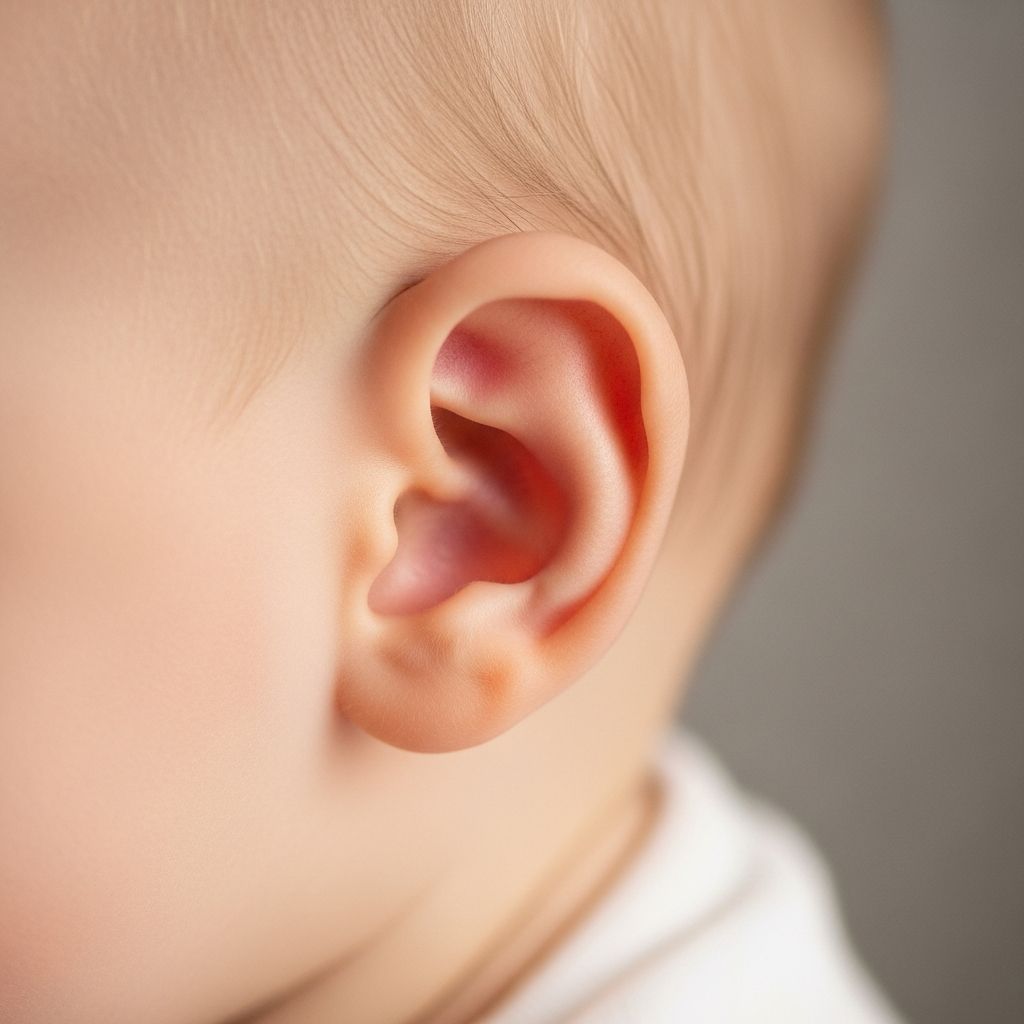
Seeing your baby’s ears look different from what you expected can be surprising and even worrying. Constricted ears are a fairly common outer ear shape difference, and in most cases they are more about appearance than health or hearing problems.
What Are Constricted Ears?
Constricted ears are a group of outer ear shape differences where the upper rim of the ear is tighter, folded, wrinkled, or rolled in on itself. Instead of forming a smooth open curve, the top part of the ear may look pinched, cupped, or bent downward.
These changes involve the skin and cartilage of the outer ear (the part you can see) and are present at birth. Many parents first notice the difference right in the delivery room or shortly afterward while looking closely at newborn photos.
Common Ways Constricted Ears Can Look
Not all constricted ears look the same. Some are very mild and only noticeable from certain angles, while others are more obvious and affect the size and position of the ear. Doctors sometimes use specific names to describe the pattern.
- Mild fold at the top: The upper rim simply folds over slightly, giving a soft, drooping look.
- “Cup” or “bowl” appearance: The ear may look smaller and more tightly curved, with the rim rolling inward.
- Tight, rolled outer edge: The rim can form a firm, narrow roll instead of a broad, open curve.
- One-sided or both-sided: Some children have only one constricted ear, while others have both ears involved, sometimes in different ways.
In most children the earlobe and the ear canal opening are normal, and the difference is limited to the upper portion of the ear.
Is Hearing Affected?
Parents naturally worry that any visible ear difference might affect hearing. For many children with constricted ears, hearing is normal because the ear canal, eardrum, and inner ear structures develop in the usual way.
Newborn hearing screening tests help confirm that the hearing pathway is working well. If the ear canal is open and the screening test is normal, the outer ear shape difference typically does not interfere with how well the child hears everyday sounds or speech.
Why Constricted Ears Happen
The outer ear forms early in pregnancy as small ridges of tissue grow and fuse into the familiar ear shape. Constricted ears occur when the skin or cartilage in the upper portion of the ear does not fully unfold or grow as widely as usual.
In many cases no single cause is ever found. A variety of influences may play a role, and in most families the ear difference appears suddenly with no history of similar ears in parents or siblings.
Possible Influences and Risk Factors
Doctors often speak in terms of “possible contributors” rather than definite causes because outer ear differences are complex. Some factors that may be involved include:
- Position in the womb: Pressure on the side of the head during pregnancy may gently squeeze the soft forming ear, preventing it from expanding normally.
- Variations in blood flow: Reduced blood supply to part of the developing ear can change how the cartilage grows and hardens.
- Genetic influences: In a few families, similar ear shapes appear across generations, suggesting that inherited traits can play a role.
- Random developmental variation: Sometimes, tissue simply grows in a slightly different pattern without any clear trigger or family pattern.
Nothing a parent did or did not do during pregnancy causes constricted ears. They are a structural variation, not the result of behavior, diet, or routine activities.
How Constricted Ears Are Diagnosed
Most of the time, constricted ears are spotted as soon as the baby is born. The difference is visible without any special tests. A pediatrician, family doctor, or newborn nurse first examines the ears and then, if needed, a specialist in ear, nose, and throat care or plastic surgery may take a closer look.
During the exam the health care professional will look at:
- The overall shape, size, and position of each ear.
- Whether the ear canal is open and appears normal.
- Whether the ear difference is mild, moderate, or severe.
- Any other facial or body differences that might suggest a broader syndrome.
Additional tests like imaging or blood work are rarely needed when constricted ears are the only concern and hearing tests are normal.
When Treatment May Not Be Necessary
Many constricted ears are mild and do not cause health problems, pain, or functional difficulty. In these situations, treatment is often considered optional and based mainly on how the child and family feel about the appearance of the ears.
Some reasons families choose to watch and wait instead of treating right away include:
- The difference is subtle and only noticeable on close inspection.
- The child’s hearing is normal and development is on track.
- Parents prefer to let the child grow older and participate in decisions about appearance.
- The family wishes to avoid procedures unless clearly necessary.
Early Non-Surgical Ear Shaping (Ear Molding)
In the first weeks of life, a baby’s ear cartilage is very soft due to circulating maternal hormones. During this short window, the outer ear can be gently reshaped using special molds, splints, or custom devices designed to guide the ear into a more open position.
These ear molding systems are typically applied by a specialist and left in place for several weeks. The device is checked and adjusted periodically to ensure the ear is moving toward a more typical shape while the cartilage is still flexible.
Benefits of Early Ear Molding
- Non-surgical approach that avoids incisions and general anesthesia.
- Can significantly improve ear shape when started very early, often within the first few weeks after birth.
- Can reduce or eliminate the need for later surgery in some children.
- Allows parents to address appearance concerns before the child is old enough to notice or be self-conscious.
Practical Considerations for Parents
- The device needs to stay on most of the time, which means keeping it clean and dry.
- Frequent follow-up visits are usually required to adjust the mold.
- Insurance coverage for ear molding can vary, so families may want to check benefits early.
- If started after the cartilage stiffens, results may be less dramatic, and surgery may still be considered later.
Surgical Options for Older Children
For children whose constricted ears are more pronounced or who did not receive early ear molding, surgery may be considered when they are older. This type of procedure is usually done by a plastic surgeon or an ear, nose, and throat surgeon with experience in pediatric ears.
Surgery typically involves reshaping or repositioning cartilage, sometimes adding skin or cartilage to areas that are tight or deficient. The goal is to create a more open, balanced ear shape that fits the child’s face and head.
When Surgery Is Usually Considered
- The child is emotionally mature enough to cooperate with healing instructions.
- The difference in appearance is causing distress, teasing, or difficulty with hairstyles, glasses, or hats.
- Non-surgical methods were not possible, not available, or did not provide enough improvement.
Comparing Non-Surgical and Surgical Approaches
The table below summarizes key differences between early ear molding and later surgery to help families understand typical choices. Each child is unique, so individual recommendations may differ.
| Aspect | Early Ear Molding | Surgery in Older Children |
|---|---|---|
| Typical age | First weeks to few months of life | Usually school age or older |
| Invasiveness | Non-surgical, uses external devices only | Surgical with incisions and sutures |
| Pain and recovery | Minimal discomfort, no surgical recovery | Short-term soreness and swelling after procedure |
| Main goal | Guide soft cartilage into a more open shape | Reshape and reposition firmer cartilage and skin |
| Timing importance | Works best during brief early cartilage-soft phase | Can be scheduled when child and family are ready |
Emotional and Social Considerations
For many families the biggest concern about constricted ears is not medical but emotional. Parents may worry about how their child will feel about their appearance or whether peers will notice and make unkind comments.
Children develop self-awareness and pay more attention to differences in appearance as they grow, especially once they enter school. Support at home can make a powerful difference in how they see themselves and handle questions from others.
Supporting Your Child’s Confidence
Regardless of whether you choose treatment, nurturing your child’s self-esteem is essential. A loving, accepting environment at home helps them feel secure and confident in who they are.
- Use neutral, matter-of-fact language when describing their ears, avoiding negative labels.
- Emphasize strengths, talents, and personality traits more than physical appearance.
- Role-play how to answer simple questions from curious friends in calm, confident ways.
- Share age-appropriate examples of diversity in appearance so your child sees that everyone has unique features.
Practical Tips for Day-to-Day Care
Routine daily care for a child with constricted ears is usually the same as for any other child. The ears can be washed gently with mild soap and water during baths, and dried carefully afterward.
- Watch for redness or irritation behind the ear, especially if devices, masks, or glasses rest on the area.
- Choose soft, well-fitting hats or headbands that do not pull or fold the ears uncomfortably.
- If your child wears glasses, work with an optician to find frames that rest comfortably on the ears.
- Let your health care provider know if you notice pain, discharge, or frequent ear infections, which may signal a separate issue.
Questions to Ask Your Child’s Care Team
It can help to bring a written list of questions to appointments so you leave feeling informed and confident. Consider asking:
- How would you describe the specific type and severity of my child’s ear difference?
- Is my child’s hearing normal, and should we repeat hearing tests later on?
- Is early ear molding an option for my baby at this age?
- What changes can we reasonably expect from non-surgical treatment versus surgery?
- When would you suggest we consider surgery, if at all?
- How many similar cases have you treated, and what were the typical outcomes?
Frequently Asked Questions About Constricted Ears
Do constricted ears get better on their own?
Some very mild cases may appear slightly less noticeable as the head grows and the surrounding features change, but the basic ear shape difference usually remains. True reshaping of the cartilage typically requires either early ear molding or surgery.
Is it painful for babies to have constricted ears?
Constricted ears themselves are not usually painful. Babies do not typically act uncomfortable because of the ear shape alone. Discomfort is more likely to arise from unrelated issues like ear infections, pressure from devices, or skin irritation.
Will my child be teased because of their ears?
Some children with noticeable differences in ear shape do experience questions or comments from peers, especially in school settings. Supportive adults, open communication, and, when needed, school staff involvement can reduce the impact of teasing and help children feel protected.
Can constricted ears be part of a syndrome?
In most children, constricted ears occur alone and are not connected to other health problems. Occasionally, outer ear differences can appear as one feature of a broader condition that also affects facial bones, jaw, or other organs. Your child’s health care provider will look for any additional signs that warrant further evaluation.
How do we choose between doing nothing, ear molding, and surgery?
The right choice depends on your child’s age, the severity of the ear difference, your family’s values, and the options available where you live. Talking with both your primary care provider and a specialist, and considering how your child feels as they grow, can guide you toward a plan that feels comfortable and respectful for everyone.
Key Takeaways for Parents
- Constricted ears are outer ear shape differences present at birth that usually do not affect hearing.
- Early ear molding may gently reshape the ear in very young infants, while surgery is an option for older children when needed.
- Many mild cases require no medical treatment and can be managed with reassurance and emotional support.
- Open conversations with your child’s care team and attention to your child’s feelings are just as important as any physical treatment.
With information, support, and thoughtful decision-making, families can navigate constricted ears in a way that protects both their child’s health and their self-confidence.