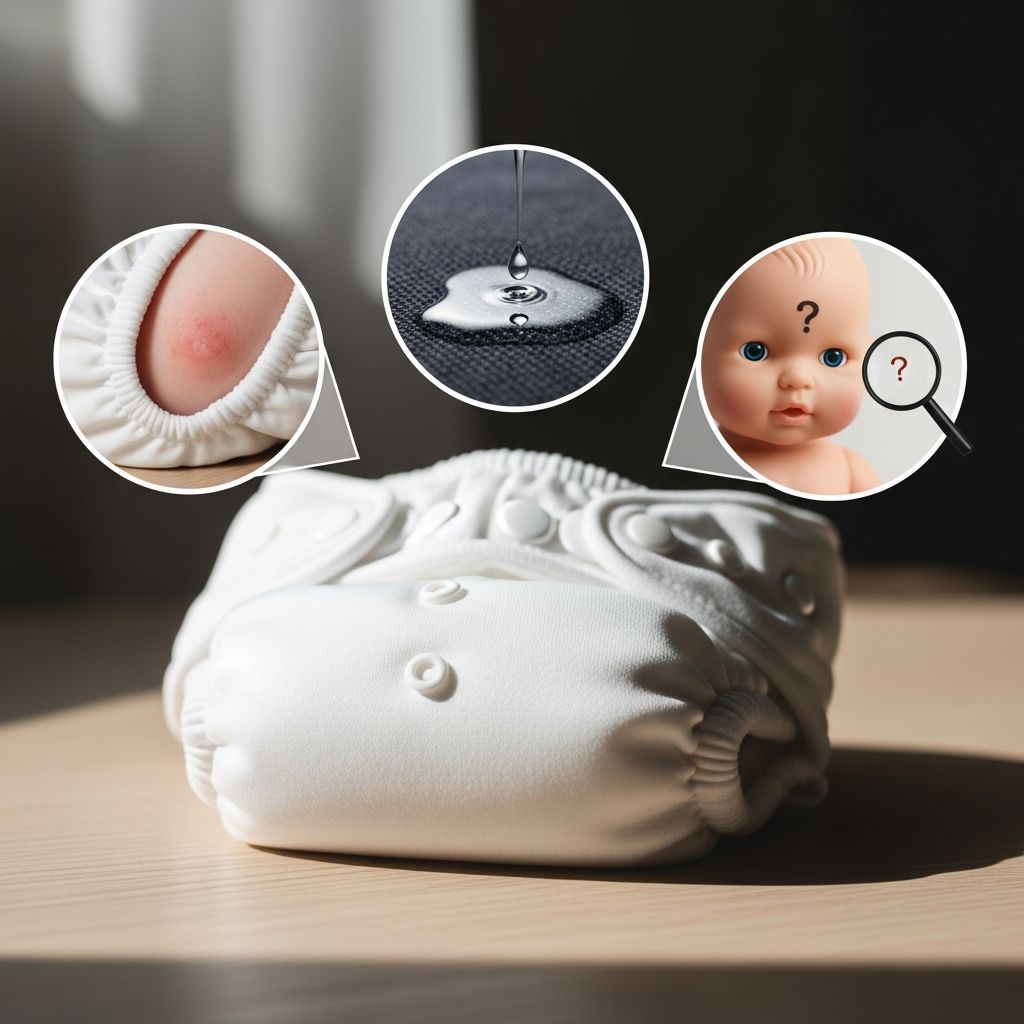
Cloth diapers can be economical, eco-friendly, and surprisingly easy once the routine clicks, but the learning curve can feel brutal when every change seems to bring a new problem. Red marks, stubborn rashes, damp covers, or a baby waking soaked at 3 a.m. can make anyone question the entire decision.
This guide breaks down the most common cloth diaper problems and offers realistic, parent-tested solutions. You will not find perfection here—just practical ways to diagnose what is going wrong and small tweaks that can help cloth work better for your baby and your lifestyle.
Why Cloth Diapers Go Wrong
Most cloth diaper issues fall into a few broad categories: skin irritation, leaking, lingering smells, and wash-routine headaches. The good news is that each of these problems usually has a clear cause, and once you know what to look for, the fix is often straightforward.
Instead of chasing a completely new brand or buying an entire second stash, start by looking at how diapers fit, how they are washed, and what touches your baby’s skin. Small adjustments in these areas usually make the biggest difference.
Understanding Cloth Diaper Rash
Diaper rash in cloth is frustrating because many families choose cloth hoping for healthier, less irritated skin. When redness or bumps show up anyway, it can feel like cloth has failed. In reality, a rash is usually a symptom, not a verdict on your diaper choice.
Moisture, friction, trapped irritants, sensitivity to detergent or fabric, and even mild infections can all show up as a rash. The first step is not to abandon cloth, but to pay careful attention to when the rash appears, how it looks, and how quickly it returns after treatment.
Common Types of Diaper Rash
- Simple irritation: General redness, sometimes shiny, often linked to long stretches between changes or frequent bowel movements.
- Contact reaction: Redness or small bumps in areas where the diaper or wipe touches the skin, possibly tied to detergent, fabric, or wipe solution.
- Yeast or fungal rash: Bright red patches, sometimes with smaller “satellite” spots beyond the main rash, often stubborn and quick to return after seeming to clear.
Tracking the pattern—does it appear more in cloth or disposables, after certain foods, or following illness—can help you and your pediatrician identify whether you are dealing with simple irritation or a deeper infection.
Step-by-Step Rash Troubleshooting
- Increase change frequency. Change at least every 2–3 hours in the day and immediately after bowel movements. Newborns and heavy wetters may need even more frequent changes.
- Let skin breathe. Add daily diaper-free time on a waterproof mat or towel. Even 10–20 minutes of air can improve mild irritation.
- Simplify what touches the skin. Use plain water or a very mild wipe solution; avoid fragrances, essential oils, and harsh soaps while the skin is irritated.
- Check your detergent. If you recently changed brands or started using more detergent, consider switching to a free-and-clear formula and adjusting the dose.
- Use a safe barrier. Apply a cloth-safe cream or use a disposable liner to protect the diaper if you rely on a conventional thick paste.
If redness does not improve in a few days, spreads, or looks like a yeast infection, contact your child’s healthcare provider for proper diagnosis and treatment.
When Rash Keeps Returning in Cloth
One of the most confusing situations arises when a rash improves in disposables but flares up again as soon as you return to cloth. This pattern often points to lingering irritants or a low-level infection living in the diapers themselves.
In these cases, addressing only the baby’s skin is not enough. You also need to treat the diaper stash so you are not reintroducing the same problem with every diaper change.
Signs Your Diapers May Be Reinfecting Skin
- Rash disappears or greatly improves in disposables but quickly returns with cloth.
- Diapers smell sour, musty, or strongly “off” even after washing.
- You have recently treated a yeast or fungal rash but did not change anything in your laundry routine.
In this situation, a one-time, deliberate deep cleaning and disinfecting routine can help reset your stash. After that, small wash-routine tweaks generally keep the problem from coming back.
Deep Cleaning Cloth Diapers Safely
Deep cleaning, sometimes called “stripping,” is not something to do every week. It is a targeted process used when your usual wash routine is no longer working—especially if you are dealing with repeated rashes, strong odors, or obvious repelling.
The goal is to remove built-up detergent, creams, and minerals, and then, if needed, add a one-time disinfecting step that is safe for your particular fabrics and closures.
Basic Deep-Clean Outline
- Start with clean diapers. Run a normal wash so you are stripping clean, not visibly soiled, items.
- Soak in hot water with a stripping agent or very small amount of detergent. Follow manufacturer or product instructions for amounts and soaking time.
- Rinse repeatedly. Run multiple hot rinses until there are no visible suds and the water looks clear.
- Add a disinfecting step if advised by your pediatrician. Depending on the type of rash and your fabrics, this might involve a specific additive or protocol designed to be safe for cloth.
- Dry thoroughly. Line dry or machine dry if your diaper manufacturer allows it, making sure everything is fully dry before storing.
Always confirm that any disinfecting method is compatible with your diapers’ materials (especially elastics, waterproof layers, and snaps) so you do not accidentally shorten their life while trying to rescue them.
Leaks, Wicking, and “Mystery Moisture”
Leaking cloth diapers may be the biggest reason families give up. When you constantly deal with damp clothing, wet sheets, or random moisture on the outside of supposedly waterproof covers, it is natural to assume the product has failed.
However, leaks usually come from one of three places: poor fit, insufficient absorbency, or problems in the fabric itself (repelling or damage). Working through these potential causes one by one typically reveals what is actually going wrong.
Leak Diagnosis Checklist
| Symptom | Likely Cause | What to Try |
|---|---|---|
| Clothing wet at legs or back, diaper fully soaked | Not enough absorbency or long stretch between changes | Add an extra insert, use more absorbent fibers, or change more often. |
| Clothing wet but insert not saturated | Poor fit, gaps, or repelling inner fabric | Adjust rise and waist, check for leg gaps, consider deep cleaning. |
| Outer shell feels damp but seams are dry | Wicking from soaked cotton edges or snug clothes pressing moisture through | Tuck all fabric inside cover; avoid tight onesies or pants over the diaper. |
| Sudden leaks after months of success | Elastic wear, delaminated waterproof layer, or buildup | Inspect elastics and lining; repair or replace older diapers if needed. |
Quick Fit and Absorbency Tweaks
- Check the rise snaps. Overly “tall” settings can leave leg gaps, while too-tight settings can cause compression leaks.
- Do the finger test. You should be able to slide one finger under the leg elastic without seeing obvious gaps when baby moves.
- Experiment with insert placement. Heavy wetters may need extra absorbency in the front (for many boys and tummy sleepers) or center.
- Avoid compression. Very tight onesies, carriers that press on the diaper area, and snug pants can squeeze liquid out of even well-stuffed diapers.
Not-So-Waterproof Covers and Pocket Shells
Waterproof covers and pocket shells are designed so that moisture stays inside while the outside feels dry to the touch. When the outer fabric feels persistently damp, it is easy to worry that the waterproof layer has failed.
Sometimes, the issue is actual damage or age; other times, what feels like a failing cover is really wicking, buildup, or simply being pushed past its capacity.
Testing Your Waterproof Layer
- Lay a clean, dry shell flat on a counter or sink.
- Drip a small amount of water on the outside of the shell.
- Watch what happens over a minute or two.
If the water beads up and can be easily wiped away, the waterproof layer is likely intact. If it slowly seeps into the fabric and leaves a damp area, the barrier may be compromised or heavily worn.
When Covers Need Replacing
- Obvious cracking or peeling inside. This indicates delamination, which is not repairable at home.
- Persistent leaks in the same spots. If several fit and absorbency tweaks fail, and the shell feels damp even with moderate use, the fabric may simply be worn out.
- Loose, tired elastics. While elastics can sometimes be replaced, extremely stretched-out leg and back elastics often signal that a cover is at the end of its life.
Odors, Ammonia, and Build-Up
A strong smell when you open the diaper pail, or a sharp ammonia scent that nearly stings your nose at morning diaper changes, points toward wash-routine issues. Cloth diapers should smell like clean laundry after washing, not like a barnyard or swimming pool.
Odors usually mean that something is being left behind: detergent, minerals, or simply not enough water and agitation to remove waste fully. The fix often involves altering water temperature, cycle length, detergent type, or the balance between detergent amount and rinse thoroughness.
Simple Wash-Routine Framework
- Start with a rinse or short wash. Use cool or warm water to remove most of the pee and poop residue before the main wash.
- Run a long, heavy-duty main wash. Use hot or warm water with an appropriate amount of detergent for your machine size and water hardness.
- Rinse well. Add an extra rinse if you see suds leftover or notice irritation that might be linked to residue.
- Avoid constant additives. Routine use of vinegar, fabric softeners, or other extras can cause buildup or fabric damage over time.
If odor persists, consider testing your water hardness and adjusting detergent type and quantity accordingly. Hard water often needs more detergent and possibly a water softener product; very soft water usually needs less detergent to avoid buildup.
Nighttime Cloth Without the Flood
Nights are the ultimate test for cloth diapers because they combine time, heavy wetting, and movement. Families often fall back on disposable nighttime diapers even if they use cloth during the day, simply to preserve sleep and sanity.
It is possible to make cloth work overnight, but it often requires more strategic layering, experimenting with different fibers, and paying attention to sleep position.
Building a Solid Nighttime Setup
- Start with a highly absorbent base. Natural fibers such as cotton, bamboo, or hemp tend to handle long stretches better than microfiber alone.
- Add targeted boosters. Place an extra insert where your baby tends to wet most (front for many boys and tummy sleepers, center for back sleepers).
- Use a reliable cover. Wool covers or high-quality PUL/TPU covers with good elastics can provide an extra layer of leak protection.
- Expect a learning period. You may need a few nights of trial and error to find the right combination of diaper style, inserts, and cover.
Balancing Convenience and Real Life
Cloth diapering does not have to be all or nothing. Many families find that using cloth most of the time but keeping disposables for long outings, illness, or nighttime preserves the benefits of cloth without turning diaper care into a source of constant stress.
If a particular season of life is overwhelming, it is okay to press pause, simplify, or mix systems. The ultimate goal is a healthy baby and a routine that your family can manage, not achieving a perfect cloth record.
Frequently Asked Questions
How often should cloth diapers be changed?
Most babies in cloth do well with changes every 2–3 hours during the day and immediately after bowel movements. Newborns and heavy wetters may need more frequent changes to prevent leaks and rashes, especially when using natural fibers that hold a lot but feel wet against the skin.
Can regular diaper creams be used with cloth diapers?
Thick, petroleum-based creams and some zinc-heavy pastes can coat fibers and cause repelling over time. If your baby needs one of these products, using a disposable liner or a thin cloth wipe as a barrier between the cream and the diaper helps protect the fabric while allowing you to treat the skin effectively.
Do cloth diapers really save money if problems keep happening?
While troubleshooting can be frustrating, most recurring issues can be solved with routine and technique changes rather than buying an entirely new stash. Once you identify what works for your water, washing machine, and baby, the same set of diapers can usually be used for years or even multiple children, spreading out the initial cost.
Is it safe to switch between cloth and disposables?
Yes. Alternating between systems is completely safe and often practical, especially during travel, illness, or while treating stubborn rashes. The key is to monitor your baby’s skin, continue good hygiene and frequent changes, and make sure any diaper rash treatment plan takes into account both types of diapers you are using.
When is it time to retire a cloth diaper?
Diapers with cracked waterproof layers, heavily frayed or thinning absorbent fabric, or elastics that no longer hold snugly around the legs and waist are usually at the end of their useful life. Some parts, such as elastics and snaps, can be repaired, but when multiple components are worn out, replacement is often often more cost-effective.
Key Takeaways for Confident Cloth Diapering
- Most cloth diaper problems have a specific cause: fit, absorbency, wash routine, or fabric condition.
- Persistent rashes often require treating both your baby’s skin and the diapers themselves.
- Leaks are not a universal failure of cloth, but a sign that some part of the system needs adjustment.
- It is acceptable to blend cloth and disposables in whatever way keeps your baby comfortable and your routine sustainable.
Cloth diapers do involve a learning curve, but once you understand the usual trouble spots and how to fix them, they can become a straightforward and satisfying part of everyday baby care.