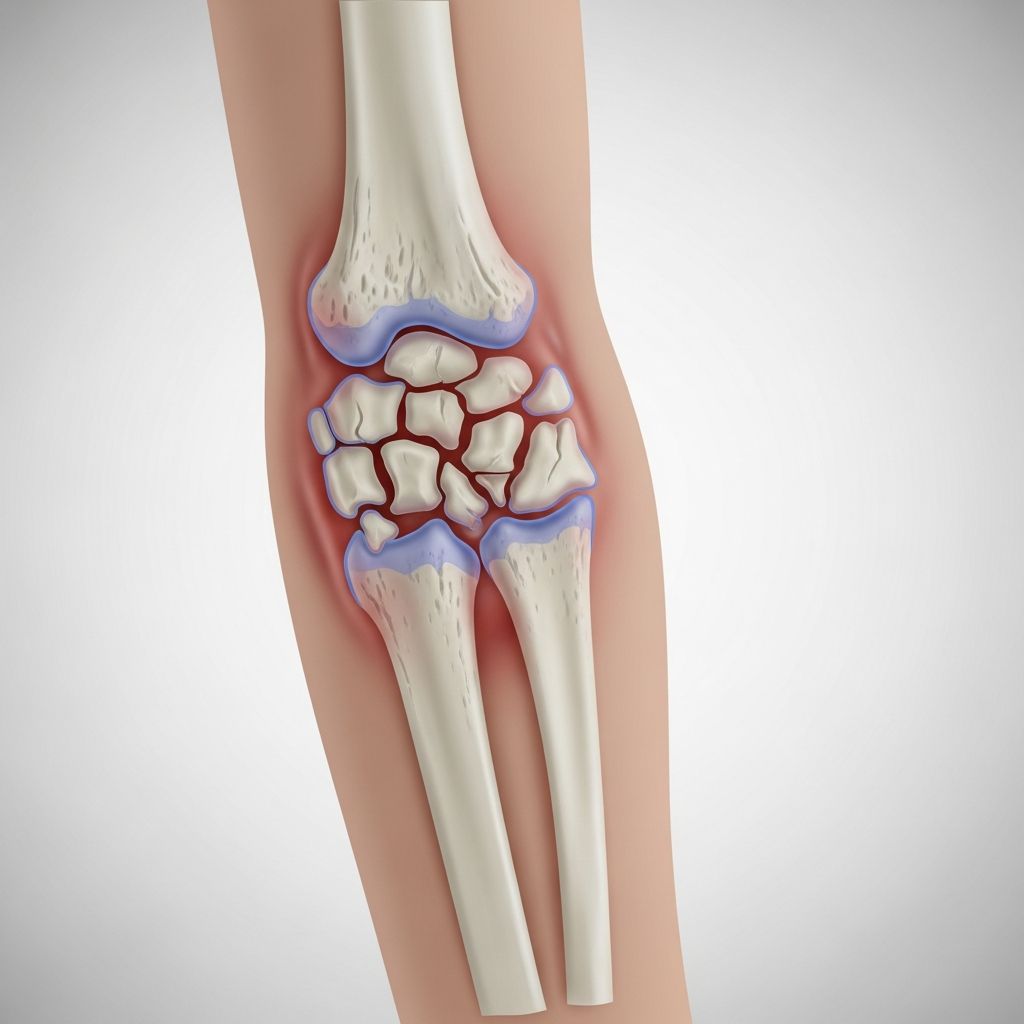
When a child breaks a bone, it can be frightening for the whole family. A comminuted fracture is one of the more serious kinds of broken bones because the bone is split into several pieces instead of just one clean break. This guide explains what that means in simple terms, how these injuries happen, and what parents can expect during diagnosis, treatment, and recovery.
What Is a Comminuted Fracture?
A comminuted fracture is a broken bone where the bone is separated into three or more pieces. In medical dictionaries, it is described as a bone that is splintered or crushed into multiple fragments.
- “Comminuted” comes from a word that means to break into small pieces.
- Any bone can be affected, but it is more common in long bones such as the thigh bone (femur), shin bone (tibia), and bones of the arm.
- Because the bone is in many pieces, treatment is often more complex and healing can take longer than with a simple fracture.
Doctors may also describe the fracture with other terms, such as:
- Open (compound) vs. closed (simple) – whether the bone has pierced the skin.
- Displaced vs. non-displaced – whether the pieces are out of alignment.
How Do Comminuted Fractures Happen in Kids?
Comminuted fractures usually result from a high-energy impact or strong force. Everyday bumps and falls rarely cause this kind of injury in otherwise healthy children.
Common causes include:
- Motor vehicle crashes – including car, motorcycle, or bicycle accidents.
- Falls from a height – such as falling from playground equipment, a tree, or stairs.
- Sports injuries – especially in contact or high-speed sports where collisions or hard landings occur.
- Crush injuries – when a heavy object falls on or rolls over a limb.
The stronger the force, the more likely the bone is to shatter into many fragments instead of just cracking in one place. Children often have more flexible bones than adults, which can help protect them, but a very powerful impact can still cause a comminuted fracture.
Signs and Symptoms Parents May Notice
Because comminuted fractures involve significant force, the symptoms are usually clear and severe. According to orthopedic and emergency medicine sources, children with these fractures often show:
- Severe pain at the injured site, especially when moving or trying to put weight on it.
- Swelling and bruising developing quickly around the area.
- Visible deformity – the arm or leg may look bent, twisted, or unusually shaped.
- Inability to move the limb normally or to stand/walk if a leg is affected.
- Tenderness to touch along the injured bone.
In more serious cases, you may also see:
- Bone visible through the skin or a wound that goes down to the bone (an open or compound fracture).
- Bleeding and a large open cut around the injury.
- Numbness or tingling, which may suggest nerve involvement.
- Cool or pale skin below the injury, which can be a sign of reduced blood flow and needs urgent care.
If you suspect a comminuted fracture or any serious bone injury in a child, seek emergency medical attention immediately.
How Doctors Diagnose Comminuted Fractures
Diagnosis begins with a careful history and physical exam and is confirmed with imaging tests. In major trauma, this typically happens in an emergency department.
Initial Assessment
Health professionals will:
- Ask how the injury happened and when symptoms began.
- Check the child’s breathing, heart rate, and level of alertness, especially after major trauma.
- Look for visible deformity, wounds, and signs of open fracture.
- Test circulation, movement, and feeling below the injured area.
Imaging Tests
| Test | What It Shows | Why It Is Used |
|---|---|---|
| X-ray | Overall view of the bone, number and position of fragments. | First-line test for suspected fractures; guides initial treatment. |
| CT (computed tomography) scan | Detailed cross-sectional images of complex fractures, including joints and pelvis. | Helps plan surgery for difficult or highly fragmented injuries. |
| MRI (magnetic resonance imaging) | Soft tissues (ligaments, tendons, cartilage) around the fracture. | Used selectively if doctors suspect additional soft tissue damage. |
Treatment Options for Comminuted Fractures in Children
Because the bone is broken into multiple pieces, comminuted fractures in both adults and children commonly require surgery and internal fixation to restore normal alignment and stability.
Emergency Care
In the emergency setting, doctors first focus on stabilizing the child and preventing further harm:
- Immobilizing the injured limb with a splint or temporary cast.
- Managing pain with appropriate medications.
- Cleaning and covering any open wounds to reduce infection risk.
- Checking and supporting breathing and circulation after major trauma.
Surgical Repair (Internal Fixation)
Many comminuted fractures are repaired using a procedure called open reduction and internal fixation (ORIF).
- Open reduction: The surgeon makes an incision to see the broken bone and gently moves the fragments back into their proper positions.
- Internal fixation: Special hardware such as plates, screws, rods, pins, or nails is used to hold the bone pieces together while healing occurs.
In children, surgeons take care to protect growth plates (areas of growing bone near the ends of long bones), since damage to these areas can affect limb length or shape later in life.
Open (Compound) Comminuted Fractures
When the bone has broken through the skin, treatment is more urgent and complex:
- The wound is thoroughly cleaned (debrided) in the operating room to remove dirt and dead tissue and reduce infection risk.
- Antibiotics are usually given early to help prevent bone and wound infections.
- After cleaning, the fracture is stabilized using internal fixation or, in some cases, an external fixator (a frame outside the body attached with pins to the bone).
Casting and Bracing
Once the fracture has been surgically stabilized, or if surgery is not required, the limb is often placed in a cast or brace to protect the bone as it heals. Children’s bones can heal more quickly than adults’, but the healing time for comminuted fractures is often longer than for simple fractures.
Healing and Recovery: What to Expect
Recovery from a comminuted fracture is usually a long-term process, often lasting several months or more. The exact timeline depends on the child’s age, the specific bone, the number of fragments, and whether other injuries are present.
Typical Healing Stages
- Early healing (first few weeks) – pain and swelling gradually improve; a soft bone “callus” starts to form.
- Intermediate phase (weeks to months) – new bone bridges the fragments; casts or braces may be changed, and gentle movement may begin.
- Late remodeling (months to a year or more) – the bone slowly reshapes and strengthens, especially in growing children.
According to orthopedic care guidelines, some comminuted fractures may take a year or longer to fully heal and remodel.
Physical Therapy and Rehabilitation
Rehabilitation is crucial to help a child regain strength and normal movement after a serious fracture:
- Range-of-motion exercises to prevent stiffness in nearby joints.
- Strength training to rebuild weakened muscles.
- Balance and coordination activities, especially after leg injuries.
A pediatric physical therapist can tailor exercises to a child’s age, abilities, and interests, making rehabilitation safer and more engaging.
Possible Complications Parents Should Know About
Most children recover well with prompt, appropriate treatment, but comminuted fractures carry a higher risk of complications than simpler fractures.
- Delayed union or nonunion – the bone takes longer than expected to heal, or fails to heal completely.
- Malunion – the bone heals in a less-than-ideal position, which might cause deformity or affect function.
- Infection – especially with open fractures or surgery, when bacteria can enter the bone or wound.
- Nerve or blood vessel injury – caused by the initial trauma or by bone fragments.
- Joint stiffness – due to prolonged immobilization or scar tissue, particularly when a fracture extends into a joint.
In children, doctors also monitor the growth plate near the fracture, as injuries there can occasionally affect future bone growth.
How Parents Can Support Healing at Home
Parents play a vital role in helping a child recover safely and comfortably.
Managing Pain and Comfort
- Give pain medicine exactly as prescribed by the child’s healthcare provider.
- Use ice packs (wrapped in a towel) on the injured area for short periods if recommended, to reduce pain and swelling.
- Help your child elevate the injured limb on pillows when possible.
- Encourage simple relaxation techniques like deep breathing or quiet activities to help with discomfort and anxiety.
Protecting the Cast or Splint
- Keep the cast dry and clean unless the provider has given specific instructions for a waterproof cast.
- Do not let your child put objects inside the cast to scratch an itch; this can damage skin and cause sores.
- Watch for warning signs, such as increasing pain, bad odor, severe itching, or swelling of toes or fingers that does not improve with elevation.
Encouraging Safe Activity
- Follow the healthcare team’s directions on weight-bearing and activity limits.
- Help your child use crutches, a wheelchair, or a walker if needed.
- Find safe ways to keep your child socially and mentally engaged, such as reading, crafts, games, or video calls with friends.
Preventing Future Serious Bone Injuries
Not all injuries can be prevented, especially accidents, but parents can lower the risk of serious fractures by focusing on safety and bone health.
- Make sure children use seat belts and age-appropriate car seats or booster seats on every car trip.
- Encourage the consistent use of protective gear such as helmets, wrist guards, or pads for sports and wheeled activities.
- Help create safe play environments – for example, using soft playground surfaces and supervising high-risk activities.
- Promote strong bones with a diet rich in calcium and vitamin D, along with regular physical activity.
Frequently Asked Questions (FAQs)
Q1: Are comminuted fractures more serious than simple fractures?
Yes. Because the bone is broken into several pieces and often results from high-energy trauma, comminuted fractures are generally more complex to treat and may take longer to heal than simple fractures.
Q2: Will my child always need surgery for a comminuted fracture?
Many comminuted fractures do require surgery and internal fixation to stabilize the bone and allow it to heal correctly. However, the exact treatment plan depends on the child’s age, the bone involved, the number of fragments, and whether the fracture is open or closed.
Q3: How long will it take for my child’s fracture to heal?
Healing time varies, but because comminuted fractures are complex, full recovery can take several months and sometimes up to a year or more, especially for major bones like the femur. Children often heal faster than adults, but they also need careful follow-up to protect growing bones.
Q4: Will the metal plates or screws have to be removed?
Some hardware stays in place permanently, while in other cases surgeons may remove screws or plates after the bone has fully healed. The decision depends on the type of hardware, its location, whether it causes symptoms, and your child’s growth.
Q5: Can my child return to sports after a comminuted fracture?
Most children can return to sports once the bone has healed, strength is restored, and the healthcare team gives clearance. The timeline is individualized and often involves a gradual return to activity guided by the orthopedic surgeon and physical therapist.
References
- Comminuted Fracture: Symptoms, Causes & Treatment — Cleveland Clinic. 2023-03-01. https://my.clevelandclinic.org/health/diseases/22252-comminuted-fracture
- What is a Comminuted Fracture? Causes, Symptoms, & Recovery — Coppell ER. 2022-06-10. https://coppellemergencyroom.com/blog/what-is-a-comminuted-fracture/
- Comminuted Fracture: Causes, Symptoms, and Recovery — Healthline. 2022-05-26. https://www.healthline.com/health/comminuted-fracture
- What Is a Comminuted Fracture? — WebMD. 2021-07-15. https://www.webmd.com/a-to-z-guides/comminuted-fracture-overview
- What is a Comminuted Fracture & How is it Treated? — Orthopaedic & Spine Center (OSC). 2020-10-05. https://www.osc-ortho.com/blog/what-is-a-comminuted-fracture-and-how-is-it-treated/
- Fractures, Comminuted – MeSH Descriptor Data — U.S. National Library of Medicine, National Institutes of Health. 1994-04-16. https://www.ncbi.nlm.nih.gov/mesh/68005446