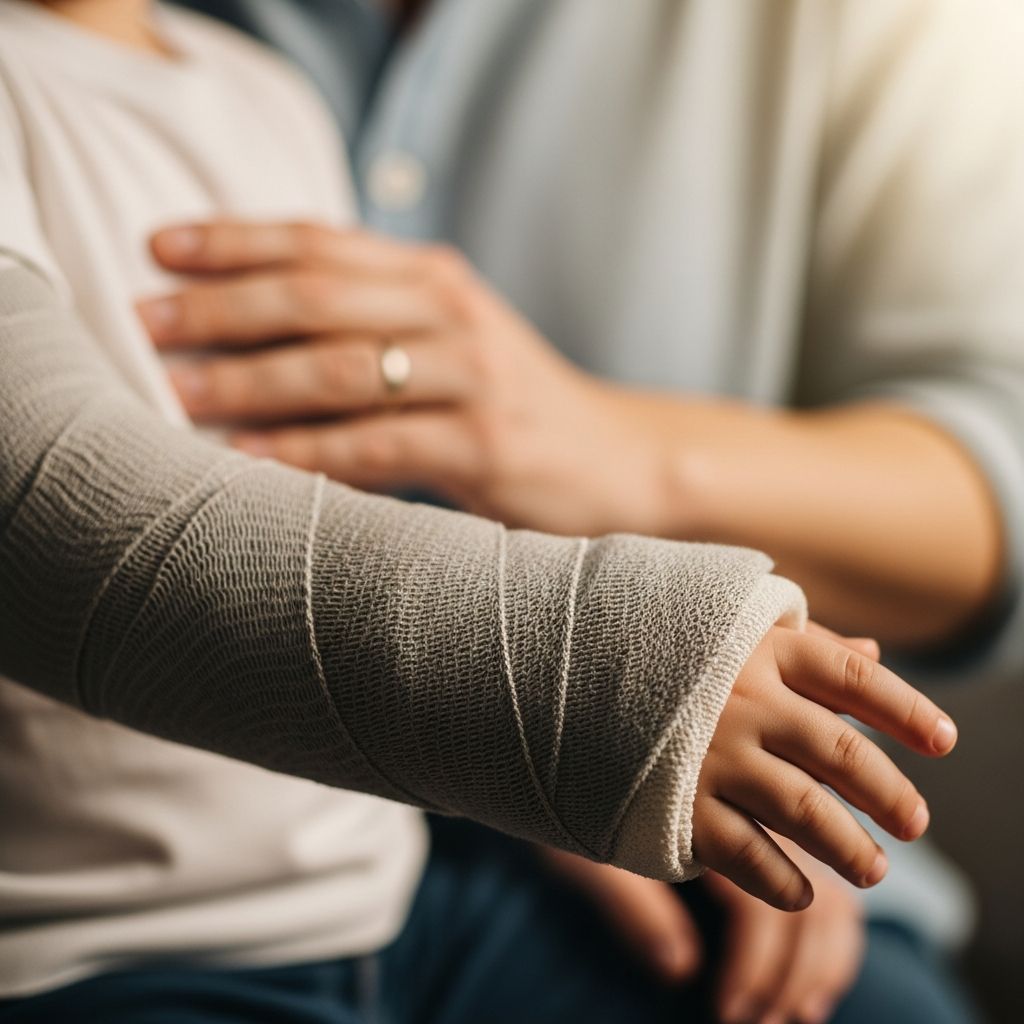
When a child breaks a bone in several pieces instead of one clean break, doctors may call it a comminuted fracture. This type of injury is usually linked to strong forces, such as a serious fall or a car crash, and often needs surgery and months of careful recovery.
This article explains comminuted fractures in plain language so parents and caregivers can better understand what is happening, what to expect at the hospital, and how to help a child heal at home.
What Is a Comminuted Fracture?
A comminuted fracture is a broken bone that has split into three or more pieces rather than just cracking or snapping in a single spot.
Medical references also describe it as a bone that has been splintered or crushed into multiple fragments. In children, this can affect any bone, but it is more common in the longer bones of the arms and legs.
How It Differs From Other Breaks
| Type of fracture | What happens to the bone? | Typical treatment needs |
|---|---|---|
| Simple / non-displaced | Bone cracks or breaks but pieces stay lined up | Cast or splint, usually no surgery |
| Displaced | Bone pieces move out of normal position | Often needs reduction (realignment), sometimes surgery |
| Open (compound) | Bone breaks and goes through the skin | Emergency care, surgery, infection prevention |
| Comminuted | Bone is broken into three or more pieces or crushed | Usually surgery with plates, screws, or rods; long recovery |
A comminuted fracture can also be open (bone fragments poking through the skin) or closed (skin is intact). Open comminuted fractures carry a higher risk of infection and usually require urgent surgical cleaning and repair.
Why Do Comminuted Fractures Happen in Kids?
Children’s bones are relatively flexible compared with adult bones, which helps protect them in many falls. But a comminuted fracture usually means the bone was hit with a very strong force.
Common Causes
- Motor vehicle crashes (as a passenger, pedestrian, or cyclist)
- Falls from a height, such as off playground equipment, roofs, or trees
- High-speed sports impacts, for example in football, hockey, skiing, or skateboarding
- Crush injuries where a limb is trapped under heavy objects
When the force is very intense, the bone may shatter much like a dropped plate or glass, producing many irregular fragments.
Typical Signs and Symptoms
Any suspected broken bone in a child needs urgent medical attention. Comminuted fractures usually cause symptoms that are hard to ignore.
Symptoms You May Notice
- Severe pain that starts right after the injury and gets worse with movement
- Swelling and bruising that develop quickly around the injured area
- Visible deformity, such as a limb that looks bent, twisted, or unusually short
- Inability to use the limb normally – your child may refuse to walk, stand, or lift the arm
- Tenderness to touch over the site of the break
- Grinding or crunching feeling if the area is moved (your child may describe this as a “crackling” sensation)
Warning Signs of an Open or Complicated Injury
Call emergency services right away if you see any of the following:
- Bone visible through the skin or an open wound down to the bone
- Heavy bleeding that does not slow with pressure
- Cold, blue, or numb fingers or toes below the injury
- Inability to feel or move the limb at all
- Signs of shock (very pale, sweaty, confused, or unusually sleepy)
How Doctors Diagnose a Comminuted Fracture
Evaluation usually begins in the emergency department or urgent care, especially if the injury was caused by a high-speed event.
Initial Assessment
- Stabilizing the child first, checking breathing, circulation, and other injuries
- Looking for obvious deformity, wounds, and signs of nerve or blood vessel damage
- Gently checking motion and sensation in fingers or toes beyond the injury
Imaging Tests
- X-rays to confirm the fracture, count the fragments, and check alignment of the bone
- CT scans (computed tomography) for complex breaks or injuries around joints like the hip, knee, or ankle
These images help the orthopedic team decide whether surgery is required and what type of hardware (such as plates or rods) will be needed to hold the bone together.
Treatment Options for Children
Because a comminuted fracture includes many pieces, it is much harder to keep lined up with just a cast. For that reason, most comminuted fractures need surgical repair plus a period of casting or bracing.
Emergency Care
- Giving pain medicine and sometimes sedation
- Stabilizing the injured limb with a splint so it cannot move
- Covering open wounds with clean dressings and starting antibiotics if bone is exposed to reduce infection risk
- Updating tetanus shots if needed
Surgical Repair (Open Reduction and Internal Fixation)
For many comminuted fractures, surgeons perform a procedure often called open reduction and internal fixation (ORIF).
- Open reduction: making an incision to see the bone and gently moving fragments back into their normal position
- Internal fixation: holding the fragments together from inside the body using:
- metal plates and screws
- rods or nails placed inside the bone canal
- wires or pins to support smaller fragments
These devices are designed to be strong enough to keep the bone stable while it heals. In many cases they stay inside permanently; sometimes, especially in children, some hardware may later be removed if it causes problems.
Non-Surgical Care
Very rarely, if the bone fragments are stable and lined up, doctors may manage a comminuted fracture with:
- A cast or brace that keeps the limb still
- Regular X-rays to confirm the bone is staying in good position
However, because multi-piece breaks are more likely to shift, this approach is less common than surgery.
Healing Time and Recovery
Bone healing is a gradual process. In general, comminuted fractures take longer to heal than simpler breaks because the body has to repair more damage and stabilize multiple fragments.
General Timelines
- Initial bone healing may take 6–12 weeks or longer, depending on the bone and the child’s age
- Full recovery of strength and function, especially after major trauma, can take many months to a year
Children often heal faster than adults because their bones are still growing and have a good blood supply, but a complex injury can still require patience and careful follow-up.
Factors That Affect Healing
- Age: younger children typically heal more quickly than teens
- Location of the fracture: weight-bearing bones like the femur (thigh bone) may need more time off the leg
- Type of fracture: open fractures or those with damage to skin, muscles, or blood vessels heal more slowly and carry more risks
- Overall health and nutrition: good nutrition and control of medical conditions support healing
- How well the treatment plan is followed, including activity restrictions and follow-up visits
Home Care and Everyday Support for Your Child
Parents play a major role in a child’s recovery. Following the care team’s instructions closely helps prevent complications and improves the chances of a strong, straight bone as it heals.
Managing Pain and Swelling
- Give medicines exactly as prescribed by the doctor
- Use elevation (raising the arm or leg above heart level) to reduce swelling when possible
- Ask the care team whether using cold packs is appropriate and how to protect the skin and cast
Cast and Wound Care
- Keep the cast or splint dry and clean
- Never insert objects into the cast to scratch an itch (this can damage skin and cause infection)
- Watch the skin around the edges of the cast for redness or sores
- For surgical incisions, follow instructions for dressing changes and bathing
Signs You Should Call the Doctor
- New or worsening pain that is not helped by medicine
- Fingers or toes that become very pale, blue, or cold to the touch
- Numbness, tingling, or inability to move fingers or toes
- Cast that feels too tight or has a foul odor
- Fever or drainage from around a surgical wound
Physical Therapy and Returning to Activities
Once the bone has begun to heal and the doctor feels it is safe, a child may be referred to physical therapy to help restore motion and strength.
Role of Rehabilitation
- Gentle exercises to improve joint movement and prevent stiffness
- Strength-building activities to support the injured limb
- Training in safe walking, climbing stairs, or using crutches if needed
High-impact sports, jumping, and rough play are usually restricted until the bone has healed fully and the care team confirms it is safe to return.
Frequently Asked Questions (FAQs)
Is a comminuted fracture more serious than a regular broken bone?
Yes. Because the bone is split into several pieces, a comminuted fracture is generally more complex than a simple fracture and often needs surgery, longer healing time, and careful follow-up to make sure the pieces stay aligned.
Will my child always need surgery for a comminuted fracture?
Most comminuted fractures do require surgery to line up the fragments and keep them stable, especially when the break involves a major bone of the arm or leg. Rare exceptions exist, but your orthopedic surgeon will recommend the safest approach for your child.
Can hardware like plates and screws damage my child’s bone growth?
Surgeons who treat children carefully plan the placement of hardware to avoid growth plates whenever possible. Some devices stay in place permanently; others may be removed later if they cause irritation or if the surgeon feels removal will benefit the child’s growth and function.
How long before my child can play sports again?
Return to sports depends on which bone was injured, how severe the fracture was, and how well healing is progressing. Many children need several months, and sometimes longer, before they can safely return to full activity after a comminuted fracture. The orthopedic team will give specific guidance.
Will there be long-term problems?
Many children recover well and return to their usual activities. However, complex fractures can increase the risk of stiffness, differences in limb length, or arthritis in nearby joints later in life, especially if the break involved a joint surface. Regular follow-up helps detect and manage these issues early.
References
- Comminuted Fracture: Symptoms, Causes & Treatment — Cleveland Clinic. 2022-10-12. https://my.clevelandclinic.org/health/diseases/22252-comminuted-fracture
- What Is a Comminuted Fracture? Causes, Symptoms, & Recovery — Coppell ER. 2023-03-01. https://coppellemergencyroom.com/blog/what-is-a-comminuted-fracture/
- Comminuted Fracture: Causes, Symptoms, and Recovery — Healthline. 2021-08-26. https://www.healthline.com/health/comminuted-fracture
- What Is a Comminuted Fracture? — WebMD. 2021-11-09. https://www.webmd.com/a-to-z-guides/comminuted-fracture-overview
- What is a Comminuted Fracture & How is it Treated? — Orthopaedic & Spine Center. 2020-02-10. https://www.osc-ortho.com/blog/what-is-a-comminuted-fracture-and-how-is-it-treated/
- Fractures, Comminuted (MeSH) — National Library of Medicine. 1994-04-16. https://www.ncbi.nlm.nih.gov/mesh/?term=%22Fractures%2C+Comminuted%22%5BMeSH+Terms%5D