Understanding Comfort Objects and Their Role in Child Development
Every parent has witnessed the scene: a child clutching a worn blanket, a stuffed animal, or another cherished item with fierce determination. These objects, known as comfort or transitional objects, represent far more than simple toys or blankets. They serve as vital psychological tools that help children navigate the complex journey from complete dependence to growing autonomy.
Transitional objects function as emotional anchors during periods of uncertainty and change. Whether a child is starting school, facing bedtime alone, or experiencing separation from caregivers, these items provide a tangible connection to safety and familiarity. Understanding the purpose and benefit of comfort objects can help parents support their child’s emotional development more effectively.
The Psychology of Comfort Items: How They Work
The effectiveness of comfort objects extends beyond sentimentality. Neuroscience reveals that familiar items can trigger measurable calming responses in the developing brain. When a child holds their security blanket or beloved stuffed animal, the brain releases chemicals associated with comfort and reduces the production of cortisol, a stress hormone.
This psychological mechanism operates through two primary pathways. First, comfort objects provide tactile reassurance. The softness and texture of these items create pleasant sensory experiences that soothe an anxious child. Second, they offer emotional familiarity. A child’s security blanket carries their scent and memories associated with safety, creating a portable sense of home.
Researchers in attachment theory recognize that comfort objects serve as a bridge between parental dependence and self-soothing. As children develop, they gradually learn to regulate their own emotions. Transitional objects accelerate this process by providing external support during moments when internal regulation feels overwhelming.
When Comfort Objects Typically Emerge
Most children develop attachments to comfort objects between eight and twelve months of age. This timing aligns with developmental milestones when babies begin to recognize object permanence and develop stronger preferences for specific items and people.
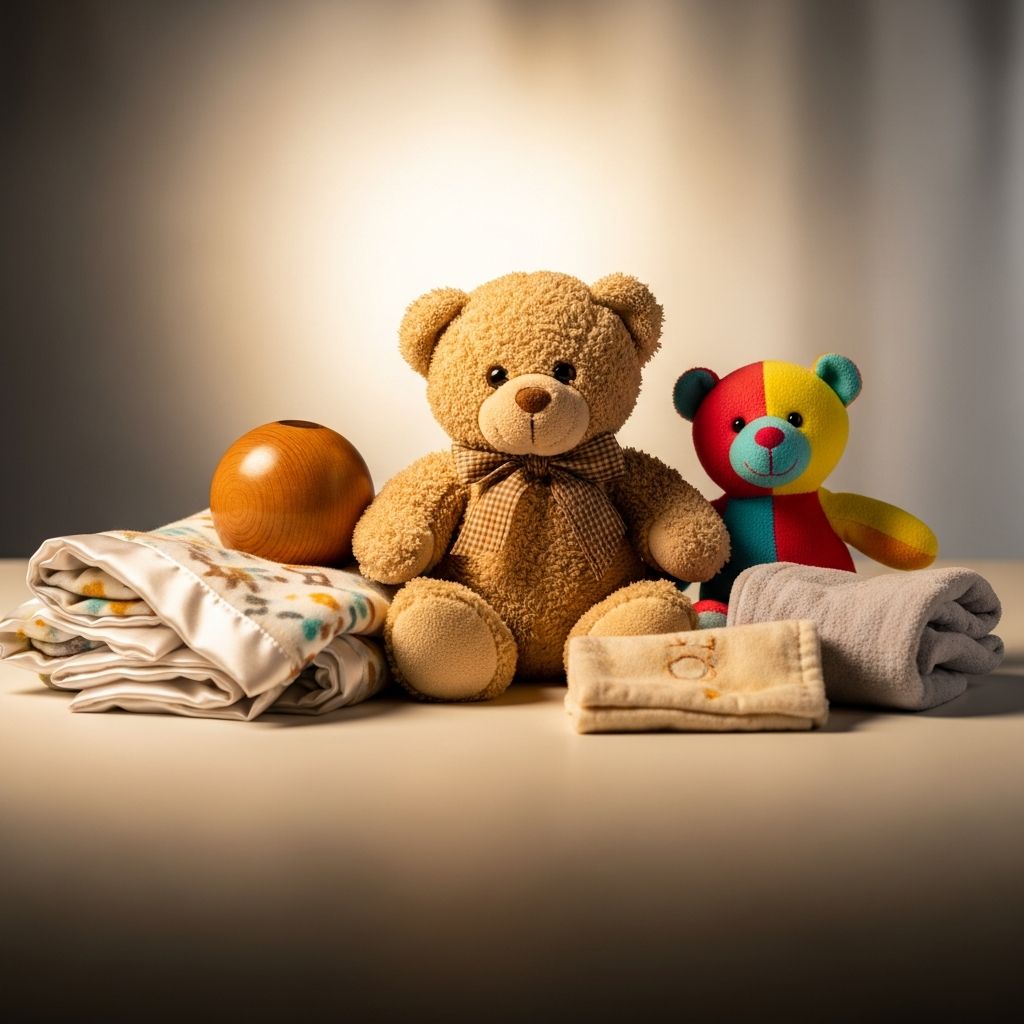
The selection process is often child-directed. Rather than imposing a comfort object, most children naturally choose their own. These selections are wonderfully varied and sometimes surprising. While soft blankets and plush toys dominate, some children select unconventional items like a toothbrush, a particular toy, or even a piece of cloth.
Parents need not worry if their child selects an unusual comfort object, provided it poses no safety risk. The value lies not in the object itself but in what it represents to the child: security, continuity, and emotional stability.
The Developmental Benefits of Transitional Objects
Comfort objects provide multifaceted developmental support during critical growth periods:
- Managing Separation Anxiety: When children face separation from primary caregivers, comfort objects reduce distress by providing a familiar presence that eases the transition.
- Easing Environmental Transitions: Starting school, attending new daycare programs, or moving to new spaces becomes less frightening when a child has their comfort item available.
- Building Emotional Regulation: Through repeated use, children learn self-soothing techniques. The object becomes a tool for managing their own emotional states rather than always relying on caregiver intervention.
- Providing Companionship: For only children or younger siblings, comfort objects often serve as their first “friend,” offering non-judgmental emotional presence.
- Supporting Nervous System Regulation: Holding or interacting with comfort objects helps shift children from high arousal states to calmer, more manageable emotional states during periods of distress.
Practical Strategies for Supporting Your Child’s Comfort Object Use
Creating Duplicates for Practical Purposes
One of the most valuable parenting strategies involves acquiring a second identical or similar comfort object. This approach prevents emotional crises when the primary item requires washing or cleaning. Parents should introduce the duplicate early, ideally before the original becomes heavily worn and distinctively scented. Children who wait too long may reject the new item as feeling unfamiliar or foreign.
For large blankets, cutting the item into two pieces works effectively since young children have limited size perception. For toys, locating an identical version quickly maximizes the likelihood of acceptance.
Maintaining the Object’s Integrity
As comfort objects age and show wear, parents face the question of whether to replace them. Generally, the worn appearance and softness are features children treasure, not drawbacks. Rather than discarding or replacing a beloved item, parents should accept that the object may become tattered or faded while remaining emotionally precious to their child.
Regular gentle cleaning prevents hygiene concerns while preserving the object’s essential character. Avoid aggressive washing that might damage the item or remove the distinctive scent that provides comfort.
Handling Transitions Without the Comfort Object
Situations occasionally arise where a child cannot bring their comfort object to school or other settings due to program policies. Rather than forcing separation, create transition rituals that acknowledge the separation and provide emotional continuity.
For example, parents might help their child say goodbye to the comfort object before leaving home, establishing a predictable ritual that reduces anxiety. Alternatively, keeping the comfort object in the car allows pickup routines to restore emotional connection immediately after separation.
Avoiding Shame or Pressure
One critical guideline for parents: never tease, shame, or ridicule a child for their attachment to a comfort object. Such responses can create emotional confusion, linking a soothing tool with negative feelings. Additionally, never dispose of a comfort object without the child’s knowledge or permission, as this constitutes a betrayal of trust during a vulnerable developmental period.
Recognizing that comfort object attachment represents healthy emotional development rather than weakness or immaturity helps parents respond supportively. These objects facilitate the gradual transition to independence, not delay it.
Gradually Phasing Out Comfort Object Dependence
Eventually, most children naturally outgrow their need for comfort objects. This process works best when it occurs gradually and child-initiated rather than through parental pressure.
If parents wish to gently encourage reduced dependence, a gradual approach works most effectively. Starting with brief separations—”Let’s put your blanket on the shelf for 10 minutes while we play”—gradually extends the time the object remains out of reach. This method respects the child’s emotional needs while slowly building confidence in their ability to self-regulate without external support.
Forcing separation from comfort objects causes unnecessary anxiety and should be avoided. When children feel secure enough to release their attachment, they do so naturally. This organic process typically occurs as children mature and develop stronger internal emotional resources.
Comfort Objects Beyond Childhood
Attachment to transitional objects sometimes continues into adulthood, and this pattern deserves normalizing. Many adults maintain meaningful relationships with objects from childhood or develop new comfort items in response to stress.
The psychological benefits persist throughout life. Familiar objects continue to trigger calming responses and provide emotional grounding during challenging periods. This continuity suggests that comfort objects address fundamental human needs for security and emotional regulation that extend far beyond early childhood.
When Your Child Doesn’t Have a Comfort Object
Some children show little interest in comfort objects, and this represents a normal developmental variation rather than a concern. However, parents who believe a comfort object would benefit their child can facilitate the selection process.
Offering options—new soft items, familiar toys, or hand-me-downs from family members—allows children to choose naturally. Hand-me-downs prove particularly valuable because they may already carry comforting scents and worn textures that appeal to children. Avoid forcing attachment to a specific item; instead, provide opportunities and let the child’s preferences emerge organically.
Addressing Common Parental Concerns
Parents often worry about comfort object attachment, wondering whether dependence indicates insecurity or delays independence. Research consistently demonstrates that these concerns are unfounded.
Comfort objects do not indicate weakness or emotional problems. Rather, they represent sophisticated emotional tools that children use to support their own development. A child using a security blanket is demonstrating healthy coping strategies and active engagement with their emotional needs.
Similarly, comfort object use does not delay independence. In fact, the opposite occurs: children with access to comfort objects often develop independence more confidently because they have reliable tools for managing transitions and stressful situations.
Creating an Environment That Supports Emotional Regulation
Beyond the comfort object itself, parents can support healthy emotional development through environmental choices. Establishing consistent routines incorporates comfort items naturally into daily life. Bedtime rituals that include the comfort object, for example, create predictable transitions and reinforce the item’s role in emotional regulation.
Recognizing that comfort objects serve important functions helps parents make policy decisions. While some childcare programs restrict items from home, research suggests that flexibility in these policies supports successful transitions. Parents can advocate for policies that allow comfort objects when possible, or create compensatory rituals when such items cannot be present.
Frequently Asked Questions
Q: Is it normal for older children to still use comfort objects?
A: Yes, comfort object use that continues into early school years is completely normal and does not indicate problems with development or independence. Children naturally outgrow these attachments at varying ages.
Q: What if my child’s comfort object gets lost?
A: Loss of a cherished comfort object causes genuine distress. If possible, locate a duplicate or similar replacement. If unavailable, provide extra emotional support and reassurance. Having a backup duplicate prevents this scenario.
Q: Can I encourage my child to use a comfort object if they haven’t chosen one?
A: Yes, offering options and allowing natural selection works well. Hand-me-downs or soft new items provide choices without forcing attachment to a specific object.
Q: At what age should I try to eliminate the comfort object?
A: Allow the process to unfold naturally. Most children naturally reduce dependence as they mature and develop stronger self-regulation skills. Forced elimination creates unnecessary anxiety.
Q: Are comfort objects different for different children?
A: Absolutely. Children select varied items based on personal preference. While blankets and stuffed animals are common, some children prefer toys, cloths, or even unexpected items, provided they pose no safety risk.
References
- Security Blankets & Strength: A Guide to Transitional Objects — Child Health and Safety Learn. https://www.chslearn.org/resources/for-families/security_blankets_strength_guide_to_transitional_objects/
- Security Blankets: Transitional Objects & Development — Bright Horizons. https://www.brighthorizons.com/article/toddler/security-blankets-transitional-objects-support-development
- Transitional Objects: Security Blankets & Beyond — American Academy of Pediatrics, Healthy Children. https://www.healthychildren.org/English/ages-stages/baby/Pages/Transitional-Objects.aspx
- Transitional Objects In Child Development – Definition & Explanation — Mother.ly. https://www.mother.ly/terms/transitional-objects-in-child-development/
- Exploring the Relationship Between Transitional Object Attachment and Emotion Regulation — National Center for Biotechnology Information. https://pmc.ncbi.nlm.nih.gov/articles/PMC11720695/
- Security Objects Offer Comfort to Young Children — Cornell Cooperative Extension. https://warren.cce.cornell.edu/family-community/parent-pages/babies-young-children/security-objects-offer-comfort-to-young-children
- Self-Comfort With Transitional Objects — MentalHealth.com. https://www.mentalhealth.com/library/the-transitional-objects-and-self-comfort