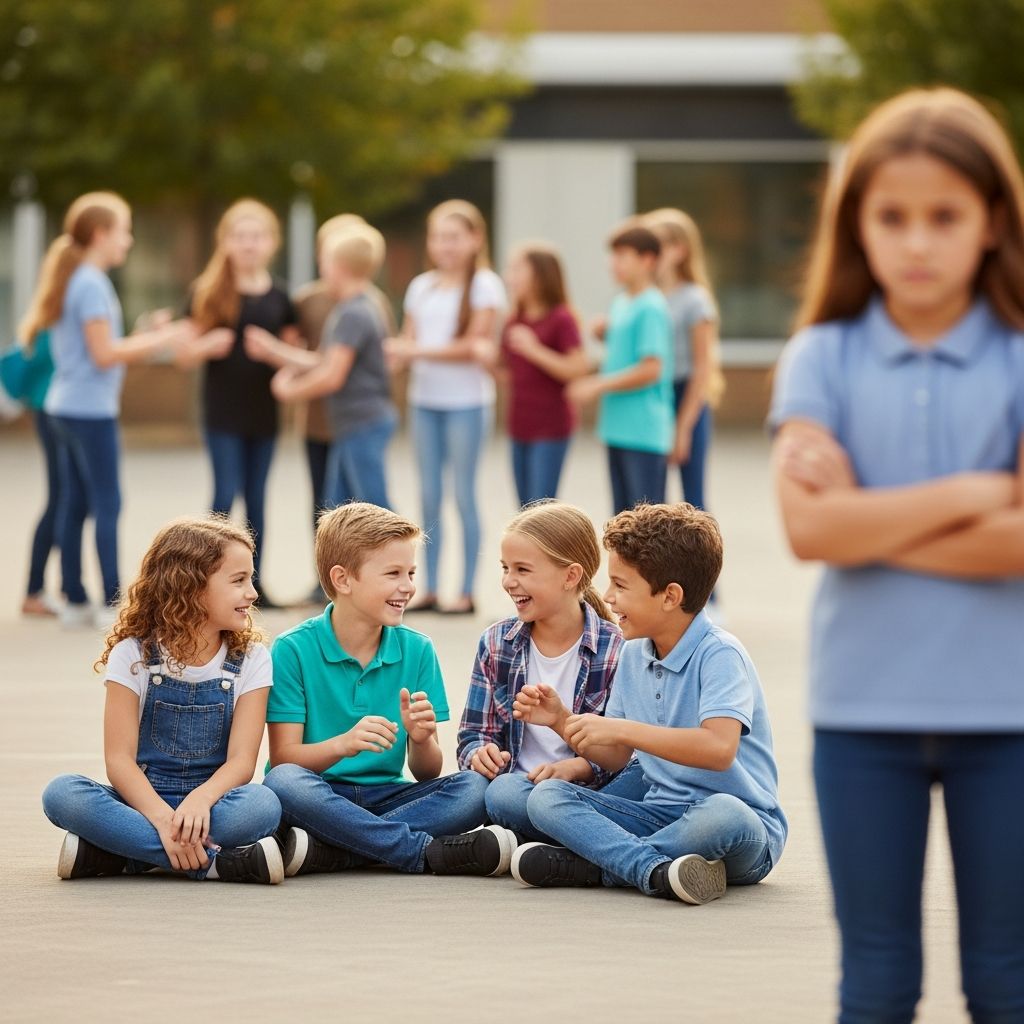
School friendships are often a source of joy, but they can also be confusing and painful when cliques, popularity, and exclusion enter the picture. Parents frequently see their once-confident child suddenly worried about fitting in, dressing a certain way, or being accepted by a specific group. Understanding what cliques are and how they work can make it easier to support kids through these challenging social dynamics.
Developmental researchers note that forming small, close peer groups is a normal part of growing up and can help children feel a sense of belonging and identity. At the same time, tightly knit groups can become hurtful when they are built on exclusion, rigid rules, or unkind behavior toward others.
What Are Cliques?
In childhood and adolescence, kids often move between different kinds of peer groups. One of the most influential of these is the clique.
In social and developmental psychology, a clique is typically:
- A small group of peers (often 5–6 members) who interact frequently and regularly.
- A group whose members tend to share similar interests, appearance, or social status.
- A group that often has clear boundaries about who is “in” and who is “out”.
Cliques are different from larger “crowds,” which are more about reputation (for example, “athletes” or “band kids”) than close interaction. Kids may belong to a crowd by image, but to a clique by everyday friendship and routine contact.
Why Cliques Are So Powerful for Kids and Teens
During late childhood and especially in adolescence, peer relationships become a central part of how kids see themselves. Research shows that cliques can play an important role in social and emotional development, sometimes in both helpful and harmful ways.
Potential Benefits of Close Peer Groups
When they are healthy, tight-knit groups can provide:
- Belonging and identity: Kids feel connected to others who share interests, values, or experiences.
- Practice with social skills: Regular interaction gives kids a chance to learn cooperation, empathy, and conflict resolution.
- Emotional support: Friends can offer encouragement and comfort when school, family, or life feel stressful.
When Cliques Become a Problem
Cliques can also create stress when they are rigid, hierarchical, or centered on exclusion. Some warning signs include:
- Pressure to conform in appearance, behavior, or interests to stay accepted.
- Shunning or ignoring kids who are different or who “break the rules.”
- Using gossip, teasing, or online posts to control or hurt others.
- Discouraging members from having other friendships or activities outside the group.
Studies indicate that membership in highly status-focused or aggressive peer groups is linked with more conflict and higher rates of externalizing problems such as rule-breaking or aggression.
How to Recognize Unhealthy Clique Dynamics
Not every close friend group is a clique, and not every clique is toxic. Parents can watch for patterns that suggest the group is starting to cause harm to their child or to others.
| Healthier Group Traits | Concerning Clique Traits |
|---|---|
| Kids can be themselves without fear of being dropped. | Kids feel they must constantly impress or imitate the leader. |
| Friendships are open to new people and overlapping groups. | Group strongly discourages friendships outside the clique. |
| Disagreements happen but are discussed and resolved. | Conflict leads to silent treatment, public shaming, or expulsion. |
| Members support each other’s interests and achievements. | Successes are mocked, minimized, or used as leverage. |
| Group does not target other kids. | Group uses gossip, rumors, or bullying to stay “on top.” |
Signs Your Child Is Struggling With Clique Issues
Kids are not always able or willing to describe what is happening socially, but changes in behavior can offer important clues. Parents might notice that a child:
- Suddenly stops being invited to hangouts, parties, or group chats.
- Frequently checks their phone and appears anxious or upset after reading messages.
- Talks about a group in terms of “they let me” or “they won’t let me” do things.
- Begins to change clothing, interests, or opinions overnight just to please the group.
- Shows mood changes such as irritability, sadness, or withdrawal after school.
- Makes self-critical comments like “No one likes me” or “I’m such a loser”.
Research indicates that social rejection and bullying, especially in preteens and teens, can be linked with later anxiety, depression, and poorer health outcomes if not addressed.
Talking With Kids About Cliques
Open, nonjudgmental communication is one of the most powerful tools parents have. Kids are more willing to share when they feel heard rather than criticized.
Start the Conversation
Instead of jumping straight to advice, begin with curiosity:
- “Who do you usually sit with at lunch?”
- “What’s it like in your group chats these days?”
- “Are there groups at school that seem hard to get into?”
These open-ended questions invite your child to describe social dynamics without feeling cornered.
Listen Without Rushing to Fix
When kids share something painful, it is natural to want to immediately step in. But often, they need empathy first:
- Reflect back feelings: “It sounds like you felt really left out when that happened.”
- Avoid minimizing: Skip comments like “It’s not a big deal” or “You’ll laugh about this later.”
- Ask permission before offering advice: “Do you want ideas, or do you mostly need to vent?”
Normalize Their Experience
Let children know that:
- Many kids and adults have felt excluded at some point.
- It is common for friend groups to shift, especially in middle school and high school.
- Needing friends is healthy, but their worth is not defined by one group’s opinion.
Helping Kids Respond to Exclusion and Peer Pressure
Coping skills and problem-solving strategies can help kids feel less trapped by clique dynamics. Parents can coach children through specific situations and even role-play conversations.
Practical Strategies Kids Can Use
- Use “I” statements to assert feelings: “I don’t like it when we make fun of people who aren’t here.”
- Set boundaries with group rules that feel wrong: “I’m not going to send that picture” or “I don’t want to be part of that chat.”
- Step away calmly from hurtful conversations: “I’ve got to go, I’ll talk to you later.” Then leave the conversation, both in person or online.
- Seek out kinder peers in class, clubs, sports, or online interest groups that are supervised and safe.
- Limit exposure to social media accounts or group chats that constantly cause stress.
Evidence from school-based social-emotional programs suggests that practicing assertive communication and perspective-taking can improve peer relationships and reduce bullying.
What Parents Can Do Behind the Scenes
Beyond direct conversations, there are many ways parents can quietly support kids as they navigate shifting friend groups.
1. Build a Strong Foundation of Self-Worth
When kids feel valuable for who they are, they are less likely to tolerate cruel behavior just to stay in a group. Parents can:
- Notice and praise effort, kindness, and integrity, not just achievements.
- Encourage a mix of activities (arts, sports, volunteering, hobbies) so identity is not tied to one group.
- Share stories from your own life about times you stood up for yourself or changed friend groups.
2. Encourage Diverse Social Circles
Having more than one group of friends protects kids from feeling destroyed if one group changes or dissolves.
- Support involvement in clubs, teams, or community programs where they can meet peers with similar interests.
- Arrange opportunities to see friends from outside school, such as neighbors, cousins, or family friends.
- Welcome different kinds of friends into your home so your child sees that you value variety and inclusion.
3. Stay Attuned to Mental Health
If clique problems begin to affect sleep, appetite, grades, or overall mood, it may be time to seek additional support. Look for:
- Persistent sadness or tearfulness.
- Frequent physical complaints like headaches or stomachaches with no clear medical cause.
- Talk of feeling “worthless” or “like nobody would miss me.”
Pediatricians and mental health professionals can help assess whether a child’s reactions fall within a typical range or suggest depression, anxiety, or other concerns.
Working With Schools on Clique and Bullying Issues
Schools play a central role in shaping peer culture. Research-backed anti-bullying and social-emotional learning programs can reduce aggressive behavior and improve school climate when implemented consistently.
When to Contact the School
Reach out to teachers, counselors, or administrators if:
- Your child is being threatened, harassed, or physically harmed.
- Rumors, social media posts, or group chats are creating ongoing distress.
- Your child fears going to school or asks to stay home frequently.
Keep a brief log of incidents, including dates, locations, and screenshots (if safe and appropriate). This can help staff understand the pattern and respond more effectively.
How to Approach School Staff
- Start from a stance of collaboration, not blame: “I’d like to work together to help my child feel safe and connected.”
- Ask what supports and policies the school already has around bullying, digital citizenship, and conflict resolution.
- Stay in communication about what is improving and what still needs work.
Supporting Kids Who Are Inside the Clique
Sometimes the child you are worried about is not the one being excluded, but the one in the powerful group. Kids inside status cliques can also feel pressure to go along with unkind behavior to keep their place.
Help Them See the Invisible Costs
Talk with your child about how:
- It can feel “safe” to be in charge, but it also creates constant pressure to maintain status.
- Hurting others to stay popular can damage their own self-respect and long-term reputation.
- Kindness and inclusion often lead to more stable, trusting friendships over time.
Teach Bystander Skills
Kids in cliques have real power to change the tone of the group. Work on small, realistic actions such as:
- Refusing to share or like posts that mock others.
- Changing the subject when gossip starts.
- Checking in privately with a classmate who has been excluded.
- Inviting someone new to join a lunch table, group project, or game.
Long-Term Perspective: Cliques Don’t Last Forever
Cliques often feel permanent to kids, but studies of adolescent development show that peer groups tend to shift as young people mature, change schools, or explore new roles. Over time, many teens move from larger status groups toward a few close, reciprocal friendships that are based less on image and more on trust and shared values.
Parents can gently remind kids that:
- The people who seem most important in one grade may not be part of their life in a few years.
- Learning to choose good people over “popular” people is a life skill.
- Respecting others and staying true to themselves matters more than impressing a particular group.
Frequently Asked Questions (FAQs)
Is every close friend group a clique?
No. A small group of friends becomes a clique when it is defined by strong boundaries, strict rules about who belongs, and a pattern of exclusion or control. Many close friend groups are supportive and flexible rather than controlling or status-driven.
Should I tell my child to leave their clique?
Rather than giving an ultimatum, explore how the group makes your child feel and whether it aligns with their values. You can help them set boundaries, build connections elsewhere, and gradually spend more time with kinder peers. Sudden cutoffs can backfire if the group is central to their current social life.
How do I know if the situation is bullying rather than normal conflict?
Normal conflict tends to be occasional, balanced, and resolved with communication. Bullying involves a pattern of behavior where there is a power imbalance (such as social status or group size), intent to harm, and repeated actions like exclusion, name-calling, or spreading rumors.
When should I involve a therapist?
Consider professional support if clique issues are causing ongoing changes in mood, sleep, appetite, school performance, or if your child expresses hopelessness or talks about self-harm. A licensed mental health professional can help with coping skills, self-esteem, and safety planning.
Can boys be affected by cliques as much as girls?
Yes. While people often associate cliques with girls, research shows that both boys and girls form close peer groups and can experience pressure or exclusion within them. The behaviors may look different (for example, more overt teasing or physical dominance among some boys), but the emotional impact can be similar.
References
- Adolescent clique — Summary of research on cliques in adolescence, including group size, homogeneity, and developmental role. 2023-08-01. https://en.wikipedia.org/wiki/Adolescent_clique
- Crowds, Cliques, and Close Friendship – Middle Childhood and Adolescent Psychology — Liu Q. Wisconsin Pressbooks / University of Wisconsin System. 2025. https://wisconsin.pressbooks.pub/adolescentpsychology/chapter/peer-relationships/
- Preventing bullying — Centers for Disease Control and Prevention (CDC). 2023-01-13. https://www.cdc.gov/violenceprevention/youthviolence/bullyingresearch/fastfact.html
- Adolescence and the Power of Social Cliques — Pickhardt C. Psychology Today. 2021-12-19. https://www.psychologytoday.com/us/blog/surviving-your-childs-adolescence/202112/adolescence-and-the-power-of-social-cliques
- Structure Matters: The Role of Clique Hierarchy in Adolescent Aggression and Prosocial Behavior — de la Haye K, et al. PLOS ONE. 2015-11-10. https://www.ncbi.nlm.nih.gov/pmc/articles/PMC4636991/