Parents often walk a tightrope between wanting to share silly, slightly cheeky jokes with their kids and worrying about crossing a line. The good news is that it is possible to enjoy “dirty” jokes as a family when the dirt is just mud, mess, and wordplay, not anything inappropriate. This guide shows you how to use playful double meanings and mild gross-out humor to keep everyone laughing while staying age-appropriate.
Why Kids Love Slightly “Naughty” Humor
Children quickly learn that certain words and topics feel a little off-limits, which makes them incredibly funny. Tapping into that feeling—without drifting into adult themes—can turn joke time into a favorite family ritual.
- Transgression feels exciting: Kids love the sense that they are getting away with something, even when the joke is totally harmless.
- Gross is funny: Jokes about mud, slime, stinky feet, or messy food match children’s natural fascination with the physical world.
- Wordplay feels clever: As kids develop language skills, they enjoy jokes that show they understand multiple meanings of words.
Psychologists note that humor helps children practice flexible thinking and understand that the same situation can be interpreted in more than one way. This is exactly what double-meaning jokes are built on.
How Double Meanings Turn Into Clean “Dirty” Jokes
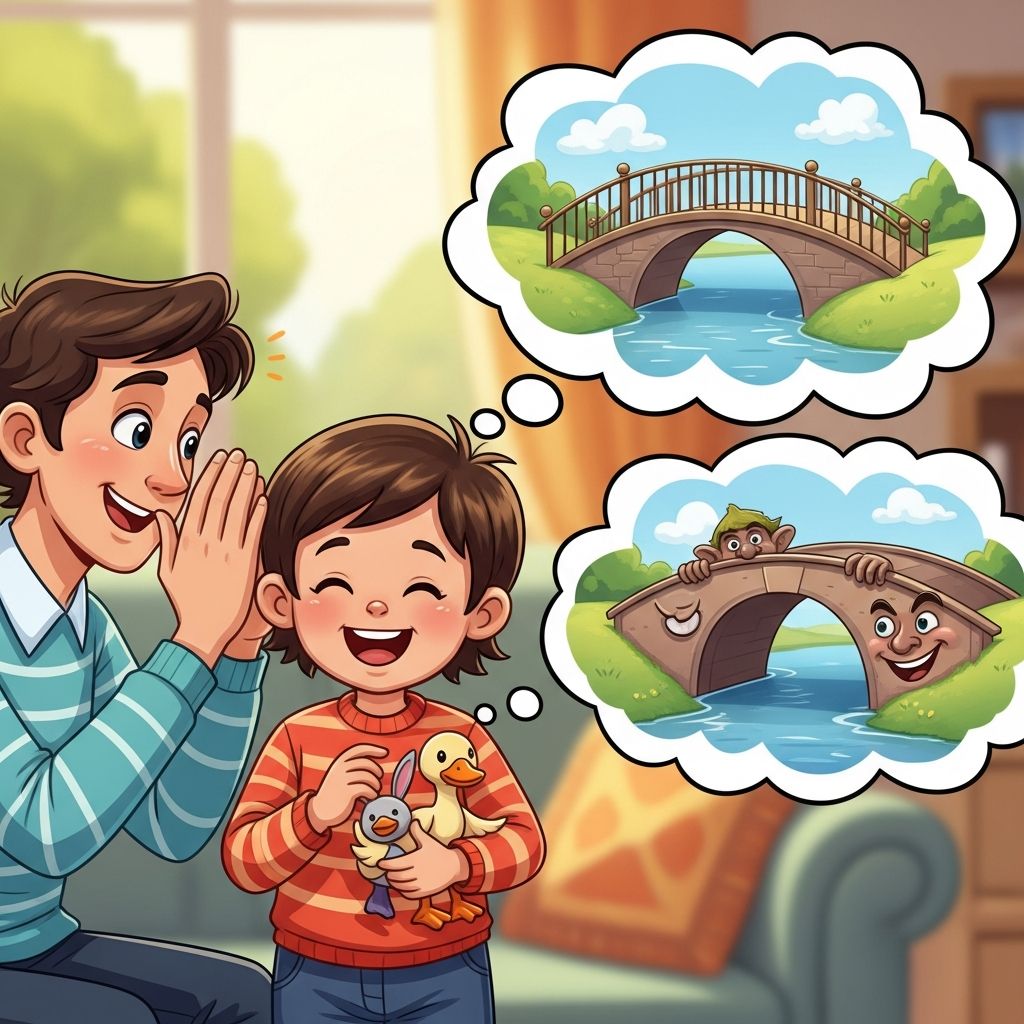
Most family-safe “dirty” jokes are not actually inappropriate. Instead, they rely on words that sound like they could be rude but are used in an innocent context. This creates just enough tension to feel mischievous, then safely releases it with a silly punchline.
A simple way to understand these jokes is to break them into three parts:
- Expectation: The setup suggests something a bit edgy or odd.
- Twist: The punchline reveals an innocent or literal meaning.
- Relief: Everyone laughs because the joke stayed safe while flirting with the taboo.
| Joke Style | What Feels “Dirty” | Why It’s Still Clean |
|---|---|---|
| Messy humor | Mud, slime, bathroom implied | Stays focused on kid-level grossness, not adult topics |
| Double meanings | Words that could be rude | Punchlines use the innocent meaning of the word |
| Fake shock | Setup sounds outrageous | Payoff is completely silly and child-appropriate |
Setting Simple Ground Rules for Family Joke Time
Before you unleash a wave of semi-naughty wordplay, it helps to set clear, age-appropriate boundaries. Research on media and child development suggests that parental guidance is most effective when adults explain why certain content is okay or not, instead of just banning it.
Here are easy rules you can explain to kids:
- No jokes that insult people: Jokes can be silly, but not mean about someone’s body, identity, or background.
- Keep it classroom-safe: If you wouldn’t say it in front of a teacher, it probably doesn’t belong in family joke time.
- Avoid real bathroom details: Hints and wordplay are okay; graphic descriptions are not.
- Respect the youngest listener: If there’s a toddler in the room, aim for jokes everyone can hear.
Benefits of Clean Double-Meaning Jokes for Kids
These jokes do more than get a laugh. They also support skills that matter for school and social life.
- Language and vocabulary: Puns and wordplay help kids recognize multiple meanings of words, a key part of reading and language development.
- Timing and storytelling: Telling a joke teaches kids how to build suspense and deliver a payoff.
- Confidence: Making others laugh can boost self-esteem and improve social connections.
- Stress relief: Humor helps both kids and adults cope with everyday stress and increases resilience.
Age-by-Age Guide to Slightly Cheeky, Still-Clean Jokes
Not every joke fits every child. Here’s how to match the style of humor to your kid’s stage without losing the playful edge.
For Younger Kids (Around Ages 4–7)
Younger children love repetition, silly sounds, and simple punchlines. Their sense of what’s “naughty” is usually limited to:
- Messy food and mud
- Stinky socks or shoes
- Ridiculous misunderstandings
At this age, lean on:
- Knock-knock jokes with harmless surprises
- Animal mishaps that sound embarrassing but are just silly
- Body-adjacent humor that stays vague and not graphic
For Big Kids (Around Ages 8–12)
Older kids grasp sarcasm, irony, and layered meanings, which opens the door to more clever double-meaning jokes. They enjoy:
- Puns and wordplay that let them show off verbal skills
- Fake “grown-up” jokes that turn harmless at the punchline
- Expectation-busting endings that sound edgy, then swerve to something innocent
You can talk openly with this age group about what makes a joke cross the line, and invite them to help enforce your family’s humor rules.
Tips for Parents: How to Tell Cheeky Jokes Without Cringing
Sharing jokes with your kids shouldn’t feel like a risk. Use these strategies to stay in the safe zone.
- Read the room: If a joke makes you tense even before you say it, skip it or soften the wording.
- Model the right reaction: If a joke goes too far, stay calm and explain why it wasn’t okay instead of overreacting.
- Turn risky jokes into teachable moments: Ask your child, “How could we change that joke so it’s funny and kind?”
- Encourage creativity: Challenge kids to invent their own double-meaning jokes that follow your rules.
Creating Your Own Clean Double-Meaning Jokes
You don’t have to rely only on lists of prewritten jokes. Inventing your own together can be one of the funniest parts of family time.
Step-by-Step Joke-Building Formula
- Pick a “dangerous” word: Choose a word that sounds a little edgy but has a normal meaning (like “butt” in “butter” or “booty” as treasure).
- Find the innocent angle: Focus your punchline on the harmless meaning.
- Add surprise: Make the setup suggest something outrageous, then resolve it with the innocent version.
- Test it out: Ask, “Would this be okay in front of Grandma or a teacher?” If yes, you’re good.
Family Brainstorming Prompts
Use these prompts at dinner or in the car to invent new jokes:
- “What’s the messiest thing that could happen at school but still be funny?”
- “What word sounds like it might be rude but really isn’t?”
- “How could an animal accidentally embarrass itself in a silly way?”
Using Jokes to Bond as a Family
Certain jokes become part of a family’s shared language—lines that everyone knows and can quote. These running gags build a sense of belonging and help kids feel securely connected to parents.
Research on family routines shows that predictable, shared activities like game nights, story time, or joke sessions contribute to stronger emotional bonds and better communication. When you regularly share jokes, you create tiny rituals that help kids feel safe, seen, and understood.
Easy Ways to Add Joke Time to Your Routine
- Breakfast giggles: Start each day with one “semi-naughty” but clean joke before school.
- Joke jar: Keep a jar of folded slips with jokes your family has collected or invented. Pull one at dinner.
- Car-ride comedy: Let each person tell one joke per red light on the way to activities.
- Bedtime banter: End the day with one silly joke, then invite kids to make up a new version.
How to Say “No” Without Killing the Fun
Kids will inevitably test limits by bringing home jokes from friends or the internet. When a joke clearly crosses your family’s line, you can still respond in a way that teaches rather than shames.
- Stay calm: Take a breath before reacting. Remember they may not fully understand why it feels wrong.
- Explain clearly: Use simple language like, “That joke makes fun of people’s bodies, and in our family we don’t laugh at that.”
- Offer an alternative: Suggest a way to rewrite the joke so it keeps the structure but loses the target.
- Reinforce your rules: Remind them of your “classroom-safe” or “kind-to-everyone” guideline.
Frequently Asked Questions (FAQs)
How can I tell if a “dirty” joke is still kid-appropriate?
Ask yourself three quick questions: Does it make fun of a group of people? Does it use graphic body or sexual content? Would I be embarrassed if a teacher heard my child repeat it? If the answer is yes to any of these, skip it or rewrite it.
My older child knows real dirty jokes from friends. What should I do?
Acknowledge that they will hear things outside your control, then calmly explain which types of jokes your family doesn’t repeat and why. Invite them to help you create clever, clean alternatives so they still feel included socially without spreading hurtful or explicit humor.
Can joke-telling really help my child’s learning?
Yes. Wordplay jokes rely on vocabulary, reading between the lines, and understanding double meanings, all of which support literacy and language skills. They also practice memory, sequencing, and performance skills when telling the joke to others.
What if my child gets obsessed with one gross joke and repeats it nonstop?
Normalize the phase but set limits. You might say, “That joke is for outside only,” or, “You can tell that one twice a day.” Then redirect their creativity by challenging them to invent three new, less-gross jokes to add to the family joke jar.
Is it okay if I genuinely find these jokes annoying?
You don’t have to love every joke to support your child’s sense of humor. It’s fine to say, “That one’s not my favorite, but I like how creative you’re being,” or to gently steer toward jokes you enjoy more. The goal is shared connection, not pretending every punchline is hilarious.
References
- McGhee, Paul E. “Understanding and Promoting the Development of Children’s Humor.” — International Journal of Humor Research. 2002-06-01. https://doi.org/10.1515/humr.2002.011
- American Academy of Pediatrics. “Media and Young Minds.” — Pediatrics. 2016-11-01. https://doi.org/10.1542/peds.2016-2591
- Filippova, Eva, and Janet Wilde Astington. “Further Development in Social Reasoning Revealed in Discourse Irony Understanding.” — Child Development. 2008-01-01. https://doi.org/10.1111/j.1467-8624.2007.01120.x
- Martin, Rod A. “Humor, Laughter, and Physical Health: Methodological Issues and Research Findings.” — Psychological Bulletin. 2001-07-01. https://doi.org/10.1037/0033-2909.127.4.504
- National Association for the Education of Young Children. “The Power of Playful Learning in the Early Childhood Setting.” — NAEYC. 2020-03-01. https://www.naeyc.org/resources/topics/play