Understanding the Choking Risk in Young Children
Choking represents a significant health threat for infants and young children, particularly those under five years of age. The vulnerability stems from developmental factors: children in this age group are still mastering the complex coordination required for safe eating, and their airway passages are proportionally smaller than those of older children and adults. When food or small objects become lodged in the throat, they can obstruct oxygen flow to the lungs and brain. Brain damage or fatal outcomes can occur within minutes when oxygen deprivation continues unchecked. Parents and caregivers must understand that choking emergencies require immediate intervention and prevention through careful food selection and supervision practices.
High-Risk Foods That Require Special Attention
Certain foods present substantially greater choking dangers than others due to their physical properties. Round, firm, and sticky foods pose particular risks because they can lodge in a child’s airway and resist dislodgment. Children younger than four years should never receive these foods unless they have been appropriately prepared and cut into very small pieces.
Foods That Demand Careful Preparation
- Meat products: Hot dogs, sausages, and chunks of poultry should be sliced lengthwise into thin strips and then cut into bite-sized segments rather than served as rounds.
- Fresh produce: Whole grapes, chunks of apples, raw carrots, celery, and other firm vegetables require either cooking until soft or cutting into appropriately small pieces.
- Protein sources: Nuts, seeds, peanut butter chunks, and cheese cubes present hazards and should be avoided or modified by grating, slicing thinly, or grinding.
- Candy and sweets: Hard candy, caramels, marshmallows, and chewing gum should not be given to young children due to their tendency to become stuck or cause aspiration.
- Snack foods: Popcorn, whole seeds, and watermelon with seeds create obvious obstruction risks.
Optimal Food Preparation Techniques
The manner in which food is prepared directly influences its safety for young children. Proper preparation transforms potentially dangerous foods into safe meal components suitable for developing palates and swallowing abilities.
Modifying Texture and Consistency
Hard foods like raw vegetables should be softened through cooking or steaming until they can be pierced easily with a fork, indicating they will not require forceful chewing. This approach allows children to enjoy nutritious foods while eliminating choking hazards. Grinding tough meats and poultry creates a texture that children can safely manage without risk of large pieces becoming lodged.
Appropriate Sizing Standards
Food pieces should never exceed one-half inch in diameter. This measurement corresponds to the typical size of a young child’s throat. Some foods with unusual shapes require special cutting techniques: tube-shaped foods like hot dogs and baby carrots should be cut lengthwise into strips rather than sliced into rounds, which can create seal-like pieces that obstruct airflow. Round foods such as grapes must be cut into quarters to reduce aspiration risk significantly.
Removing Problematic Components
Before serving, all seeds, pits, bones, and tough skins should be removed from fruits, vegetables, and proteins. Cheese should be grated or thinly sliced rather than cut into cubes that present significant hazards. These preparation steps require minimal additional effort but substantially reduce risk.
Creating Safe Eating Environments and Practices
Food preparation represents only one component of comprehensive choking prevention. The environment in which children eat and the behaviors modeled during meals are equally important for maintaining safety.
Positioning and Supervision During Meals
Children must always sit upright while eating—never lying down, crawling, or in positions that compromise swallowing mechanics. High chairs for younger children and proper dining chairs for older toddlers provide secure positioning that facilitates safe eating. Parents and caregivers should maintain constant visual supervision during all eating occasions, remaining close enough to intervene immediately if choking begins. This active presence also allows adults to model appropriate eating behaviors and provide reminders about pacing and chewing.
Eliminating Distractions
Television, tablets, smartphones, and other electronic devices should be turned off during meal and snack times. Distractions compromise a child’s focus on the eating process and can lead to rushed consumption or attempts to swallow improperly chewed food. Mealtimes should remain calm, unhurried, and free from disruptions that might encourage hasty eating. Games involving food or playful interactions that distract from the eating task increase choking likelihood and should be avoided entirely.
Teaching Proper Eating Technique
Children benefit from explicit instruction about safe eating practices. Adults should remind children to take small bites, chew food thoroughly before swallowing, and avoid talking or laughing with food in their mouths. When older children eat with younger siblings, they can model these behaviors, demonstrating how to eat slowly and deliberately. Parents who eat alongside their children provide the most powerful behavioral examples and can immediately address unsafe practices.
Location-Based Safety Considerations
Where children eat significantly impacts choking risk. Eating in vehicles creates particular hazards because parents cannot safely respond to a choking emergency while driving. If a child begins choking in a moving vehicle, the driver must find a safe location to stop before providing assistance—potentially critical minutes may be lost. Similarly, eating while crawling or walking with food in the mouth substantially increases aspiration risk. Strollers, car seats while traveling, and other mobile situations should not include eating opportunities for young children.
Non-Food Choking Hazards in the Home
Beyond food-related risks, numerous household items and toys present choking dangers that parents often overlook. Infants and young children instinctively explore their environment by placing objects in their mouths, making it essential to control access to small items.
Identifying Small Objects
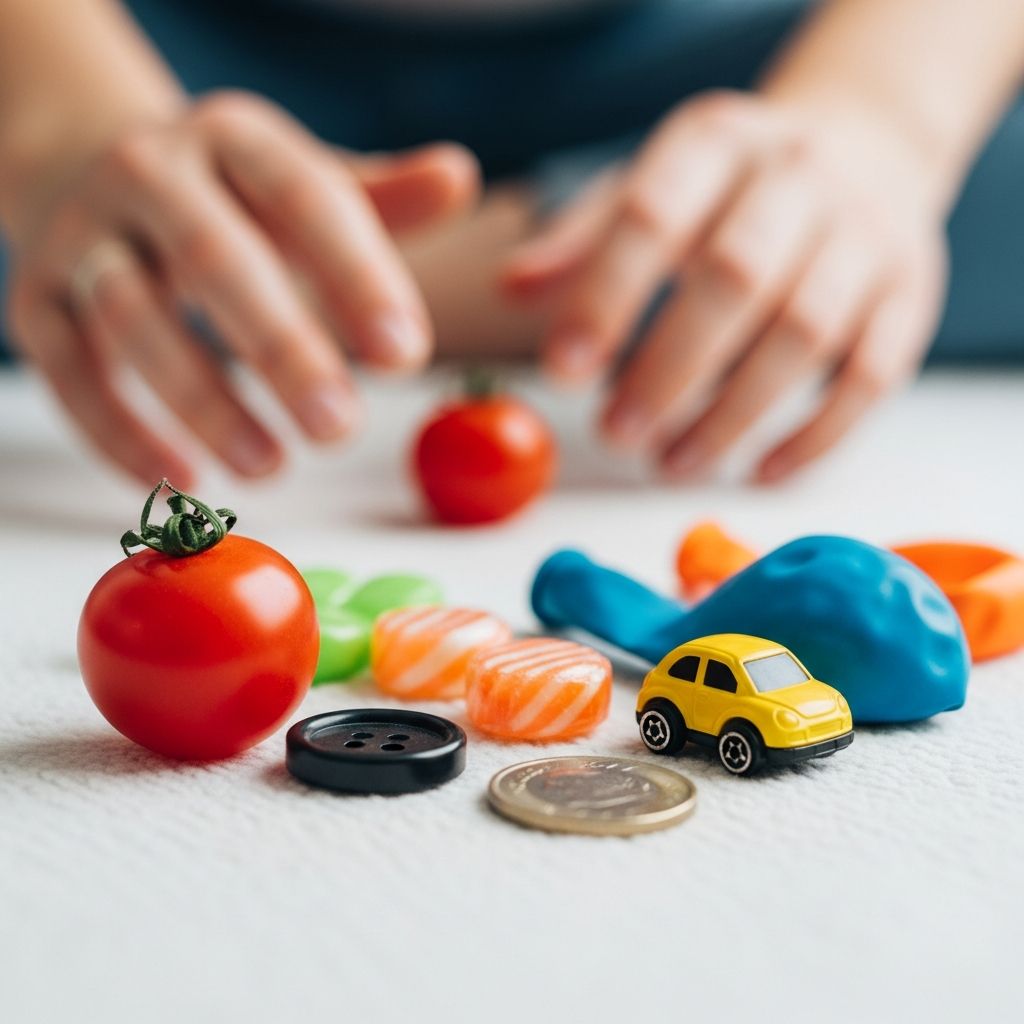
Any item that fits inside a toilet paper tube is too small for young children to have access to without supervision. This simple test identifies numerous hazards: coins, buttons, small game pieces, pen caps, hair clips, batteries (especially dangerous button batteries), and magnets should all be stored securely out of reach. Parents should periodically check under furniture, between cushions, and in other spaces where small objects accumulate and young children explore.
Toy Safety and Inspection
Before giving toys to young children, carefully inspect them for small parts that could detach and become choking hazards. Stuffed animals’ eyes and noses, toy wheels, loose buttons, and small hinges should be checked regularly. Broken toys should be discarded immediately rather than repaired or set aside. Parents should follow age recommendations on toy packaging, as these guidelines reflect both choking hazards and developmental appropriateness. Small parts test devices, available at many toy and specialty stores, help determine whether an object is too small for young children.
Balloon Safety
Latex balloons pose choking risks to children up to eight years of age because latex can stretch and conform to a child’s throat, blocking the airway even if the balloon is not fully inflated. Mylar or foil-type balloons present much lower risks and are preferable for celebrations involving young children.
Supervising Older Children to Protect Younger Siblings
Many choking incidents occur when older siblings or playmates give younger children unsafe foods, toys, or small objects. Older children may not recognize hazards or understand why certain items are forbidden for younger family members. Parents must actively supervise interactions between children of different ages, clearly communicate which foods and objects are off-limits for younger siblings, and monitor what older children leave within reach. Regular reminders help older children internalize safety awareness and become protective rather than accidental sources of danger for younger family members.
Emergency Preparedness and Response Knowledge
Despite excellent prevention practices, choking incidents can still occur. Parents and caregivers should invest time in learning first aid and cardiopulmonary resuscitation (CPR) techniques specific to infants and children. This knowledge empowers caregivers to respond effectively during emergencies and may mean the difference between a resolved incident and permanent injury or death. Many community organizations and hospitals offer abbreviated training courses designed specifically for parents and childcare providers.
Frequently Asked Questions
At what age can children safely eat popcorn and nuts?
Most choking prevention guidelines recommend waiting until children are at least four years old before introducing these foods, and some experts suggest waiting until age five or six. Even then, careful supervision and confirmation that the child can chew thoroughly before swallowing is essential.
How should I cut grapes safely for my toddler?
Whole grapes should be cut into quarters lengthwise. This eliminates the round shape that can seal a child’s throat and makes pieces small enough to prevent obstruction.
What should I do if my child is choking but coughing?
If a child is coughing forcefully, their airway is at least partially open. Encourage continued coughing and remain nearby to monitor the situation. Only if coughing becomes ineffective should you perform choking rescue techniques. Call emergency services immediately.
Are there specific choking signs I should watch for?
Signs include sudden inability to cry or speak, difficulty breathing or wheezing sounds, weak or no cough, difficulty swallowing, and bluish skin color. Any of these signs requires immediate intervention.
Can I safely give my child peanut butter?
Peanut butter in chunks or thick spoonfuls is a choking hazard. Instead, spread thin layers on bread or crackers, or mix into foods like applesauce. Always supervise closely and ensure the child takes small amounts.
How often should I check toys for loose parts?
Inspect toys regularly—at least weekly for frequently used toys and monthly for others. After rough play or if you notice any damage, check immediately before allowing continued use.
References
- Choking Hazards | Infant and Toddler Nutrition — Centers for Disease Control and Prevention. 2024. https://www.cdc.gov/infant-toddler-nutrition/foods-and-drinks/choking-hazards.html
- Choking Prevention — Nationwide Children’s Hospital, Center for Injury Research and Policy. 2024. https://www.nationwidechildrens.org/research/areas-of-research/center-for-injury-research-and-policy/injury-topics/general/choking-prevention
- Reducing the Risk of Choking in Young Children at Mealtimes — U.S. Department of Agriculture, Food and Nutrition Service. https://wicworks.fns.usda.gov/sites/default/files/media/document/English_ReducingRiskofChokinginYoungChildren.pdf
- Preventing Choking — Nemours KidsHealth. 2024. https://kidshealth.org/en/parents/safety-choking.html
- Choking Prevention for Babies & Children — American Academy of Pediatrics, HealthyChildren.org. 2024. https://www.healthychildren.org/English/health-issues/injuries-emergencies/Pages/Choking-Prevention.aspx
- Choking Prevention and Awareness — Seattle Children’s Hospital. 2024. https://www.seattlechildrens.org/health-safety/injury-prevention/choking/