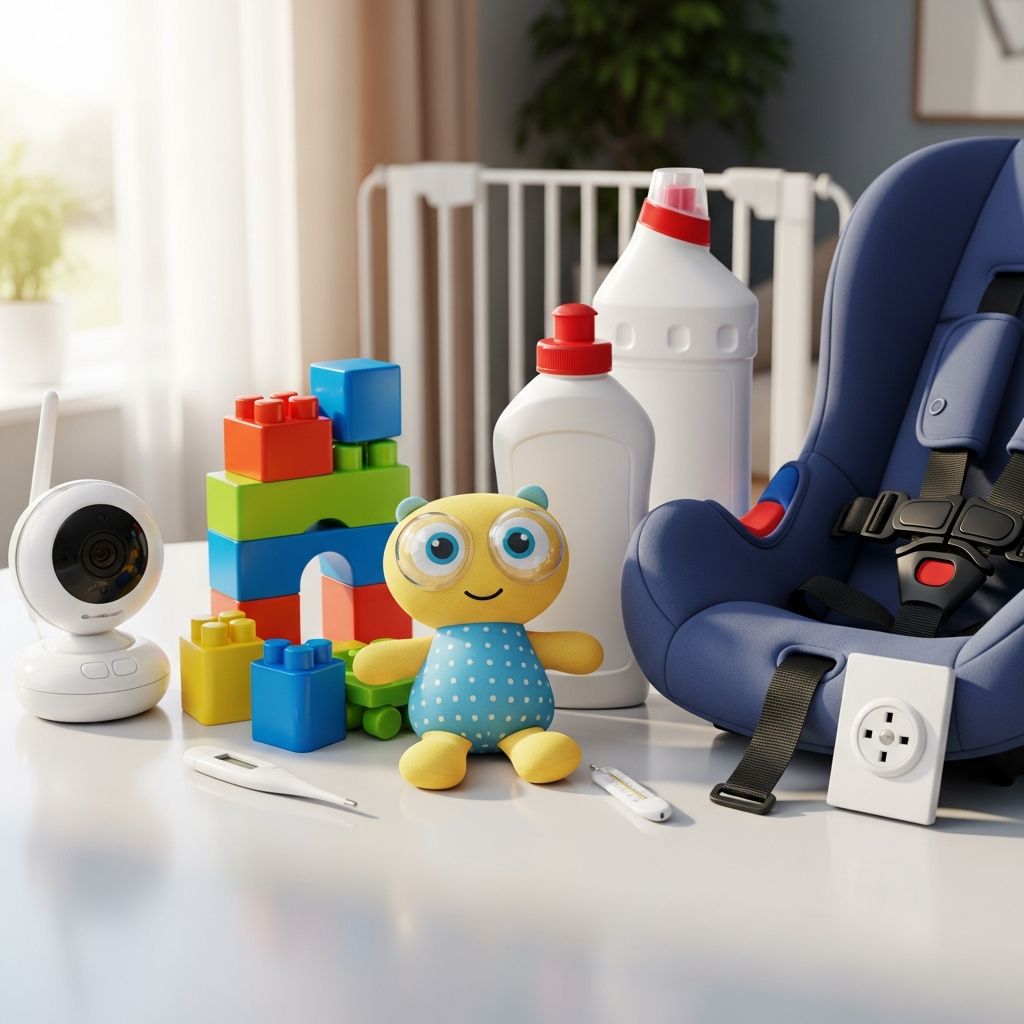
Protecting children from everyday product hazards requires vigilance and knowledge of safety standards. This guide equips parents with practical steps to evaluate toys, furniture, clothing, and gear, drawing from federal regulations and expert recommendations to minimize risks like choking, chemical exposure, and injuries.
Understanding What Qualifies as a Children’s Product
Federal law defines a **children’s product** as any consumer item designed or intended primarily for children 12 years old or younger. This includes toys, clothing, car seats, feeding items, and sleep products. Determination factors encompass manufacturer statements, packaging, marketing, and common consumer perceptions—not just labels. Manufacturers influence classification through design and promotion, but the Consumer Product Safety Commission (CPSC) makes the final call. Err on caution: if unsure, treat it as a children’s product to comply with strict rules.
Examples of covered items: toys, children’s cosmetics and jewelry under age 12, sucking/teething aids, sleep/relaxation products, clothing/footwear, and infant car seats. Exclusions apply to adult-oriented items like lighters or child-resistant packaging.
Key Federal Laws and Certifications for Protection
The **Consumer Product Safety Improvement Act (CPSIA) of 2008** revolutionized safety by mandating third-party testing, lead limits (phased to 100 ppm), phthalate bans, and tracking labels for durable infant products. It enforces standards for cribs, play yards, bath seats, and toys, ensuring pre-market testing.
Trusted certifications include:
- ASTM International: Develops standards for toys, cribs, high chairs; voluntary but widely adopted for performance and hazard prevention.
- CPSC: Oversees recalls and rules; check cpsc.gov for compliance.
- JPMA: Certifies juvenile gear like strollers and car seats via independent testing.
- OEKO-TEX or GOTS: For textiles, verifying absence of harmful chemicals like PFAS.
Children’s products must have a Children’s Product Certificate (CPC) post third-party testing for rules like lead, phthalates, and toy safety (ASTM F963).
Step-by-Step Checklist for Safe Product Selection
Follow this structured approach to vet products effectively.
1. Verify Age Appropriateness
Age grading reflects developmental stages, motor skills, and behavior to prevent choking, entrapment, or misuse. A toy for 3+ may choke infants; respect labels to match child’s abilities.
2. Confirm Safety Certifications and Testing
Look for ASTM, JPMA, or CPSIA-compliant labels. Online imports often skip U.S. standards—prioritize certified items.
3. Inspect Materials for Hidden Dangers
| Product Type | Key Checks | Common Risks |
|---|---|---|
| Toys | No small/detachable parts, cords; avoid magnets, batteries | Choking, strangulation |
| Clothing/Sleepwear | Flame-resistant per Flammable Fabrics Act; no cords, PFAS-free | Burns, chemical exposure |
| Pacifiers/Bottles | Wide guards, ventilation; no lead/BPA | Choking, toxins |
| Furniture/Gear | Stable assembly, weight limits | Tipping, entrapment |
4. Review Instructions and Warnings
Follow setup, use, cleaning, and weight guidelines. Misuse causes many incidents—inspect regularly for wear.
5. Check for Recalls and Reports
Use SaferProducts.gov or CPSC recalls page before buying. Register durable products for notifications.
Common Hazards and Prevention Strategies
Choking tops risks for under-3s: avoid small parts (test with toilet paper tube). Toxic chemicals like lead, cadmium, phthalates, and flame retardants are restricted; Washington’s CSPA mandates reporting high-concern chemicals.
- Strangulation: No cords on toys/clothing; secure blinds.
- Burns: Flame-retardant sleepwear only.
- Chemical Exposure: Choose certified textiles/cosmetics.
- Mechanical Failures: Assemble per instructions; check stability.
Daily Maintenance and Long-Term Habits
Regular inspections prevent degradation. Wash textiles, test pacifier integrity, tighten furniture screws. Teach kids safe play; supervise high-risk activities. Stay updated via CPSC alerts.
Frequently Asked Questions (FAQs)
Can I label a product ‘not for children’ to skip rules?
No—labels are one factor; CPSC considers overall design/marketing. Ensure compliance if child-targeted.
What if a product lacks a CPC?
It’s non-compliant for children’s products; avoid or test independently. CPC proves third-party testing.
How do I report a unsafe product?
File at SaferProducts.gov; CPSC investigates harm/potential harm reports.
Are imported toys safe?
Not always—many bypass U.S. testing. Prioritize certified domestic options.
What’s the lead limit in kids’ products?
100 ppm per CPSIA; tested via third-party labs.
Building a Safer Home Environment
Integrate safety into routines: shop certified retailers, educate family, model caution. Informed choices reduce emergency visits—empower your parenting with these tools.
References
- The Ultimate Child Product Safety Checklist — The Lanier Law Firm. 2023. https://www.lanierlawfirm.com/child-product-safety/
- The Consumer Product Safety Improvement Act (CPSIA) Fact Sheet — Consumer Federation of America. 2013-08-05. https://consumerfed.org/pdfs/CPSIA-fact-sheet-8-5-13.pdf
- Children’s Safe Products Act (CSPA) — Washington State Department of Ecology. 2025. https://ecology.wa.gov/waste-toxics/reducing-toxic-chemicals/washingtons-toxics-in-products-laws/childrens-safe-products-act
- Children’s Products — U.S. Consumer Product Safety Commission (CPSC). 2025. https://www.cpsc.gov/Business–Manufacturing/Business-Education/Childrens-Products
- 16 CFR § 1200.2 – Definition of children’s product — Legal Information Institute, Cornell Law School. 2025. https://www.law.cornell.edu/cfr/text/16/1200.2