Guiding Your Child Through Orthodontic Treatment: What Parents Need to Know
Orthodontic treatment represents one of the most significant dental investments parents make for their children’s long-term oral health and self-confidence. When your child requires orthodontic intervention, understanding the various treatment options available, the timing of when to pursue treatment, and how to support your child through the process becomes essential. This comprehensive guide addresses the key considerations that help parents make informed decisions about their child’s orthodontic care.
When Should Your Child Begin Orthodontic Evaluation?
The journey toward a properly aligned smile often begins much earlier than many parents realize. Professional orthodontists recommend that children undergo their initial orthodontic assessment by age seven. At this developmental stage, your child typically has a combination of primary (baby) teeth and newly erupting permanent teeth, creating an ideal opportunity for orthodontists to evaluate the overall dental structure and identify potential alignment challenges.
Early evaluation does not necessarily mean immediate treatment. Instead, it allows your orthodontist to establish a comprehensive understanding of your child’s dental development trajectory. During these early assessments, professionals can detect crowding patterns, bite irregularities, and spacing issues that may benefit from intervention at a later date. This proactive approach enables orthodontists to create a personalized treatment timeline that aligns with your child’s natural development.
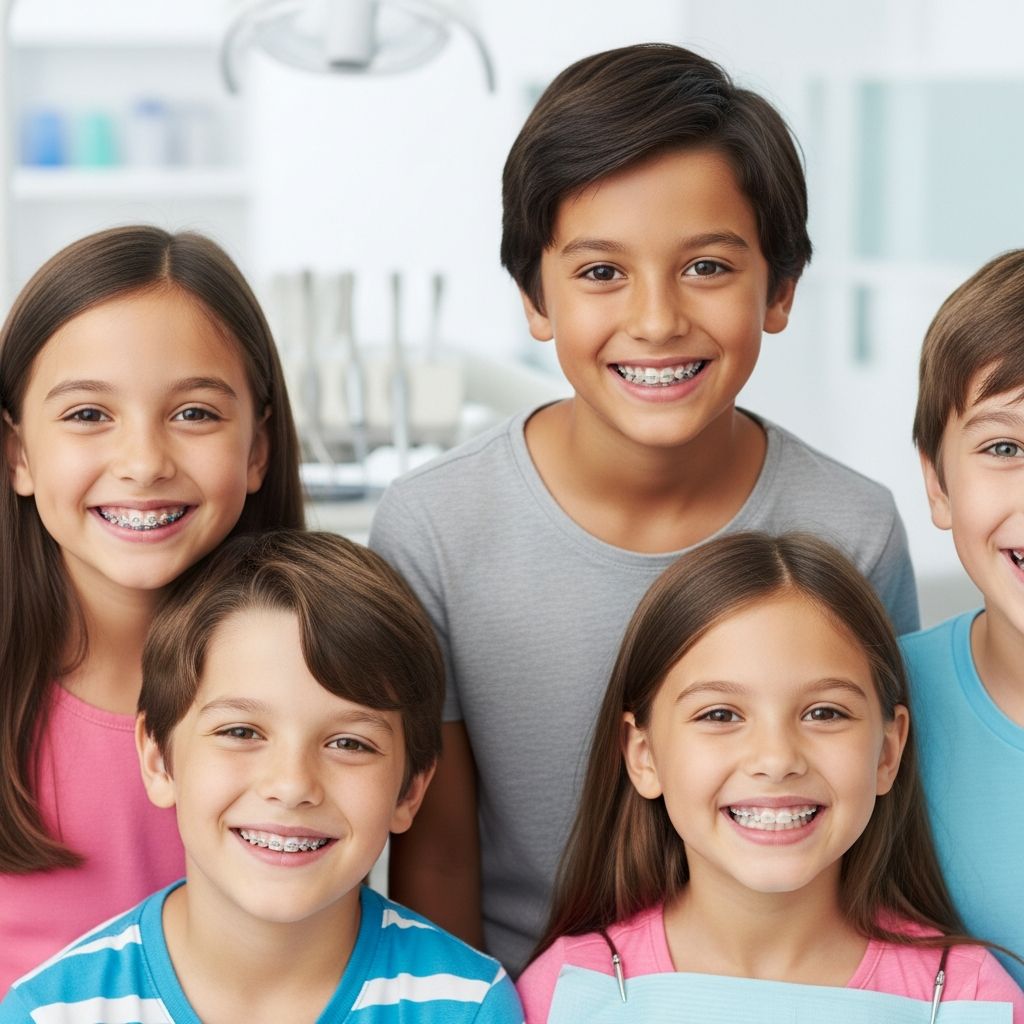
Most children receive braces sometime between ages eight and fourteen, though individual variation exists based on dental maturity and specific orthodontic needs. The timing of treatment depends on factors including the severity of misalignment, your child’s jaw development, and the complexity of the orthodontic issues requiring correction.
Exploring Available Orthodontic Treatment Options
Modern orthodontics offers multiple pathways to achieve proper dental alignment. Understanding the characteristics, advantages, and considerations of each option empowers you to have meaningful conversations with your child’s orthodontist about the most suitable approach for your family’s circumstances.
Traditional Metal Braces: The Established Standard
Metal braces represent the most widely utilized and extensively researched orthodontic treatment option. Constructed from stainless steel, these braces consist of small brackets bonded directly to each tooth and connected by a thin metal wire that applies consistent, gentle pressure to gradually move teeth into proper alignment.
Several characteristics make traditional metal braces the preferred choice for many families:
- High effectiveness across a broad spectrum of orthodontic problems, from minor crowding to complex bite irregularities
- Generally the most economical option when considering overall treatment costs
- Contemporary designs are significantly more compact and comfortable than earlier generations
- Customization opportunities through colorful elastics and bands allow children to express personal style
- Minimal maintenance requirements compared to alternative options
Advanced metal brace systems, such as self-ligating designs, incorporate innovative clip mechanisms that reduce adjustment appointment frequency and may enhance comfort during treatment. These modern advancements have made metal braces increasingly attractive to families seeking both effectiveness and convenience.
Ceramic Braces: The Aesthetic Alternative
Ceramic braces function identically to traditional metal braces in their mechanical operation, utilizing the same bracket-and-wire system to apply corrective pressure. The primary distinction lies in their appearance: ceramic brackets feature tooth-colored or clear construction, rendering them substantially less visible than their metal counterparts.
Ceramic braces appeal particularly to image-conscious children and adolescents who experience self-consciousness about visible orthodontic appliances. However, this aesthetic advantage comes with important trade-offs:
- Higher treatment costs compared to conventional metal braces
- Increased fragility of ceramic brackets, requiring cautious eating and oral hygiene practices
- Potential for tooth discoloration around bracket edges if oral hygiene is not meticulously maintained
- Similar treatment duration to metal braces for comparable orthodontic issues
Ceramic braces remain an excellent option for families prioritizing discretion while accepting the associated increased cost and care requirements.
Self-Ligating Braces: Efficiency Through Innovation
Self-ligating braces employ a specialized clip or door mechanism to secure the archwire within the bracket slot, eliminating the need for traditional elastic ties or rubber bands. This technological refinement offers several practical advantages for treatment delivery and patient experience:
- Shorter adjustment appointments due to reduced manipulation time
- Potentially reduced discomfort compared to traditional elastic-based systems
- Easier cleaning and maintenance since no elastic bands accumulate food particles
- Generally higher cost than conventional braces but potentially faster treatment progression
Parents considering self-ligating options should discuss with their orthodontist whether the efficiency gains justify the increased investment for their child’s specific situation.
Lingual Braces: Maximum Invisibility
Lingual braces occupy the ultimate position on the discretion spectrum, being bonded to the interior surfaces of teeth rather than the front-facing position of conventional braces. This placement renders them completely invisible during normal interaction and speech.
While lingual braces offer unparalleled aesthetic benefits, several practical considerations warrant careful deliberation:
- Significantly higher cost than all other brace options
- More challenging cleaning and maintenance due to interior tooth positioning
- Longer and more frequent adjustment appointments
- Temporary speech adjustments as the tongue adapts to the interior appliance
- Limited suitability for severe crowding or complex bite problems
Lingual braces suit families where aesthetic concerns are paramount and the associated costs and maintenance demands are acceptable.
Clear Aligners: The Removable Alternative
Clear aligners, including systems like Invisalign, represent a fundamentally different treatment approach using progressively changing, removable plastic trays rather than fixed brackets and wires. These nearly invisible appliances appeal to active children and adolescents, particularly those participating in sports or playing wind instruments.
Important characteristics of clear aligner treatment include:
- Removable design enabling unrestricted eating and straightforward oral hygiene maintenance
- Virtually invisible appearance supporting psychological comfort during treatment
- Shorter total treatment time for minor to moderate alignment issues
- Limited effectiveness for complex orthodontic problems requiring precise three-dimensional control
- High dependence on patient compliance for successful outcomes, as results depend on consistent wear
Clear aligners work optimally for children and teens demonstrating mature responsibility regarding appliance care and consistent usage. Younger children or those with more severe misalignment typically benefit more from fixed brace systems.
The Consultation Process: Setting the Foundation for Treatment
Before any orthodontic appliance is placed, comprehensive evaluation establishes the blueprint for treatment planning. During the initial consultation, your orthodontist will conduct a thorough examination including visual assessment of your child’s teeth, bite pattern, and jaw alignment, along with specialized radiographic imaging (X-rays) to visualize the underlying bone structure and tooth roots.
This evaluation generates a personalized treatment plan specifying the recommended brace type, expected treatment duration, and anticipated outcomes. This is the optimal time to discuss your family’s priorities regarding cost, appearance, treatment speed, and maintenance demands, allowing your orthodontist to recommend the most compatible option.
Understanding Treatment Duration and Progress
Orthodontic treatment timelines vary considerably based on the complexity of misalignment and the treatment method selected. Simple spacing or minor crowding may require twelve to eighteen months of active treatment, while complex bite problems involving significant jaw discrepancies may extend beyond thirty-six months. Your orthodontist provides estimated treatment duration during the initial planning phase, though individual variation occurs based on how rapidly your child’s teeth and supporting structures respond to corrective forces.
Managing Discomfort During Treatment
Children often experience mild to moderate discomfort when braces are initially applied and following periodic adjustments. This sensation, typically described as pressure or tightness in the teeth rather than sharp pain, reflects the biological process of teeth gradually shifting position within the supporting bone.
Discomfort management strategies include:
- Over-the-counter analgesics such as ibuprofen or acetaminophen, taken as directed
- Topical anesthetics applied directly to tender areas if recommended by your orthodontist
- Soft diet selections immediately following adjustments to minimize pressure on sensitive teeth
- Orthodontic wax applied to bracket edges causing friction against cheeks or lips
- Reassurance that discomfort typically diminishes within several days following adjustments
Most children adapt quickly to their orthodontic appliances, and discomfort concerns rarely prevent successful treatment completion.
Daily Care and Maintenance Requirements
Maintaining excellent oral hygiene becomes even more critical when orthodontic appliances are in place. Food particles readily accumulate around brackets, wires, and elastic components, creating environments where cavity-causing bacteria flourish. Your child should brush thoroughly at minimum twice daily, with particular attention to the areas where brackets contact teeth, and floss daily using specialized floss threaders or water-floshing devices designed for braced teeth.
Dietary modifications also support treatment success and appliance integrity. Your child should avoid sticky foods that can damage bracket bonds, hard foods requiring intense biting force, and excessively crunchy items that might crack ceramic components. Sugary foods and beverages should be minimized to reduce cavity risk during orthodontic treatment when oral hygiene is more challenging.
Maintaining Normal Activities During Treatment
Orthodontic treatment should not significantly restrict your child’s participation in sports, music, or other activities. Children with braces can continue athletic participation with appropriate protective equipment; wearing a mouthguard protects both teeth and braces from impact injuries during contact sports.
Children playing wind instruments may experience temporary adjustment period as they adapt to the appliance, but most resume normal playing within days or weeks. Your orthodontist can provide specific guidance for your child’s individual circumstances.
Comparing Treatment Options: A Quick Reference
| Brace Type | Visibility | Effectiveness | Cost Level | Maintenance |
|---|---|---|---|---|
| Traditional Metal | Visible | Excellent for all cases | Most affordable | Standard |
| Ceramic | Minimally visible | Excellent for all cases | Higher | Requires extra care |
| Self-Ligating | Visible | Excellent for all cases | Moderate | Easier than traditional |
| Lingual | Invisible | Good for simpler cases | Most expensive | Complex |
| Clear Aligners | Nearly invisible | Good for mild to moderate | Moderate to high | Dependent on compliance |
Frequently Asked Questions About Children’s Orthodontics
At what age should my child see an orthodontist for the first time?
The American Association of Orthodontists recommends that children receive their initial orthodontic evaluation by age seven, when a mix of primary and permanent teeth is present. This early assessment allows your orthodontist to identify developing problems and plan appropriate treatment timing.
How long does orthodontic treatment typically take?
Treatment duration varies based on the severity of misalignment and the method selected, typically ranging from eighteen to thirty-six months. Your orthodontist provides a specific estimate during treatment planning.
Will my child experience pain with braces?
Most children experience mild pressure or tightness rather than sharp pain, particularly following adjustments. This discomfort typically subsides within several days and can be managed with over-the-counter pain relievers.
Can my child play sports with braces?
Yes, children can continue sports participation with braces by wearing an appropriately fitting mouthguard to protect both teeth and appliances from impact.
What happens after braces are removed?
After active treatment concludes, your child will typically wear a retainer to maintain the corrected tooth positions. Retainers are removable, clear appliances that preserve treatment results over the long term.
How much do braces cost?
Costs vary significantly based on brace type and treatment complexity, typically ranging from $3,000 to $7,000. Many dental insurance plans provide orthodontic coverage, and payment plans are often available to help families manage expenses.
How often does my child need orthodontist appointments?
Most children visit their orthodontist every four to eight weeks for adjustments and progress monitoring. Self-ligating systems may require less frequent visits than traditional braces.
References
- Orthodontics for Children: Developing a Healthy Smile — American Association of Orthodontists. 2024. https://aaoinfo.org/child-orthodontics/
- Braces for Kids: A Parent’s Guide — Orthobar. 2024. https://orthobar.com/blog/parents-guide-to-braces-for-kids/
- Choosing the Best Braces for Kids’ Teeth: A Comprehensive Guide — South City Pediatric Dentistry. 2024. https://www.southcitypd.com/choosing-the-best-braces-for-kids-teeth/
- Braces for Kids: A Comprehensive Guide to Different Types of Braces, Springs and Elastics for a Healthy Smile — Big Boca Smiles. 2024. https://bigbocasmiles.com/braces-for-kids-a-comprehensive-guide-to-different-types-of-braces-springs-and-elastics-for-a-healthy-smile/
- Braces for Kids: Comprehensive Guide to Children’s Orthodontics — Rivoli Ortho. 2024. https://rivoliortho.com/braces-for-kids-comprehensive-guide-to-childrens-orthodontics/