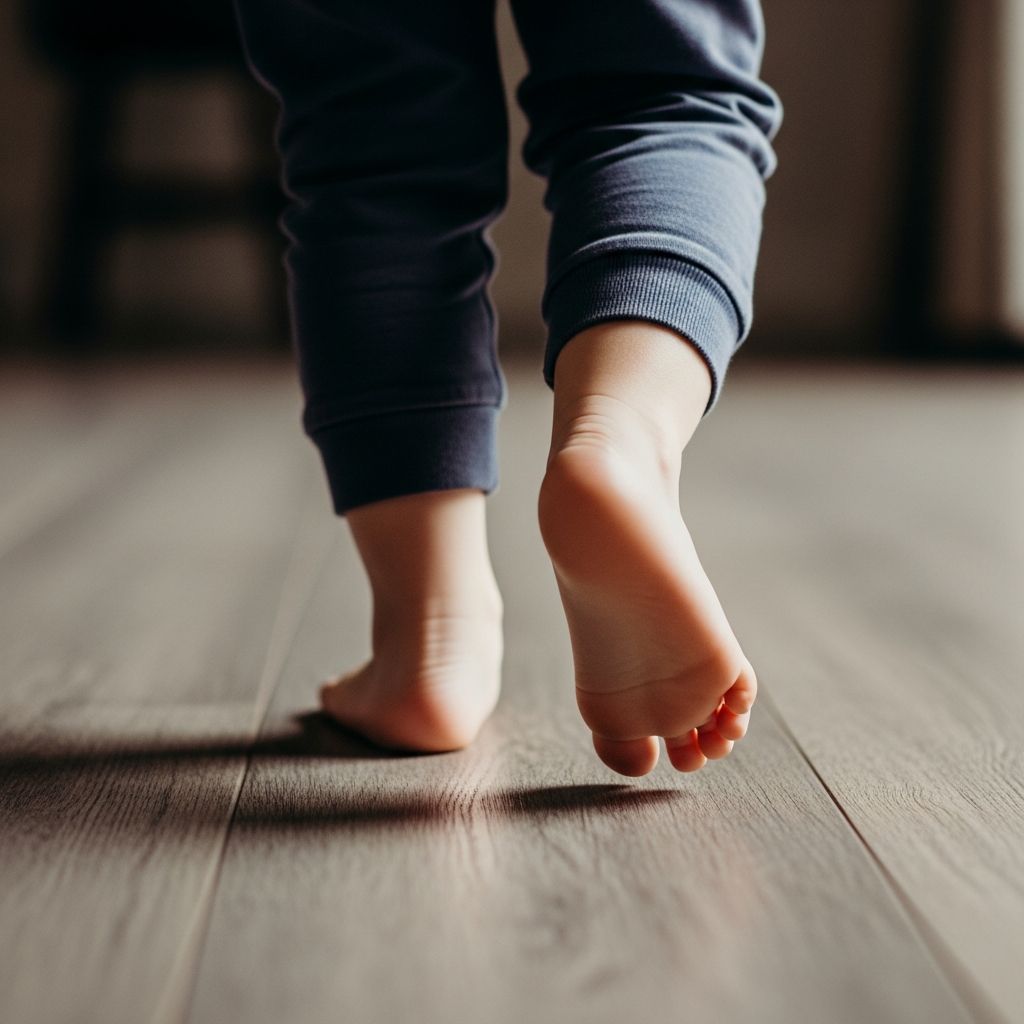
Watching a child take those first wobbly steps is exciting, but it can also raise questions about what a “normal” walk should look like and when unusual movements might signal a problem. This guide explains how walking develops, common gait patterns in children, and clear signs that it is time to speak with a health professional.
What Does “Gait” Really Mean?
“Gait” is the term used by health professionals to describe the way a person walks, including how the legs move, how the feet contact the ground, and how the arms and body help with balance. It is essentially the pattern and rhythm of walking from one step to the next. A child’s gait changes significantly from the toddler years through late childhood as muscles strengthen and coordination improves.
Even among healthy children, gait patterns can look quite different, especially in the first few years of walking. Many of the things that worry parents at this stage, like a wide stance or frequent falls, are often part of normal development and improve naturally over time.
How Walking Develops Over Time
Walking is not an on–off skill; it develops gradually as children gain strength, balance, and coordination. The way a toddler walks at the beginning can look very different from how that same child moves at age six or seven.
Below is a general overview of how gait often changes as children grow. Every child is unique, and ages are approximate rather than strict deadlines.
| Age range | Typical gait features |
|---|---|
| New walker (around 1 year) | Wide stance; short steps; feet often flat on the floor; arms held up or out for balance; frequent loss of balance and falls. |
| 1–2 years | Steps become more confident; less wobbling; arms start to come down; children may begin to walk faster and try to run but still fall often. |
| 2–3 years | Walking appears smoother and more rhythmic; children can change direction, climb stairs with support, and start to run more easily. |
| 3–5 years | Gait becomes more similar to an adult’s; arms swing naturally, and children can walk, run, and jump with better coordination. |
| 5+ years | Walking pattern is usually steady and efficient; small refinements in speed, balance, and coordination continue as the child grows. |
Parents should remember that early walkers often fall many times per day and may take months to develop a smooth, efficient pattern. As long as children are gradually improving and staying active, this is usually a sign of normal development.
Normal Variations That Often Worry Parents
Many gait patterns that appear unusual are actually common and harmless during certain stages of growth. Bones, joints, and muscles are still developing, so the legs and feet may look slightly misaligned or the walking pattern may appear awkward at times.
Below are some gait features that frequently concern parents but are often part of typical development, especially in younger children.
Bowlegged Appearance
Some toddlers have legs that curve outward, creating a bowlegged look. This can make their feet appear farther apart and their knees separated even when their feet touch.
- This pattern is very common in the first years of walking.
- It often improves on its own as the child grows and bones remodel.
- In many cases, no special treatment or bracing is needed.
Knock Knees
As children grow older, many shift from slightly bowlegged to the opposite pattern, where the knees angle inward and may touch while the ankles are apart. This is often called “knock knees.”
- This pattern often shows up in preschool or early school-age years.
- It tends to lessen over time as the child continues to grow taller.
- In mild cases, children can run and play normally without discomfort.
Flat Feet
Many children appear to have little or no arch, especially when they stand. The arch may be hidden by a pad of soft tissue in younger children.
- Most children’s arches become more visible and defined as they grow.
- If flat feet are not painful and do not affect activity, treatment is often unnecessary.
- Simple supportive shoes may be enough for comfort in active kids.
Common Gait Patterns You Might Notice
Beyond normal developmental variations, some gait patterns are noticeable enough that parents wonder whether they are harmless quirks or signs of a deeper issue. Many of these patterns can still be normal at certain ages but deserve monitoring.
Recognizing these patterns can help parents describe what they see to a pediatrician or pediatric specialist.
Toe Walking
Toe walking describes a pattern where a child walks on the balls of the feet or toes, with little or no contact from the heels. Short bursts of toe walking can be normal when kids play or pretend to be taller.
- Intermittent toe walking is common in toddlers as they experiment with movement.
- Persistent toe walking, especially on both sides and beyond early childhood, may need evaluation.
- In some cases, tight calf muscles or underlying neurological conditions may contribute.
In-Toeing (Pigeon-Toed Walking)
In-toeing occurs when one or both feet point inward instead of straight ahead during walking. Parents often describe this as their child being “pigeon-toed.”
- It can come from the foot itself, the lower leg, or the way the upper leg bone sits in the hip.
- Many children with in-toeing improve naturally without special shoes, braces, or surgery.
- Occasional tripping may occur, but many children keep up well with peers.
Out-Toeing
Out-toeing is the opposite pattern, where one or both feet angle outward. Some children naturally stand and walk with their feet turned out more than others.
- Mild out-toeing can be a normal variation, especially when children first start walking.
- Severe or one-sided out-toeing, or patterns that worsen, may need assessment.
- Early evaluation helps identify whether the cause lies in the hips, legs, or feet.
Limping
A limp means a child is shifting weight unevenly between the legs, often to avoid pain or because one side feels weaker. Limping can have many causes, from minor injuries to more serious medical conditions.
- A sudden limp after a clear injury, like a fall, may be due to a sprain or bruise.
- A limp without an obvious cause, or one that lasts more than a day or two, needs prompt evaluation.
- Signs such as fever, swelling, or refusal to walk should be treated as urgent.
When Is a Gait Problem Serious?
Because kids can look clumsy while still developing normal walking patterns, it can be difficult to know when to worry. One key sign is persistence: if a gait issue does not improve over time or seems to be getting worse, it is safer to ask for professional advice.
Parents should also pay attention to pain, asymmetry, and delays in hitting major movement milestones.
Red Flags That Need Medical Attention
- Your child is not attempting to stand or take steps with support well after peers have started.
- Walking is very unsteady and shows little improvement over several months.
- Your child consistently walks on toes and cannot comfortably place heels on the ground.
- A limp appears suddenly and does not improve within a day, even without obvious injury.
- One leg or foot looks very different from the other, or the gait is clearly uneven from side to side.
- Your child complains of regular pain in the hips, knees, legs, or feet during or after walking.
- Fever, swelling, redness, or refusal to walk accompanies a change in gait.
What Happens During a Gait Evaluation?
If a parent or doctor is concerned about how a child walks, the next step is usually a gait evaluation performed by a pediatrician, pediatric orthopedic specialist, neurologist, or physical therapist. The goal is to understand whether the walking pattern reflects normal variation, delayed development, or an underlying medical condition.
A thorough assessment looks not only at how the child walks but also at muscle strength, joint flexibility, alignment of the hips and legs, and overall coordination and balance.
Typical Parts of an Assessment
- Medical history: Questions about pregnancy, birth, early milestones, illnesses, injuries, and family history of gait or bone problems.
- Physical exam: Checking muscle tone, strength, reflexes, and range of motion in hips, knees, and ankles.
- Observation of walking: Watching the child walk, run, and sometimes climb stairs or stand on one leg, often from multiple angles.
- Imaging or tests (if needed): X-rays, ultrasound, or other tests may be ordered when bone structure or specific conditions are suspected.
In many cases, the outcome of this evaluation is reassurance that the gait falls within a normal range for the child’s age and stage of development. In other cases, the assessment helps guide a treatment plan tailored to the child’s needs.
Possible Treatments and Supports
Treatment for gait issues varies widely. Some children need nothing more than observation and time, while others benefit from therapy, supportive devices, or in rare cases surgery. The best plan depends on the cause of the gait pattern and how much it affects the child’s daily life.
Parents should work closely with health professionals to understand the goals of any recommended intervention and how progress will be monitored.
Common Approaches
- Watchful waiting: Regular checkups to ensure that gait is improving as expected without active treatment.
- Physical therapy: Exercises and activities to improve strength, flexibility, balance, and coordination, often through play-based sessions.
- Orthotics or special footwear: Shoe inserts, braces, or supportive shoes that help with alignment or provide stability when needed.
- Stretching or casting: For tight muscles, such as in persistent toe walking, stretching programs or temporary casts may be used to increase flexibility.
- Surgery: Reserved for specific structural or neurological conditions when less invasive options are not sufficient.
Most children with gait variations that require treatment can still participate in regular activities, sports, and play. Treatment often focuses on keeping children active and confident while their bodies grow and adjust.
How Parents Can Support Healthy Walking
Parents play an important role in encouraging strong, confident walking patterns. Supportive home habits and safe opportunities to move can make a real difference, even when a child is also receiving professional care.
The goal is to create an environment where children can practice standing, walking, running, and balancing in fun, age-appropriate ways.
Practical Tips for Everyday Life
- Give children space and time to practice walking on safe, flat surfaces.
- Choose flexible, lightweight shoes that allow the feet to move naturally, especially for toddlers learning to walk.
- Encourage active play such as climbing on playground equipment, walking on soft grass, and playing games that involve running and stopping.
- Avoid overusing devices that limit movement, such as baby walkers or prolonged stroller time, once the child is developmentally ready to move more independently.
- Make exercises fun if a therapist has given a home program, using games, music, or rewards to keep kids motivated.
Frequently Asked Questions About Children’s Gait
1. My toddler falls a lot. Should I be worried?
Frequent falls are common as toddlers learn to walk and experiment with speed, direction changes, and new surfaces. Concern grows if falls are very frequent, seem to be getting worse instead of better, or are paired with clear weakness, pain, or loss of previously gained skills.
2. At what age should my child be walking?
Many children begin taking independent steps around their first birthday, but a normal range can extend several months on either side. If a child is not even attempting to stand or cruise along furniture by well into the second year of life, a conversation with the pediatrician is recommended.
3. Will in-toeing or out-toeing straighten out on its own?
In many children, mild in-toeing or out-toeing gradually improves as the legs grow and muscles strengthen. Regular checkups help ensure things are headed in the right direction and identify the less common cases that may benefit from targeted treatment.
4. Is toe walking always a problem?
Short periods of toe walking, especially when playing, are very common and often harmless. Persistent toe walking that continues past early childhood or seems to be the main way a child walks should be evaluated to rule out tight muscles or neurological causes.
5. Can shoe inserts or special shoes fix my child’s gait?
In many cases, normal gait variations improve without special footwear. When inserts or braces are recommended, they are usually part of a wider plan that may include exercises and regular monitoring, rather than a stand-alone solution.
6. Who should I see if I am concerned about my child’s walking?
Starting with your child’s primary care provider or pediatrician is usually best, because they know your child’s history and growth pattern. If needed, they can refer you to specialists such as pediatric orthopedic surgeons, neurologists, or physical therapists for further evaluation and treatment.
Gait development is a complex but natural process, and most children move from those first unsteady steps to confident walking without major difficulties. When questions arise, early, informed conversations with health professionals give families clarity and support at every stage.