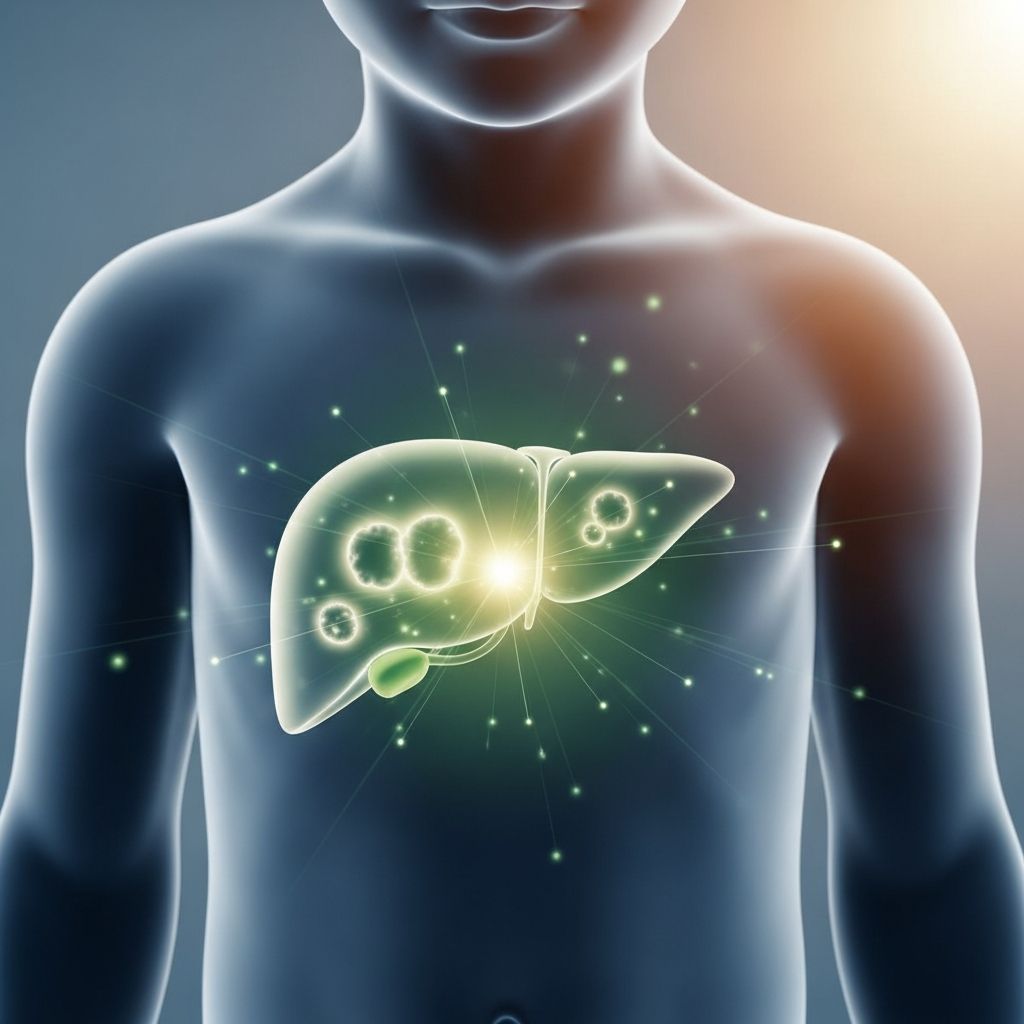
Liver tumors in children, though rare, represent a significant health concern that requires prompt parental awareness and medical intervention. Affecting primarily young kids, these growths can be benign or malignant, with hepatoblastoma being the predominant cancerous form in infants and toddlers. Early detection dramatically improves outcomes, often exceeding 90% survival rates when caught before widespread metastasis.
Understanding the Landscape of Childhood Liver Growths
The liver, a vital organ for detoxification and metabolism, can develop abnormal cell clusters known as tumors. In pediatric cases, these are distinct from adult versions due to differences in cell biology and risk profiles. Malignant tumors account for most concerns, but benign ones like hemangiomas also occur and may resolve without aggression.
Prevalence data indicates hepatoblastoma strikes about 2-3 per million children under age 5, often linked to prematurity or low birth weight, though exact triggers remain elusive. Hepatocellular carcinoma emerges later, typically in school-age kids or teens, sometimes tied to underlying liver conditions like chronic infections.
Common Types of Liver Tumors Affecting Young Patients
Pediatric liver tumors vary by age and histology. Here’s a breakdown:
- Hepatoblastoma: Prevails in children under 5, comprising over half of cases. Originates from embryonic liver cells, presenting as a solitary mass.
- Hepatocellular Carcinoma (HCC): Rarer in youth, peaks in adolescents. Aggressively invades and links to hepatitis B in endemic regions.
- Fibrolamellar Carcinoma: A unique HCC variant in teens, slower-growing with better prognosis post-resection.
- Undifferentiated Embryonal Sarcoma: Hits ages 5-10, cystic and aggressive, mimicking benign masses initially.
- Benign Variants: Hemangiomas (vascular), focal nodular hyperplasia, and adenomas; often incidental findings.
| Tumor Type | Peak Age | Malignant? | Key Feature |
|---|---|---|---|
| Hepatoblastoma | <5 years | Yes | AFP marker elevation |
| Hepatocellular Carcinoma | 12-14 years | Yes | Linked to liver disease |
| Fibrolamellar HCC | Teens | Yes | Distinct histology |
| UES | 5-10 years | Yes | Cystic appearance |
| Hemangioma | Infants | No | Spontaneous regression |
This table highlights diagnostic priorities based on age and traits.
Recognizing Warning Signs in Your Child
Symptoms often emerge subtly, delaying detection until tumors enlarge. Parents should watch for:
- Abdominal distension or a palpable mass, frequently painless initially.
- Unintended weight loss and appetite decline.
- Persistent belly pain, sometimes radiating to shoulder or back.
- Jaundice (yellowing skin/eyes), dark urine, or itchy skin from bile buildup.
- Fatigue, fever, nausea, vomiting, or pallor signaling anemia.
- Rarely, precocious puberty from hormone-secreting tumors.
These overlap with common ailments like infections, underscoring the need for medical evaluation if persistent beyond a week.
Risk Elements and Genetic Ties
No single cause dominates, but associations include low birth weight, prematurity, and genetic syndromes like Beckwith-Wiedemann or familial adenomatous polyposis. Hepatitis B elevates HCC risk globally, preventable via neonatal vaccination. Most cases arise sporadically, absolving parental fault.
Diagnostic Approaches for Accurate Identification
Diagnosis starts with history and exam, progressing to:
- Lab Tests: Alpha-fetoprotein (AFP) surges in 90% hepatoblastomas, aiding monitoring.
- Imaging: Ultrasound detects masses; CT/MRI assesses size, vessels, spread (lungs common).
- Biopsy: Essential for typing, though sometimes deferred pre-chemo.
Multidisciplinary teams at pediatric centers refine accuracy, distinguishing benign from malignant.
Treatment Strategies: From Chemo to Transplant
Protocols prioritize tumor shrinkage for resection. Standard path:
- Neoadjuvant Chemotherapy: Cisplatin-based regimens reduce hepatoblastoma by 50-70%, enabling surgery.
- Surgery: Complete removal curative in localized cases; orthotopic transplant for unresectable ones.
- Post-Op Adjuvant Therapy: Targets microscopic disease.
- Radiation/Metastatic Care: Rare, for lung nodules.
Benign tumors may need observation or embolization. Survival nears 85-90% for hepatoblastoma sans mets.
Life After Treatment: Monitoring and Support
Post-therapy vigilance tracks AFP and scans for recurrence, highest first 2 years. Long-term effects include fertility concerns, cardiac issues from chemo; regular follow-ups mitigate. Nutritional support counters growth delays.
Psychosocial aid via support groups fosters resilience.
Frequently Asked Questions (FAQs)
What prompts a doctor visit for possible liver tumor?
Seek care for ongoing abdominal swelling, weight loss, or jaundice not resolving quickly.
Is liver tumor hereditary?
Rarely; most sporadic, though syndromes raise risk.
How effective is treatment for hepatoblastoma?
Over 90% cure rate if confined to liver post-chemo/surgery.
Can benign tumors turn cancerous?
Uncommon, but monitoring advised.
What role does AFP play?
Tumor marker for diagnosis, response, relapse detection.
Empowering Parents: Next Steps
Choose centers like Children’s Pittsburgh or St. Jude for expertise. Vaccines prevent HCC risks; prenatal care aids prematurity links. Awareness saves lives—trust instincts, act swiftly.
(Word count: 1687)
References
- Pediatric Hepatoblastoma (Liver Cancer) — Children’s Hospital of Pittsburgh. 2023. https://www.chp.edu/our-services/transplant/liver/education/liver-disease-states/hepatoblastoma-liver-cancer
- Liver tumours in children — Children’s Cancer and Leukaemia Group (CCLG). 2024. https://www.cclg.org.uk/about-cancer/cancer-children-and-young-people/types-cancer-children-and-young-people/liver-tumours-children
- Liver Cancer in Children and Teens — Together by St. Jude. 2025. https://together.stjude.org/en-us/conditions/cancers/liver-cancer.html
- Pediatric Liver Tumors — Children’s Hospital Colorado. 2024. https://www.childrenscolorado.org/conditions-and-advice/conditions-and-symptoms/conditions/pediatric-liver-tumors/
- Liver Tumors — Seattle Children’s Hospital. 2024. https://www.seattlechildrens.org/conditions/liver-tumors/
- Hepatoblastoma: Symptoms, Causes & Treatment — Cleveland Clinic. 2025-01-15. https://my.clevelandclinic.org/health/diseases/22168-hepatoblastoma-liver-cancer