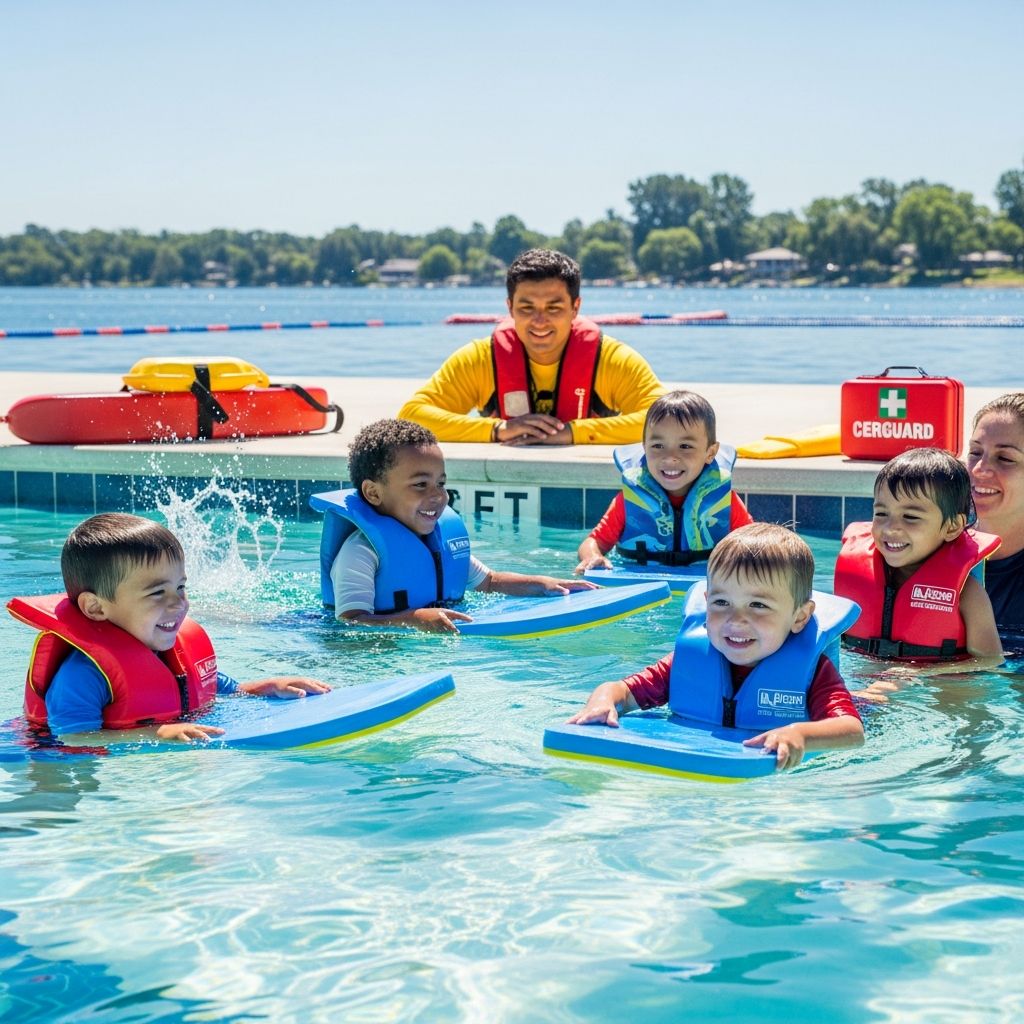
Understanding Water Dangers and Risk Awareness
Water presents one of the most significant hazards for young children, and the statistics underscore the severity of this concern. Drowning represents the leading unintentional injury-related cause of death for children between one and four years of age, with tragic incidents occurring more frequently than many parents realize. A critical fact that should alarm every caregiver is that drowning can happen rapidly—sometimes in as little as two inches of water, meaning that traditional water sources often overlooked pose serious threats.
The vulnerability extends beyond obvious swimming pools and beaches. Many life-threatening incidents occur during moments when children were not expected to be near water. These incidents frequently happen during non-swimming times, such as when children are playing near buckets, kiddie pools, or bathroom fixtures. Understanding these hidden dangers is the first step toward creating a comprehensive safety strategy for your household.
Within the home environment, specific areas require heightened vigilance. Bathrooms present particular risks, as young children can easily fall into toilet bowls or bathtubs. Laundry rooms with filled baskets, garages with buckets used for cleaning, and gardens with water collection vessels all represent potential hazards that many families fail to recognize as drowning risks.
The Multi-Layer Protection Framework
Effective drowning prevention requires implementing multiple protective strategies simultaneously rather than relying on any single solution. This layered approach addresses different scenarios and accounts for inevitable lapses in attention that occur during normal daily routines. By combining several protective measures, families can create redundant safety systems that provide protection even when one layer fails.
The foundation of this framework rests on understanding that no single prevention method is foolproof. Supervision alone cannot prevent every tragedy, just as barriers alone cannot guarantee safety if supervision lapses. Instead, families should think of protection as a comprehensive system where each element reinforces the others, creating overlapping safeguards against water-related incidents.
Structural Barriers and Physical Safeguards
Physical barriers represent one of the most researched and proven drowning prevention strategies available to families. Four-sided pool fencing has demonstrated the ability to prevent more than half of all swimming pool drownings in young children, making it perhaps the single most effective structural intervention available.
For residential pools, proper fencing must meet specific requirements to be fully effective. The barrier should completely separate the pool from the house and yard, creating an isolated swimming area that requires intentional action to access. Minimum height specifications matter considerably—fences should be at least four feet tall, which prevents most toddlers from climbing over. Self-closing and self-latching gates are essential features, as they ensure that gates return to the locked position automatically, preventing children from slipping through open gates.
Beyond basic fencing, families should consider additional physical barriers. Door locks and alarm systems provide supplementary protection by alerting caregivers when children attempt to access pool areas. These systems work by detecting when doors open, sounding alerts that draw attention to potential unsupervised water access.
For hot tubs and spas, locked safety covers provide necessary protection when these features are not in use. Drain covers must be properly installed and maintained according to safety standards, as missing or damaged covers create entrapment hazards.
Inside the home, bathroom safety requires specific attention. Toilet seat locks prevent young children from accessing toilet bowls, while removing bathtub drain plugs when tubs are not in use eliminates the risk of water accumulation if a curious child turns on the faucet. Bathroom doors with latches or locks can restrict unsupervised access to these water-filled spaces.
Active Supervision: The Human Element
While physical barriers provide crucial infrastructure, active parental supervision remains irreplaceable as a drowning prevention strategy. The type and quality of supervision matters significantly more than simply having an adult present.
The American Academy of Pediatrics emphasizes “touch supervision” as the gold standard for young children around water. This approach requires caregivers to remain within arm’s length of children at all times, whether during bath time or swimming activities. Touch supervision means being positioned to reach and grasp a child immediately if problems develop, rather than sitting across the pool observing from a distance.
This level of engagement demands undivided attention. Caregivers should eliminate distractions that compromise focus, including cell phone use, yard work, or alcohol consumption. These activities significantly reduce a caregiver’s ability to detect distress or respond quickly to emergencies. If a supervising adult must leave the water area, they should take the child with them, regardless of whether lifeguards are present at a facility.
During family gatherings or busy swimming situations, the “water watcher” system provides structured supervision. This approach designates one adult as the dedicated observer responsible for constant vigilance. Adults rotate this responsibility at set intervals—such as fifteen-minute shifts—to maintain fresh attention and prevent fatigue from diminishing observation quality. Passing a water watcher card between adults creates a clear handoff process that eliminates confusion about who holds responsibility.
Building Water Competency Through Instruction
Swimming education represents another essential layer of drowning prevention, though parents should understand realistic expectations about what swimming lessons accomplish. Swim lessons teach children valuable water skills that can contribute to survival in water-related emergencies, and recent research suggests that formal water survival training reduces drowning risk across all age groups.
The timing of swim lessons depends on individual child development. Factors to consider include how frequently the child will be around water, their emotional maturity, physical and developmental abilities, personal interest in learning, and comfort levels with water exposure. Younger toddlers may benefit from parent-child swim classes that emphasize water familiarity rather than formal stroke instruction.
Parents should recognize that swimming ability does not guarantee safety. Even children with strong swimming skills can experience panic, fatigue, or unexpected situations that compromise their ability to self-rescue. Therefore, swimming lessons should complement rather than replace other protective measures like supervision and barriers.
Equipment-Based Protection Solutions
Properly fitted life jackets serve as valuable protective equipment for children around water. Unlike swimming ability, which varies with skill level and can be compromised by panic or fatigue, approved life jackets provide consistent flotation assistance.
The U.S. Coast Guard approves life jackets meeting specific safety standards. These devices work most effectively when they fit properly—loose jackets may slip off or fail to provide adequate support. Children should wear Coast Guard-approved life jackets when in, on, or near natural bodies of water such as lakes and rivers. Children with weaker swimming skills should also wear life jackets at pools and water parks.
Beyond personal flotation devices, keeping rescue equipment accessible at swimming areas provides emergency response tools. Reaching poles, ring buoys, and other rescue devices enable faster intervention if a child experiences distress in the water.
Emergency Preparedness and Response Training
Despite implementing comprehensive prevention strategies, families should prepare for water-related emergencies by learning rescue techniques and emergency response procedures.
Cardiopulmonary resuscitation (CPR) certification can mean the difference between recovery and tragedy in drowning situations. CPR-trained individuals can maintain circulation and oxygen delivery while emergency medical services respond. Ideally, all household members and regular caregivers should obtain CPR certification. Online and in-person courses are widely available through organizations like the American Red Cross.
Beyond CPR, understanding basic water rescue techniques helps caregivers respond appropriately in emergencies. These techniques often involve reaching or throwing rescue devices rather than attempting direct intervention, which can endanger rescuers.
Keeping emergency contact information readily accessible ensures that 911 can be called immediately when needed. At pools or beaches, phones should be present and accessible, though caregivers should remain off phones during active swimming times.
Home Environment Risk Assessment
A thorough evaluation of your home environment reveals water hazards that may not be immediately obvious. Conducting regular walk-throughs helps identify emerging risks as children grow and develop new abilities.
| Location | Potential Hazards | Preventive Actions |
|---|---|---|
| Bathrooms | Toilets, bathtubs, filled buckets | Toilet seat locks, bathroom door latches, remove drain plugs, keep buckets empty |
| Bedrooms | Buckets used for cleaning activities | Empty and store buckets immediately after use |
| Kitchens | Sink basins, cleaning buckets, water containers | Drain sinks immediately, store water containers securely |
| Laundry Areas | Washing machines with water, cleaning solutions | Keep laundry rooms locked or restricted from unsupervised access |
| Garages | Buckets, water collection, fountains | Empty buckets and containers, restrict access to water features |
| Backyards | Pools, spas, kiddie pools, birdbaths, fountains | Install fencing, drain kiddie pools, use safety covers, restrict access |
Water Safety for Different Ages and Abilities
Water safety strategies should evolve as children grow, recognizing that older children face different risks than toddlers while remaining vulnerable to drowning.
Young toddlers require the most intensive supervision because they have minimal swimming ability and cannot reliably understand verbal safety instructions. Touch supervision remains appropriate for this age group, and many of the home-based barriers discussed earlier are most critical for protecting toddlers.
As children reach school age and develop stronger swimming skills, risks shift somewhat, though supervision remains essential. Older children may be tempted to take unnecessary risks or venture into areas beyond their skill level. Teaching these children about water hazards, the importance of remaining with designated swim areas, and never swimming alone helps build judgment alongside physical skills.
For children with developmental delays or other special needs, individualized safety planning ensures that strategies address specific vulnerabilities. Consultation with healthcare providers helps identify appropriate supervision methods and protective equipment for each child’s circumstances.
Extending Water Safety to Other Locations
Water dangers exist not only in residential settings but also when families visit friends’ homes, vacation properties, public beaches, and water parks. Consistent safety practices across all environments help establish protective routines.
When visiting other homes, conduct a brief safety assessment of their water areas. Ask about available barriers, supervision practices, and emergency procedures. If deficient protections are apparent, modify activities or avoid water play to reduce risk.
At public swimming facilities, determine whether lifeguards are present and understand their specific responsibilities. Even with lifeguards, parental supervision remains essential, as lifeguards cannot watch every individual swimmer constantly.
Beach visits require additional precautions due to currents, temperature variations, and uneven bathymetric conditions. Swim only at designated swim areas and avoid times of heavy current or rough conditions. Life jackets provide valuable protection in ocean environments where fatigue occurs more readily.
Family Communication and Education
Teaching children about water safety establishes protective behaviors that extend throughout their lives. Age-appropriate conversations help children understand water dangers without creating excessive anxiety.
Young children should understand simple rules like never entering water without adult permission and staying with assigned caregivers. Older children can learn about specific hazards, recognition of distress signs in others, and when to seek adult help.
Family discussions about water safety at wellness visits with pediatricians ensure that healthcare providers can address individual risk factors and answer specific family questions.
Common Water Safety Questions
At what age can children learn to swim?
Swimming instruction can begin at various ages depending on individual development, comfort with water, and emotional maturity. Some programs accept children as young as 12 months, while others recommend waiting until age 3 or 4. Discuss appropriate timing with your pediatrician based on your child’s specific circumstances.
Can life jackets replace supervision?
No. Life jackets provide an important protective layer but do not eliminate the need for constant adult supervision. Children wearing life jackets still require attentive watching and may face situations—such as panic or entanglement—that reduce life jacket effectiveness.
How can I make water play safe for young toddlers?
Use shallow kiddie pools designed for toddlers, empty them completely after use, maintain touch supervision during water play, and ensure the area is clear of hazards. Keep these activities very brief and always with dedicated adult focus.
What should I do if I witness a drowning?
Call 911 immediately. If the person is out of the water, begin CPR if trained. If attempting a rescue, use reaching or throwing devices rather than direct contact, which may endanger the rescuer.
Are inflatable pools as risky as regular pools?
Yes. Large inflatable pools present the same drowning risks as traditional pools and require the same protective barriers, supervision practices, and safety precautions. They should be drained completely after each use.
References
- Water Safety and Young Children — American Academy of Pediatrics. 2024. https://www.healthychildren.org/English/safety-prevention/at-play/Pages/Water-Safety-And-Young-Children.aspx
- Drowning Prevention and Water Safety — American Academy of Pediatrics. 2024. https://www.aap.org/en/patient-care/drowning-prevention-and-water-safety/
- Water Safety and Drowning Prevention — Stony Brook Children’s Hospital. 2024. https://www.stonybrookchildrens.org/lp/water-safety-and-drowning-prevention
- Preventing Drowning — Ballad Health Niswonger Children’s. 2024. https://www.balladhealth.org/niswonger-childrens/preventing-drowning
- Know the 5 Layers of Protection — National Drowning Prevention Alliance. 2024. https://ndpa.org