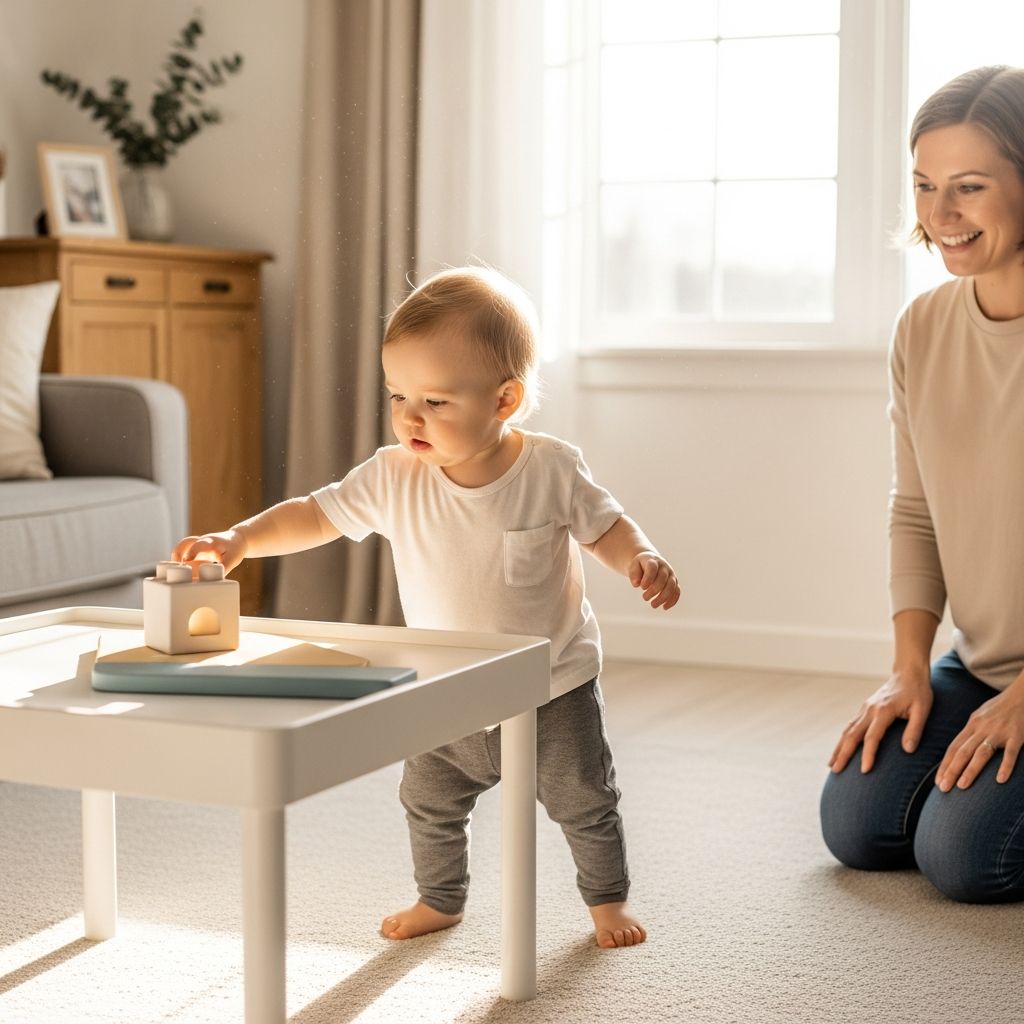
At around 18 months, toddlers often shift from babyhood into a more independent, energetic stage filled with new words, bigger emotions, and constant exploration. This guide explains typical development at this age, suggests easy ways to support your child, and highlights when to ask your pediatrician for advice.
Big Picture: What 18 Months Often Looks Like
No two toddlers grow at exactly the same pace, but by about 18 months many children are on the move, using some words, understanding far more than they can say, and showing strong preferences—sometimes with dramatic tantrums. It is normal to see uneven development: a child may walk early but talk later, or be very social yet cautious with new physical skills.
- More independence, like wanting to do things “by myself.”
- Rapid growth in understanding language, even when spoken words are still limited.
- Stronger emotions, including frustration, joy, and sometimes clinginess.
- Curiosity about how objects work, fit together, and cause things to happen.
Movement and Coordination: On the Go All Day
By 18 months, many toddlers use their bodies in more coordinated, confident ways. They are usually eager to practice new physical skills and often repeat the same movements over and over as they build strength and balance.
Common gross motor abilities
- Walking independently on flat surfaces, sometimes starting to run in a wobbly way.
- Climbing onto low furniture or small steps, often needing a hand for safety.
- Pulling or pushing toys while walking, such as a small wagon or push toy.
- Squatting to pick up objects and standing back up without help.
Fine motor and hand skills
- Scribbling when given crayons or markers.
- Picking up small objects with thumb and forefinger.
- Trying to turn pages in board books, often a few at a time.
- Beginning to use a spoon or cup with fewer spills, though messes are still expected.
Simple ways to support physical development
- Offer safe space to move: clear floors, secure furniture, and supervise climbing.
- Provide toddler-sized tools: light balls, push toys, ride-on toys, and chunky blocks.
- Let your child practice self-feeding, even if meals take longer and get messy.
Understanding and Using Language
Many 18-month-olds understand far more words than they can say. They often follow simple instructions and recognize familiar people and objects, even if their spoken vocabulary is still small.
Receptive (understanding) language
- Recognizing names of everyday objects like cup, shoe, ball, or car.
- Following simple one-step directions such as “Come here,” “Give me the ball,” or “Sit down.”
- Responding to their own name and looking toward people or items you mention.
- Pointing to a few body parts or pictures in a book when asked.
Expressive (spoken) language
There is a wide range of normal for how many words an 18-month-old uses. Some may use only a few, while others may use many more.
- Using a small set of recognizable words, often including familiar names or simple nouns.
- Attempting to copy new words, though the sound may not be clear.
- Using gestures (pointing, nodding, shaking head, reaching) along with sounds or words.
- Making animal sounds or sound effects in play.
Encouraging language every day
- Talk through daily routines: describe what you are doing, seeing, and feeling.
- Read short, simple books and name pictures; let your child point and “talk” too.
- Give choices: “Do you want milk or water?” and wait for a sound, word, or point.
- Repeat and expand: if your child says “ball,” you can say, “Yes, big red ball.”
Thinking Skills and Problem Solving
At 18 months, toddlers experiment with cause and effect, notice routines, and begin simple pretend play. Everyday activities are chances to practice memory, attention, and early problem-solving.
Typical thinking skills
- Exploring how objects work by dropping, shaking, stacking, and filling or emptying containers.
- Recognizing how familiar objects are used, such as brushing hair with a brush or pretending to stir with a spoon.
- Searching for hidden objects when they see you hide them under a cloth or behind your back.
- Showing understanding of routines, like getting shoes when it is time to go outside.
Activities that build thinking skills
- Offer simple puzzles with large pieces and let your child explore freely.
- Provide containers, cups, and safe household items for filling, pouring, and sorting.
- Encourage pretend play with dolls, stuffed animals, toy phones, or toy dishes.
- Repeat songs and rhymes with actions to support memory and attention.
Social World and Big Feelings
Social and emotional growth becomes very visible around 18 months. Toddlers may show affection, seek comfort from caregivers, and have strong reactions when they cannot do or say what they want.
Typical social behaviors
- Showing preference for familiar caregivers and sometimes becoming shy with new people.
- Bringing toys to show you, or checking back visually while exploring.
- Imitating everyday activities like sweeping, talking on the phone, or cooking.
- Showing affection to a favorite doll, stuffed animal, or pet.
Emotions at this age
- Frequent frustration when they cannot communicate or control their environment.
- Tantrums when they are tired, overwhelmed, or told “no.”
- Growing sense of “mine,” leading to struggles with sharing.
- Occasional clinginess, especially in new situations or during separations.
Supporting emotional development
- Stay calm during tantrums and keep your child safe; use few words and a steady presence.
- Label feelings: “You are mad because you wanted the toy,” helping them learn emotion words.
- Keep routines predictable for meals, naps, and bedtime to reduce stress.
- Offer simple choices to give your toddler a sense of control.
Daily Life Skills and Growing Independence
Everyday routines are powerful learning moments. At 18 months, many toddlers start to participate more actively in dressing, eating, and other self-care tasks, even though they still need plenty of help.
Early self-care abilities
- Helping with dressing by pushing arms through sleeves or offering a foot for a sock.
- Attempting to remove easy items like hats, shoes, or loose socks.
- Holding a cup with two hands and drinking with some spills.
- Showing awareness of being wet or dirty and sometimes signaling discomfort.
Encouraging independence safely
- Build extra time into routines so your child can practice helping.
- Offer simple, clear steps: “First shoes, then coat.”
- Provide child-sized utensils, cups, and chairs when possible.
- Praise effort rather than perfection: “You worked hard to put on your shoe.”
Sample Milestone Overview Table
The table below summarizes many abilities often seen around 18 months. Some children will reach these earlier or later. Use this as a general guide, not a checklist.
| Area of Development | Examples of Common Skills Around 18 Months |
|---|---|
| Movement | Walks alone, may start to run; climbs onto low furniture; pulls toys while walking. |
| Hand Skills | Scribbles with crayons; stacks a few blocks; turns pages in a board book; uses spoon with help. |
| Language | Understands simple instructions; uses several words; points to show what they want; combines sounds and gestures. |
| Thinking | Finds hidden objects; imitates simple household tasks; knows how common objects are used. |
| Social & Emotional | Shows affection to caregivers; imitates others; may have tantrums; seeks comfort and reassurance. |
Play Ideas That Support Growth
Play is the main way an 18-month-old learns. Keeping activities simple, hands-on, and responsive to your child’s interests is more important than buying special toys.
Easy play ideas at home
- Movement games: gentle chasing games, dancing to music, rolling or kicking a soft ball.
- Container play: filling and emptying bins with blocks, cups, or safe kitchen items.
- Pretend scenes: feeding a stuffed animal, pretending to cook, or using a toy phone.
- Book time: looking at picture books together, naming objects, and letting your child turn pages.
- Art exploration: large crayons on big paper, washable paint with close supervision.
Tips for making play meaningful
- Follow your child’s lead rather than directing every step.
- Describe what your toddler is doing to support language and thinking.
- Repeat favorite games; repetition builds confidence and skills.
- Keep screens off during playtime so your child can focus on real-world interaction.
Safety Considerations for Active Toddlers
With increased mobility comes increased risk. An 18-month-old moves quickly, often without understanding danger. Making your home safer allows your child to explore while lowering the chance of injury.
Key safety points
- Use safety gates at stairs and keep doors to dangerous areas closed or locked.
- Anchor heavy furniture and TVs to the wall to prevent tipping.
- Keep cleaning products, medicines, and small objects out of reach and locked away.
- Always supervise near water, including bathtubs, buckets, and small pools.
- Use age-appropriate car seats correctly on every ride.
When to Talk With a Pediatrician
Some children are simply late bloomers, but certain signs deserve a closer look. Early evaluation can identify conditions that benefit from extra support, such as speech therapy or early intervention services.
Consider contacting your child’s health provider if your 18-month-old:
- Is not walking independently or using alternative ways to move around the room.
- Does not point, gesture, or attempt to communicate needs in some way.
- Does not use any meaningful words or seems to have lost words that were used before.
- Shows very little eye contact or does not respond to their name consistently.
- Does not imitate actions, show interest in people, or play with toys purposefully.
- Seems unusually floppy or unusually stiff in body movements.
If you are worried, trust your instincts and discuss your concerns with your child’s pediatrician. You know your child best, and asking questions is an important part of supporting healthy development.
Frequently Asked Questions About 18-Month-Olds
Is my child behind if they are not saying many words yet?
Some toddlers focus on movement first and talk more later, while others use many words early on. What matters most is overall communication: pointing, gestures, eye contact, and attempts to imitate sounds. If there are no words at all by 18 months or you feel your child is not trying to communicate, it is wise to bring this up with your pediatrician.
How many tantrums are normal at this age?
Tantrums are a typical part of development around 18 months as children feel strong emotions but have limited language to express them. Short, occasional tantrums that resolve when the child is comforted or distracted are usually normal. Extremely long or aggressive episodes, or behaviors that put your child or others at risk, should be discussed with a health professional.
Should my 18-month-old be starting toilet training?
Most children are not ready for full toilet training at 18 months, though some start to show early interest, like noticing a wet diaper or watching caregivers use the bathroom. True readiness usually appears later, when children can follow simple directions, stay dry for longer stretches, and communicate their needs more clearly.
How much sleep does an 18-month-old need?
Many toddlers in this age range need a combination of nighttime sleep and one or two daytime naps that total several hours of rest in 24 hours. Consistent routines with a calming pre-sleep ritual can help your child fall asleep more easily and stay rested.
What is the best type of toy for this age?
Simple, open-ended toys such as blocks, balls, books, dolls, and household objects that are safe to handle are usually more valuable than complex electronic toys. Items that your child can push, pull, stack, fill, and pretend with support a wide range of skills.
Every 18-month-old has a unique path. Rather than comparing your child to others, focus on steady progress, a warm relationship, and plenty of chances to play and explore. When you have questions or concerns, your pediatrician and early childhood professionals are important partners in supporting your child’s growth.