Feeding children the right amounts of food is crucial for their growth, energy levels, and long-term health. Unlike adults, kids have unique nutritional needs that change with age, size, and activity. This guide uses practical, child-centered methods like hand measurements to simplify portion control, drawing from expert recommendations to help parents serve balanced meals without guesswork.
Why Portion Sizes Matter for Growing Kids
Proper portions prevent overeating, which can lead to obesity, while ensuring kids get enough nutrients for development. Children’s appetites vary, but guidelines based on body size—like using their fist or palm—personalize servings effectively. Over time, consistent habits foster healthy relationships with food.
Activity level plays a key role: active kids may need more calories, but quality trumps quantity. Focus on nutrient-dense foods from all groups: fruits, vegetables, grains, proteins, and dairy. Studies show kids who eat balanced portions have better weight management and cognitive function.
Handy Hand-Based Portion Guide for Children
The most intuitive way to gauge portions is using your child’s hand, as it scales with their body size. This method, endorsed by pediatric experts, makes it easy without scales or cups.
- Grains and starchy veggies (e.g., rice, pasta, potatoes): One clenched fist (about ½-1 cup).
- Proteins (meats, fish, nut butter): One palm for cooked meat; one thumb for nut butter or fats like oils.
- Fruits and non-starchy veggies: Two clenched fists per meal.
- Dairy: 8 oz milk/yogurt or 2 oz cheese, 3-4 times daily for most ages.
These visuals adapt to each child—a toddler’s fist is smaller than a teen’s—ensuring fairness among siblings. Pair with smaller plates: 7 inches for young kids, 7-9 inches for older ones, to make meals look satisfying.
Daily Nutritional Needs by Age Group
Requirements evolve as kids grow. Below are evidence-based daily servings, adjusted for age and development stages.
Toddlers (Ages 1-3)
Focus on exploration with small, frequent meals. Total daily calories: 1,000-1,400.
| Food Group | Servings | One Serving Example |
|---|---|---|
| Vegetables | 4-8 | ¼ cup cooked or raw |
| Fruits | 4-6 | ¼ cup fresh or canned |
| Grains | 3-6 | ½ oz (e.g., 1 slice bread) |
| Protein | 2-5 | 1 oz meat or 2 tbsp beans |
| Dairy | 4-5 (full-fat) | ½ cup milk/yogurt |
Limit added sugars and high-sodium items. Snacks: 2 food groups (e.g., fruit + yogurt).
Preschoolers (Ages 3-5)
Encourage independence amid picky phases. Calories: 1,200-1,600.
| Food Group | Servings | One Serving Example |
|---|---|---|
| Vegetables | 3-4 | ½ cup |
| Fruits | 2-3 | ½ cup |
| Grains (½ whole) | 3-6 | ½ oz |
| Protein | 3-5 | 1 oz |
| Dairy | 3-5 | ½-¾ cup low-fat |
Meals: 3+ groups. Vary textures to build preferences.
School-Age Kids (Ages 6-11)
Support school energy and growth spurts. Calories: 1,600-2,200 (girls), 1,800-2,600 (boys).
| Food Group | Girls 5-8 / 9-11 | Boys 5-8 / 9-11 | One Serving |
|---|---|---|---|
| Vegetables & Fruit | 5 / 6 | 5 / 6-7 | ½ cup diced or 1 medium fruit |
| Grains (½ whole) | 4 / 6 | 5 / 6 | ½ cup cooked rice; 1 slice bread |
| Protein | 1-2 / 2-3 | 2 / 2-3 | Palm-sized meat |
| Dairy | 3-4 | 3-4 | 1 cup milk |
Include dark greens and oranges daily. Juice: max ½ cup.
Fruit and Vegetable Portions: Meeting the 5-a-Day Goal
Everyone needs at least 5 portions of fruits and veggies daily—80g per adult portion, scaled down for kids via palmfuls. Variety prevents boredom and maximizes vitamins.
- Small fruits: 2+ (e.g., 2 plums, 7 strawberries).
- Medium fruits: 1 (e.g., apple, banana).
- Large fruits: ½ (e.g., grapefruit).
- Dried fruit: 1 tbsp (small handful).
- Veggies: Palmful raw; ½ cup cooked. Salads: 1 side bowl.
Canned, frozen, or fresh all count if low-sugar/salt. Kids’ portions: fist-sized for accuracy.
Practical Strategies for Mealtime Success
Implement portions without battles:
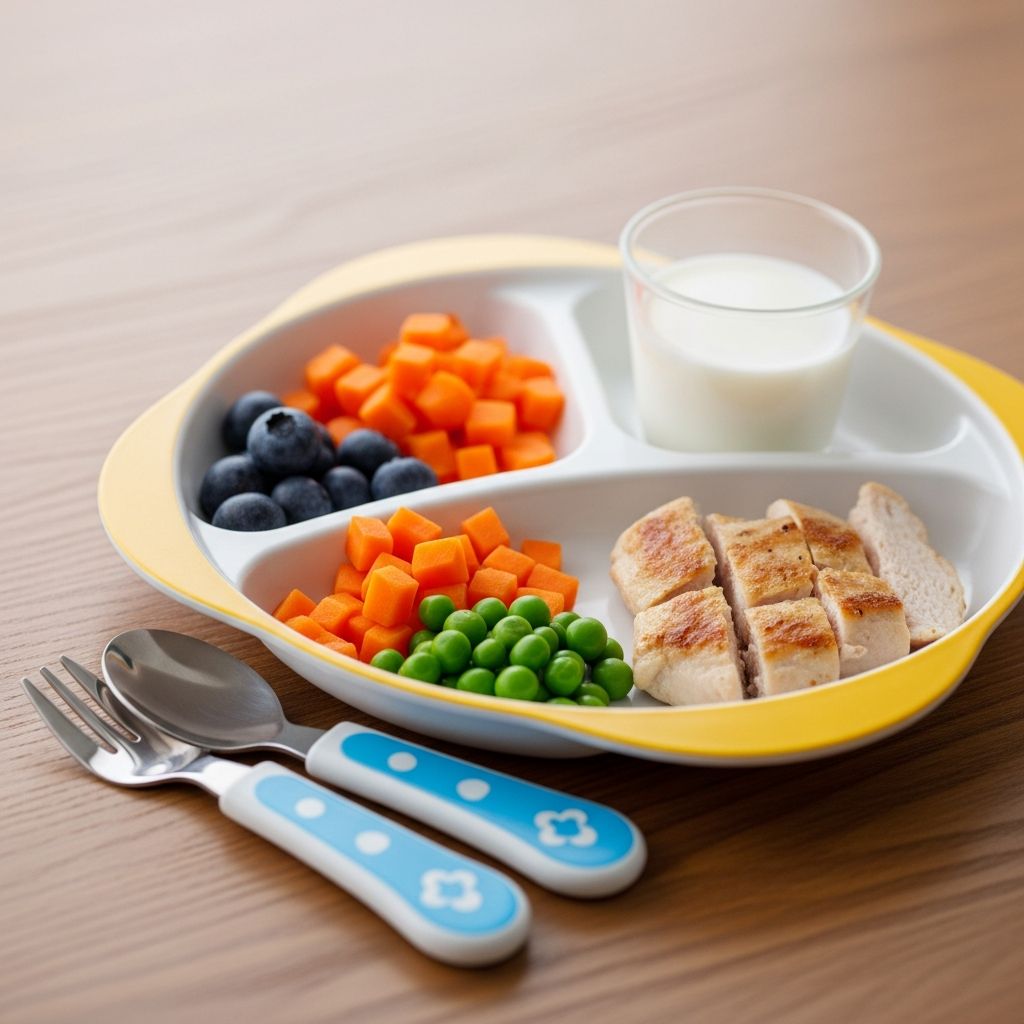
- Use divided plates to visualize groups.
- Serve family-style but pre-portion proteins/fats.
- Let kids self-serve veggies/fruits for control.
- Hydrate first—thirst mimics hunger.
- Model eating: parents’ plates influence most.
Track weekly intake, not daily—appetites fluctuate. For active kids, add snacks like cheese sticks + apple.
Common Mistakes and How to Avoid Them
Parents often adult-size kids’ plates, leading to excess calories. Clean-plate pressure ignores hunger cues. Solution: Offer seconds after pause. Drinks: Water or milk over juice.
Label reading helps: Serving size ≠ portion. A “serving” is standardized; portion is what you serve.
Special Considerations for Active or Picky Eaters
Athletic kids need +20-30% calories, emphasizing proteins/grains. Picky eaters: Hide veggies in smoothies; involve in prep. Consult pediatricians for allergies or growth concerns.
Frequently Asked Questions (FAQs)
What if my child doesn’t finish their portion?
It’s normal—don’t force. Offer at next meal; growth averages out weekly.
How do I handle siblings of different ages?
Use hand sizes and varied plates so all feel full.
Can portions change with growth spurts?
Yes, increase gradually; monitor weight/energy via doctor visits.
Is dairy essential, or can we use alternatives?
Fortified plant milks work if child meets calcium needs.
What about snacks?
2/day, combining 2 groups (e.g., nuts + fruit). Time 1.5-2 hours pre-meal.
Building Lifelong Healthy Eating Habits
Portion awareness teaches satiety. Combine with play, sleep, and routine for holistic health. Regular check-ups track progress.
References
- How Much Food is Just Right? A Handy Guide to Portions — Nationwide Children’s Hospital. 2024-01-01. https://www.nationwidechildrens.org/family-resources-education/700childrens/2024/01/how-much-food-is-just-right
- 5 A Day portion sizes — NHS. 2023-10-01. https://www.nhs.uk/live-well/eat-well/5-a-day/portion-sizes/
- Ages 2-8 Feeding Recommendations — Healthy Eating Research. 2024-01-01. https://healthyeatingresearch.org/tips-for-families/ages-2-8-feeding-recommendations/
- Portions and Serving Sizes — American Academy of Pediatrics. 2023-05-15. https://www.healthychildren.org/English/healthy-living/nutrition/Pages/Portions-and-Serving-Sizes.aspx
- Understanding Portion Sizes for Kids — Colorado State University Extension. 2022-08-10. https://extension.colostate.edu/resource/understanding-portion-sizes-for-kids/
- How Much Should My Child Eat? — Academy of Nutrition and Dietetics. 2023-02-20. https://www.eatright.org/health/pregnancy/babys-first-foods/how-much-should-my-child-eat-a-guide-to-serving-sizes-from-infancy-to-preschool