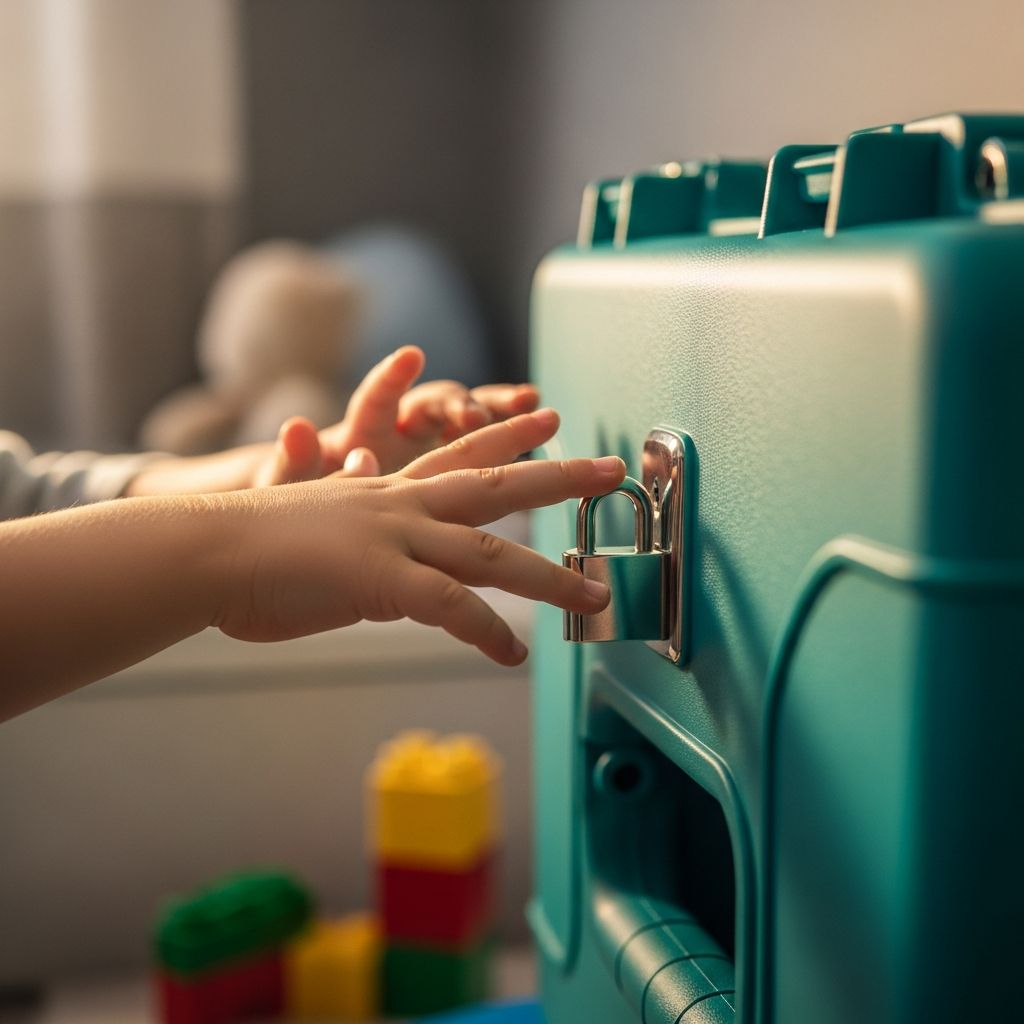
Firearms are present in millions of homes, which means nearly every child may encounter a gun at some point – at home, a relative’s house, or a friend’s. Parents and caregivers play a critical role in preventing tragedies by controlling access to guns, setting firm rules, and teaching kids what to do if they ever see a firearm.
This guide offers practical, research-informed steps any parent can take, whether or not you own a gun yourself.
Why Gun Safety Matters for Families
In recent years, firearm injuries have become a leading cause of death for children and teens in the United States, including from unintentional shootings, homicides, and suicides. Most serious injuries to kids do not come from strangers; they occur in or around the home, often with guns that belong to family or friends.
- Children are naturally curious: Many kids will handle a gun if they find it, even after being taught not to.
- Young children cannot judge risk accurately: Even toddlers can pull a trigger, and many children cannot reliably tell a real gun from a toy.
- Teens face additional risks: Impulsivity, strong emotions, and access to firearms increase the risk of self-harm and violence.
For these reasons, experts emphasize that secure storage and adult responsibility are far more important than relying on a child to “do the right thing.”
The Core Rule: Secure Storage Comes First
Health and safety organizations consistently agree on one central principle: the safest way to protect children is to keep firearms locked, unloaded, and stored separately from ammunition.
| Practice | Why It Matters for Kids |
|---|---|
| Gun locked in a safe or lockbox | Prevents children and unauthorized users from accessing the firearm. |
| Trigger lock or cable lock used on an unloaded gun | Adds another barrier so the gun cannot be fired quickly or easily. |
| Ammunition locked separately | Reduces the chance that a child can create a functional, loaded gun. |
| Gun hidden but unlocked and loaded (e.g., closet, drawer) | Children often find hidden guns; many know exactly where they are kept. |
| Gun kept loaded in a car or nightstand | Allows quick and unsupervised access, especially when routines change or visitors are present. |
Safe Storage Checklist for Parents
- Use a locked container (safe, lockbox, or cabinet) for every firearm.
- Keep guns unloaded when not in use.
- Store ammunition in a separate, locked location.
- Control access to keys and combinations; do not share them with children.
- Apply comparable precautions for guns kept in vehicles.
- Re-check your storage whenever routines change (moving, renovation, visitors, travel).
Talking With Children About Guns by Age
Conversations about guns should be honest, calm, and repeated over time. The tone and level of detail should match your child’s age and maturity.
Preschool and Early Elementary (Approximately 3–7 Years)
At this age, focus on clear, simple safety rules and repetition.
- Explain that real guns can seriously hurt or kill people, unlike toy guns or what they see on screens.
- Use a short, memorable rule they can repeat, such as:
- Stop.
- Do not touch.
- Leave the area.
- Tell a grown-up right away.
- Practice the rule regularly, like a fire drill, so it becomes automatic.
- Keep explanations brief but clear; avoid graphic detail.
Older Children (Approximately 8–12 Years)
School-age kids can understand more about risk, rules, and responsibility.
- Review the “don’t touch, tell an adult” rule and expand on why it matters.
- Talk about peer pressure and how to leave if friends want to “play” with a gun.
- Explain that even if a gun looks fake or unloaded, they must still treat it as dangerous.
- Encourage questions and correct misinformation from TV, games, or friends.
Teens (Approximately 13–18 Years)
Teens may encounter firearms in more situations: friends’ homes, social gatherings, or online marketplaces.
- Discuss how alcohol, drugs, and strong emotions can make gun situations much more dangerous.
- Talk openly about mental health, including suicidal thoughts, and explain why access to guns is especially risky when someone is in crisis.
- Set expectations about social media posts, showing off guns, or riding in cars where others have firearms.
- If your teen participates in hunting, sport shooting, or ROTC, require formal safety training and reinforce that no level of skill replaces secure storage and rules.
What Kids Should Do If They Find a Gun
Because you cannot control every environment your child enters, it is essential they know what to do if they ever come across a firearm, anywhere.
Teach and rehearse the following steps:
- Stop: Do not move closer to the gun.
- Do not touch: No picking it up, pointing it, or passing it to anyone.
- Move away: Leave the area where the gun is.
- Tell an adult: Find a trusted grown-up immediately and explain what they saw.
Emphasize that these rules apply anywhere – at home, school (if they see a gun where it should not be), a friend’s house, a park, or in a car.
Asking Other Adults About Guns in the Home
Even if you do not own a firearm, your child may visit homes where guns are present. Just as you might ask about allergies, pets, or supervision, it is reasonable to ask about gun storage before a playdate.
Conversation Starters
- “Before the kids get together, I like to ask: do you have any firearms at home, and how are they stored?”
- “We keep any guns in our house locked and unloaded. What about you?”
- “My child is very curious, so I always ask about secured medications and guns when we visit new homes.”
If someone does not store guns safely, you can choose to:
- Host the playdate at your home instead.
- Suggest meeting at a neutral location, like a park.
- Politely decline if you are not comfortable with the arrangement.
Special Situations: Visits, Travel, and Vehicles
Routines change when families travel or host visitors, and safety practices can slip. Plan ahead for these scenarios.
When Relatives or Friends Visit
- Ask overnight guests if they are bringing firearms and how they plan to store them.
- Provide a lockbox or safe if needed, and explain house rules about kids and guns.
- Reinforce your safety rules with your children before guests arrive.
When You Travel
- If you travel with a gun, use a locked container that is out of sight and not accessible to children.
- Never leave a loaded firearm unsecured in a hotel room, rental house, or car.
- Confirm that children cannot access suitcases or bags that contain firearms or ammunition.
Balancing Respect, Rights, and Safety
Families have different views about firearms – for protection, sport, or not at all. Regardless of views on ownership, most parents agree on one goal: keeping children safe.
- Gun-owning households can model responsible ownership through training, secure storage, and clear rules.
- Non–gun-owning families still need safety conversations because children may encounter guns elsewhere.
- Schools, pediatricians, and community organizations can reinforce the same core safety messages.
Building a Family Gun Safety Plan
Writing down your family’s approach to firearms can help everyone stay consistent and make it easier to communicate expectations to babysitters, relatives, and older kids.
Key Elements of a Family Plan
- Storage rules: Where guns and ammunition are kept, who can access them, and how they are secured.
- Handling rules: When a firearm may be handled, under what supervision, and with what safety equipment (e.g., eye and ear protection).
- Visitor rules: What you expect from guests who own or carry firearms on your property.
- Emergency steps: What to do if a gun is found where it should not be, or if someone is injured.
When Kids Are Interested in Shooting Sports
Some children and teens participate in hunting, target shooting, or competitive marksmanship. These activities still require a strong safety framework.
- Enroll children in formal safety courses that cover safe handling, storage, and range rules.
- Require adult supervision any time a minor handles a firearm.
- Separate sporting use from entertainment; emphasize that guns are tools, not toys.
- Maintain strict storage rules at home, regardless of your child’s skill level.
Recognizing When Extra Support Is Needed
In some situations, additional precautions may be necessary:
- A child or teen in the home is struggling with depression, anxiety, or suicidal thoughts.
- There is frequent conflict, substance use, or domestic violence among adults in the household.
- A child has serious behavior problems, impulse control issues, or fascination with weapons.
In these cases, many experts recommend removing firearms from the home entirely or storing them off-site until the situation becomes more stable. Talk with your child’s pediatrician or a mental health professional for guidance if you are unsure what level of safety is needed.
Frequently Asked Questions (FAQs)
Is hiding a gun enough to keep kids safe?
No. Research shows that many children know where guns are hidden and can access them, even when parents believe otherwise. Effective safety requires locked, unloaded storage with ammunition stored separately.
If I teach my child not to touch guns, do I still need to lock them up?
Yes. Education alone does not reliably prevent children from handling firearms. Secure storage is essential even when kids seem mature and informed.
We do not own guns. Do we still need to talk about gun safety?
Yes. Your child may encounter firearms in other homes, vehicles, or public places. Teaching them what to do if they see a gun and asking other adults about storage remain important steps.
How should I respond if my child tells me they saw a gun?
Stay calm, thank them for telling you, and ask where and when they saw it. Remove your child from the situation if needed, inform a responsible adult (such as the other child’s parent or school staff), and review safety rules again.
Are there community resources that can help with safe storage?
Yes. Many communities offer free or low-cost gun locks through hospitals, law enforcement, and safety campaigns, and some organizations provide educational materials and storage guidance for families.
References
- Firearm Injury Prevention Education for Parents — Memorial Hermann Health System. 2023-05-01. https://memorialhermann.org/services/specialties/childrens/patients-visitors/kids-health-safety-guide/firearm-injury-prevention-education-for-parents
- Talking to Your Child About Gun Safety (Eddie Eagle GunSafe® Program) — National Rifle Association. 2022-01-01. https://eddieeagle.nra.org/parents/
- Guns in the Home: How to Keep Kids Safe — American Academy of Pediatrics / HealthyChildren.org. 2022-10-01. https://www.healthychildren.org/English/safety-prevention/at-home/Pages/Handguns-in-the-Home.aspx
- Gun Safety Tips — Safe Kids Worldwide. 2023-03-15. https://www.safekids.org/tip/gun-safety-tips
- Gun Safety — Nationwide Children’s Hospital, Center for Injury Research and Policy. 2022-06-01. https://www.nationwidechildrens.org/research/areas-of-research/center-for-injury-research-and-policy/injury-topics/general/gun-safety
- Educational Materials — Project ChildSafe, National Shooting Sports Foundation. 2021-09-01. https://projectchildsafe.org/educational-materials/
- Be SMART: Secure Gun Storage — Be SMART for Kids / Everytown for Gun Safety Support Fund. 2023-01-01. https://besmartforkids.org