Pets and wild animals are part of many children’s daily experiences, from friendly dogs at the park to curious cats at home and squirrels in the backyard. Even gentle animals can bite or scratch when startled, scared, or in pain, so knowing what to do in those first few minutes can protect your child from infection and other serious problems.
This guide explains how to prevent bites, what immediate steps to take if your child is bitten or scratched, how to recognize more serious situations (including rabies and tetanus risk), and when to contact a doctor or emergency services.
Why Animal Bites Matter for Kids
Children are especially vulnerable to animal bites because they are shorter, more likely to get close to an animal’s face, and may not recognize warning signs that an animal is uncomfortable. A bite or deep scratch can introduce bacteria into the skin, damage underlying tissues, and sometimes transmit serious infections such as rabies or tetanus.
Even small wounds can become serious if they are not cleaned properly, located on high-risk areas like the face or hands, or caused by wild or unknown animals. Parents who stay calm, act quickly, and seek timely medical advice greatly reduce the chances of complications.
Common Situations That Lead to Bites
Understanding how bites and scratches happen can help parents prevent them. Many incidents involve everyday situations that can be managed with a bit of training and supervision.
- Play that gets too rough: A usually gentle dog may nip if a child hugs too tightly, pulls ears or tail, or climbs on the animal.
- Protective behavior: Animals may bite to defend food, toys, their bed, or their babies.
- Startled reactions: Waking a sleeping pet, approaching from behind, or sudden loud noises can cause an animal to lash out.
- Fear of strangers: Dogs or cats that are not familiar with children may react when a child runs toward them or tries to touch them.
- Wild encounters: Raccoons, bats, foxes, squirrels, and other wildlife can bite if cornered, fed by hand, or handled when injured.
- Scratches treated as harmless: Cat scratches or small nicks from other pets are often ignored, yet they can still become infected if not properly cleaned.
Immediate First Aid: Step-by-Step
When a child is bitten or scratched, the first priority is to stay calm and stop any serious bleeding. Then the focus turns to gentle but thorough cleaning of the wound to lower the risk of infection.
1. Ensure Safety First
- Move your child away from the animal to prevent additional bites or scratches.
- Secure pets in another room or have another adult restrain them.
- Avoid chasing or cornering wild animals; call animal control or local authorities instead.
2. Control Bleeding
Some bleeding is normal and can actually help flush bacteria from a superficial wound. However, heavy or persistent bleeding requires immediate attention.
- Place a clean cloth, sterile gauze, or towel over the wound.
- Apply steady, direct pressure for several minutes without frequently lifting the cloth to “check.”
- If blood soaks through, layer another cloth on top rather than removing the original one.
- If bleeding does not slow within a few minutes or spurts from the wound, seek emergency medical care.
3. Clean the Wound Thoroughly
Cleaning is one of the most important steps a parent can take. Ideally, start this within minutes of the injury.
- Wash your hands or use hand sanitizer if soap and water are not available.
- Rinse the wounded area under cool running water for several minutes to flush out dirt and saliva.
- Gently wash around the wound with mild soap, avoiding harsh scrubbing that can damage tissue.
- Do not use strong household cleaners, hydrogen peroxide, or full-strength alcohol directly in deep wounds, as they can irritate tissue and slow healing.
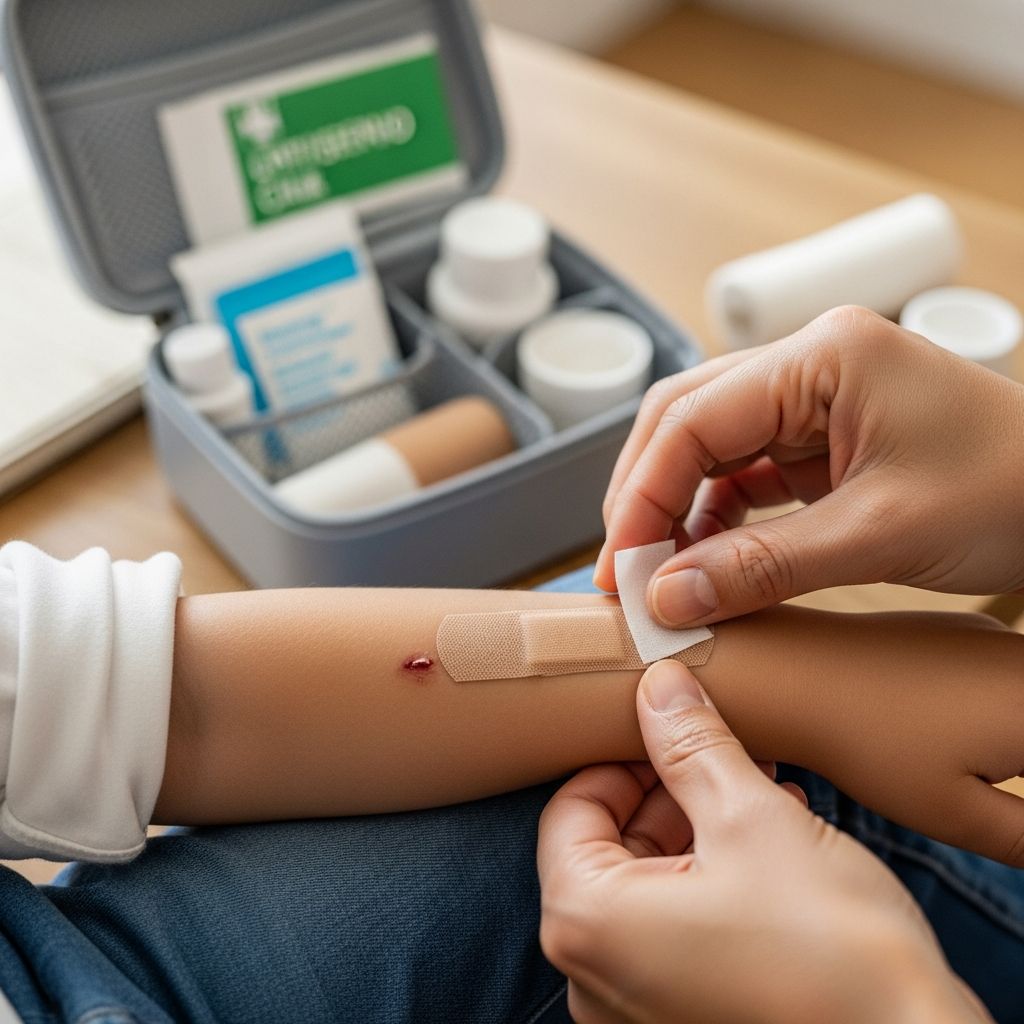
4. Protect and Cover the Area
Once the wound is clean and bleeding is controlled, it needs to be protected from further contamination.
- Pat the area dry with a clean cloth or sterile gauze.
- Apply a thin layer of over-the-counter antibiotic ointment if your child has no known allergy to it.
- Cover with a sterile adhesive bandage or non-stick dressing secured with tape.
- Change the dressing at least once a day or whenever it gets wet or dirty.
5. Soothe Pain and Reassure Your Child
Being bitten can be frightening. Comforting your child emotionally is as important as treating the physical wound.
- Offer age-appropriate pain relief medication recommended by your child’s healthcare provider.
- Use calm, simple language to explain what you are doing and that they are now safe.
- Encourage slow, deep breaths if your child is panicking or crying uncontrollably.
When a Bite Needs a Doctor
Some bites and scratches require only basic home care, while others need prompt medical evaluation, antibiotics, or even stitches. When in doubt, call your child’s doctor or an urgent care center and describe exactly what happened.
Situations That Deserve Prompt Medical Attention
Contact a healthcare provider as soon as possible if:
- The bite or scratch is deep, wide, or gaping.
- The skin is badly torn, crushed, or missing.
- The injury is on the face, head, neck, hands, feet, or near a joint.
- The wound continues to bleed after 10–15 minutes of direct pressure.
- Your child has not had a tetanus booster in the last few years or vaccination status is uncertain.
- The animal was wild, stray, or behaving oddly, or its vaccination history is unknown.
Signs of Infection to Watch For
Infection may develop even when a wound looks small, especially with puncture-type bites (like cat bites) or if cleaning was delayed. Check the wound several times a day.
- Increasing redness or warmth around the wound.
- Swelling or a firm, tender area developing under the skin.
- Pus, cloudy fluid, or a foul smell from the wound.
- Red streaks spreading from the bite toward the body.
- Fever, chills, or your child acting unusually tired or unwell.
If any of these signs appear, contact a doctor right away. Infections from animal bites can spread quickly, and early treatment with antibiotics is often very effective.
Understanding Rabies and Tetanus Risk
Two major concerns after an animal bite are rabies and tetanus. While serious infections are rare in many areas, they can be life-threatening, so they are always taken seriously by healthcare professionals.
Rabies: What Parents Should Know
Rabies is a viral infection that affects the brain and nervous system. Once symptoms appear, it is almost always fatal, but it is preventable if treated promptly after an exposure. The risk is highest from bites by wild animals such as bats, raccoons, foxes, coyotes, and skunks, and from unvaccinated or stray dogs and cats.
- Any bite from a wild animal should be evaluated urgently.
- If the animal can be safely captured or observed by authorities, its health status may guide treatment decisions.
- Doctors may recommend a series of rabies vaccinations and, in some cases, an additional injection (rabies immune globulin) for protection.
Tetanus: Not Just Rusty Nails
Tetanus is a serious bacterial disease caused by germs found in soil, dust, and animal saliva. Puncture wounds, deep or dirty injuries, and bites can provide a pathway for these bacteria. Most children are protected through regular childhood vaccinations, but boosters are sometimes needed after a bite.
- Let your child’s doctor know the date of the last tetanus shot if you know it.
- If your child’s immunizations are not current, a booster may be given to reduce the risk of tetanus.
Types of Animals and Special Concerns
Different animals pose different risks. The wound’s location, the type of animal, and the circumstances of the bite all influence how a doctor will evaluate and treat your child.
| Animal | Typical Injury | Key Concerns for Parents |
|---|---|---|
| Dog | Crushing bites, punctures, or tears | Cosmetic damage to face, deep tissue injury, infection, possible need for stitches |
| Cat | Small punctures and scratches | High infection risk from deep, narrow punctures even when wounds appear tiny |
| Rodents (hamsters, gerbils, mice) | Small bites on fingers or hands | Usually lower rabies risk; still need careful cleaning and monitoring for infection |
| Wild mammals (raccoons, bats, foxes) | Punctures or tears | Higher concern for rabies; urgent medical and public health evaluation |
| Human bite | Crushing and tearing injuries | Surprisingly high infection risk from bacteria in the mouth; often needs medical care |
Home Care Over the Next Few Days
After the initial first aid and any medical visit, caring for the wound at home helps ensure proper healing. Follow the instructions given by your child’s doctor, and ask questions if anything is unclear.
- Keep the wound clean and dry; change bandages as directed.
- Remind your child not to pick at scabs or scratch the area.
- Give antibiotics and pain medicines exactly as prescribed and finish the full course of any antibiotic.
- Watch for new or worsening redness, swelling, pain, or drainage.
- Check your child’s overall behavior: unusual sleepiness, fever, or low energy may signal a problem.
Preventing Animal Bites and Scratches
Prevention starts with adult supervision and teaching children how to behave safely around animals. Clear rules and consistent examples from adults make a big difference.
Safety Rules for Children
- Always ask the owner’s permission before approaching a dog or other pet.
- Let the animal sniff your closed hand first instead of reaching suddenly for its head.
- Never disturb an animal that is eating, sleeping, or caring for babies.
- Do not hug, climb on, or ride pets; many animals dislike tight hugs or being pinned down.
- Stay still like a “tree” if an unfamiliar dog runs toward you: stand tall, keep arms at your sides, and avoid eye contact.
- Never try to catch or handle wild animals, including injured ones; tell an adult instead.
Responsibilities for Parents and Caregivers
- Choose pets with calm temperaments and expose them gradually to children in a controlled way.
- Ensure routine veterinary visits, including rabies vaccination for dogs, cats, and other appropriate animals.
- Use secure leashes, fences, or enclosures when pets are outdoors or around visitors.
- Supervise all interactions between young children and animals, even trusted family pets.
- Teach caregivers (grandparents, babysitters, older siblings) the same safety rules and first aid steps.
Emotional Impact on Children
An animal bite or aggressive encounter can be emotionally upsetting. Some children become fearful of animals afterward, while others minimize the event. Supporting both physical and emotional healing helps restore confidence.
- Encourage your child to talk about what happened and how they feel.
- Use age-appropriate language to explain that the animal may have been scared or surprised, not “mean.”
- Reintroduce contact with trusted, calm animals slowly, and only when your child seems ready.
- If your child shows ongoing fear, nightmares, or behavior changes, consider speaking with a pediatrician or counselor.
Frequently Asked Questions (FAQs)
1. Do all animal bites need antibiotics?
No. Some small, shallow bites may heal well with proper cleaning and monitoring alone, especially if they are on low-risk areas and caused by a healthy, vaccinated pet. However, doctors often prescribe antibiotics for bites on the face, hands, or feet, deep puncture wounds, or any injuries with a higher risk of infection.
2. Is a scratch less serious than a bite?
Not always. While many minor scratches heal without problems, deeper scratches or those contaminated with saliva can introduce bacteria into the skin. Cat scratches, in particular, can lead to specific infections, so they should be cleaned carefully and monitored just as closely as bites.
3. What if my child was bitten by a vaccinated pet?
A vaccinated pet lowers the chance of rabies but does not eliminate the risk of other infections. Your child’s wound still needs proper cleaning, and you may need to call a doctor depending on the depth and location of the wound and your child’s vaccination history.
4. How quickly should we see a doctor after a bite?
For deep or high-risk wounds, bites from wild or unknown animals, or injuries to the face, hands, or genitals, it is best to seek medical attention as soon as possible, ideally within hours. For milder injuries, call your child’s doctor the same day for guidance on whether an in-person visit is needed.
5. Can my child still play with our pet after a bite?
Yes, in many cases, but not immediately. First, make sure your child’s wound is healing and that both the child and the pet have had time to calm down. Then gradually re-introduce supervised interactions, reinforcing gentle handling rules so that both the child and the animal feel safe.
Key Takeaways for Parents
- Stay calm, remove your child from danger, and focus on stopping serious bleeding.
- Clean bite and scratch wounds thoroughly and cover them with a clean dressing.
- Contact a healthcare provider promptly for deep wounds, high-risk locations, wild animal bites, or any signs of infection.
- Keep your child’s and your pet’s vaccinations up to date, including tetanus and rabies where recommended.
- Teach and model safe behavior around animals to lower the chances of future bites or scratches.