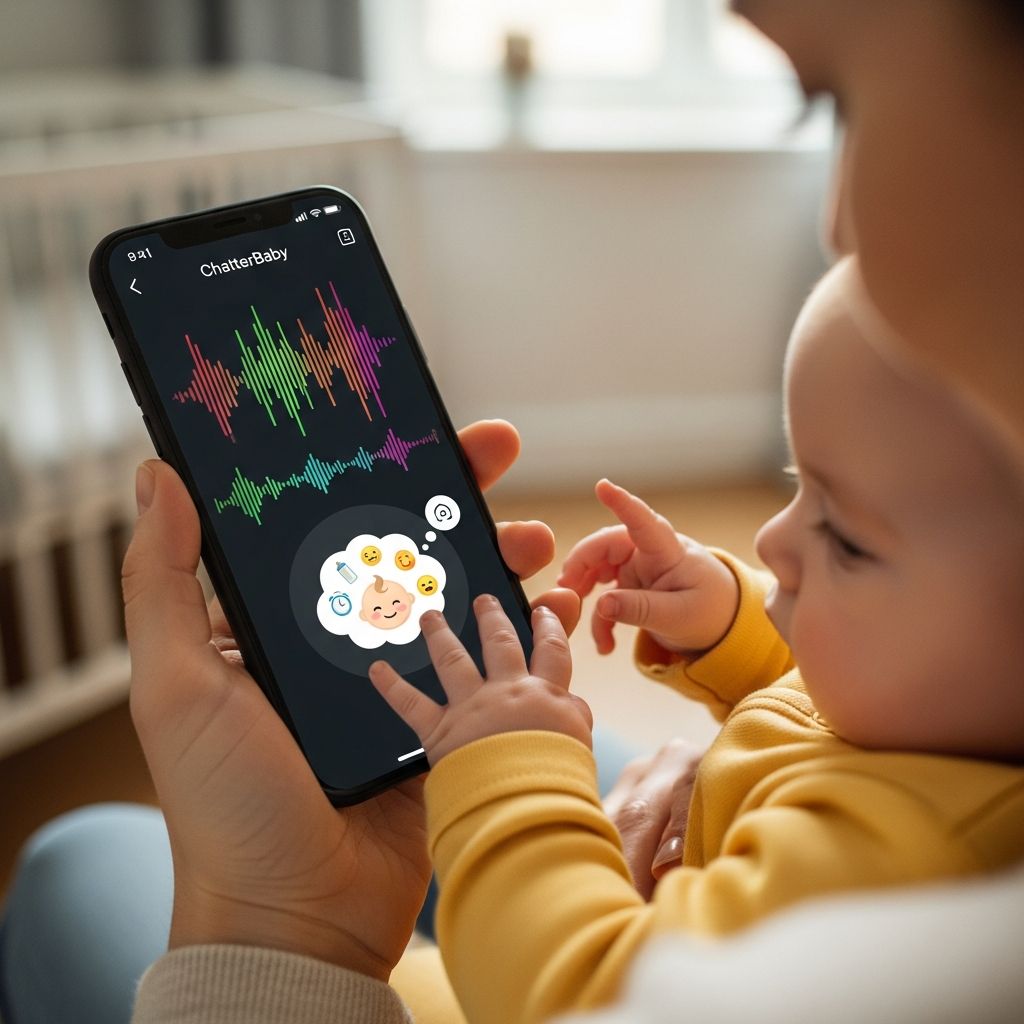
New parents often face the daunting task of interpreting their baby’s cries, a universal language of needs that can feel like a mystery. The ChatterBaby app, developed by researchers at the University of California, Los Angeles (UCLA), leverages artificial intelligence to bridge this communication gap, offering real-time insights into whether a baby is hungry, fussy, or in pain.
The Science Behind Baby Cry Interpretation
Infants communicate primarily through vocalizations, with cries varying in pitch, duration, and intensity based on their emotional or physical state. UCLA researchers analyzed over 2,000 cry samples to train machine learning algorithms that detect acoustic patterns. For instance, pain cries feature higher energy levels and fewer pauses compared to fussy ones, enabling 90% accuracy in identifying distress from events like vaccinations.
This technology relies on signal processing to examine features such as frequency, silence intervals, and amplitude. Babies in pain produce sustained high-pitched wails, while hungry cries often include rhythmic patterns with breaks. Fussy cries, linked to discomfort or tiredness, are lower-pitched and more intermittent.
Origins and Purpose of ChatterBaby
ChatterBaby emerged from UCLA’s Code for the Mission initiative, primarily to empower deaf or hard-of-hearing parents. Traditional baby monitors alert to noise but fail to distinguish cries from coos or babbles. The app notifies users of cries and categorizes them, fostering confidence in caregiving.
Dr. Ariana Anderson, assistant professor at UCLA’s Semel Institute, led the development. Starting in 2013, her team built a database now exceeding 20,000 sounds, crowdsourced from parents worldwide. This ‘lab-to-participant’ model allows anyone to contribute five-second clips via the free app, de-identified for privacy, enhancing algorithm precision over time.
How the App Works in Everyday Parenting
Available on iOS and Android, ChatterBaby is user-friendly: parents record a cry, and AI compares it against its database of 1,500+ validated sounds. Results categorize the cry as pain (90% accurate), hunger, or fussy (around 85% overall).
- Recording: Capture 5 seconds of clear audio, minimizing background noise for best results.
- Analysis: Algorithms process acoustics instantly, providing probabilities (e.g., 92% pain cry).
- Personalization: Tag and upload clips to train the model for your baby’s unique patterns.
- Alerts: Background monitoring notifies deaf parents of cries they can’t hear.
Beyond basics, ongoing research expands to colic, gas, and boredom—common culprits in prolonged crying episodes affecting 20% of infants.
Benefits for Diverse Parenting Scenarios
| Parenting Challenge | How ChatterBaby Helps | Accuracy Insight |
|---|---|---|
| Deaf/Hard-of-Hearing Parents | Detects cries vs. non-cries; categorizes needs | 90% for cries |
| New Parents (Hearing) | Reduces guesswork; speeds response | 85-90% pain/fussy |
| Colic Management | Analyzes ‘mystery’ cries for patterns | Emerging research |
| Sleep-Deprived Families | Quick insights minimize trial-and-error | Database-driven |
For deaf families like the Whetters, who have a talkative infant, the app confirms cries and their cause, transforming uncertainty into action.
Expanding Research and Future Applications
Post-2018 launch, user contributions have refined models. NIH and UCLA-funded studies now probe colic—intense crying without clear cause—and autism-linked vocal patterns. By 2026, the database supports nuanced detections like exhaustion or dirty diapers.
Future updates may integrate wearables for vital signs or predict needs preemptively, revolutionizing pediatric care. Ethical data handling ensures anonymity, with opt-in contributions driving progress.
Practical Tips for Maximizing App Effectiveness
- Record in quiet environments to avoid false readings from pets or music.
- Label uploads accurately (e.g., ‘fed after cry’ for hunger) to improve personalization.
- Combine with basics: check diaper, temperature, feeding routine first.
- Update regularly for algorithm enhancements from new data.
Parents report reduced stress, as the app cuts soothing trial times by providing data-backed starting points.
Potential Limitations and Realistic Expectations
No tool is infallible—fussy vs. hungry differentiation hovers at 70-80% due to overlap. Background noise skews results, and individual cry styles vary. It’s a guide, not a substitute for intuition or medical advice.
For persistent cries, consult pediatricians to rule out reflux or allergies. The app excels as a supplement, especially in high-need scenarios.
Frequently Asked Questions
What accuracy can I expect from ChatterBaby?
It identifies pain cries over 90% accurately and any cries around 90%, with fussiness/hunger slightly lower.
Is my baby’s data private?
Yes, uploads are de-identified and used solely for research to improve the app.
Can it detect colic or other specific issues?
Current versions handle basics; colic research is ongoing, with promising expansions.
Who developed ChatterBaby?
UCLA team led by Dr. Ariana Anderson, supported by NIH and institutional grants.
Is it free, and what devices support it?
Fully free on iPhone and Android via App Store/Google Play.
Why ChatterBaby Matters for Modern Families
In an era of tech-savvy parenting, ChatterBaby democratizes cry translation, leveling the field for all caregivers. Its evolution from niche aid to universal tool underscores AI’s role in humanizing early parenthood. Download at Chatterbaby.org and contribute to a growing knowledge base that eases cries worldwide.
References
- App helps new and deaf parents know when and why their baby is crying — UCLA Newsroom. 2018-11-14. https://newsroom.ucla.edu/releases/app-helps-hearing-impaired-parents-know-when-and-why-their-baby-is-crying
- UCLA smartphone app translates meanings of your baby’s cries — New Atlas. 2018-11-20. https://newatlas.com/baby-cry-translation-research-autism-study/54722/
- ChatterBaby, an app that helps parents know when and why their baby is crying — UCLA Health. N/A. https://www.uclahealth.org/news/article/chatterbaby-an-app-that-helps-parents-know-when-and-why-their-baby-is-crying-used-in-new-research
- How to Understand Baby Sounds — UCLA Newsroom. N/A. https://newsroom.ucla.edu/magazine/chatterbaby-app-artificial-intelligence-infant-cries
- ChatterBaby – Apps on Google Play — Google Play Store. 2023-05-01. https://play.google.com/store/apps/details?id=org.uclahealth.chatterbaby&hl=en_US
- ChatterBaby – App Store — Apple App Store. 2023-05-01. https://apps.apple.com/us/app/chatterbaby/id1347345855