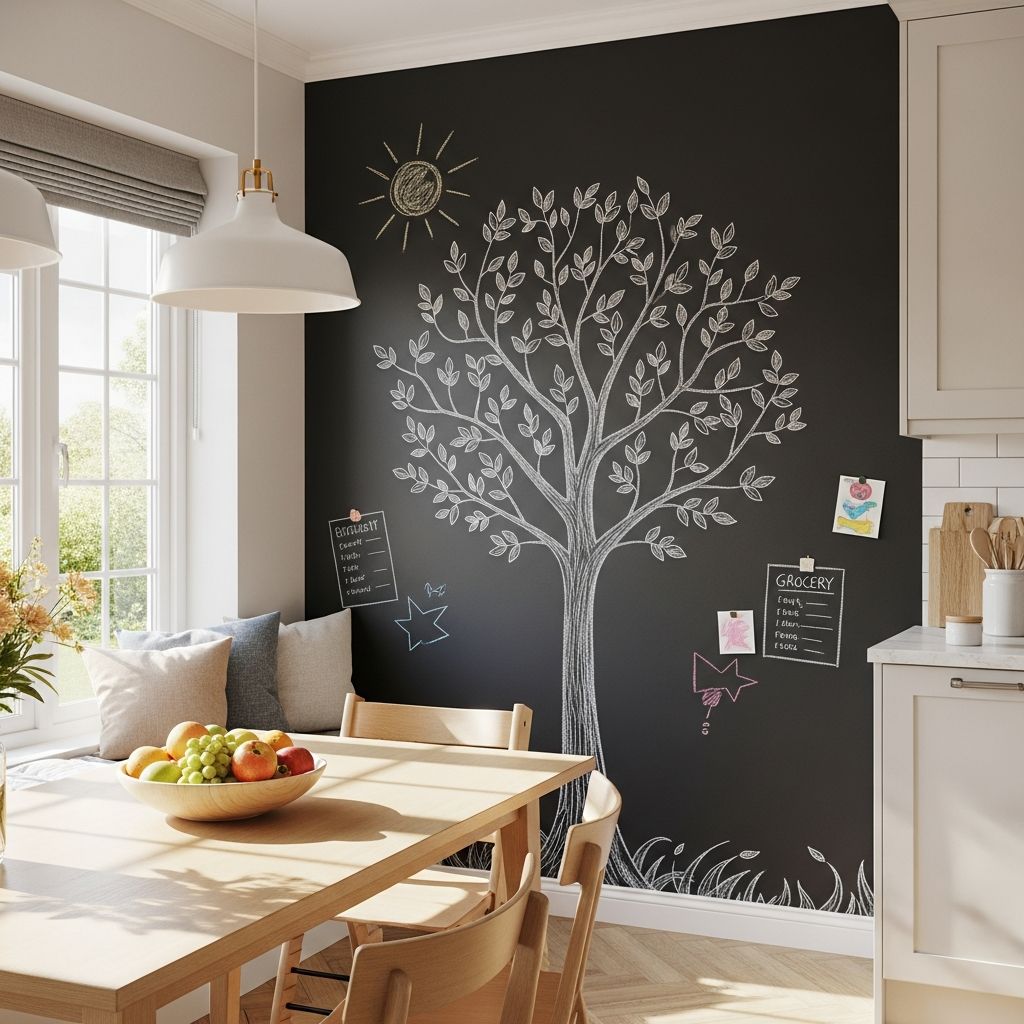
Chalkboard paint has evolved from a classroom staple into one of the most playful and practical finishes you can use at home. It turns ordinary walls, furniture and accessories into reusable canvases for creativity, reminders and seasonal decor. The beauty of chalkboard paint is that it works just as well for busy parents tracking schedules as it does for kids who want to draw on the walls without getting in trouble.
This guide explores original, family-friendly ideas for using chalkboard paint, along with planning tips, surface suggestions, styling advice, and answers to common questions. Use it as inspiration to create a home that feels both intentional and fun.
Understanding Chalkboard Paint vs. Chalk-Style Paint
Before you start, it helps to distinguish between two products that are often confused. Chalkboard paint is designed to create a surface you can write on with chalk and erase repeatedly. Chalk-style paint, by contrast, is a decorative furniture paint with a matte, chalky finish that does not automatically become writable.
- Chalkboard paint: Creates a functional surface for drawing, notes and lists; usually works best on smooth, primed surfaces.
- Chalk-style paint: Used for upcycling furniture; typically sealed with wax or topcoat and not meant for writing.
For the ideas in this article, you will want true chalkboard paint, available in classic dark colors and, in many brands, a variety of fun shades.
Planning Your Chalkboard Project
A bit of planning goes a long way in making your chalkboard area look deliberate rather than like a random patch of black paint. Think about what problem you want to solve or what experience you want to create, then design around that.
Questions to Ask Yourself
- Do you need a place to track calendars, chores and menus?
- Are you looking for a creative outlet for kids that you can easily reset?
- Would you like a rotating display area for seasonal quotes, doodles or educational content?
- Is your space small and in need of a visual focal point?
Once you know your priority—organization, creativity, or decoration—you can choose where to place the chalkboard and how large it should be.
Where Chalkboard Paint Works Best
Chalkboard paint can technically go almost anywhere, but some locations naturally see more use and feel intuitive to your family. Rather than covering every possible surface, choose a few spots that will make an impact.
Smart Spots for Chalkboard Surfaces
- Kitchen or dining area: For menus, grocery lists and family messages.
- Kids’ rooms and playrooms: For drawing, practicing letters, and games.
- Hallways or entryways: For reminders, quick doodles and inspirational notes.
- Home office or study nook: For brainstorming, to-do lists and schedules.
- Utility or laundry rooms: For household reminders and chore charts.
Creative Chalkboard Paint Ideas by Room
Instead of painting a random rectangle on the wall, you can integrate chalkboard paint into your existing decor so it looks like it belongs. The following room-by-room ideas help you do just that while staying practical for families.
Kitchen Command Center Wall
The kitchen is often the hub of family life, which makes it an ideal place for a chalkboard command center. Choose a vertical section of wall near the fridge or dining area and dedicate it to family communication.
- Divide the area into labeled sections, such as “This Week,” “Meals,” “Reminders,” and “Notes.”
- Mount a floating shelf or magnetic strip below for chalk, erasers, pens and mail.
- Use colorful chalk to distinguish different family members’ activities.
This design turns a previously blank wall into a living dashboard that evolves as your schedule changes.
Chalkboard Pantry Door
If wall space is limited, look for a solid door you can reinvent. A pantry or utility room door is a prime candidate. Paint the inside, the outside, or both, depending on your layout and how much you want on display.
- Use the outside of the door for weekly menus and cheerful messages.
- Reserve the inside for more functional notes, like running grocery lists and inventory reminders.
- Add a small hook or clip-on basket to hold chalk and a soft cloth.
Because the door is a defined shape, the chalkboard area feels neat and purposeful without extra framing.
Kid-Friendly Drawing Zones
Children love to draw on surfaces they are normally told to avoid, which is why a dedicated chalkboard zone is such a hit. Focus on placement and height so they can reach comfortably.
- Paint a band of chalkboard paint along the lower half of a playroom or bedroom wall.
- Outline the zone with bright trim so kids understand where drawing is allowed.
- Consider a corner with two adjoining walls painted to create a cozy, immersive art nook.
You can encourage learning by occasionally drawing alphabet letters, shapes or numbers that your child can trace or copy.
Study Nook or Homework Station
A chalkboard surface next to a desk or homework area is a useful place for reminders and simple visual aids. It can be much more flexible than a traditional bulletin board.
- Use it for spelling words, math problems or a simple weekly overview.
- Draw simple charts or diagrams that match what your child is learning.
- Reserve a small area for motivational quotes they can decorate themselves.
Because everything erases, you can update the wall as school subjects and priorities shift over time.
Entryway Message Zone
An entryway chalkboard is perfect for last-minute reminders and cheerful greetings. It can be as bold or as subtle as your space allows.
- Paint a narrow vertical stripe next to the door for quick notes like “Don’t forget library books!”
- Hang hooks or a coat rack nearby so the area functions as a mini landing zone.
- Change messages seasonally for an easy decor refresh.
This is a great location for families with older kids who come and go at different times and need a central communication spot.
Unexpected Surfaces You Can Transform
Walls are not the only surfaces that can benefit from chalkboard paint. Small-scale projects are often quicker, less messy and easier to change if your style evolves.
Furniture and Accessories
- Tabletops: Paint a coffee table or kids’ craft table for doodling, board games or labeling snacks during parties.
- Drawer fronts: Use chalkboard paint on dresser or toy-bin drawers so you can label and relabel as storage needs change.
- Serving trays: Turn a wooden tray into a reusable sign for snack tables, drink stations or holiday displays.
These projects add personality and function without requiring a major room makeover.
Organizing Helpers
- Canisters and jars: Paint label-sized rectangles on glass or metal containers for pantry staples, craft supplies or small toys.
- Clipboards: Create a set of chalkboard clipboards for rotating art, chore lists or schedules.
- Reusable gift tags: Make small wooden tags with chalkboard paint that can be retitled for birthdays, holidays and storage bins.
Because the writing is temporary, these pieces adapt easily as your family’s routines grow and shift.
Style Tips: Making Chalkboard Areas Look Finished
While chalkboard paint is playful, it can look unfinished if it is simply brushed onto a random patch of wall. A few styling tricks will help your project feel polished and intentional.
Framing, Borders and Color
- Add wood trim, molding or painted borders to frame the chalkboard area.
- Choose a contrasting wall color so the chalkboard reads as a design feature.
- Use coordinating accessories—like baskets, hooks or picture ledges—to integrate the chalkboard into the room.
These touches visually ground the space and make it clear that the chalkboard is a planned element of your decor.
Choosing Chalk and Art Style
- Use traditional white chalk for a classic, cohesive look, or mix in colored chalk for kids’ areas.
- Keep a few simple templates or stencils on hand for banners, borders and lettering.
- Photograph your favorite designs before erasing so you can recreate them or print them for keepsakes.
A consistent style of doodles, banners or fonts can make even casual scribbles feel pulled together.
Basic Chalkboard Paint Preparation and Application
Good preparation is the difference between a chalkboard that wipes clean and one that constantly looks dusty or streaky. Always follow the instructions on your specific paint, but these general steps apply to most projects.
| Step | Action | Why It Matters |
|---|---|---|
| 1. Clean | Wipe the surface with a mild cleaner and let it dry fully. | Removes grease and dust that prevent adhesion. |
| 2. Smooth | Fill holes, sand bumps and lightly scuff glossy surfaces. | Creates an even canvas that erases more cleanly. |
| 3. Tape | Use painter’s tape to mark clean edges or shapes. | Gives a crisp outline and professional appearance. |
| 4. Prime (if needed) | Apply primer on porous or high-contrast surfaces. | Ensures even color and better durability. |
| 5. Paint | Apply multiple thin coats, allowing proper drying time. | Reduces drips and improves coverage. |
| 6. Cure | Let the paint cure for the time specified on the can. | Strengthens the surface before use. |
| 7. Season | Rub the entire area with the side of a chalk stick, then erase. | Helps prevent “ghost” images from early drawings. |
Taking the time to smooth and properly cure your chalkboard will make day-to-day use far more satisfying.
Keeping Chalk Dust Under Control
One of the main concerns parents have about chalkboard paint is the potential mess. A bit of planning can keep chalk dust in check and make cleanup manageable.
- Place a washable rug, mat or vinyl floor protector beneath high-use chalkboard areas.
- Use a small handheld vacuum or dustpan near the base of the wall to collect dust regularly.
- Consider dustless or low-dust chalk if someone in the family is sensitive to airborne particles.
With a few simple systems in place, chalkboard surfaces can remain a fun feature rather than a cleaning headache.
Encouraging Creative and Organized Use
A chalkboard is only as useful as the habits built around it. Helping kids (and adults) understand how the space should be used will keep it from becoming chaotic or ignored.
Ideas for Kids
- Create a weekly “theme” for drawings, such as space, animals or seasons.
- Designate half the board for free drawing and half for learning activities or games.
- Invite children to help erase and refresh the wall as part of a regular routine.
By giving kids ownership, they are more likely to treat the chalkboard with care.
Ideas for Parents
- Use the same area of the chalkboard for recurring lists, like groceries or chores.
- Block out a visible section for the weekly schedule to reduce last-minute scrambles.
- Rotate simple, uplifting phrases where everyone can see them each morning.
When adults model consistent, intentional use, the chalkboard becomes part of daily life rather than background clutter.
Frequently Asked Questions About Chalkboard Paint
Does chalkboard paint work on any surface?
Chalkboard paint adheres best to smooth, non-flexible surfaces such as drywall, wood, metal and some laminates. Very textured walls, fabrics and flexible plastics do not usually make good chalkboard surfaces. For unusual materials, test a small area first and see how well the paint covers and erases.
How do I prevent ghost images after erasing?
Seasoning the board before first use—by rubbing the side of a chalk stick over the entire surface and wiping it away—greatly reduces ghosting. Using a slightly damp cloth for occasional deep cleaning also helps. Avoid pressing too hard with chalk or leaving the same drawing on the board for long periods if you want super-clean erasures.
Can I use liquid chalk markers?
Some people enjoy liquid chalk markers for crisp lines and bright colors, but not all chalkboard paints work well with them. Test markers in a discreet corner first to see if they erase cleanly. If they leave residue or stains, stick with traditional chalk for the main drawing area.
Is chalkboard paint safe for kids?
Many modern chalkboard paints are low-odor and designed for indoor use, but always check the label for safety information and ventilation recommendations. Apply the paint while children are out of the room, let it cure fully, and supervise young kids who might be tempted to put chalk in their mouths. Choosing high-quality chalk and cleaning dust regularly will also support a kid-friendly environment.
Can I repaint or remove a chalkboard wall later?
Yes. If you want to change the wall, you can treat it like any painted surface. Clean it, lightly sand to remove texture, and apply primer followed by your new wall color. For heavily used or layered chalkboards, a bit of extra sanding may be needed to achieve a smooth finish again.
Bringing It All Together
Chalkboard paint offers an appealing mix of practicality and play, especially in homes with children. By thoughtfully choosing locations, framing the space, planning for dust and building habits around how the surface is used, you can enjoy a chalkboard feature that supports both creativity and organization. Whether you start with a small pantry door project or commit to an entire wall in the playroom, the result is a living canvas that changes right along with your family.