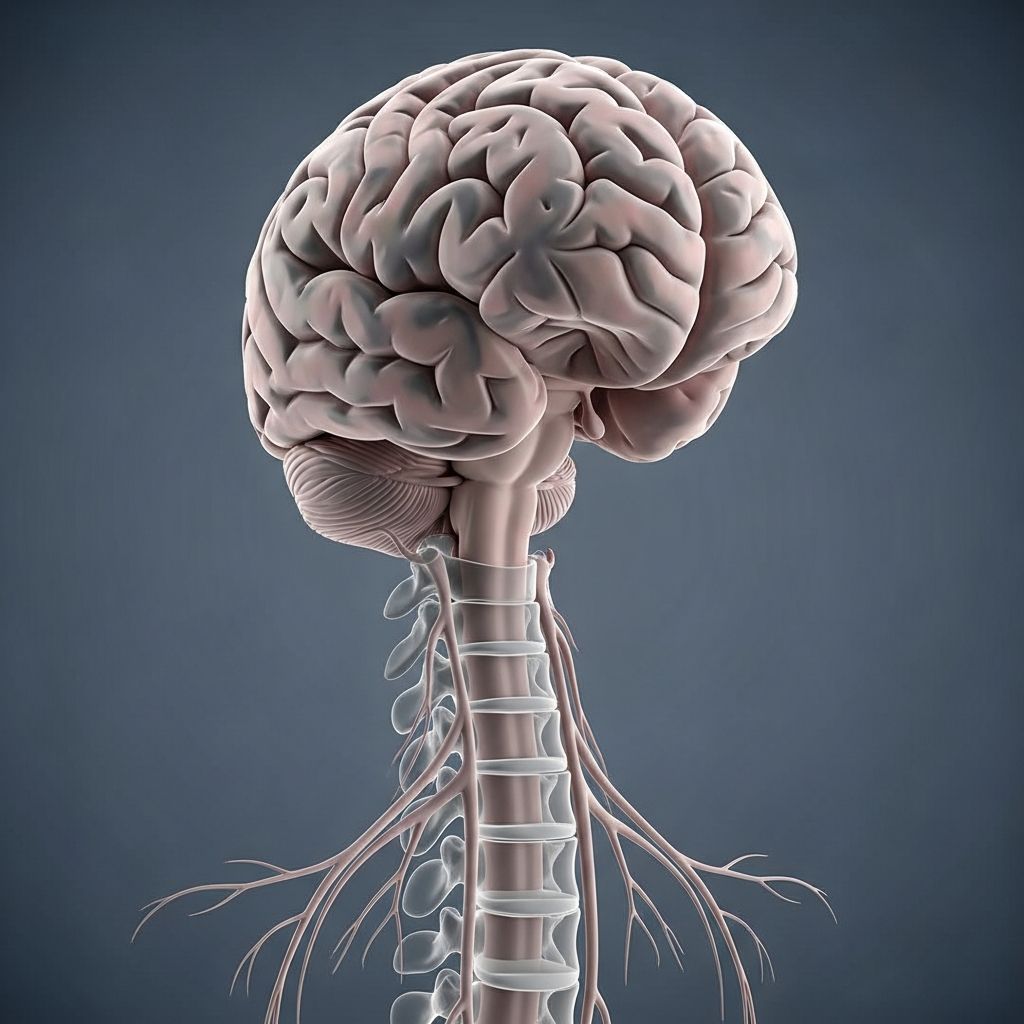
The central nervous system (CNS) serves as the primary control hub for the human body, comprising the brain and spinal cord to manage everything from basic survival functions to complex cognitive processes. In children, this system is particularly dynamic as it develops rapidly, influencing learning, physical growth, and emotional regulation.
Primary Components of the CNS
The CNS consists of two interconnected organs: the brain, housed within the skull, and the spinal cord, protected by the vertebral column. These structures process sensory inputs, generate responses, and coordinate bodily activities, ensuring seamless interaction between mind and body.
- Brain: The largest CNS component, responsible for higher-order functions like thinking, memory, and voluntary movement.
- Spinal cord: Acts as a conduit for signals between the brain and periphery, also handling reflex actions independently.
Detailed Anatomy of the Brain
The brain, weighing about 3 pounds in adults but starting small in infants, features intricate divisions for specialized tasks. Its outer layer, the cerebral cortex, enables advanced cognition through folded gyri and sulci that expand surface area.
Cerebrum: The Thinking Powerhouse
Dominating the brain, the cerebrum divides into two hemispheres linked by the corpus callosum, each with four lobes: frontal, parietal, temporal, and occipital. The frontal lobe drives executive functions like planning and decision-making; parietal processes touch and spatial awareness; temporal handles auditory input and memory; occipital focuses on vision.
| Lobe | Main Functions | Child Development Impact |
|---|---|---|
| Frontal | Decision-making, problem-solving | Supports learning self-control |
| Parietal | Sensory integration, spatial skills | Aids coordination in play |
| Temporal | Language, memory formation | Crucial for speech development |
| Occipital | Visual processing | Essential for reading readiness |
Cerebellum: Balance and Precision
Located at the brain’s rear base, the cerebellum fine-tunes motor activities, posture, and equilibrium, critical for children’s active lifestyles like running and jumping.
Brainstem: Life-Sustaining Core
The brainstem, including midbrain, pons, and medulla oblongata, oversees automatic processes such as breathing, heart rate, and sleep-wake cycles. The midbrain manages eye movements; pons relays signals; medulla controls vital rhythms.
Spinal Cord Structure and Role
Extending from the brainstem through the vertebral canal to the lumbar area, the spinal cord features central grey matter for processing and surrounding white matter for signal transmission. It facilitates rapid reflexes, like pulling away from heat, without brain involvement.
- Protected by meninges and cerebrospinal fluid (CSF), which cushions against impacts.
- Segmental organization matches spinal nerves for body-wide communication.
Protective Layers Safeguarding the CNS
The CNS is shielded by bony encasements—skull for the brain, vertebrae for the spinal cord—plus three meningeal layers: dura mater (tough outer), arachnoid (web-like middle), and pia mater (delicate inner). CSF circulates in subarachnoid spaces, providing buoyancy and nutrient delivery.
Cells Powering the CNS
Neurons, numbering around 86 billion in the brain, transmit signals via dendrites (receivers), soma (processors), and axons (senders). Glial cells outnumber neurons, offering structural support, insulation via myelin, and immune defense.

How Signals Travel in the CNS
Communication occurs through electrical impulses along axons, boosted at synapses by neurotransmitters, enabling coordinated responses from sensory detection to motor output. Sensory neurons feed data upward; motor neurons execute brain commands downward.
Developmental Milestones in Children’s CNS
From fetal stages, the CNS expands dramatically; by age 3, a child’s brain reaches 80% adult size, refining connections through experience. Milestones include newborn reflexes transitioning to voluntary control, language bursts by toddlerhood, and abstract thinking in school years.
- Infancy: Reflexes like sucking and grasping dominate.
- Toddlerhood: Walking, talking emerge via myelination.
- School age: Enhanced focus, memory for academics.
Common CNS Challenges in Kids
Children may face issues like concussions from falls, infections such as meningitis affecting meninges, or developmental delays signaling disorders like epilepsy. Genetic conditions (e.g., cerebral palsy) or injuries can impair functions; early intervention is key.
| Condition | Symptoms | Prevention/Treatment |
|---|---|---|
| Concussion | Headache, dizziness | Helmet use, rest |
| Meningitis | Fever, stiff neck | Vaccinations, antibiotics |
| Epilepsy | Seizures | Medication, monitoring |
Daily Care for Healthy CNS Development
Nutrition rich in omega-3s, adequate sleep (10-12 hours for kids), physical activity, and limited screen time foster optimal CNS growth. Encourage reading, puzzles for cognitive stimulation; helmets and seatbelts prevent trauma.
Frequently Asked Questions
What does the CNS control in everyday child activities?
The CNS orchestrates thinking, moving, feeling, and automatic processes like breathing, vital for play and learning.
How can parents spot CNS issues early?
Watch for delays in milestones, persistent headaches, seizures, or coordination problems; consult pediatricians promptly.
Is the CNS fully developed at birth?
No, it matures through adolescence, with critical growth in early years influenced by environment and stimulation.
What role does sleep play in CNS health?
Sleep consolidates memories, clears toxins, and supports neural plasticity, essential for children’s development.
Can diet affect CNS function?
Yes, nutrients like iron and DHA support myelination and neuron health, preventing deficiencies.
References
- Central Nervous System (CNS): Structure & Main Functions — Simply Psychology. 2023-10-15. https://www.simplypsychology.org/central-nervous-system.html
- Central nervous system: Anatomy, structure, function — Kenhub. 2024-05-20. https://www.kenhub.com/en/library/anatomy/the-central-nervous-system
- Central Nervous System (CNS): What It Is & Function — Cleveland Clinic. 2024-02-12. https://my.clevelandclinic.org/health/body/central-nervous-system-cns
- Central nervous system: Structure, function, and diseases — Medical News Today. 2023-11-08. https://www.medicalnewstoday.com/articles/307076
- Anatomy, Central Nervous System — NCBI Bookshelf (StatPearls). 2023-07-24. https://www.ncbi.nlm.nih.gov/books/NBK542179/