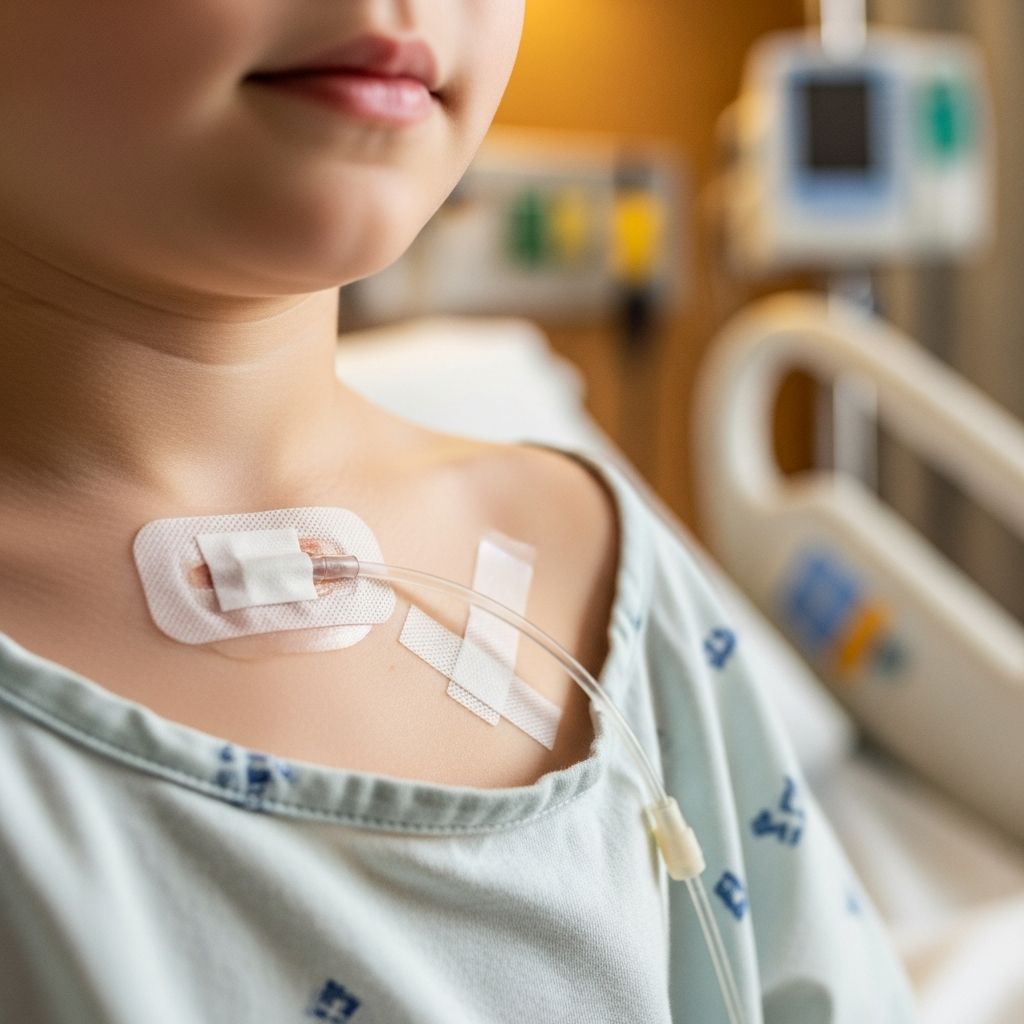
When a child needs long-term medicine, nutrition, or frequent blood tests, repeated needle sticks quickly become stressful for the entire family. A central line offers a safer, more comfortable way to deliver treatment directly into a large vein over weeks or even months.
This guide explains what central lines are, why doctors recommend them, what to expect during placement, how to care for the line at home, and which warning signs require urgent attention. It is written for parents and caregivers so you can feel more confident and prepared while your child receives the care they need.
What Is a Central Line?
A central line, also called a central venous catheter, is a thin, flexible tube that sits inside one of the body’s larger veins, usually in the chest, neck, or arm. Unlike a regular IV that sits in a small vein near the skin, a central line travels deeper and ends near the heart, where blood flow is stronger and can safely handle concentrated medications and large fluid volumes.
- Longer and sturdier than a standard IV: Designed to stay in place for weeks or months instead of just a few days.
- Multiple uses: One line can give fluids, medicine, nutrition, blood products, and also be used for blood draws.
- Fewer needle sticks: Because nurses can use the line to take blood and give treatments, your child often needs fewer separate IVs or injections.
For many children with serious or long-lasting illnesses, a central line is an essential tool that makes their overall treatment course more manageable and less painful.
Why a Child Might Need a Central Line
Doctors usually recommend a central line when treatment is complex, long term, or too harsh for small surface veins. It is not used for simple, short illnesses like routine infections that need a few days of IV antibiotics.
Common reasons a child might need a central line include:
- Long courses of IV antibiotics: For serious infections that require several weeks of intravenous treatment.
- Cancer treatment: To give chemotherapy, transfuse blood products, and draw frequent blood tests without repeated needle sticks.
- IV nutrition: When a child cannot eat enough by mouth or through a feeding tube and needs total parenteral nutrition (TPN).
- Frequent blood transfusions: For conditions like certain anemias or bleeding disorders.
- Complex intensive care: When a child is critically ill and needs multiple medicines and careful monitoring through a secure, reliable access point.
Before recommending a central line, the medical team weighs the benefits, such as comfort and reliable access, against risks like infection or clotting. Families are encouraged to ask questions and fully understand why the line is being suggested.
Main Types of Central Lines Used in Children
There are several designs of central lines, each chosen for particular medical needs and lifestyle considerations. The right type depends on how long treatment is expected to last, the child’s age, and how active the child is.
| Type | Where It Enters | What You See Outside | Typical Uses |
|---|---|---|---|
| Peripherally Inserted Central Catheter (PICC) | Vein in the upper arm | Thin tube coming out of the arm, secured with a dressing | Weeks to months of IV therapy, antibiotics, some chemotherapy |
| Tunneled Central Line | Vein in the chest or neck; part of the line runs under the skin | Portion of tubing exits the chest with one or more ends | Long-term therapies, frequent blood draws or infusions |
| Implanted Port (Port-a-cath) | Vein in the chest; small device placed fully under the skin | Bump under the skin; accessed with a special needle when needed | Long-term, intermittent treatments such as chemotherapy |
Each type has its own care instructions, but all share the same goals: easy access to the bloodstream and a reduced need for repeated needle sticks.
How Central Lines Are Placed
Central line placement is a planned medical procedure. The care team explains the steps in advance and asks for your consent. Children receive medicine to prevent pain and help them stay calm and still during the procedure.
Before the Procedure
- The doctor reviews your child’s medical history, medicines, and any allergies.
- Blood tests may be done to check clotting and infection risk.
- Your child may need to stop eating and drinking for a period before sedation or anesthesia.
- The team marks the area where the line will be placed and uses strict cleaning and sterile techniques.
During the Procedure
- The child receives either local anesthesia (numbing the area), sedation, or general anesthesia, depending on age and complexity.
- The doctor uses ultrasound or X-ray guidance to find a suitable vein and guide the catheter into place.
- For tunneled lines or ports, a small tunnel is created under the skin so the line is more secure and less likely to pull out.
- The catheter tip is placed in a large central vein near the heart, and position is usually checked with an X-ray.
Right After Placement
- The area is covered with a sterile dressing.
- Nurses monitor your child’s breathing, heart rate, and comfort as the anesthesia wears off.
- The team confirms that the line draws blood well and flushes easily before using it for treatment.
Most children can resume gentle activities soon after placement, depending on how they feel and the doctor’s instructions.
Benefits of a Central Line for Children
Although the idea of a tube going into a large vein can be frightening, central lines offer many advantages that make medical care more manageable for children and families.
- Less needle trauma: One central line can replace many separate IVs and blood draws.
- Reliable access: Staff can give critical medications quickly, even if small veins are hard to find.
- Comfort during long treatments: Children undergoing chemotherapy or extended antibiotic therapy often spend less time getting poked and more time resting.
- Flexibility for home care: Some medications and nutrition can be given at home through the line under nursing guidance.
When combined with good daily care and infection prevention, these benefits usually outweigh the risks for children who need intensive or prolonged treatment.
Risks and Possible Complications
Like any invasive device, a central line carries risks. Knowing the potential problems helps you recognize early warning signs and seek help quickly.
Infection
Germs can travel along the outside of the catheter or through the hub where tubing connects, leading to infections in the skin, bloodstream, or both. Infections related to central lines can be serious and may require antibiotics or even removal of the line.
Warning signs of infection include:
- Fever or chills without another clear cause.
- Redness, warmth, or swelling where the line enters the skin.
- Pus, drainage, or bad smell from the site.
- Your child seems unusually tired, irritable, or unwell.
Blood Clots (Thrombosis)
Occasionally, a clot can form around the catheter in the vein. This can make it hard to draw blood, cause swelling in the arm, neck, or face, or lead to pain around the line.
- Sudden swelling of the limb or area near the line.
- New pain or discomfort along the catheter path.
- Changes in how the line flushes or draws blood.
Mechanical Problems
Central lines can kink, break, or become dislodged. A damaged line may need urgent repair or replacement to prevent complications.
- Cracks or leaks in the tubing.
- The line appears shorter than before or seems to be pulling out.
- Dressing will not stay in place or the exit site is exposed.
If any of these problems occur, contact the medical team immediately and follow their instructions. Do not try to push a line back in or repair a leak on your own.
Daily Care at Home: Your Role as a Parent
Parents and caregivers are central to keeping a child’s line working well and free from infection. Before discharge, a nurse will teach you how to care for the line and give you written instructions.
Key Principles of Central Line Care
- Clean hands every time: Wash hands with soap and water or use an alcohol-based sanitizer before touching the line or dressing.
- Keep the dressing dry and secure: The site should remain covered with a clean, dry, intact dressing.
- Use sterile supplies as instructed: Only use the flushing syringes, caps, and cleaning products provided or approved by the care team.
- Follow the flushing schedule: Flushing and locking the line as directed helps prevent clots and keeps the catheter open.
Typical Home-Care Tasks
Exact steps vary by line type and hospital, but may include:
- Flushing the line with saline or heparin on a set schedule.
- Changing caps or connectors at recommended intervals.
- Changing dressings when they become loose, wet, or soiled, or according to the schedule you are given.
- Checking and recording your child’s temperature daily, or more often if advised.
Never hesitate to ask for a refresher lesson. Many families feel more confident after practicing with a nurse watching and answering questions.
Helping Kids Live Safely With a Central Line
Children are naturally active and curious, so living with a central line requires some extra planning. With precautions and clear rules, most kids can still participate in many everyday activities.
Activity and Play
- Avoid rough contact: Sports like football, wrestling, or activities with a high fall risk should be avoided unless the doctor says otherwise.
- Secure the line: Use the clips, straps, or protective covers provided to prevent the line from snagging during play.
- Encourage gentle activities: Walking, board games, reading, arts and crafts, and schoolwork are usually fine.
Bathing and Swimming
- Most children can bathe or shower with the line carefully covered and kept dry using waterproof dressings or covers.
- Immersing the line in pools, hot tubs, lakes, or the ocean is usually not allowed because it increases infection risk.
- Always follow the specific instructions from your child’s care team regarding water exposure.
Explain the rules to your child in simple terms and involve them in their own care, such as reminding others to wash hands or helping check that the dressing is still secure.
Questions to Ask Your Child’s Care Team
Open communication with your child’s doctors and nurses helps you feel more in control and ensures everyone is working from the same information. Consider keeping a notebook or digital file with key details about the line and treatments.
- Why is this specific type of central line recommended for my child?
- How long is the line expected to stay in?
- Who should we call if there is a problem after hours or on weekends?
- What symptoms or changes mean we should go to the emergency department right away?
- Are there any restrictions on school, sports, or travel?
Bringing these questions to appointments can improve understanding and help you advocate for your child’s needs.
Frequently Asked Questions (FAQs)
Is a central line painful for my child?
The placement procedure is done with medicine to prevent pain and help the child relax. Afterward, the area may feel sore or tender for a few days, similar to a bruise or pulled muscle. Daily life with a well-secured line is usually not painful, though some children notice it when clothing rubs against the site or when the line is accessed for treatment.
How long can a central line stay in place?
The length of time depends on the type of line and your child’s treatment plan. Some lines stay in for only a few weeks, while tunneled lines and ports can remain in place for many months or even longer if they continue to work well, remain infection-free, and are still needed for care.
Can my child go to school with a central line?
Many children safely attend school with a central line, provided teachers and school nurses understand the basics of care and emergency responses. You may be asked to provide written instructions, emergency contact information, and any needed supplies. Your child may need to avoid physical education activities or contact sports while the line is in place.
What happens if the dressing gets wet or comes loose?
A wet or loose dressing can increase the risk of infection because germs may get closer to the insertion site. If this happens, follow your facility’s instructions, which often include changing the dressing right away using clean or sterile technique, and calling the care team if you are unsure how to proceed or if you notice redness or drainage.
How is the central line removed when treatment is finished?
When the central line is no longer needed, a clinician removes it using a simple procedure. Some lines, such as PICCs, can be taken out at the bedside with local numbing medicine, while ports usually require a minor surgical procedure to remove the device under the skin. Children typically go home the same day, and the small wound is covered with a dressing until healed.
Supporting Your Child Emotionally
Beyond the medical details, living with a central line can be emotionally challenging. Children may feel different from their peers or worry about their appearance and activities. Honest, age-appropriate conversations and reassurance can help them adjust.
- Encourage your child to ask questions and express feelings about the line.
- Use stories, drawings, or play to help younger children understand what the line does.
- Seek support from child life specialists, counselors, or parent support groups if your family is struggling with the emotional side of treatment.
With information, practice, and support, parents and children can become confident partners in central line care, reducing complications and making treatment as safe and comfortable as possible.