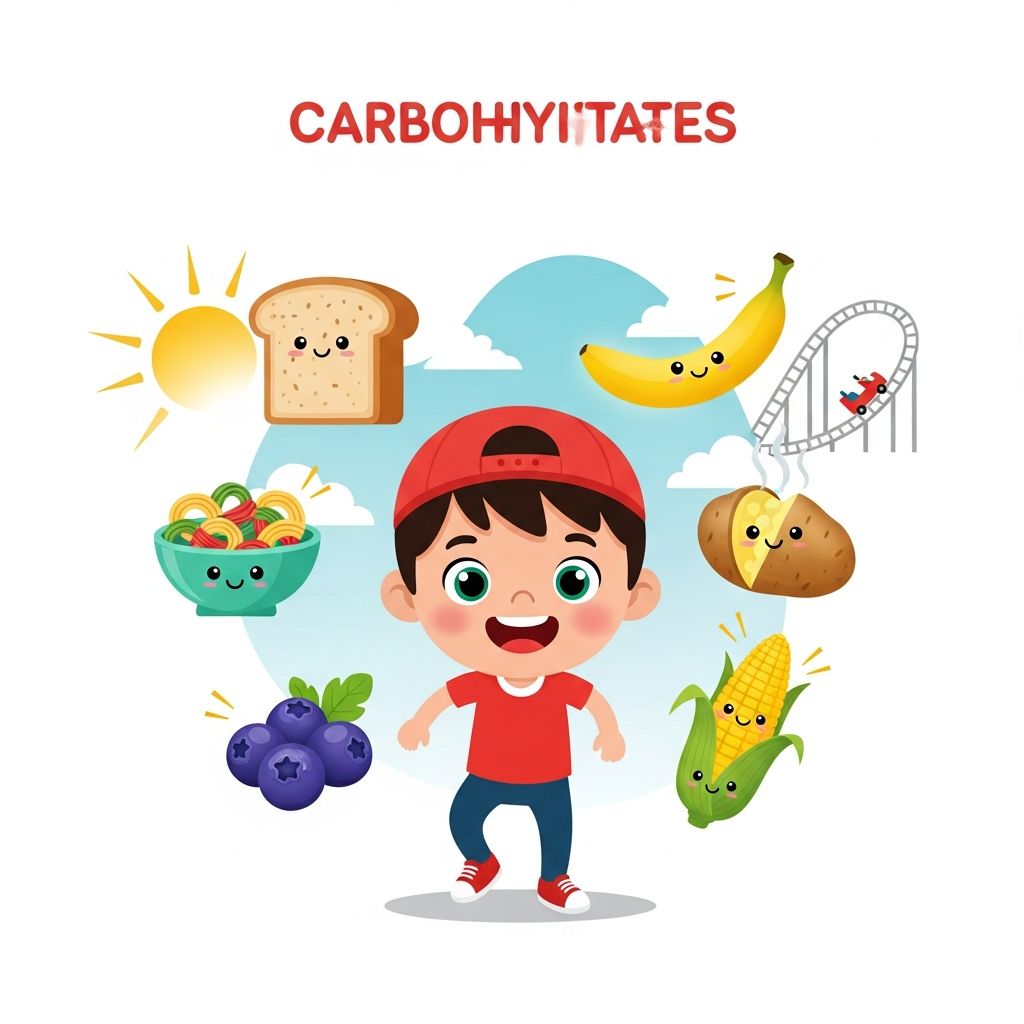
When you run, jump, think, read, or even sleep, your body needs energy. One of the main ways your body gets that energy is from carbohydrates, often called carbs. Carbs are a big group of nutrients found in many of the foods kids eat every day, from fruit and milk to rice and bread.
This guide explains what carbohydrates are, how they help kids grow and learn, the different types of carbs, and how to make smart choices at meals and snack time.
What Exactly Are Carbohydrates?
Carbohydrates are molecules made of sugars that your body can use for energy. Along with protein and fat, they are one of the three main nutrients your body needs in fairly large amounts, also called macronutrients.
When you eat foods with carbohydrates, your body breaks them down into simple sugars, such as glucose, which travel in your blood to cells all over your body. Cells then use this sugar as fuel to do their jobs.
- Main job: Provide energy to the body and brain.
- Where they are found: Grains, fruits, vegetables, milk, yogurt, beans, and many sweet foods.
- What the body does with them: Uses some right away and stores extra for later.
Why Do Kids Need Carbohydrates?
Carbohydrates are sometimes called the body’s preferred fuel because they are often the easiest and quickest source of energy to use. Kids are growing, learning, and moving a lot, so their bodies depend on a steady supply of this fuel.
How Carbs Help Your Body Every Day
- Power for muscles: Carbs help you run in gym class, ride your bike, dance, or play sports without getting tired too quickly.
- Fuel for the brain: The brain uses a lot of glucose, so carbs help you pay attention in school, solve math problems, and remember what you learn.
- Support for growth: When your body has enough carbs, it doesn’t need to break down protein for energy, so protein can focus on building and repairing muscles and other tissues.
- Help for digestion: Many carb foods contain fiber, which keeps your digestive system working smoothly and helps prevent constipation.
Health experts recommend that a large part of the calories kids eat each day come from carbohydrates, as long as they are mostly nutritious sources like fruits, vegetables, whole grains, and low-fat dairy foods.
Three Major Types of Carbohydrates
Even though all carbohydrates give your body energy, they don’t all act the same way. Most are grouped into three main types: sugars, starches, and fiber.
| Type of carbohydrate | What it is | Examples of foods | Main effect on the body |
|---|---|---|---|
| Sugars | Small, simple molecules; sometimes called simple carbohydrates. | Fruit, milk, yogurt, honey, table sugar, candy, soda. | Give quick energy because they are digested rapidly. |
| Starches | Many sugar units linked together; called complex carbohydrates. | Bread, pasta, rice, potatoes, corn, oats, cereals, beans. | Provide longer-lasting energy because they take more time to break down. |
| Fiber | Carbohydrate that your body cannot fully digest. | Whole grains, beans, lentils, fruits with skin, vegetables, nuts. | Helps digestion, supports heart health, and makes you feel full longer. |
Sugars: Natural and Added
Not all sugars are the same. Nutrition experts often separate them into naturally occurring sugars and added sugars.
- Naturally occurring sugars: Found naturally in foods like fruit (fructose) and milk or yogurt (lactose). These foods also contain vitamins, minerals, and sometimes fiber, so they are usually healthy choices.
- Added sugars: Sugars or syrups added to foods and drinks when they are made or prepared. Examples include soda, candy, many desserts, and sweetened breakfast cereals.
Too many foods and drinks high in added sugar can lead to too many calories and increase the risk of weight gain and other health problems, so they are best kept as once-in-a-while treats.
Where Do Carbs Hide? Common Food Sources
Lots of kids think only about bread and pasta when they hear the word “carbs,” but carbohydrates are found in many different foods. Some are healthier choices than others.
Nutritious Carb-Rich Foods
- Whole grains: Brown rice, oats, whole-wheat bread, whole-grain pasta, and whole-grain breakfast cereals provide carbs plus fiber and B vitamins.
- Fruits: Apples, bananas, berries, oranges, grapes, and melons give natural sugars, water, fiber, and many vitamins.
- Vegetables: Carrots, peas, corn, sweet potatoes, and regular potatoes are good sources of carbohydrates; other vegetables contain smaller amounts but still count.
- Legumes: Beans, lentils, and chickpeas supply carbohydrates, protein, and fiber.
- Dairy foods: Milk and yogurt contain lactose, a natural sugar, along with calcium and protein that help build strong bones and teeth.
Less-Healthy Carb Sources to Limit
- Sugary drinks: Sodas and many sweetened juices or sports drinks can contain a lot of added sugar and calories but few nutrients.
- Sweets and desserts: Candy, cookies, cakes, pastries, and some ice creams are high in added sugar and sometimes unhealthy fats.
- Refined grains: White bread, regular pasta, and many snack crackers are made from grains that have had parts removed, lowering their fiber and nutrient content.
Carbs and Energy: What Happens in Your Body?
When you eat foods with carbohydrates, your body begins to work with them right away.
- Digestion starts in the mouth: Chewing breaks food into smaller pieces while saliva begins to act on certain starches.
- Breakdown in the stomach and small intestine: Enzymes continue to turn starches and many sugars into glucose.
- Glucose enters the blood: It travels through your bloodstream to your cells.
- Insulin helps glucose enter cells: Your body makes a hormone called insulin that lets glucose move from the blood into the cells, where it can be used for fuel.
- Extra is stored: Some unused glucose is stored in the liver and muscles as glycogen; if you need more energy later, your body can use these stores.
This system allows your body to keep your blood sugar in a healthy range and make sure your muscles and brain have what they need, even between meals.
Choosing Smart Carbohydrates
A healthy pattern of eating for kids includes carbohydrates from mostly nutritious sources, balanced with protein and healthy fats. Experts recommend focusing on whole grains and foods with little or no added sugar most of the time.
Easy Tips for Healthier Carb Choices
- Pick whole grains often: Choose breads and cereals that list a whole grain as the first ingredient (such as whole wheat or oats) rather than refined white flour.
- Enjoy more fruits and vegetables: Try to fill about half your plate with colorful fruits and veggies at meals when possible.
- Go easy on sugary drinks: Choose water or plain milk most of the time instead of soda or sweetened drinks.
- Save sweets for special times: Candy, cookies, and desserts can fit into a balanced diet if they are eaten in small amounts and not every day.
- Check food labels: On packaged foods, look at the Nutrition Facts label for total sugars and added sugars to see how sweet the food really is.
How Many Carbs Do Kids Need?
The exact amount of carbohydrates a child needs depends on age, size, and activity level, but nutrition guidelines generally suggest that a little more than half of daily calories for kids and adults can come from carbohydrates, preferably from wholesome sources.
Because many healthy foods like fruits, vegetables, grains, and dairy naturally contain carbs, most children get enough without needing to count grams or track every bite. The focus is usually on quality rather than strict numbers.
Balancing Carbs With the Rest of the Plate
- About half the plate: Fruits and vegetables.
- About one quarter: Whole grains or other healthy carb foods like potatoes or corn.
- About one quarter: Protein foods such as beans, eggs, poultry, fish, tofu, or lean meats.
- On the side: A serving of dairy like milk or yogurt, if tolerated.
This kind of pattern naturally includes a good mix of carbohydrates, protein, and fats.
Carbohydrates and Long-Term Health
Choosing healthier carb sources can do more than just give you energy for today’s activities. Over time, balanced carbohydrate choices can support your overall health.
- Heart health: Diets rich in whole grains and fiber are linked with a lower risk of heart disease later in life.
- Healthy weight: Nutritious carb foods, especially those with fiber, help you feel full and satisfied, which can make it easier to avoid overeating.
- Stable energy: Whole grains and other complex carbs provide longer-lasting energy and reduce big ups and downs in blood sugar.
- Better digestion: Fiber keeps your digestive system working well and can help prevent constipation.
Frequently Asked Questions About Carbohydrates
Are all carbs bad?
No. Carbohydrates are an important part of a healthy diet and give your body energy. The goal is to choose mostly healthy carb foods like fruits, vegetables, whole grains, beans, and low-fat dairy, and to limit foods with a lot of added sugar.
Is sugar the same as carbohydrates?
Sugar is one type of carbohydrate, but not the only kind. Starches and fiber are also carbohydrates. Foods like oats, brown rice, beans, and vegetables contain carbohydrates even if they don’t taste sweet.
Do kids need to avoid carbs to be healthy?Kids usually should not avoid carbohydrates. Instead, they benefit from eating carbs mostly from foods that also provide vitamins, minerals, and fiber. Completely cutting out carbs can make it harder to get enough energy and nutrients.
Q: Why are whole grains better than white bread or white rice?
Whole grains keep all parts of the grain, which means they contain more fiber and nutrients. Refined grains like white bread or white rice have had parts removed, so they usually have less fiber and fewer vitamins and minerals.
How can I tell if a food has a lot of added sugar?
On packaged foods, check the Nutrition Facts label. Under Total Carbohydrate you will see Total Sugars and Added Sugars. A larger number for added sugars means the food has more sugar added during processing or preparation.
References
- Carbohydrates — MedlinePlus, U.S. National Library of Medicine. 2024-05-15. https://medlineplus.gov/carbohydrates.html
- Carbohydrates: What They Are, Function & Types — Cleveland Clinic. 2023-08-10. https://my.clevelandclinic.org/health/articles/15416-carbohydrates
- Carbohydrates — Nutrition.gov, U.S. Department of Agriculture. 2023-03-01. https://www.nutrition.gov/topics/whats-food/carbohydrates
- Carbohydrates and Sugar — KidsHealth / Akron Children’s Hospital. 2017-01-17. https://www.akronchildrens.org/kidshealth/en/parents/sugar.html
- Carbohydrates — American Heart Association. 2021-06-01. https://www.heart.org/en/healthy-living/healthy-eating/eat-smart/nutrition-basics/carbohydrates