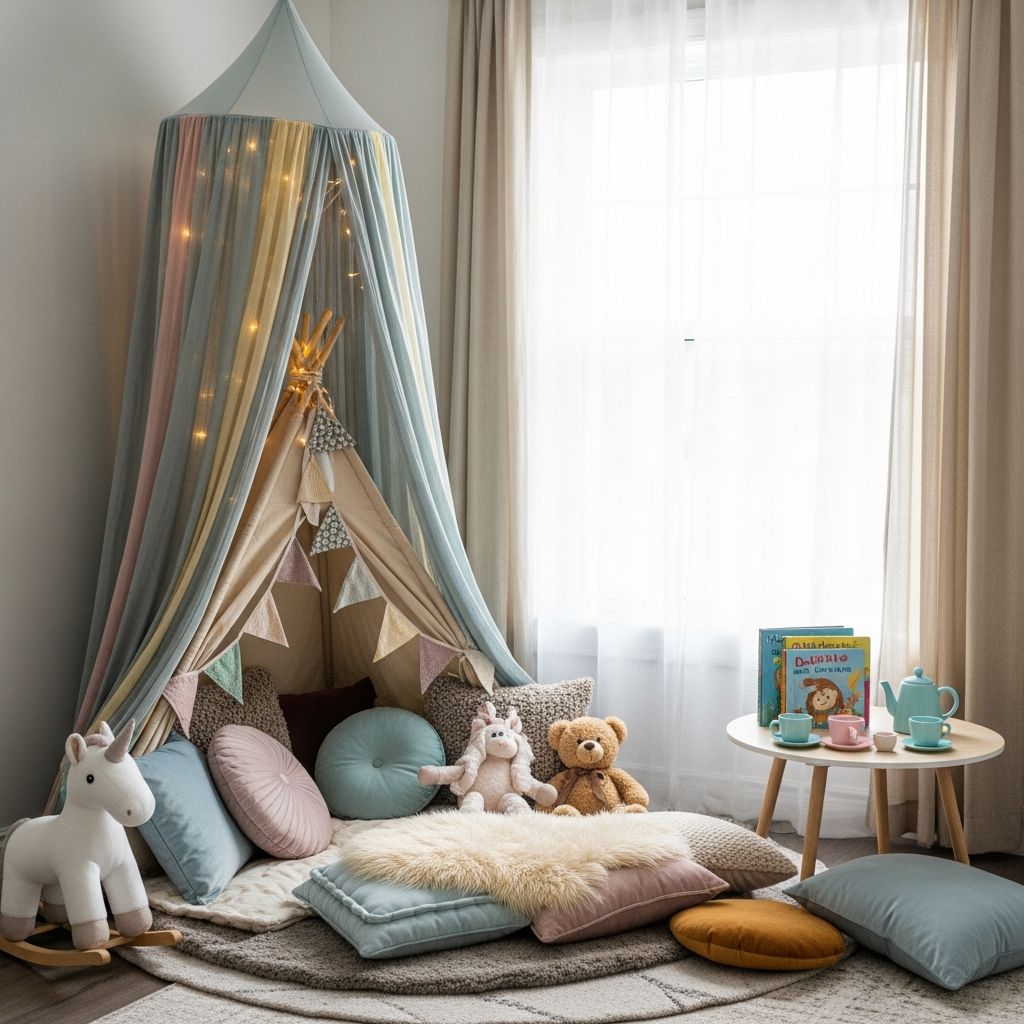
Turning a small corner of your home into a cozy canopy playhouse is one of the simplest ways to give children a place where imagination feels completely real. Done well, this type of space becomes equal parts reading nook, club house, stage, and quiet retreat.
This guide walks through everything needed to design a stylish, practical, and safe canopy playhouse corner, from choosing the right location and structure to decorating, storing toys, and encouraging creative play.
Why a Canopy Playhouse Corner Works So Well
Children naturally gravitate toward small, defined spaces that feel like their own little world. A canopy playhouse takes advantage of that instinct without requiring permanent construction or a full-sized playhouse.
- It fits into apartments, shared bedrooms, and multipurpose living rooms.
- It can be taken down, washed, or moved as kids grow and rooms change.
- It blends play and decor so adults enjoy the space too.
Planning the Perfect Spot
The first decision is location. The right spot helps the playhouse feel inviting while staying practical for daily life.
Indoor vs. Outdoor Placement
You can build a canopy playhouse indoors, outdoors, or even plan a setup that moves between the two. Consider how your family actually lives and where children naturally tend to play.
- Indoor corners: Ideal for year-round use and bedtime reading routines; look for a low-traffic corner away from doors that open inward.
- Outdoor patios or porches: Great for warm weather and messy play; choose a space with partial shade and a flat surface.
- Shared spaces: In living rooms or family rooms, aim for a spot that can look tidy with minimal effort when guests arrive.
Space and Traffic Flow
You do not need a large room to make this work, but you do need a clear footprint where children can sit and move without blocking walkways.
- Measure the floor area you can spare, even if it is only as large as a small rug.
- Check for nearby vents, radiators, or sharp furniture corners and plan around them.
- Make sure doors and drawers still open comfortably once the canopy is in place.
Choosing a Canopy or Structure
The structure is the backbone of your playhouse corner. It can be as simple as a fabric canopy or as elaborate as a themed frame. The key is stability and ease of use.
Main Structural Options
| Type | Best For | Pros | Considerations |
|---|---|---|---|
| Ceiling-hung canopy | Small rooms; reading nooks | Minimal floor space; airy look; easy to move | Requires secure ceiling hook; not ideal for renters who avoid drilling |
| Freestanding play tent | Rentals; flexible layouts | No drilling; quick to assemble; portable | Takes more floor space; can wobble if very lightweight |
| Canopy frame or playhouse structure | Dedicated playroom | Sturdy; highly decorative; can include windows or doors | Higher cost; more permanent; heavier to move |
| DIY curtain rod or branch | Creative, budget builds | Custom size; upcycled materials; very unique look | Needs careful installation; test strength before kids use it |
Fabric and Material Choices
The fabric you select sets the mood and influences safety and maintenance. Aim for textiles that feel soft and inviting but can handle regular cleaning.
- Lightweight cotton or linen: Breezy, breathable, and easy to wash.
- Muslin or gauze: Perfect for dreamy, cloud-like drapes and layered looks.
- Canvas or twill: Sturdier and more tent-like, ideal for outdoor or high-traffic use.
- Sheers and tulle: Best used in combination with opaque layers to keep the space cozy rather than exposed.
Check any fabric for loose threads, scratchy trims, or embellishments that might be uncomfortable if children lean against them or lie down to read.
Designing a Cozy Interior
Once the canopy or frame is in place, the inside of the playhouse corner becomes the main event. Think like a child: low seating, soft surfaces, and just enough decor to spark imagination.
Flooring and Seating Layers
Soft layers on the floor invite children to linger, read, and play pretend. Combine a few simple pieces rather than overfilling the space.
- Start with a cushioned rug or foam mat as the base to soften the floor.
- Add a thick floor cushion, bean bag chair, or small mattress for lounging.
- Mix in a few throw pillows in different textures for sensory variety.
If the playhouse is near a window or door, consider a rug with a nonslip backing to prevent sliding during energetic play.
Lighting That Feels Magical
Lighting transforms a basic canopy into a dreamy hideout. The goal is soft, safe illumination that feels special at night or on cloudy days.
- Use battery-operated string lights or fairy lights that stay cool to the touch.
- Place a small, low-wattage table lamp or clip-on light outside the canopy, shining indirectly in.
- For younger children, add a night-light or projector that displays stars or gentle patterns on the fabric.
Avoid glass bulbs within reach and keep any cords secured along walls or under rugs to prevent tripping.
Decor Themes and Styling Ideas
There is no single right theme for a canopy playhouse. The most successful spaces reflect a child’s current interests while leaving enough flexibility to grow and change over time.
Simple Theme Starters
- Storybook retreat: Neutral fabrics, a few framed prints from favorite tales (without copying book art), and a low bookshelf.
- Nature hideout: Leaf garlands, soft green textiles, nature-themed pillows, and a basket of plastic or wooden animals.
- Space station: Darker canopy fabric, glow-in-the-dark stars on the ceiling, and cardboard “control panels.”
- Market stall or cafe: Striped canopy, play food, a small table, and handmade “menus.”
Use removable details—like garlands, throw pillows, or paper decorations—so you can swap themes without replacing the entire structure.
Personal Touches That Make It Theirs
Personal details help children feel that the playhouse is truly their own place. Include them in decisions so they develop ownership and pride in the corner.
- Hang a small sign with the child’s name or a fun title for the space.
- Display a few of their drawings or crafts on clipboards or string with clothespins.
- Choose one item—a stuffed animal, blanket, or cushion—that always “lives” in the playhouse.
Storage That Keeps the Magic Intact
A beautiful playhouse can quickly feel chaotic if every toy ends up piled inside. Discreet storage helps the space stay calm and usable.
Hidden Storage Ideas
- Use low baskets or fabric bins that tuck under cushions or along the edges of the canopy.
- Choose a lidded ottoman or storage pouf that doubles as seating.
- Install a narrow picture ledge nearby to hold a rotation of books without taking floor space.
Aim to keep only a small selection of toys and books inside the playhouse at any given time. The rest can live on a nearby shelf and rotate in and out to keep everything feeling fresh.
Playhouse Essentials Checklist
| Category | Examples |
|---|---|
| Comfort | Rug, cushions, throw blanket |
| Lighting | Battery string lights, night-light |
| Play | 2–3 favorite toys, dolls, cars, or blocks |
| Books | Short stack of age-appropriate stories |
| Storage | Basket, bin, or small ottoman |
Safety Considerations for Peace of Mind
Even the coziest playhouse needs a safety check before children settle in. A few simple guidelines protect little explorers without limiting their fun.
- Secure any ceiling hooks or wall anchors following weight guidelines and manufacturer instructions.
- Check that the canopy hangs high enough so children do not trip or drag fabric while walking.
- Choose flameless candles or battery lights instead of open flames or hot bulbs.
- Keep small parts, breakable decor, and loose cords out of reach of younger children.
Do a quick monthly inspection to tighten hardware, check for rips, and wash fabrics as needed, especially if anyone in the home has allergies.
Encouraging Imaginative Play
The canopy playhouse corner is a stage for open-ended stories. With just a few simple props, it can transform into countless settings in a single afternoon.
Open-Ended Props to Keep Inside
- Blank notebooks, scrap paper, and crayons or colored pencils.
- Lightweight scarves that can become capes, picnic blankets, or curtains.
- Small baskets for pretend shopping, treasure hunts, or sorting games.
- Non-noisy dolls, figures, or stuffed animals that easily join any storyline.
Resist the urge to overfill the space. A few versatile items encourage creativity far more than a crowded pile of themed toys.
Simple Games to Play in the Canopy Corner
- Story circle: Sit together and take turns adding one sentence to a shared story that takes place inside the playhouse.
- Secret mail: Leave little notes or drawings in a “mailbox” basket for children to discover when they enter.
- Quiet challenge: Challenge kids to find five blue items in the room and bring them back to the playhouse for sorting or counting.
These gentle activities make the canopy feel like a special destination rather than just another spot in the room.
Adapting the Space as Children Grow
A well-designed canopy playhouse corner can evolve from toddler years into the early school years and beyond. Small updates keep it relevant and loved.
- For toddlers, emphasize soft textures, simple toys, and sturdy books.
- For preschoolers, add pretend-play items like kitchen sets, doctor kits, or puppets.
- For early readers, include a small side table for chapter books, sketchbooks, and puzzles.
Over time, the canopy corner can shift from make-believe clubhouse to cozy reading nook or teen hangout with a change in fabrics and accessories.
Frequently Asked Questions
How much space is needed for a canopy playhouse?
Most families can create a comfortable playhouse corner in a space roughly the size of a small area rug. As long as a child can sit or lie down comfortably and move without bumping into furniture, the footprint is probably large enough. Focus more on comfort and safety than on exact measurements.
Can a canopy playhouse work in a shared room?
Yes, a shared bedroom is an excellent location. Choose neutral fabrics that coordinate with both children’s bedding and give each child a small, separate basket or shelf within the space for their personal items. This helps prevent arguments about ownership and keeps the corner feeling fair and inviting.
What is the easiest canopy option for renters?
Freestanding play tents or canopy frames that do not require drilling are the simplest choice. If you prefer a ceiling canopy, look for damage-free adhesive hooks that are rated for the appropriate weight, and test them thoroughly before children begin using the space.
How can the playhouse stay tidy?
Limit how many items are allowed inside at one time and give everything a designated spot—such as a basket for toys and a small stack of books. Build a quick cleanup routine into daily life, like asking children to return the playhouse to “resting mode” before dinner or bedtime.
Is it safe to let children sleep in the canopy playhouse?
For naps or special sleepovers, some families do allow children to sleep in the playhouse area, but only after checking that fabric is secure, breathable, and kept away from faces. Always follow safe sleep guidelines for younger children and supervise more closely during overnight setups or campouts.