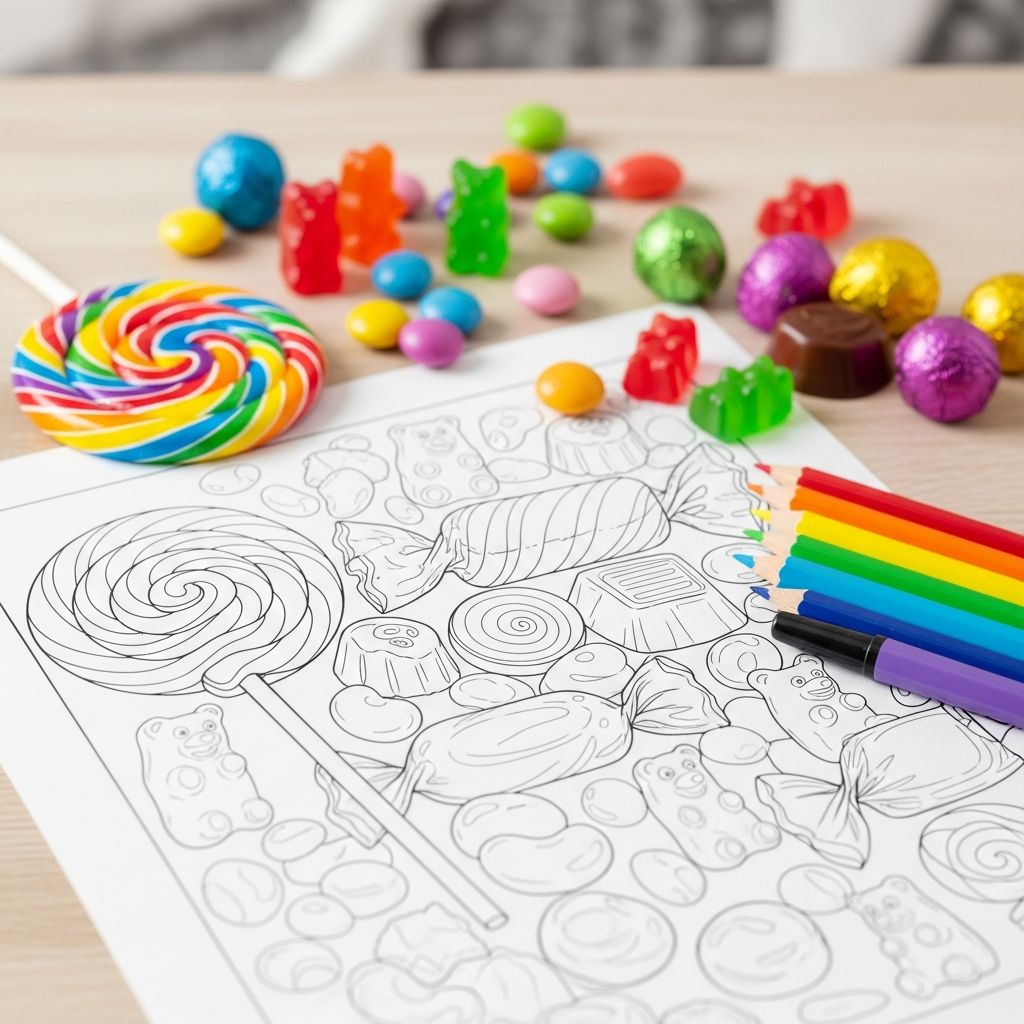
Candy coloring pages turn a simple love of sweets into a creative, screen-free activity that kids and adults can enjoy together. These playful designs, filled with lollipops, chocolate bars, candy canes, and gumdrops, invite artists of all ages to relax, experiment with color, and build important skills along the way.
Why Candy Makes Great Coloring Themes
Candy is instantly recognizable, joyful, and full of shapes and patterns, which makes it a perfect subject for coloring pages. Simple outlines and repeating designs help beginners feel successful, while more detailed candy scenes can still challenge older kids and grown-ups.
- Bright colors and familiar treats keep children engaged longer than abstract shapes.
- Repetitive candy patterns make it easy to practice shading, blending, and color matching.
- Seasonal sweets (like candy canes or heart-shaped candies) add a festive touch to holidays and parties.
Developmental Benefits for Children
Coloring may look like simple fun, but it supports many areas of child development. Candy-themed pages add an extra layer of motivation, encouraging kids to keep practicing important skills while they play.
- Fine motor control: Holding crayons or colored pencils and filling in candy shapes strengthens the small muscles in the hands and fingers.
- Hand–eye coordination: Children learn to guide their hands carefully to stay inside the lines and color specific areas.
- Color recognition: Kids practice naming colors and experimenting with combinations, such as purple gumdrops or striped lollipops.
- Focus and patience: Completing a whole page requires sustained attention and persistence.
Wellness Benefits for Teens and Adults
Candy coloring pages are not just for children. Many teens and adults use coloring as a gentle way to unwind after a busy day, and sweet-themed designs are especially lighthearted and nostalgic.
- Coloring can promote relaxation by giving the mind something simple and repetitive to focus on.
- Structured designs offer a break from screens and social media, creating a quiet pocket of time for reflection.
- Nostalgic candy images may spark happy memories, improving overall mood.
Popular Types of Candy Coloring Pages
There are many ways to design candy coloring pages, from single treats to busy candy shops. Mixing page styles keeps the activity fresh and appeals to different ages and skill levels.
Simple Single-Treat Pages
These pages usually feature one large candy with bold outlines. They are ideal for toddlers, preschoolers, or anyone who prefers a relaxed, low-detail design.
- Large lollipops with swirls.
- Big wrapped candies with ribbons at each end.
- Oversized chocolate bars with simple sections.
Candy Collages and Patterns
Candy collage pages are filled with many small treats scattered across the page or arranged in repeating patterns. They invite experimentation with color schemes and are great for older children and adults.
- Patterned backgrounds of gumdrops, jelly beans, or peppermints.
- Mixed treats: cupcakes, cotton candy, chocolate truffles, and hard candies.
- Mandala-style circles made from tiny sweets.
Scenes and Story-Based Pages
Some pages show whole candy worlds or scenes, which encourage imaginative play and storytelling. Children can name characters, invent stories, and even draw extra details around the designs.
- Candy shops with jars, shelves, and baskets of sweets.
- Fantasy landscapes with candy trees, chocolate rivers, and gumdrop hills.
- Party tables filled with candy buffets and birthday treats.
Age-by-Age Guide to Candy Coloring
Choosing the right type of candy coloring page helps each age group feel confident and successful. The table below gives general suggestions; always adjust for the child’s individual interests and abilities.
| Age Group | Recommended Page Style | Suggested Tools | Skills to Emphasize |
|---|---|---|---|
| Toddlers (1–3) | Very large candy shapes with thick outlines | Chunky crayons, washable markers | Exploring color, grasping tools, simple scribbling |
| Preschoolers (3–5) | Single candies and small clusters | Crayons, triangular pencils | Hand–eye coordination, basic color naming |
| Early Elementary (6–8) | Candy patterns and simple scenes | Colored pencils, fine-tip markers | Staying in the lines, following patterns, patience |
| Older Kids (9–12) | Detailed candy worlds and complex collages | Blending pencils, gel pens | Shading, blending, creative color choices |
| Teens & Adults | Intricate designs and stylized candy art | Alcohol markers, artist-grade pencils | Stress relief, artistic techniques, color harmony |
Materials and Tools for Best Results
The right materials make candy coloring pages more enjoyable and help them last longer. You do not need expensive art supplies, but choosing tools that suit your purpose can improve the experience for everyone.
- Paper: Use slightly thicker paper if you plan to hang or reuse finished pages. Cardstock works well for decorations and crafts.
- Crayons: Great for young children because they are sturdy and easy to grip.
- Colored pencils: Ideal for older kids and adults who want more control and the ability to add shading.
- Markers: Provide bold color, but choose washable versions for kids and place an extra sheet of paper underneath to prevent bleed-through.
Creative Ways to Use Finished Candy Pages
Candy coloring pages can become much more than simple sheets in a coloring book. Once the coloring is complete, turn them into crafts, decorations, and keepsakes.
- Party décor: Hang finished pages as a banner, or tape them to walls and doors for a candy-themed party.
- Gift wrap and cards: Use colored pages as wrapping paper for small presents, or cut out candies to glue onto handmade cards.
- Bookmarks: Cut long strips from your favorite section, laminate, and punch a hole for a ribbon.
- Placemats: Laminate completed pages to use as reusable table placemats during snack time or holiday meals.
- Memory games and puzzles: Glue a page onto cardboard and cut it into puzzle pieces, or create matching pairs of colored candies for a homemade memory game.
Fun Ideas for Parents and Teachers
Candy coloring pages can easily be woven into everyday routines at home and in the classroom. With a bit of planning, you can transform simple pages into playful learning opportunities.
- Use candy designs to practice counting, grouping, and simple addition or subtraction problems.
- Ask children to sort candy shapes by color or type before coloring to build early math and classification skills.
- Invite students to invent names and stories for their candy characters, encouraging language development and storytelling.
- Create a class gallery where each child contributes one candy page, then display them in a hallway or bulletin board.
Tips for Making Coloring Time More Enjoyable
A few thoughtful choices can turn a quick coloring break into a relaxing, meaningful ritual for the whole family. Focus on the atmosphere, timing, and expectations rather than perfection.
- Set up a dedicated “art corner” with a small basket of candy-themed pages and basic supplies.
- Use coloring as a calm transition activity, such as before bedtime or after school.
- Join in yourself instead of just supervising; children often stay more engaged when adults participate.
- Celebrate effort rather than neatness, especially for younger children.
Frequently Asked Questions
Are candy coloring pages appropriate for toddlers?
Yes, candy coloring pages can be suitable for toddlers when the designs are very simple and printed with large, bold outlines. Always supervise young children closely, as they may still put crayons or paper in their mouths.
How can I use candy coloring pages for learning, not just fun?
Candy-themed pages can support early math, language, and science concepts. Try counting the number of each candy, comparing sizes, naming colors, or discussing how sweets should be enjoyed in moderation as part of a balanced lifestyle.
What if my child scribbles outside the lines?
Scribbling is a normal stage in artistic development, especially for younger children. Encourage practice over time, but avoid criticizing; the goal is to build confidence and enjoyment, not perfect technique.
Can adults really benefit from coloring candy pages?
Many adults find that coloring provides a calming, mindful break from daily stress. Candy designs, in particular, can feel playful and nostalgic, helping to lighten the mood and spark positive memories.
How should I store finished coloring pages?
You can keep favorite pages in a simple binder with plastic sleeves, or photograph them and store the images digitally. Rotating a few favorites on the fridge or in frames keeps the activity feeling special without creating clutter.
Final Thoughts on Sweet-Themed Coloring
Candy coloring pages blend creativity, comfort, and skill-building into one simple activity that fits into almost any schedule. With a stack of printable designs and a handful of crayons or pencils, families can share quiet moments together, decorate their spaces, and build lasting memories inspired by their favorite sweets.