Claims that you can “taste” soy sauce through your testicles pop up online every so often, usually as part of a viral challenge. The idea sounds outrageous, but it is loosely connected to a real scientific finding: some taste receptors are present in the testis and sperm. That does not mean your genitals can savor salty snacks. This article unpacks the myth, the underlying biology, and what researchers actually know about taste receptors in the male reproductive system.
From TikTok Challenge to Scientific Question
The modern version of the myth spread when people began dipping their scrotum into soy sauce and claiming they could taste the flavor. Videos and posts suggested that “taste buds” in the testicles were responsible. In reality, this trend blended a small kernel of science with a large dose of misunderstanding.
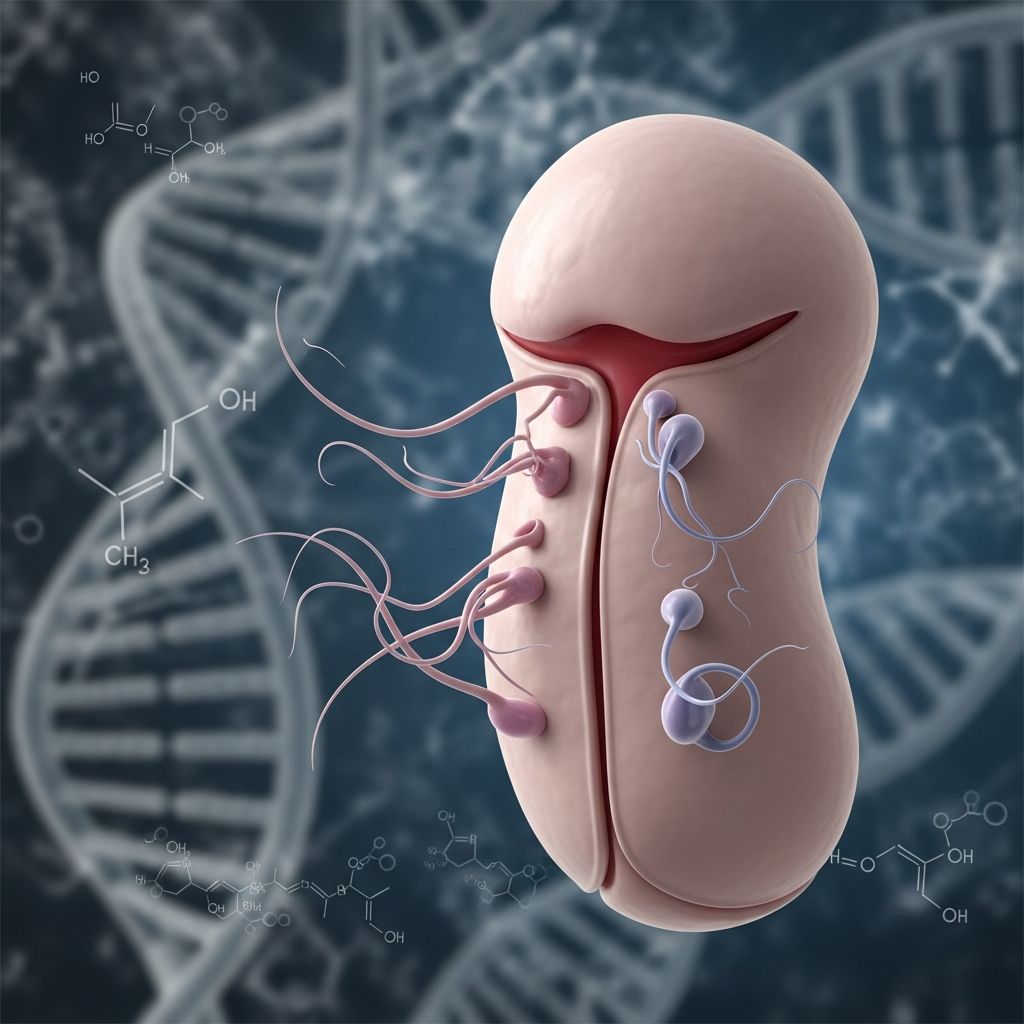
Research over the past two decades has revealed that taste receptor proteins—the same general families that help you detect sweet, bitter, and umami on your tongue—also appear in other organs, including the gut, airways, brain, testis, and sperm cells. These receptors outside the mouth do not generate conscious taste sensations. Instead, they act as local chemical sensors that help tissues respond appropriately to their environment.
Taste Buds vs. Taste Receptors: A Crucial Distinction
To understand why your testicles cannot taste food, it helps to separate two related but very different concepts: taste buds and taste receptors.
- Taste buds are complex sensory structures in the mouth that contain specialized cells, nerve connections, and support cells. They are wired to cranial nerves that carry signals directly to the brain’s gustatory (taste) centers.
- Taste receptors are specific proteins (for example, TAS1R and TAS2R families) embedded in cell membranes. They bind particular molecules, like sugars or bitter compounds, and trigger chemical signaling inside the cell.
A fully functioning taste bud requires:
- Receptor-bearing cells organized in a bud-like structure
- Direct nerve connections to the brain (via cranial nerves VII, IX, or X)
- Central processing in the brain to convert signals into flavor perception
While some testicular cells do carry taste receptor proteins, they are not part of taste buds, and they are not wired to the brain. That is why having taste receptors in the testis is not the same thing as being able to taste with your genitals.
Where Are Taste Receptors Found in the Body?
Scientists have identified two major classes of G protein–coupled receptors involved in taste:
- TAS1R family: responds to sweet and umami (amino acid) tastes
- TAS2R family: responds to a wide range of bitter compounds
Beyond the tongue, these receptors appear in multiple tissues:
- Digestive tract (stomach, intestines)
- Pancreas
- Respiratory tract
- Brain
- Testis and sperm cells
In each location, they serve local chemical-sensing roles. For example, in the gut, they help regulate hormone release and digestion in response to nutrients or bitter toxins. In the airways, similar receptors help detect irritants and can trigger protective reflexes.
Taste Receptors in the Testis and Sperm
Multiple studies have confirmed that components of the taste signaling system are present in the male reproductive tract:
- TAS1R receptors (sweet/umami) and TAS2R receptors (bitter) are expressed in testicular tissue and in mature sperm.
- The G protein subunit gustducin (GNAT3), which usually helps transmit taste signals in the tongue, is also found in testis and sperm.
- Taste-related signaling components appear in cells involved in spermatogenesis (sperm development) and in spermatozoa themselves.
Experimental work in mice has shown that deleting certain taste-related genes can disrupt male fertility. For example, loss of both the sweet/umami receptor subunit TAS1R3 and gustducin (GNAT3) leads to male-specific sterility in animal models. These findings strongly suggest that taste signaling pathways help regulate aspects of sperm production and function, even though they do not generate taste sensations.
What Might These Receptors Be Doing?
Researchers are still piecing together the exact functions, but current evidence points to several possible roles:
- Guiding spermatogenesis: Receptors may help germ cells respond to local chemical cues that control maturation and survival.
- Supporting hormone production: Some studies indicate that taste receptors influence steroid hormone synthesis (such as testosterone) via pathways involving cyclic AMP (cAMP) signaling.
- Sperm navigation and activation: Taste-like receptors on sperm could help them detect molecules in the female reproductive tract, steering them toward the egg or triggering capacitation (the final maturation step allowing fertilization).
A 2022 review summarized these ideas by noting that taste receptors in the testis and epididymis appear to regulate male reproductive activity primarily by affecting steroid hormone synthesis and intracellular signaling pathways important for sperm development.
Why You Cannot Taste Soy Sauce With Your Scrotum
Even with this scientific background, the viral soy sauce test still fails for several straightforward reasons.
1. The Receptors Are Inside, Not on the Skin
The testes—where taste receptors have been detected—sit inside the scrotum. The thin skin you see and touch is not testicular tissue, and current evidence does not support the idea that functional taste receptors are present on the surface of the scrotal skin. Dipping the scrotum into soy sauce therefore exposes the outer skin, not the internal structure containing these receptors.
2. No Nerve Pathway to the Taste Centers of the Brain
Even if soy sauce molecules somehow reached testicular cells bearing taste receptors, there is still no anatomical route for these receptors to send signals to the brain’s taste-processing regions. Conscious taste requires connections from the mouth to the brain via specific cranial nerves, which the testis does not have.
3. Local Sensing ≠ Conscious Flavor
When taste receptors operate outside the mouth, they typically trigger local cellular responses, not a recognizable flavor. In the testis, these responses might alter hormone production or sperm behavior, not generate a vivid impression of “salty” or “umami.” As science journalists have pointed out, if having taste receptors alone were enough to taste, you would also be able to taste with your gut, lungs, or bladder, which clearly is not the case.
What the Research Tells Us About Male Fertility
While the soy sauce stunt is a distraction, the underlying science may have important implications for understanding and treating some forms of male infertility.
| Aspect | Role of Taste-Related Pathways (Current Evidence) |
|---|---|
| Testicular expression | Many bitter (TAS2R) and sweet/umami (TAS1R) receptors are expressed in human testis and sperm. |
| Spermatogenesis | Disrupting certain taste receptor genes in mice impairs sperm development and can cause male sterility. |
| Hormone regulation | Taste receptors may affect steroid hormone synthesis through cAMP-dependent pathways. |
| Sperm function | Receptors on sperm could act as molecular sensors that help with chemotaxis and fertilization. |
One detailed study of human tissue measured the RNA levels of several bitter taste receptors (TAS2Rs) in the testis and in ejaculated sperm. It found a strong correlation between the expression of these receptors and TRPM5, an ion channel involved in the downstream signaling of bitter, sweet, and umami taste in the tongue. This suggests that a taste-like signaling cascade is active within sperm cells themselves.
Another mouse study demonstrated that when both TAS1R3 and GNAT3 were missing, males became sterile, underscoring the importance of these molecules for reproductive function rather than taste perception.
What This Does Not Mean About Everyday Life
Given the media attention and online jokes, it is worth emphasizing how these scientific findings should not be interpreted in day-to-day contexts.
- You cannot improve your sense of taste in the mouth by stimulating your testicles.
- You cannot diagnose fertility problems by exposing your scrotum to different flavors.
- You should not rely on home experiments involving sauces, chemicals, or temperature extremes on the genitals to get any meaningful medical information.
Clinical evaluation of male fertility involves established measures such as semen analysis, hormone testing, and imaging when needed—not taste challenges. Any concerns about fertility or testicular health are best addressed with a healthcare professional, typically a urologist or reproductive specialist.
Frequently Asked Questions (FAQs)
Do testicles have taste buds?
No. Testicles do not have taste buds like those on the tongue. Some cells in the testis and sperm express taste receptor proteins, but these are not organized into buds and are not connected to the brain’s taste centers.
So why did some studies say there are taste receptors in testicles?Laboratory studies have detected proteins from the TAS1R (sweet/umami) and TAS2R (bitter) receptor families, along with the signaling protein gustducin, in testis and sperm. These receptors appear to help regulate sperm development and hormone production, not conscious taste.
Q: Can dipping my scrotum in soy sauce make me taste it?
No. The scrotal skin does not contain functioning taste buds, and the testis lacks the nerve pathways needed to send taste information to the brain. Any sensation you perceive during such a stunt is due to smell, imagination, or normal skin sensitivity—not genuine taste.
Are these receptors related to infertility?In animal models, removing certain taste receptor genes or their signaling partners can cause male-specific infertility, suggesting an important role in spermatogenesis and sperm function. In humans, research is ongoing, and some studies have linked variations in taste receptor genes to differences in semen parameters.
Q: Should I worry about flavors or diet directly affecting my testicles via these receptors?
There is no evidence that tasting specific foods or placing sauces on your genitals meaningfully influences testicular function through these receptors. However, overall nutrition, body weight, and environmental exposures can affect fertility through many well-established pathways, so maintaining a healthy lifestyle is still important—just not because of taste receptors.
What should I do if I’m concerned about my testicular health?
Perform regular self-checks for lumps, changes in size, or persistent pain, and discuss any concerns with a healthcare professional. For fertility questions, a semen analysis ordered by a clinician is far more informative than any viral test or home experiment.
References
- Expression of Taste Receptor 2 Subtypes in Human Testis and Sperm — Luddi A, et al., International Journal of Molecular Sciences. 2019-12-30. https://pmc.ncbi.nlm.nih.gov/articles/PMC7019805/
- Taste perception: from the tongue to the testis — Meyer D, et al., Molecular Human Reproduction. 2013-06-01. https://pubmed.ncbi.nlm.nih.gov/23423265/
- No, you can’t taste anything with your testicles — Kohn D, Popular Science. 2020-01-22. https://www.popsci.com/story/science/taste-buds-receptors-testicles-tiktok/
- Genetic loss or pharmacological blockade of testes-expressed taste receptor TAS1R3 or GNAT3 disrupts spermatogenesis in mice — Li F, et al., Proceedings of the National Academy of Sciences. 2013-06-17. https://www.pnas.org/doi/10.1073/pnas.1302827110
- Taste receptors affect male reproduction by influencing steroid synthesis and spermatogenesis — Zhao J, et al., Frontiers in Cell and Developmental Biology. 2022-08-16. https://www.frontiersin.org/articles/10.3389/fcell.2022.956981/full
- Do Testicles Have Taste Buds? Actually, Yes. — Men’s Health Editors. 2021-07-09. https://www.menshealth.com/sex-women/a36751724/do-testicles-have-taste-buds/
- People Are Dipping Their Testicles in Soy Sauce, So Here’s Some Science — Faller S, ScienceAlert. 2020-01-22. https://www.sciencealert.com/people-are-dipping-their-testicles-in-soy-sauce-so-here-s-some-science