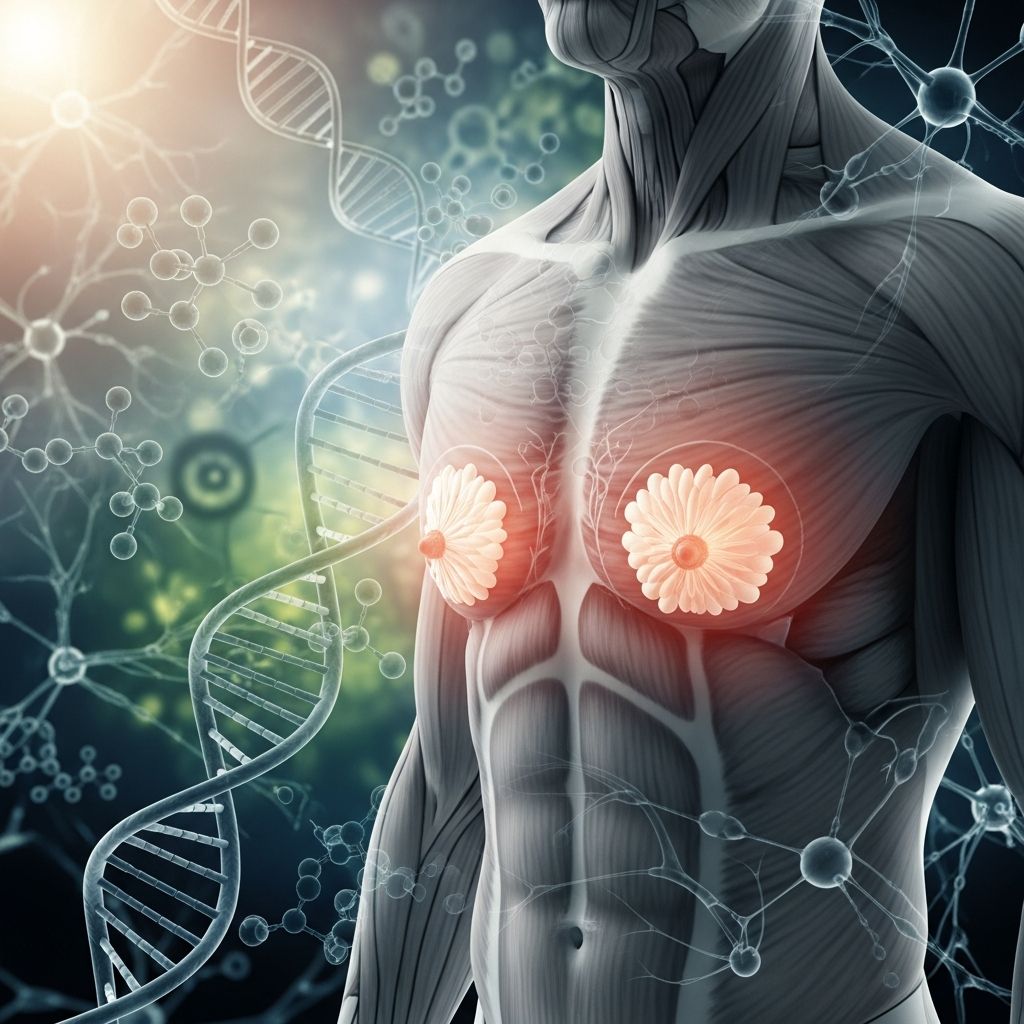
Most people assume breastfeeding is exclusively a female function, but biology tells a more nuanced story. Men have nipples, mammary tissue, and the hormonal machinery that can produce milk under certain conditions. This raises a compelling question: if men can lactate, why is breastfeeding by males so rare in humans and other mammals?
This article explores the science, health implications, and evolutionary puzzles behind male lactation, using current research and medical evidence.
Male Anatomy 101: Why Men Have the Hardware to Lactate
Before birth, male and female embryos follow a similar blueprint. Nipples and early mammary tissue form in all fetuses before sex hormones direct further development. As a result, most males are born with:
- Nipples and ducts that are structurally similar to females, though usually less developed.
- Mammary glands that can respond to certain hormones, especially prolactin.
- Alveoli (milk-producing units) that may remain rudimentary but are present in the tissue.
The primary difference is that during puberty, females are exposed to much higher levels of estrogen and progesterone, which grow the breast tissue into a fully functional organ for milk production. In most males, this development is minimal, but the underlying capacity does not completely disappear.
The Hormonal Switch: How Lactation Starts in Any Body
Lactation is less about sex and more about hormones. Three key hormonal systems control milk production:
- Prolactin: Produced mainly by the pituitary gland, prolactin stimulates mammary cells to make milk.
- Oxytocin: Triggers the “let-down” reflex that moves milk from the glands to the nipple.
- Estrogen and progesterone: Prepare and mature breast tissue; their drop after birth in women helps launch active milk production.
Everyone, including men, has some prolactin in their bloodstream, but it is usually not high enough to trigger milk secretion. When prolactin levels become abnormally elevated or breast tissue is strongly stimulated, milk production can begin.
| Factor | Typical Role in Women | Possible Effect in Men |
|---|---|---|
| Prolactin | Rises in late pregnancy and postpartum to drive milk production | When abnormally high (e.g., pituitary tumor), can cause milk secretion |
| Estrogen | Develops breast tissue during puberty and pregnancy | High levels (e.g., from medications) can stimulate breast enlargement and sensitize tissue |
| Physical stimulation | Regular nursing maintains milk supply via feedback to the brain | Intense, repeated nipple stimulation may contribute to triggering lactation |
When Men Actually Do Lactate: Medical and Natural Examples
Milk production in a person who is not pregnant or postpartum is called galactorrhea. It can occur in both men and women and is usually a sign of a hormonal imbalance or another underlying condition.
Documented Cases of Male Lactation
- Endocrine disorders: Case reports have described men with excessive prolactin (hyperprolactinemia) producing milk that chemically resembles early breast milk (colostrum), containing typical components such as lactose and lactoferrin.
- Pituitary tumors (prolactinomas): Benign tumors of the pituitary gland can secrete prolactin, raising blood levels sufficiently to cause breast enlargement and milk leakage.
- Medication side effects: Certain antipsychotics, antidepressants, and other drugs interfere with dopamine (which normally suppresses prolactin), allowing prolactin to rise and occasionally leading to galactorrhea in men.
- Severe stress and starvation recovery: Historical accounts include male World War II prisoners who began lactating after prolonged starvation followed by refeeding, likely due to sudden hormonal rebounds overwhelming the body’s normal regulatory systems.
These examples confirm that male breast tissue can produce genuine milk when the hormonal and physical conditions are right, though it is rare and typically pathological rather than intentional.
Could a Healthy Man Intentionally Induce Lactation?
In theory, yes. The same principles used to induce lactation in adoptive mothers—hormonal regimens plus nipple stimulation—could apply to people assigned male at birth. In practice, however, this would often involve:
- Exogenous hormones (such as estrogens, progestogens, and sometimes prolactin-raising drugs).
- Frequent breast or pump stimulation, potentially many times per day.
- Close medical supervision to monitor side effects and risks.
Because of potential health consequences, no major medical organization currently recommends that otherwise healthy men use hormones solely to induce breastfeeding. The focus in clinical care is instead on diagnosing and treating unintended galactorrhea and its underlying causes.
Is Male Breast Milk Similar to Female Breast Milk?
Although research is limited, at least one detailed case study examined milk from a man with galactorrhea and found:
- Presence of lactose, the main carbohydrate in human milk.
- Typical milk proteins such as alpha-lactalbumin and lactoferrin, both characteristic of human breast milk.
- Nutrient and electrolyte concentrations within the range observed in colostrum or early milk from lactating women.
This suggests that when men do lactate, their milk can be compositionally similar to early female breast milk, at least in some cases. However, there are no large-scale studies on the safety, immune properties, or long-term outcomes of relying on male-produced milk to feed infants.
Why Male Breastfeeding Is So Rare in Mammals
If male lactation is biologically possible, why do almost all mammals rely on mothers alone for milk? Evolutionary biology offers several explanations.
1. Energy and Opportunity Costs
Lactation is one of the most energetically expensive forms of parental care. Producing milk demands significant calories, nutrients, and physiological investment from the body. For many species, natural selection appears to have favored strategies in which:
- Females invest heavily in gestation and lactation.
- Males maximize reproductive success by seeking additional mating opportunities rather than sharing the metabolic load of milk production.
2. Paternity Uncertainty and Investment
Earlier evolutionary theories proposed that because males cannot always be certain they are the genetic father of a given offspring, there is less evolutionary pressure for them to develop costly, highly specialized parenting traits like lactation. In species with high paternity uncertainty, investing heavily in one infant might reduce a male’s chance to sire others.
3. The Milk Microbiome and Disease Risk
Recent research adds a new twist: breast milk is not just nutrition, it is a critical vehicle for transferring microbes that seed an infant’s gut microbiome. The gut microbiome influences digestion, immune development, and disease resistance. A mathematical model published by researchers at the University of York suggests:
- Milk carries both beneficial and potentially harmful microbes.
- If both parents routinely nursed infants, the chance of a harmful microbe entering and spreading through a population could effectively double.
- Restricting milk transmission to mothers only may act as a kind of evolutionary “filter” or sieve, reducing the spread of dangerous microbes via milk.
This model helps explain why, even in species with very dedicated fathers (such as Azara’s owl monkeys), males still do most caregiving but do not nurse.
Health Implications: When Male Lactation Is a Red Flag
In a clinical setting, unexpected lactation in a man is treated as a symptom, not a goal. Doctors usually investigate for underlying issues such as:
- Pituitary tumors (prolactinomas).
- Medication side effects, especially drugs that raise prolactin.
- Thyroid disorders and other endocrine imbalances.
- Chronic kidney disease or liver disease, which can alter hormone clearance.
Evaluation often involves blood tests (including prolactin and thyroid hormones) and sometimes imaging of the brain to examine the pituitary gland.
Anyone noticing nipple discharge (especially if bloody or occurring without stimulation) should seek medical advice, as it can indicate hormonal problems or, more rarely, breast cancer in men.
Psychological and Social Dimensions
Beyond biology, the idea of men breastfeeding touches social norms and identity:
- Gender expectations: Many cultures strongly associate breastfeeding with motherhood, so male lactation can challenge traditional gender norms and raise complex emotional responses.
- Trans and non-binary parents: Some trans women and non-binary individuals assigned male at birth may pursue medically supervised lactation as part of affirming their parental role; research on outcomes and best practices is still emerging.
- Shared caregiving: The rarity of male lactation does not prevent men from being primary caregivers; bottle-feeding, skin-to-skin contact, and responsive parenting all strongly influence bonding.
While science demonstrates that men can lactate under certain conditions, social acceptance and ethical questions about deliberate induction remain topics of debate rather than consensus.
Key Takeaways About Men and Breastfeeding
- Most men have the anatomical and hormonal potential to produce milk, but it rarely happens without an underlying medical cause or deliberate intervention.
- Documented cases show that male milk can be similar in composition to early female milk, but research on its routine use for infant feeding is extremely limited.
- Evolutionary pressures—particularly energy costs, paternity patterns, and disease risk via the milk microbiome—help explain why male lactation is almost absent across mammals.
- Unexpected milk production in men is usually a reason to see a healthcare professional, as it can signal hormone-secreting tumors or other medical conditions.
Frequently Asked Questions (FAQs)
Can a healthy man breastfeed a baby safely?
In principle, a man who successfully induces lactation could produce milk that is nutritionally similar to early breast milk, at least based on limited case reports. However, there is almost no large-scale research on safety, reliability of supply, or long-term infant outcomes. Major medical bodies do not currently provide guidelines endorsing routine male breastfeeding, and any attempt to induce lactation should be medically supervised.
How common is male lactation?
It is rare. Most reports involve galactorrhea related to high prolactin, pituitary tumors, medication side effects, or severe systemic stress and recovery. Occasional lactation in male animals has been documented, but true male nursing as a standard behavior is confirmed in only a few species, such as the Dayak fruit bat.
Does male lactation mean something is seriously wrong?
Not always, but it should never be ignored. Because elevated prolactin can signal a pituitary tumor or endocrine disorder, clinicians typically evaluate any unexplained milk production in men with blood tests and sometimes imaging. Early diagnosis often allows effective treatment.
Can nipple stimulation alone make a man lactate?
Intense, frequent stimulation can contribute to lactation by signaling the brain to increase prolactin and oxytocin, but in men it usually is not enough without additional hormonal influences. Most documented cases involve abnormal hormone levels, disease, or medications.
Why would evolution “allow” male nipples if men rarely breastfeed?
Nipples develop in embryos before sex differentiation, and it is evolutionarily simpler to keep the same basic body plan for both sexes than to evolve a mechanism that removes them in males. Because male nipples impose little or no fitness cost, there has been minimal selective pressure to eliminate them, even if they are rarely used for feeding.
References
- New mathematical model sheds light on the absence of breastfeeding in male mammals — University of York. 2024-05-09. https://www.york.ac.uk/news-and-events/news/2024/research/male-mammals-milk/
- Why don’t male mammals breastfeed? — BioTechniques. 2024-05-22. https://www.biotechniques.com/microbiology/why-dont-male-mammals-breastfeed/
- Composition of Breast Fluid of a Man with Galactorrhea and Hyperprolactinemia — J Clin Endocrinol Metab. 1981-03-01. https://pubmed.ncbi.nlm.nih.gov/7462406/
- Is It True Men Can Lactate? 3 Common Causes to Know About — GoodRx Health. 2023-01-27. https://www.goodrx.com/health-topic/mens-health/men-lactate-prolactin
- Male lactation — Reviewed in academic and historical sources summarized by Live Science. 2014-06-25. https://www.livescience.com/45732-can-men-lactate.html