Your beloved cat has always been attuned to your routines, but lately, their behavior seems different—more clingy, protective, or aloof. Many expecting parents wonder if their feline friends possess a sixth sense for pregnancy. While no definitive science proves cats consciously understand human gestation, evidence suggests they pick up on subtle physical and emotional shifts through their superior senses.
Feline Sensory Superpowers: How Cats Perceive Change
Cats boast extraordinary sensory abilities that far surpass humans, enabling them to detect environmental alterations imperceptible to us. Their olfactory system, equipped with around 200 million scent receptors compared to our 5 million, allows them to identify minute chemical changes. During pregnancy, hormonal surges like human chorionic gonadotropin (hCG), prolactin, and relaxin alter body chemistry, potentially releasing subtle pheromones or odors.
Although no studies confirm cats smell hCG specifically, anecdotal reports and feline biology indicate they notice such variances. Cats also excel in audition, with specialized ear structures amplifying high-frequency sounds. In late pregnancy, a cat curled on your lap might theoretically hear fetal heartbeats earlier than humans, though this remains speculative without empirical data.
Thermoreception plays a role too; cats gravitate toward warmth, and the slight basal body temperature elevation in early pregnancy could draw them closer. Combined, these senses create a feline radar for household disruptions, including pregnancy-related ones.
Common Behavioral Shifts in Cats Around Pregnant Owners
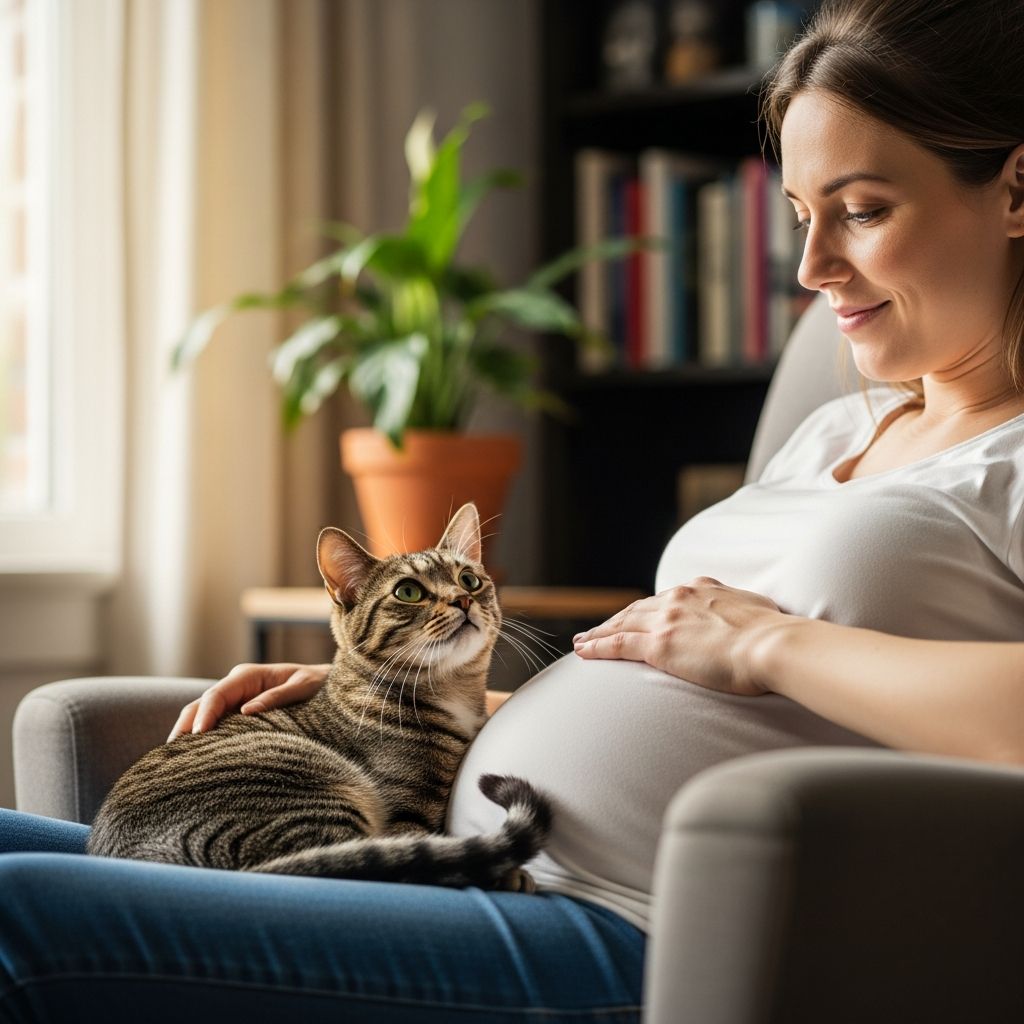
Expectant mothers frequently share stories of cats becoming unusually affectionate, following them room-to-room or nestling against the abdomen. Others note increased independence or territorial marking. These reactions stem from detecting routine changes rather than pregnancy comprehension.
- Affectionate Behavior: Cats may seek extra comfort amid their owner’s fatigue, nausea, or emotional fluctuations.
- Protective Instincts: Positioning near the belly could mimic guarding littermates, triggered by novel scents or sounds.
- Anxiety or Withdrawal: Stress from altered schedules, scents, or home preparations prompts hiding or vocalizing.
- Appetite Changes: Mirroring owner eating habits or competing for attention as pregnancy progresses.
Individual temperament influences responses; confident cats adapt smoothly, while anxious ones exhibit stress signs like excessive grooming or aggression. Monitoring these cues helps owners address feline needs proactively.
Scientific Evidence: What Studies Reveal About Feline Awareness
Research on cats sensing human pregnancy is limited, focusing more on behavioral observation than controlled experiments. No peer-reviewed studies conclusively link specific hormones to feline detection, but related findings offer clues. For instance, cats discern human emotions via pheromones, suggesting pregnancy-related biochemical shifts register similarly.
In veterinary science, relaxin—a pregnancy hormone in cats—rises post-implantation, detectable in serum and urine via kits from around day 21-28. While human relaxin differs, parallel hormonal profiles underscore felines’ sensitivity to reproductive states. A study noted pregnant cats exhibit lower lacrimal caruncle temperatures (38°C vs. anoestrus cats), hinting at physiological attunement to gestation.
Extrapolating to humans, cats likely respond to tangible cues like movement changes, voice modulation from fatigue, or partner interactions, mistaking them for territorial shifts. Experts emphasize behavioral adaptations over mystical intuition.
Safety First: Health Risks and Precautions for Expectant Cat Owners
Beyond behavioral curiosities, pregnancy introduces real health considerations with cats, primarily toxoplasmosis—a parasitic infection from Toxoplasma gondii in feline feces. The American College of Obstetricians and Gynecologists (ACOG) advises pregnant women avoid litter boxes, especially for outdoor cats, as the parasite poses miscarriage or birth defect risks.
| Risk Factor | Precautions | Why It Matters |
|---|---|---|
| Litter Box Handling | Delegate cleaning to others; use gloves if necessary; scoop daily | Oocysts become infectious after 1-5 days in feces |
| Outdoor Exposure | Keep cat indoors; avoid raw meat diets | Hunting increases parasite carriage |
| Scratching/Biting | Trim nails; discourage rough play | Prevents injury amid clumsiness |
| Gardening | Wear gloves; avoid soil contact | Contaminated earth harbors oocysts |
Most U.S. cats are low-risk if indoor-fed commercial food, but vigilance is key. Consult veterinarians for toxoplasmosis testing and preconception screening. Pregnancy-safe interactions maintain bonds without compromise.
Preparing Your Cat for the New Family Member
Transitioning a cat to baby arrival minimizes jealousy or stress. Gradual acclimation fosters harmony.
- Simulate Baby Noises: Play recordings of cries, vacuums incrementally to desensitize.
- Adjust Routines Early: Shift feeding/walking schedules to mimic postpartum life.
- Create Safe Spaces: Install cat trees, perches away from cribs for retreat.
- Introduce Scents: Rub baby blankets on cat for familiarization post-birth.
- Reinforce Positivity: Reward calm behavior with treats, play during owner rest.
Veterinary behaviorists recommend pheromone diffusers like Feliway to ease anxiety. Supervised introductions post-delivery prevent overwhelm.
Understanding Feline Pregnancy: Parallels and Diagnostics
While focusing on human gestation, cat owners benefit from gestation knowledge. Feline pregnancy lasts 63-65 days, with relaxin detectable via urine kits diluted in non-pregnant serum from day 21. Palpation (days 17-20), ultrasound (22-25 days), and X-rays (late term) confirm status.
Physical signs mirror human queries: nipple pinkening (week 3), appetite surges, abdominal growth. These parallels highlight why cats might attune to similar owner changes, reinforcing sensory prowess discussions.
Frequently Asked Questions About Cats and Pregnancy
Do cats know when you’re pregnant?
No scientific proof exists, but cats detect sensory changes like scents, sounds, and warmth shifts via acute senses.
Is it safe to own a cat while pregnant?
Yes, with precautions like avoiding litter boxes to prevent toxoplasmosis. ACOG confirms no issue for indoor cats if hygiene maintained.
Why is my cat acting weird during pregnancy?
Behavioral changes arise from routine disruptions, hormonal scents, or stress, not pregnancy understanding.
Can my cat hear the baby’s heartbeat?
Possible in late stages due to superior hearing, but unproven; they sense vibrations similarly.
How to keep my cat safe around a newborn?
Supervise interactions, provide escape routes, and gradually introduce under controlled conditions.
Expert Tips for Harmonious Homes
Veterinarians and obstetricians concur: informed preparation ensures cats enhance rather than complicate pregnancy. Regular vet checkups confirm parasite-free status, while behavioral monitoring supports emotional well-being. Celebrate your cat’s intuitive companionship as a pregnancy perk, armed with knowledge for safety and joy.
References
- Pregnancy diagnosis in cats using a rapid, bench-top kit to detect relaxin in urine — F J de Haas van Dorsser et al. 2007-02. https://pubmed.ncbi.nlm.nih.gov/17214785/
- Pregnancy in cats. Rapid pregnancy kit — Vets and Clinics. Accessed 2026. https://www.vetsandclinics.com/en/library/pregnancy-in-cats-rapid-pregnancy-kit
- Can cats sense pregnancy? Feline myths and facts — Clearblue (citing ACOG). 2022-10-28. https://www.clearblue.com/am-i-pregnant/can-cats-sense-pregnancy
- Can Cats Sense Pregnancy? Research Says Maybe — Healthline. Accessed 2026. https://www.healthline.com/health/pregnancy/can-cats-sense-pregnancy
- The Effects of Pregnancy Status on Lacrimal Caruncle Temperature — Wiley Online Library. 2023. https://onlinelibrary.wiley.com/doi/full/10.1002/vms3.70077
- Pregnancy Testing in Cats — EveryCat Health Foundation. Accessed 2026. https://everycat.org/cat-health/pregnancy-testing-in-cats/