Breastfeeding offers unmatched nourishment for infants, yet it often brings discomforts like swollen breasts, inflammation, and infections that can overwhelm new mothers. One time-tested remedy gaining scientific attention involves applying fresh cabbage leaves directly to the breasts. These leaves, rich in anti-inflammatory compounds, provide cooling relief for common issues such as engorgement and mastitis while potentially easing the weaning process.
Understanding Common Breastfeeding Discomforts
New mothers frequently encounter breast engorgement, where milk production surges, causing breasts to become hard, painful, and overly full, typically peaking in the first few days postpartum. Mastitis, an inflammation often leading to infection, adds fever, chills, and localized tenderness, stemming from milk stasis or bacterial entry through cracked nipples. Weaning introduces its own hurdles, with milk buildup causing throbbing pain as supply diminishes. These conditions disrupt bonding and feeding, prompting exploration of gentle interventions.
Conventional approaches include frequent nursing, warm compresses, or medications, but natural options like cabbage leaves appeal for their simplicity and low risk. Derived from Brassica oleracea, cabbage contains phytochemicals such as glucosinolates that may inhibit inflammatory pathways, mimicking effects seen in clinical settings.
The Science Behind Cabbage Leaves’ Effectiveness
Research supports cabbage leaves’ role in symptom management. A systematic review of eight studies found chilled cabbage leaves significantly reduced breast pain in postpartum women, attributing relief to anti-inflammatory properties, though engorgement reduction was less consistent. Another analysis compared cabbage leaves to hot compresses, noting both alleviated discomfort, but hot methods excelled in easing engorgement overall among early breastfeeding mothers.
The U.S. National Library of Medicine’s LactMed database confirms topical cabbage leaf use for engorgement and mastitis adjunct therapy, highlighting their historical application without noted adverse effects on lactation when used judiciously. Cooling from chilled leaves constricts tissues, reducing swelling, while plant compounds like sulforaphane block prolactin receptors, curbing milk production during weaning.
Step-by-Step Guide to Applying Cabbage Leaves
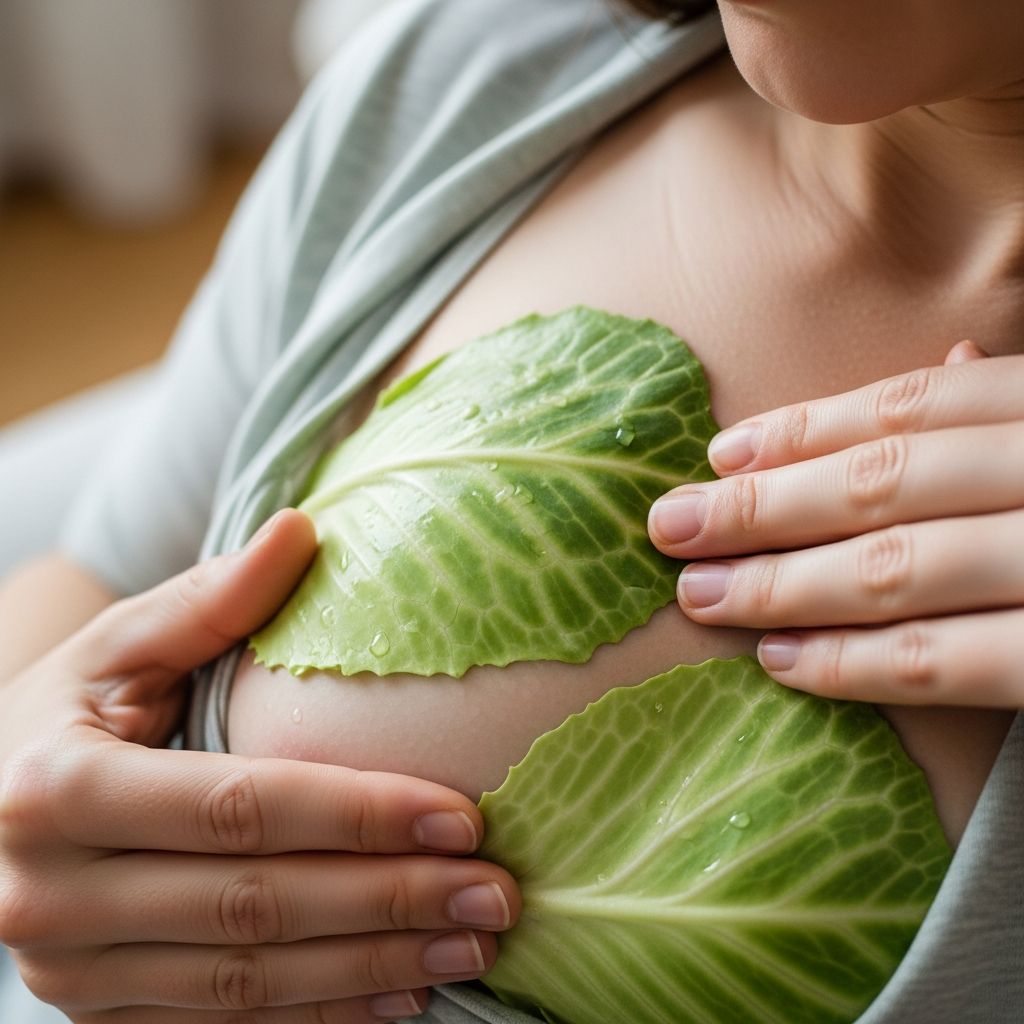
Select fresh, green cabbage heads from a grocery store, ensuring outer leaves are crisp and pesticide-free. Wash thoroughly under running water, pat dry, and chill in the refrigerator for 30-60 minutes for optimal cooling effect. Remove the thick central vein from each leaf to ensure even contact with skin.
- Gently crush leaf edges to release juices containing active compounds.
- Place leaves directly over affected areas, cupping the breast shape, and secure with a bra or wrap without tight pressure.
- Leave on for 15-20 minutes or until leaves warm to body temperature.
- Remove, discard used leaves, and cleanse breasts with mild soap if desired. Repeat 2-3 times daily as needed.
For weaning, extend application time until leaves wilt, allowing greater milk suppression, but monitor for oversupply reduction. Always prioritize feeding or pumping to maintain supply if continuing breastfeeding.
Safe Usage Tips and Precautions
While generally safe, limit sessions to avoid excessive milk reduction, which could complicate ongoing lactation. Discontinue once relief is achieved during engorgement episodes to prevent unintended weaning. Those with cabbage allergies or open wounds should avoid direct contact. Hygiene is crucial; discard leaves after single use to minimize bacterial risks like Listeria, though rare in fresh produce.
Combine with proven strategies: nurse frequently on demand, ensure proper latch, and use hand expression. Chilled versus room-temperature leaves both work, but cold enhances pain relief slightly per comparative trials.
Addressing Myths: Diet and Cabbage Consumption
Concerns persist that eating cabbage induces infant gas due to its cruciferous nature, but evidence debunks this. A 2017 study clarified that maternal dietary gas-producing fibers do not transfer via breast milk, making cabbage safe and nutritious with vitamins C, K, and folate essential for maternal recovery.
When to Seek Professional Medical Advice
Cabbage leaves offer symptomatic relief but do not treat underlying infections. Consult a healthcare provider if symptoms persist beyond 24-48 hours, or if fever over 100.4°F, flu-like aches, or pus discharge appear, indicating possible mastitis requiring antibiotics. Lactation consultants can refine techniques alongside this remedy.
Alternative Remedies Comparison
Real Mother Experiences and Expert Insights
Mothers report rapid relief, with many noting softer breasts within sessions. Experts from NIH endorse as adjunctive, emphasizing evidence-based integration with core lactation support. Recent reviews (2022-2024) underscore pain efficacy, calling for larger trials on engorgement.
Frequently Asked Questions
Can cabbage leaves reduce milk supply too much?
Yes, prolonged use may dry up supply; stop once comfortable if continuing to breastfeed.
How often should I apply them for mastitis?
Up to three 20-minute sessions daily, alongside antibiotics if prescribed.
Are chilled leaves better than room temperature?
Chilled provide enhanced pain relief per studies, but both effective.
Is it safe during the first week postpartum?
Yes, for engorgement, but pair with frequent feeding.
Can I reuse cabbage leaves?
No, discard after one use to avoid bacterial growth.
Enhancing Your Breastfeeding Journey
Incorporate cabbage leaves into a holistic plan: stay hydrated, rest, and seek support networks. This low-cost remedy empowers mothers, bridging tradition and science for smoother lactation. Track progress and adjust as needed for optimal comfort.
References
- Using Cabbage Leaves for Weaning, Mastitis, Engorgement, More — Healthline. 2023. https://www.healthline.com/health/breastfeeding/cabbage-leaves
- Cabbage Leaves for Engorgement: A Literature Review — Margaret Salty. 2024-12-04. https://margaretsalty.com/2024/12/04/cabbage-leaves-for-engorgement-a-literature-review/
- Cabbage Leaves + Breast Pain: The Evidence Explained — Cabo Creme. 2024. https://cabocreme.com/blogs/our-journal/cabbage-leaves-breast-pain-the-evidence-explained
- Effect of Cabbage Leaves versus Hot Compresses on Breast Engorgement — Health Sciences Bulletin. 2024. https://www.healthsciencesbulletin.com/volume/BNIHS/141/02/effect-of-cabbage-leaves-versus-hot-compresses-on-breast-engorgement-among-early-breast-feeding-postnatal-women-645b759f5c6d7.pdf
- Cabbage – Drugs and Lactation Database (LactMed®) — NCBI/NIH. 2024. https://www.ncbi.nlm.nih.gov/books/NBK501774/