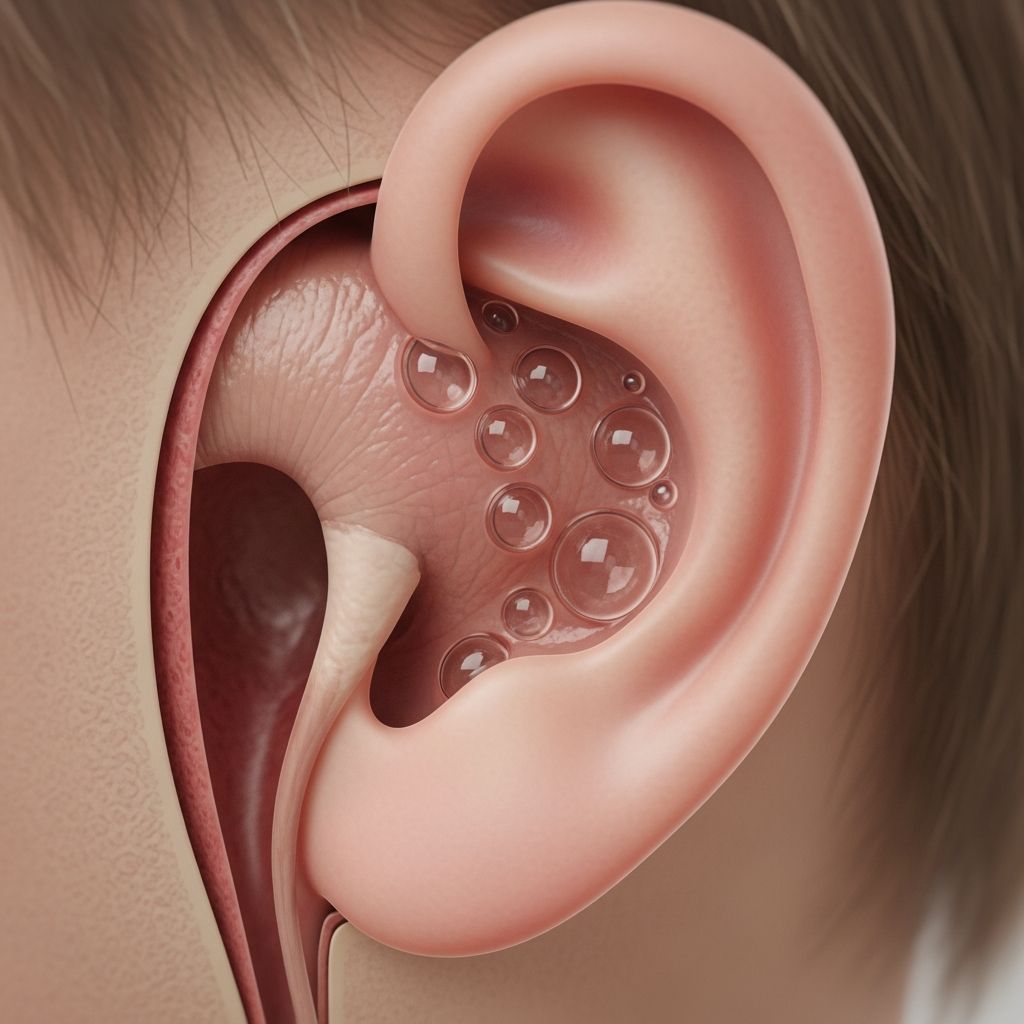
Bullous myringitis is a type of ear infection that causes painful, fluid-filled blisters on the eardrum and can briefly affect a child’s hearing. Although the pain can be intense, it usually improves quickly with the right treatment and follow-up care.
What Is Bullous Myringitis?
The eardrum (tympanic membrane) is a thin tissue that separates the outer ear canal from the middle ear. In bullous myringitis, this delicate membrane develops small, tense blisters filled with fluid, called bullae.
These blisters form when the same germs that cause colds or middle ear infections irritate the surface of the eardrum. The result is sudden, sharp ear pain that may be worse than a typical ear infection, even though there may be less fluid trapped behind the eardrum.
| Condition | What’s Happening | Typical Pain Level |
|---|---|---|
| Usual middle ear infection (otitis media) | Fluid and pus build up behind the eardrum | Mild to moderate; may build up gradually |
| Bullous myringitis | Blisters form on the eardrum itself | Often sudden and severe, but typically short-lived |
What Causes Bullous Myringitis?
Bullous myringitis is usually triggered by infections that affect the upper airways and middle ear. Both viruses and bacteria can be responsible, and it can occur alone or together with a standard middle ear infection.
Common infectious triggers
- Viruses that cause colds and flu (upper respiratory infections)
- Bacteria that typically cause ear infections, including Streptococcus pneumoniae and other common middle-ear bacteria
- Occasionally, Mycoplasma pneumoniae, a bacterium also linked to certain types of pneumonia
Because it is hard to tell from symptoms alone whether a virus or bacteria is causing the infection, doctors often treat bullous myringitis with antibiotics, especially in children.
Why children are more often affected
- Their Eustachian tubes (the small passage that drains the middle ear) are shorter and more horizontal, so germs from the nose and throat reach the ear more easily.
- Young children get frequent colds, which increases the chance that an ear infection will develop.
- Their immune systems are still learning to fight off common viruses and bacteria.
Signs and Symptoms Parents May Notice
Bullous myringitis usually comes on quickly. Parents often describe a child who seemed fairly well earlier in the day but suddenly develops strong ear pain and distress.
Common symptoms
- Sudden, intense ear pain that may last 24–48 hours
- Hearing loss or muffled hearing in the affected ear, which is typically temporary
- Fever, which can range from low-grade to higher temperatures
- Ear drainage if a blister bursts, sometimes mixed with a small amount of blood
- A full, clogged, or pressured feeling in the ear
Clues in babies and toddlers
Very young children cannot explain ear pain, so look for:
- Frequent tugging or pulling at the ear
- Unusual fussiness, crying, or irritability, especially when lying down
- Difficulty sleeping or frequent waking
- Poor feeding or less interest in eating
- Recent or current cold symptoms, such as runny nose or cough
How Doctors Diagnose Bullous Myringitis
Diagnosis starts with a careful conversation and a physical exam. Your child’s healthcare provider will ask about the timing of symptoms, recent illnesses, and any history of ear infections.
Ear exam (otoscopy)
Using a lighted instrument called an otoscope, the provider looks at the eardrum. In bullous myringitis, they may see:
- Small, round, fluid-filled blisters on the eardrum surface
- Redness or irritation of the eardrum
- Sometimes signs of a regular middle ear infection, such as fluid behind the eardrum
Other tools that might be used
- Pneumatic otoscopy – gently blows air against the eardrum to see how well it moves; less movement can suggest trapped fluid or infection.
- Tympanometry – a quick, noninvasive test that measures eardrum movement and middle ear pressure to confirm fluid or dysfunction.
- Hearing test – recommended if hearing does not seem to return to normal after the infection has cleared.
Treatment Options for Bullous Myringitis
Most children recover quickly with prompt, appropriate care. The main goals of treatment are to control pain, clear the infection, and protect hearing.
Pain relief
Pain can be very intense in the first day or two, so managing discomfort is a priority.
- Over-the-counter pain relievers such as acetaminophen or ibuprofen, dosed by weight for children (always follow your provider’s or label instructions).
- Warm compresses held against the outside of the ear to soothe discomfort, if your child finds it calming.
- In some cases, prescription eardrops with pain medication may be recommended if the eardrum is intact.
Antibiotics
Because many children with bullous myringitis have bacteria present in the middle ear, doctors usually prescribe antibiotics, especially for younger children.
- High-dose amoxicillin is commonly used as a first-choice antibiotic for otherwise healthy children, following American Academy of Pediatrics guidelines for acute ear infections.
- If the child has taken amoxicillin recently or has certain risk factors, a different antibiotic (such as amoxicillin–clavulanate or a cephalosporin) may be selected.
- Children with a true penicillin allergy may receive alternative antibiotics like azithromycin or other recommended options.
It is important to give the antibiotic exactly as prescribed and to finish the full course, even if your child seems better after a couple of days. Stopping early can allow germs to survive and the infection to return.
Draining blisters (myringotomy)
If the blisters are extremely painful, the provider may gently open them with a tiny sterile instrument to let fluid escape. This is usually done by an ear, nose, and throat specialist (ENT) and can quickly reduce pain and pressure. Not every child needs this procedure, but it can be very helpful in selected cases.
Home care and comfort tips
- Keep your child’s head slightly elevated during rest to reduce pressure in the middle ear.
- Offer plenty of fluids to prevent dehydration, especially if fever is present.
- Use distraction and comfort – books, quiet games, or cuddling can help when pain flares.
- Follow your provider’s advice about keeping the ear dry during treatment, especially if there is drainage from a hole in the eardrum or a recent procedure.
Recovery: What to Expect
With treatment, most children begin to feel significantly better within two to three days.
- Pain usually improves within 24–48 hours after treatment begins.
- Fever and irritability often settle soon after.
- Ear drainage, if present, typically stops within several days.
- Hearing usually returns to normal once the infection and inflammation resolve.
Your child’s provider may schedule a follow-up visit to make sure the eardrum looks healthy and that hearing has recovered. If your child still seems to have trouble hearing or responding to sounds after recovery, a hearing test is recommended.
Possible Complications
Serious problems from bullous myringitis are uncommon when children receive timely care. Still, it is important to know what doctors watch for:
- Prolonged or recurrent ear infections – repeated infections can sometimes lead to chronic middle ear problems.
- Temporary hearing loss – usually improves with healing, but evaluation is needed if it lingers.
- Perforated eardrum – a small tear in the eardrum may occur if a blister or infection breaks through; most small holes heal on their own, but they must be monitored.
- Rarely, spread of infection to nearby structures, such as the bone behind the ear (mastoiditis) or deeper tissues. This is why worsening symptoms or new swelling around the ear require urgent evaluation.
When to Call the Doctor or Seek Urgent Care
Contact your child’s healthcare provider promptly if you suspect an ear infection of any kind. Seek urgent or emergency care if you notice any of the following:
- Severe ear pain that does not improve with pain medicine
- A child who seems very sleepy, difficult to wake, floppy, or unusually weak
- New or worsening drainage from the ear, especially if it is bloody, foul-smelling, or accompanied by fever
- Redness, swelling, or tenderness behind the ear, or the ear sticking out more than usual
- Stiff neck, severe headache, dizziness, or sensitivity to light
- Fever that persists beyond 48–72 hours after starting antibiotics or becomes very high
- Any sudden or persistent hearing difficulty once the infection seems resolved
Can Bullous Myringitis Be Prevented?
It is not possible to prevent every ear infection, but you can reduce your child’s risk by lowering their exposure to the germs that commonly cause them.
Everyday prevention strategies
- Encourage frequent handwashing with soap and water.
- Teach children to cover coughs and sneezes with a tissue or the inside of the elbow.
- Avoid sharing cups, utensils, and pacifiers between children.
- Keep children away from tobacco smoke, which irritates the airways and increases ear infection risk.
- Try to limit close contact with people who have colds or flu when possible.
Vaccinations and routine care
- Keep your child’s routine vaccinations up to date; some vaccines (such as pneumococcal and influenza vaccines) can help reduce certain infections that might lead to ear problems.
- Follow regular well-child visits so your pediatrician can monitor ear health, hearing, and speech development.
Helpful Tips for Parents
- Trust your instincts: if your child’s pain or behavior worries you, call your provider.
- Write down when symptoms start, when medicines are given, and how your child responds. This information helps your child’s doctor decide on the best care.
- Ask your provider to show you pictures or drawings of what they see in your child’s ear. Understanding the problem can make treatment decisions easier.
- After recovery, check that your child is responding normally to voices, music, and everyday sounds.
Frequently Asked Questions (FAQs)
Is bullous myringitis contagious?
The blisters themselves are not contagious, but the viruses and bacteria that cause bullous myringitis can spread from person to person through coughs, sneezes, and close contact. Good hygiene and staying home when sick help limit spread.
Will my child have permanent hearing loss?
In most children, any hearing loss from bullous myringitis is temporary and improves as the infection gets better and the eardrum heals. If hearing does not seem back to normal after recovery, your provider may recommend a formal hearing test.
How quickly will my child feel better after starting treatment?
Many children notice less pain within 24–48 hours of starting antibiotic treatment and pain relievers, and most feel much better within a few days. Call your provider if pain or fever is not improving by then.
Can bullous myringitis come back?
It can return, especially in children who are prone to ear infections or who frequently get colds. Reducing exposure to respiratory infections, avoiding secondhand smoke, and following your provider’s advice on prevention can help lower the risk.
Does my child need to stay home from school or daycare?
Children with a fever or significant pain should stay home to rest and avoid spreading infection. Once they are feeling better, fever-free for at least 24 hours (without fever medicine), and able to participate in usual activities, they can usually return. Follow any specific guidance from your child’s healthcare provider.
References
- Bullous Myringitis: Symptoms, Causes & Treatment — Cleveland Clinic. 2022-09-01. https://my.clevelandclinic.org/health/diseases/25018-bullous-myringitis
- Bullous Myringitis: Treatment, Causes, Symptoms, and More — Healthline. 2020-04-23. https://www.healthline.com/health/bullous-myringitis
- Bullous Myringitis — StatPearls, NCBI Bookshelf. 2023-07-17. https://www.ncbi.nlm.nih.gov/books/NBK553029/
- A to Z: Myringitis, Bullous (for Parents) — KidsHealth / Humana. 2018-06-01. https://kidshealth.org/HumanaSouthCarolina/en/parents/az-bullous.html
- Bullous Myringitis: Causes and Prevention — WebMD. 2021-11-15. https://www.webmd.com/a-to-z-guides/what-is-bullous-myringitis
- Bullous Myringitis — Tolbecs Ear Centre. 2020-05-10. https://www.tolbecs.co.nz/bullous-myringitis
- Bullous Myringitis — MD Searchlight. 2022-03-01. https://mdsearchlight.com/ear-nose-and-throat/bullous-myringitis/