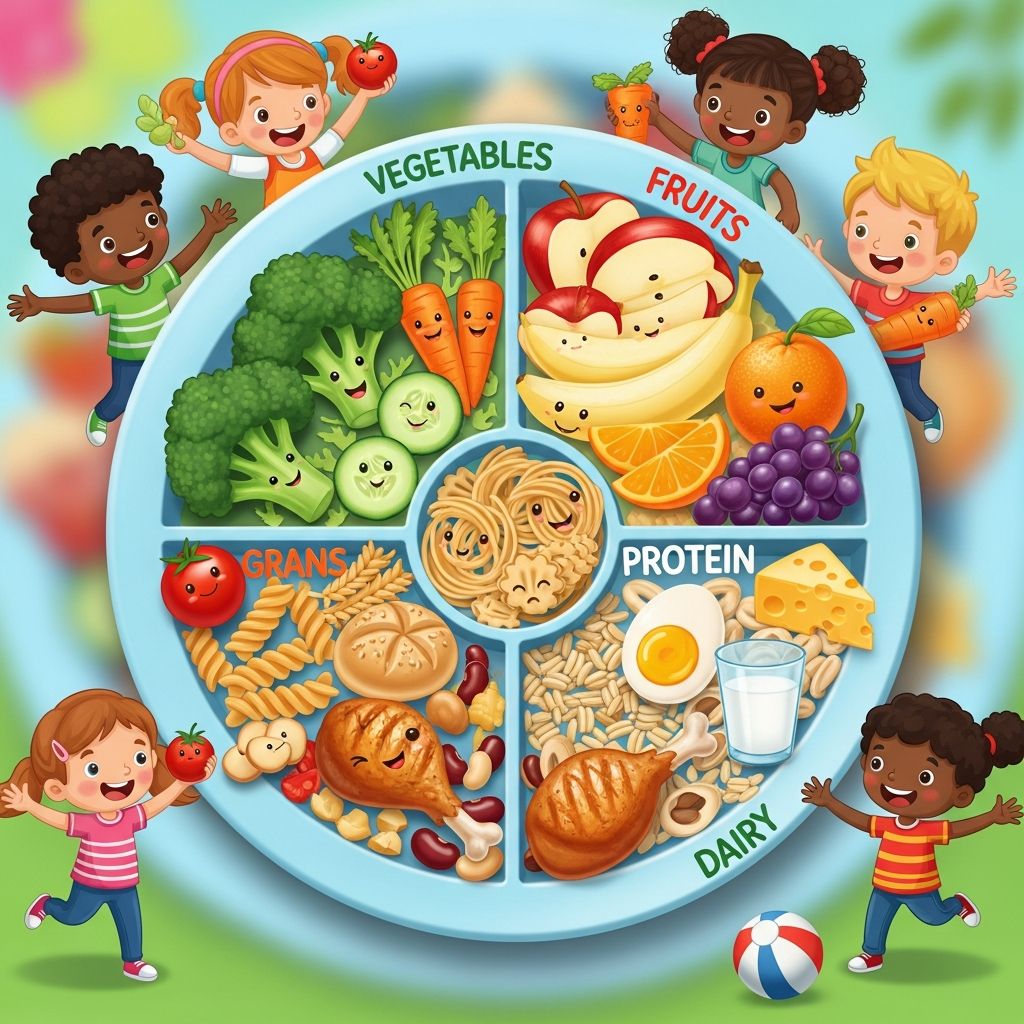
Every time you eat, you give your body fuel to run, jump, think, and grow. Instead of thinking about a tall food pyramid, imagine your dinner plate as a colorful circle that shows what your body needs. This article explains each part of that plate in simple language, with ideas kids and parents can use every day.
Why Your Plate Matters More Than a Pyramid
For many years, people used a pyramid picture to show how much of each type of food to eat. Today, a plate picture is more common because it looks just like what you see at mealtimes: your own plate. The circle is divided into sections for vegetables, fruits, grains, protein foods, and a small side of dairy. When you fill those spaces with the right kinds of food, your plate becomes a quick map to a balanced meal.
The plate idea is helpful because you do not need to count servings all day. You can simply look down and ask, “Do I see colorful veggies and fruit? Is there some grain and some protein? Did I include a dairy food somewhere?” This makes healthy choices easier at home, in the school cafeteria, or at a restaurant.
Meet the Five Food Friends
Every food belongs to a group, and each group has a special job in your body. Think of the groups as five friendly teammates that work together so you can feel your best. If one teammate is missing, your body may feel tired, hungry too soon, or not grow as well as it could.
Here are the five main food friends on your plate:
- Vegetables – the color splash that brings vitamins, minerals, and fiber.
- Fruits – sweet, juicy bites that protect your body and keep you energized.
- Grains – breads, cereals, rice, and pasta that power your muscles and brain.
- Protein foods – building blocks for strong muscles, skin, and blood.
- Dairy (or dairy alternatives) – supports bones and teeth with calcium and other nutrients.
Vegetables: The Color Champions
Vegetables take up a big part of your plate because they are packed with vitamins, minerals, and fiber while staying low in calories. The more colors you see — green, orange, red, purple, even white — the more kinds of helpful nutrients you are getting. Crunchy carrots, leafy spinach, and sweet peas all protect your body in different ways.
Try to include veggies at both lunch and dinner. If you do not like a vegetable the first time, that is okay. Kids often need to see or taste a new food many times before they start to enjoy it. You can try them raw with a dip, roasted in the oven, mixed into pasta, or blended into soups.
Fruit: Nature’s Candy
Fruit is like nature’s candy bowl, but with the bonus of vitamins, fiber, and water. Unlike candy, fruit helps protect your body and keeps your energy more steady. Berries, bananas, apples, oranges, and grapes are just a few options you can enjoy fresh, frozen, or canned in their own juice.
Fruit juice might seem easy, but it is better to eat whole fruits most of the time. Whole fruits fill you up more, and they do not pack in as much sugar at once. Juice, if used, is best kept to a small glass and not sipped all day.
Grains: Energy for Play and Learning
Grains give your body the energy to run in the playground and pay attention in class. Bread, tortillas, breakfast cereal, rice, pasta, and oatmeal all come from grains. These foods are especially helpful at breakfast and lunch so that you do not feel sleepy or cranky during the day.
Not all grains are the same. Whole grains keep the outer parts of the grain seed, which means they include more fiber and nutrients. Look for words like “whole wheat,” “brown rice,” or “oats” on packages. Switching from white bread to whole-wheat bread, or from regular rice to brown rice, is a small change that helps your plate work harder for you.
Protein Foods: The Body Builders
Protein foods help your body build and repair tissues like muscles, skin, hair, and even parts of your blood. When you scrape your knee or grow taller, protein is part of the quiet repair team inside you. Common protein foods include lean meats, chicken, fish, eggs, beans, peas, lentils, nuts, and seeds. Some soy foods, like tofu, are also rich in protein.
You do not need a huge portion of protein at each meal. A small serving that fits roughly in the palm of your hand is usually enough for kids. Plant-based proteins like beans and lentils bring along fiber and other nutrients, so adding them to soups, tacos, or salads is an easy way to give your body even more benefits.
Dairy and Alternatives: Strong Bones and Teeth
Dairy foods are important because they are one of the easiest ways to get calcium, which helps make bones and teeth strong. Milk, yogurt, and cheese are the best-known dairy foods. Some kids also enjoy fortified soy drinks or soy yogurt, which can offer calcium when they do not drink cow’s milk.
For drinks, plain milk and water are the best everyday choices. Flavored milks and sugary drinks add extra sugar your body does not need. If you already enjoy sugary drinks, you can slowly switch by mixing them with more water or choosing them less often.
How a Balanced Plate Looks
When you put all the groups together on a plate, you create a balanced meal. The easiest way to picture this is to imagine dividing your plate into four main sections plus a small side circle for dairy:
- About half the plate: vegetables and fruits together.
- About one quarter: grains, especially whole grains when possible.
- About one quarter: protein foods like chicken, fish, beans, or eggs.
- On the side: a serving of milk, yogurt, or another dairy option.
This does not need to be perfect at every meal. If breakfast is mostly grains and dairy, you can make sure lunch and dinner include more vegetables and proteins to balance out your day.
Sample Kid-Friendly Plate Ideas
Here is a simple table with ideas for putting the plate model into action at different meals. Use it as inspiration and mix and match foods your family enjoys.
| Meal | Vegetables & Fruits | Grains | Protein Foods | Dairy or Alternative |
|---|---|---|---|---|
| Breakfast | Sliced berries or banana | Oatmeal or whole-grain cereal | Peanut butter or nut butter spread thin on toast | Glass of milk or yogurt cup |
| Lunch | Carrot sticks and cucumber rounds | Whole-wheat pita or bread | Turkey, hummus, or bean spread inside sandwich | Cheese slice or yogurt |
| Dinner | Steamed broccoli and corn | Brown rice or whole-wheat pasta | Grilled chicken, tofu cubes, or beans | Milk, fortified soy drink, or small serving of cheese |
| Snack | Apple slices or grapes | Whole-grain crackers | Cheese stick or a spoonful of nut butter | Optional: glass of water or milk |
Portions: How Much Is Enough?
Kids and adults do not need the same amount of food. Grown-up portions are usually bigger, and copying them can mean kids get more than their bodies need. A simple rule is to start with smaller portions, then let kids ask for more if they are truly hungry.
Hands can help estimate portions too. For many children, a grain serving might be about the size of a small fist, while a protein portion often fits in the palm. Vegetables and fruits can fill a bigger space, and it is usually fine to go back for more of those.
Smart Snacks That Fit the Plate
Snacks are not just treats between meals; they are chances to give your body more of what it needs. A smart snack usually includes at least two food groups, like fruit and yogurt or vegetables and hummus. This helps keep your energy steady until the next meal.
Here are some kid-friendly snack pairings:
- Apple slices with a small spoonful of nut butter.
- Carrot sticks with hummus or bean dip.
- Plain yogurt topped with chopped fruit and a sprinkle of whole-grain cereal.
- Whole-grain crackers with cheese or mashed avocado.
Foods to Enjoy Less Often
Some foods taste great but do not help your body very much. These are often high in added sugar, salt, or unhealthy fats. Chips, candy, soda, and deep-fried foods fit into this group. They are best saved for special times instead of every day.
You do not need to completely ban these foods, which can make kids want them even more. Instead, think of them as “sometimes foods.” When they do appear, keep portions small and focus more on the healthy foods that fill most of your plate.
Drinks: What’s in Your Cup?
Many sugary drinks bring lots of extra calories without filling you up. These include soda, sweetened iced teas, sports drinks, and fruit drinks with added sugar. Drinking these often can make it harder to stay at a healthy weight and may affect teeth.
Water is the best thirst-quencher for most of the day. Plain milk is a strong choice at meals, especially for growing bones. If juice is offered, a small serving of 100% fruit juice is enough, and it is a good idea to drink it with a meal rather than sipping it all day long.
Making Changes as a Family
Healthy eating works best when the whole family joins in. Kids learn quickly from what they see adults do. If parents or caregivers enjoy vegetables, drink water, and eat balanced plates, children are more likely to copy those habits.
Try adding changes one at a time so they feel easy to keep. For example, start by adding a fruit or vegetable to every meal. Next, replace one sugary drink per day with water. Over time, these small choices add up to big benefits.
Fun Ways Kids Can Help
Kids who help choose and prepare foods are often more willing to taste them. Even young children can join in kitchen tasks with supervision. Turning meal prep into a team activity can also make family time more fun.
Ideas for kid helpers include:
- Picking a new fruit or vegetable at the store to try that week.
- Washing produce in a clean sink or colander.
- Stirring ingredients in a bowl or helping measure with cups and spoons.
- Arranging colorful foods on the plate to match the balanced plate picture.
Listening to Your Body
Healthy eating is not just about what is on the plate; it is also about paying attention to how your body feels. Kids are born with hunger and fullness signals, but these can be ignored if they are pushed to always “clean the plate” or eat when they are not hungry.
Parents can support kids by offering regular meals and snacks and letting children decide how much to eat from what is served. Encouraging kids to eat slowly, chew well, and pause to see whether they feel full helps them learn to trust their own bodies.
Frequently Asked Questions
Do I have to eat from every food group at every meal?
Not every meal will look perfect, and that is okay. Aim to include at least three food groups at a meal and two groups at a snack. Over the whole day, try to make sure you have eaten foods from all five groups so your body gets a wide mix of nutrients.
What if I do not like vegetables?
It is normal to dislike some vegetables at first. Keep trying small tastes in different forms — raw, cooked, mixed into sauces, or blended in soups. Sometimes it takes many tries before a food starts to taste good. You might also find that you like one kind of vegetable (like crunchy carrots) more than another (like cooked broccoli), and that is a helpful place to start.
Are all snacks bad for me?
No, snacks can be very helpful when they include foods from the main groups. The key is to choose snacks that help fill gaps in your day, such as fruit, vegetables, whole grains, dairy, or protein foods. Snacks made mostly of sugar or fat, like candy and chips, are the ones to limit.
Is it okay to eat dessert?
Desserts can be enjoyed in small amounts as part of special meals or family traditions. It helps to think of sweets as “sometimes foods” without making them a reward for eating vegetables or finishing everything on the plate. When dessert is offered, a small portion is usually enough, and you can still keep your focus on the healthy foods that build a strong body.
How can parents help without pressuring kids?
Parents and caregivers can decide what foods to offer and when, while kids decide how much to eat from those choices. Serving a variety of foods, eating together when possible, and avoiding battles about bites can make mealtimes more peaceful. When kids feel relaxed and see others enjoying healthy foods, they are more likely to explore them.
Building Healthy Habits for Life
Learning to fill your plate wisely is a skill that can last your whole life. When kids understand that each food group plays a different role — from powering busy days to building strong bones — they can feel proud of making smart choices. Families that plan meals, snack smart, and listen to their bodies create a strong foundation for health together.
Your plate is like a canvas you paint at every meal. By aiming for color, variety, and balance, you give your body what it needs to grow, play, and feel good today and in the years to come.