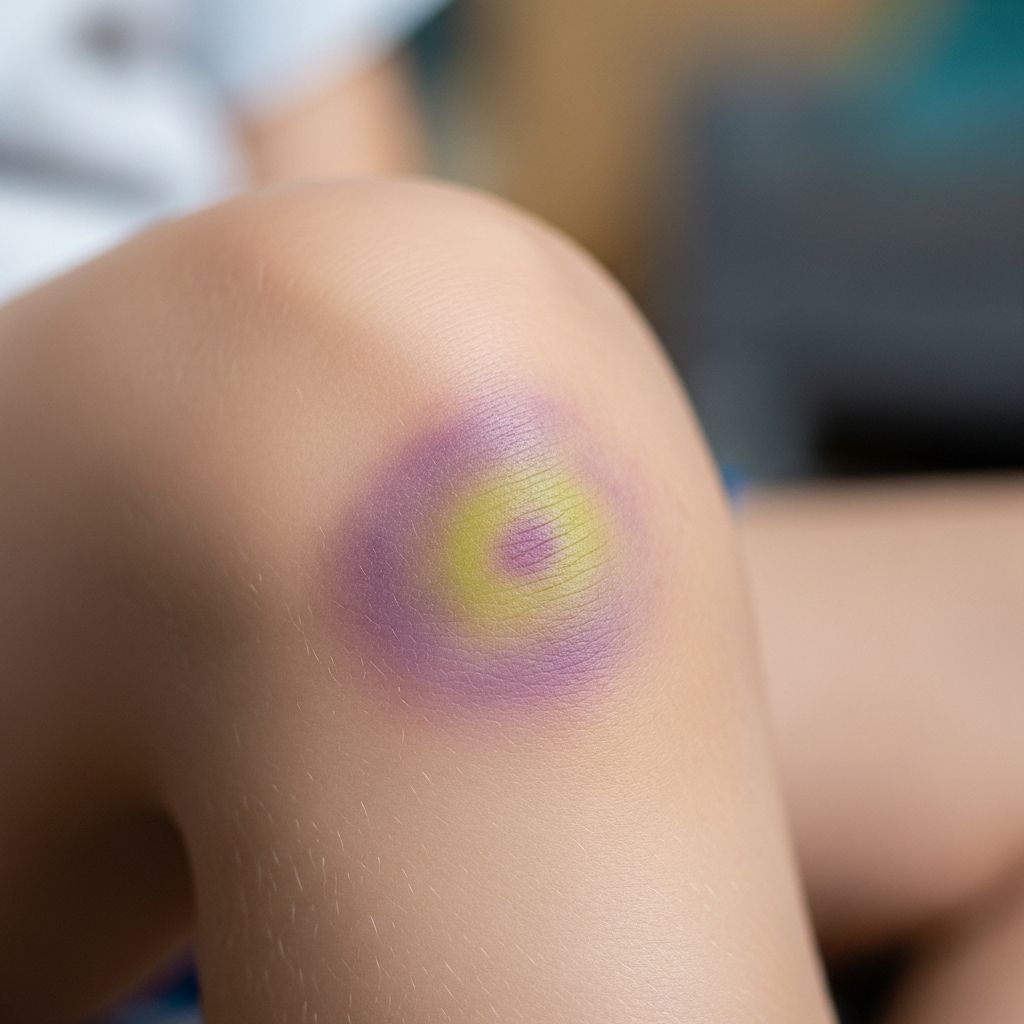
Most kids get bruises as they run, jump, climb, and explore. Those purple or blue marks can look scary, but they are usually a normal part of growing up. This guide explains what bruises are, why they change color, how to help them feel better, and when a bruise might be a sign that you should call a doctor.
What Exactly Is a Bruise?
A bruise is a type of minor injury that doctors call a contusion. It happens when a bump or blow damages tiny blood vessels under the skin without breaking the skin itself.
When those small vessels break, a little bit of blood leaks into the nearby tissue. Because the blood is trapped under the skin, you see a colored mark instead of red blood coming out like it would with a cut.
Key features of a bruise
- The skin on top is not cut or open.
- The area may be sore or tender to touch.
- The color changes over several days as the body cleans up the leaked blood.
- Most simple bruises heal on their own without special treatment.
How Do Kids Get Bruises?
Kids move a lot, which means bumps are common. Bruises can appear after many everyday activities.
Common causes of bruises in children
- Falling while running, playing sports, or learning to walk
- Bumping into furniture, doors, or playground equipment
- Getting hit by a ball or another player during games
- Wearing tight shoes or sports gear that presses on the skin
Most of the time, bruises from these causes are harmless and simply show that a child is active and exploring the world.
Why some kids bruise more easily
Some children seem to collect bruises faster than others. That does not always mean something is wrong. Experts note that bruising can be affected by:
- Activity level – very active kids naturally bump into more things.
- Skin tone and body type – bruises may look more obvious on fair skin or on thinner children.
- Certain medicines – some drugs can make bleeding and bruising easier, such as blood thinners or some anti-inflammatory medicines.
- Health conditions – rare problems with blood clotting or low platelets can cause more frequent or severe bruises.
Why Bruises Change Color
One of the most interesting things about a bruise is how it changes color as it heals. The color you see depends on what is happening to the trapped blood under the skin.
| Stage | Typical Color | What Is Happening? |
|---|---|---|
| Right after injury | Red or pink | Fresh blood has leaked under the skin from tiny broken vessels. |
| 1–2 days later | Blue or deep purple | The blood has lost oxygen, which darkens the color. |
| Around day 5 | Greenish | The body starts breaking down the blood; one of the breakdown products looks green. |
| About a week or more | Yellow or yellow-brown | The body continues to clean up, and the remaining pigments look yellow or brown before fading away. |
Most simple bruises are much lighter or gone in about two weeks, although deeper bruises or bruises on the legs can sometimes take a bit longer to disappear.
Different Kinds of Bruise-Related Marks
Not every mark under the skin is the same. Doctors use specific words to describe what they see.
- Small bruise (contusion) – a flat, tender, discolored area where the skin is not broken.
- Hematoma – a larger collection of blood under the skin that may feel like a firm, rubbery lump rather than a flat, spread-out mark.
- Tiny red or purple dots – called petechiae, these do not turn white when pressed and can sometimes signal a problem with blood clotting if they appear along with lots of bruises.
How to Take Care of a Fresh Bruise
Most bruises can be treated at home with simple steps that help with pain and swelling.
Right after the injury
- Rest the area – try not to use the injured body part too much right away.
- Cool it down – place a cold pack or a clean cloth with ice wrapped inside on the bruise for 10–15 minutes at a time, a few times during the first day.
Always wrap ice in a cloth so it does not touch bare skin. - Raise it up – if the bruise is on an arm or leg, propping it up on pillows can reduce swelling.
After the first couple of days
- Normal activities can usually continue as long as they do not cause strong pain.
- A warm compress after 48 hours may feel soothing for some kids, if their doctor agrees.
- Over-the-counter pain medicine such as acetaminophen may be used if needed, following dosing instructions from a doctor or pharmacist.
Most important: keep watching the bruise. It should slowly feel less sore, not more, and the colors should fade over time instead of growing darker and expanding a lot.
Where Bruises Usually Show Up
In active children, bruises tend to appear in places that hit things most often.
- Shins and knees
- Elbows and forearms
- Hips and outer thighs
- Hands and sometimes the forehead
Bruises in these spots are common and usually match normal play and minor accidents. Doctors often look at the pattern and location of bruises to decide whether they seem typical for a child’s age and activity.
When a Bruise Might Be a Warning Sign
While most bruises are not serious, sometimes they can be a clue that something else is happening. Parents and caregivers should pay attention to bruises that seem unusual, very painful, or do not heal the way they should.
Call a doctor if you notice:
- Bruises that appear without a clear reason again and again
- Bruises in unusual places, such as:
- middle of the back or stomach
- ears, neck, cheeks, or around the genitals
- Bruises that do not start to fade after about two weeks
- Lots of bruises together with:
- frequent nosebleeds
- bleeding gums
- tiny red or purple spots (petechiae) that don’t turn white when pressed
- unusual tiredness or weakness
- fever that will not go away
- Very severe pain under or around a bruise, especially if your child cannot move the nearby joint or walk on the leg.
In rare cases, serious or frequent bruising can be linked to problems like blood-clotting disorders, anemia, vitamin deficiencies, or certain cancers. Doctors can run blood tests or other checks if they are worried about these possibilities.
Seek emergency care right away if:
- Your child has a big head or face bruise after a fall and seems confused, very sleepy, or vomits.
- A bruise is rapidly getting bigger and tighter, especially after a strong hit or accident.
- There is a bruise along with trouble breathing, chest pain, or sudden swelling in the tongue or lips.
- You suspect any kind of abuse or intentional injury.
How Doctors Check Bruises
If you bring your child to a doctor for bruising, the doctor will start by asking questions and doing an exam.
Questions a doctor may ask
- How and when did the bruise appear?
- Has your child had many bruises before?
- Is there a family history of easy bruising or bleeding problems?
- Is your child taking any medicines, herbs, or supplements?
- Are there other symptoms, like fever, tiredness, or weight loss?
The doctor will then look at:
- The shape, size, and color of the bruise
- Whether there is swelling or a lump (possible hematoma)
- How well your child can move the nearby joint or muscle
If anything seems unusual, the doctor might order blood tests or imaging, such as an X-ray, to check for broken bones or bleeding problems.
Helping Bruises Heal and Preventing New Ones
Bruises heal mostly with time, but there are gentle habits that can support the healing process and may reduce the chance of some injuries.
Healthy habits that support healing
- Eating a balanced diet with enough vitamins, especially vitamin C and vitamin K, which help blood vessels and clotting work properly.
- Staying active to keep muscles strong and flexible, which may help protect bones and tissues.
- Getting enough sleep so the body can repair itself.
- Following medical advice if your child has a known bleeding or clotting condition.
Safety tips to limit bruises from accidents
- Use helmets, pads, and other protective gear for biking, skating, and contact sports.
- Keep play areas free of clutter and sharp-edged furniture when possible.
- Teach kids to use handrails on stairs and to walk, not run, on slippery floors.
- Make sure shoes fit well and are tied properly to prevent falls.
These steps will not prevent every bruise, but they can reduce more serious injuries and help kids stay safer while they play.
Talking to Kids About Bruises
For younger children, bruises can be confusing or scary. Using simple, calm language can help them understand what is happening.
- Explain that a bruise is like a “color change” under the skin where the body is fixing a bump.
- Let them know that it will change colors and then fade away as their body heals.
- Show them how to hold an ice pack safely, and remind them that it should feel cool, not painfully cold.
- Reassure them that most bruises are not dangerous, but also explain why you visit the doctor when something looks different or hurts a lot.
Frequently Asked Questions (FAQs)
How long does a bruise usually last on a child?
Many bruises in children fade within about two weeks, although some may last a little longer, especially on the legs or if the bump was strong.
Is it normal for my active child to have several bruises?
It is common for active kids to have a few bruises on bony areas like shins, knees, and elbows from everyday play. As long as they heal normally and are in usual spots, this is typically not a concern.
Should I put any cream or medicine directly on a bruise?
For most simple bruises, you do not need special creams. Cool packs and rest are usually enough. Always check with a doctor before using any medicated creams or herbal products on children.
Can a bruise mean a bone is broken?
A bruise alone does not prove there is a broken bone, but very strong pain, major swelling, or trouble moving or using the injured part can be signs of a fracture. In those cases, a doctor should examine your child and may order an X-ray.
When is easy bruising something to worry about?
Easy bruising deserves a medical check if bruises appear often without clear bumps, show up in unusual places, do not heal, or occur together with frequent nosebleeds, bleeding gums, tiny red spots, fevers, or extreme tiredness.
References
- Bruising in Kids — Bootin & Savrick Pediatric Associates. 2023-08-10. https://www.bootinandsavrickpediatrics.com/injuries/bruises-and-contusions/
- Bruises in Children: What’s Normal and When to Worry — Riley Children’s Health. 2022-02-15. https://www.rileychildrens.org/connections/bruises-in-children-whats-normal-and-when-to-worry
- Understanding Childhood Bruises — Children’s Hospital Colorado. 2021-09-30. https://www.childrenscolorado.org/just-ask-childrens/articles/bruises/
- Bruises and Blood Spots Under the Skin — Children’s Hospital at Montefiore / Kaiser Health Library. 2023-01-05. https://www.cham.org/health-library/article?id=bruse
- Bruises — Nemours KidsHealth for Parents. 2022-05-12. https://kidshealth.org/en/parents/bruises.html
- Contusions and Bruises — Nationwide Children’s Hospital. 2021-06-18. https://www.nationwidechildrens.org/conditions/contusions-bruises
- Bruises and Cuts — Seattle Children’s Hospital. 2023-03-20. https://www.seattlechildrens.org/conditions/a-z/bruises-and-cuts/