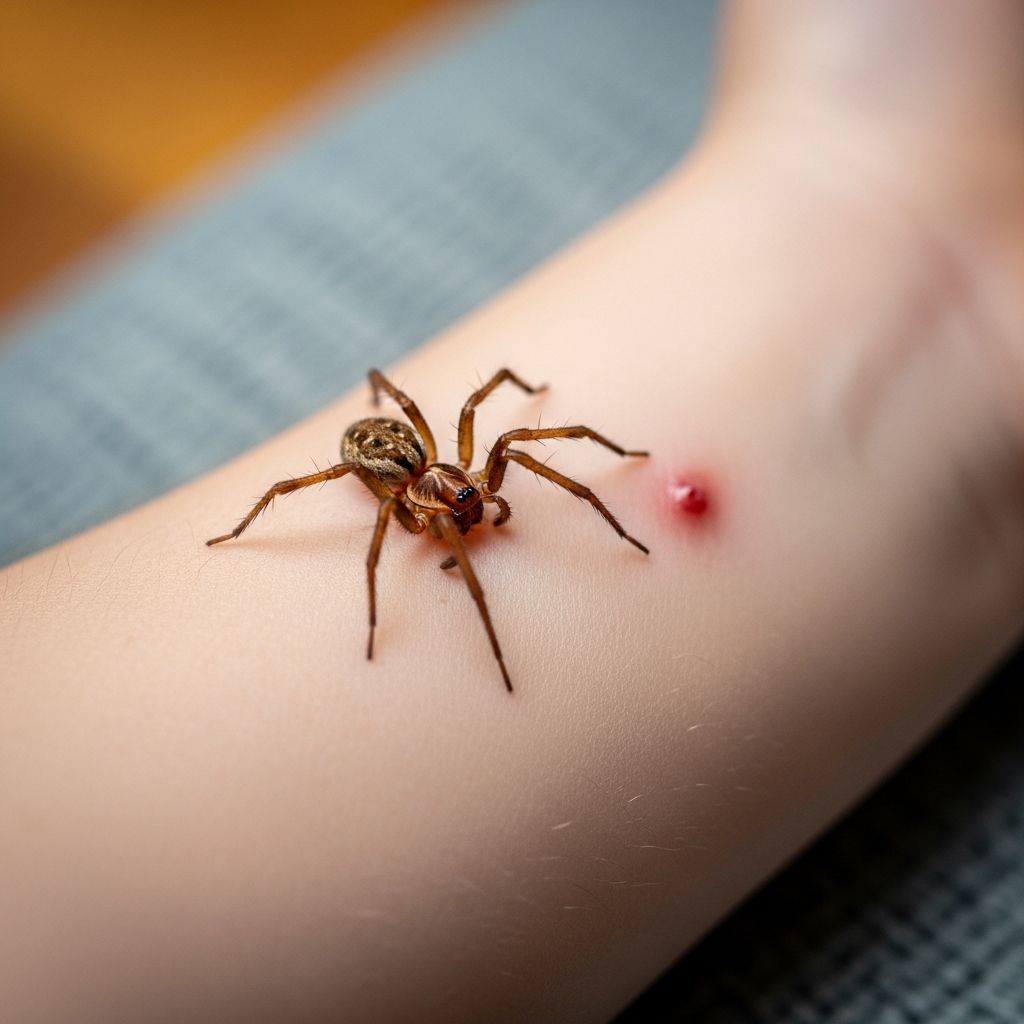
Brown recluse spiders are small, shy spiders that usually avoid people, but their bites can sometimes cause serious skin and health problems, especially in children. This guide explains how to recognize a possible brown recluse bite, what to do right away, and when to get urgent medical help so you can protect your child confidently.
Understanding the Brown Recluse
The brown recluse is a small to medium-sized brown spider known for a violin-shaped marking on the top of its body. It prefers quiet, undisturbed places such as storage boxes, basements, closets, and piles of clothing or clutter.
- Often found in the central and southern parts of the United States.
- Usually active at night and hides during the day.
- Does not chase or hunt people; it bites mainly when trapped or pressed against skin.
Because these spiders like dark, hidden spaces, children may encounter them when reaching into shoes, boxes, or clothing that have been sitting for a long time.
Why Children Are More Vulnerable
A brown recluse bite can affect anyone, but children are at greater risk of more serious reactions. Their smaller body size means the same amount of venom can have a stronger effect on their blood, skin, and organs.
- Symptoms can develop and worsen more quickly in kids than in adults.
- Children may have trouble describing where it hurts or how it started.
- Parents may not see the spider, making it harder to know that a bite is the cause.
Because of this, it is safer to treat any mysterious, painful, or worsening skin lesion in a child as a possible serious bite until a healthcare professional evaluates it.
Where Brown Recluses Like to Hide
Knowing common hiding spots can help parents reduce the chances of a bite. Brown recluses prefer dark, dry, and quiet areas where they are not often disturbed.
- Indoor hiding places:
- Closets, basements, attics.
- Behind furniture, picture frames, or stored boxes.
- Inside shoes, folded clothing, and bedding that has been unused.
- Outdoor hiding places:
- Wood piles, sheds, and garages.
- Under rocks, boards, and debris.
- In unused toys or equipment stored outside.
Simple habits, like shaking out shoes and clothing that have been sitting, greatly reduce the risk of surprise contact between a child and a hidden spider.
How to Recognize a Possible Brown Recluse Bite
Many skin spots look like insect bites, and most are harmless. A brown recluse bite can be tricky to spot at first because it may start out mild and become worse over several hours.
Early Signs (First Few Hours)
- A small red or slightly swollen area that may look like a mosquito or flea bite.
- Mild discomfort, stinging, or burning at the site.
- The area may be warm to the touch.
At this point, it is often impossible to tell whether the injury is from a spider just by looking at it. Parents usually notice it later when the area changes in appearance or pain level.
Progressing Signs (Several Hours to a Day)
- Increasing pain around the bite, going from mild soreness to throbbing or burning.
- Redness that spreads out from the center of the bite.
- Development of a pale or whitish center surrounded by a red ring, sometimes with a second outer red area.
- Blister or small fluid-filled bump forming in the middle.
These changes occur as the venom begins to affect the small blood vessels and skin tissue around the bite.
Advanced Local Signs (1–3 Days)
- A darkening center that may become purple, blue, or black.
- Damage to the skin and tissue, sometimes forming an open sore or ulcer.
- Scab or crust forming over the damaged area.
Not every brown recluse bite becomes severe. Some remain mild and heal with basic care, while others can progress to deeper skin loss and scarring.
Whole-Body Symptoms to Watch For
In some children, the venom affects more than just the skin. When the venom enters the bloodstream in larger amounts, it can trigger whole-body symptoms that need urgent medical evaluation.
- Fever, chills, or feeling unusually tired or weak.
- Headache, body aches, or general flu-like feelings.
- Upset stomach, nausea, vomiting, or poor appetite.
- Dark or cola-colored urine, which can signal blood cell damage.
- Pale or yellowish skin, rapid heart rate, or trouble breathing.
If any of these signs appear along with a suspicious bite, the child should be seen by a medical professional or emergency department right away.
Typical Stages of a Brown Recluse Bite
Every child will respond differently, but many bites follow a pattern. The table below offers a simplified overview for parents.
| Time After Bite | What Parents May See | What to Do |
|---|---|---|
| 0–4 hours | Mild redness or small bump; slight stinging or no pain. | Clean gently with soap and water, apply a cool compress, and watch closely. |
| 4–24 hours | Increasing redness, pain, or blister; pale center with red ring may appear. | Call a pediatrician or poison center for guidance; seek in-person care if pain or size worsens. |
| 1–3 days | Dark center, possible open sore or crust, surrounding swelling. | Medical evaluation strongly recommended; follow all treatment instructions carefully. |
| 3+ days | Healing, scab, or persistent ulcer; occasionally spreading skin damage. | Continue follow-up with healthcare provider; watch for signs of infection or new symptoms. |
Immediate First Aid Steps for Parents
If you suspect your child has been bitten by a brown recluse, staying calm and acting quickly can help limit damage and reduce anxiety for your child.
Do This Right Away
- Move to safety: Gently remove your child from the area where the spider may be hiding.
- Wash the area: Clean the bite gently with mild soap and cool water.
- Apply a cool compress: Use a clean cloth with cool (not icy) water and place it on the bite for about 10–15 minutes at a time.
- Raise the area: If the bite is on an arm or leg, elevate it on a pillow to help reduce swelling.
- Use child-safe pain relief if advised: Ask a healthcare provider about appropriate pain medicine and dose for your child’s age and weight.
What Not to Do
- Do not cut the skin, squeeze, or try to suck out venom.
- Do not apply heat directly, such as hot packs or heating pads.
- Do not use home remedies or topical products not recommended by a healthcare professional.
- Do not give adult-strength medication or aspirin without medical guidance.
Taking a clear photo of the bite area at the beginning and then again if it changes can help doctors see how quickly the lesion is progressing.
When to Seek Urgent Medical Care
While not every brown recluse bite becomes an emergency, parents should err on the side of caution with children. Medical care is especially important in certain situations.
- The bite area grows larger, more painful, or more discolored within hours.
- Blisters, dark spots, or an open sore form.
- Your child has a fever, chills, or appears very ill.
- There is nausea, vomiting, or strong headache or body aches.
- You notice dark or reddish urine, unusual bruising, or pale or yellowish skin.
- The bite is on the face, near the eyes, or on the genitals.
If you can safely capture or photograph the spider without risking another bite, that information can help healthcare providers. However, do not delay getting care just to look for the spider.
How Doctors May Treat a Brown Recluse Bite
Treatment plans depend on how severe the bite is and how your child is feeling overall. Mild cases may only need close monitoring and basic wound care, while more serious reactions might require hospital care.
Common Medical Treatments
- Cleaning and dressing the wound to prevent infection.
- Prescribing pain medicine that is safe and appropriate for children.
- Using antibiotics if signs of bacterial infection appear.
- Ordering blood or urine tests if whole-body symptoms suggest blood cell or organ involvement.
In rare, serious cases, children may need advanced treatments such as intravenous fluids, blood transfusions, or surgery to remove dead tissue. This level of care is usually provided in a hospital setting.
Healing, Scarring, and Long-Term Outlook
Most children who receive prompt, appropriate care for a brown recluse bite recover fully. Many bites leave only a small, faint mark or none at all once healing is complete.
- Minor bites may heal within a couple of weeks with simple care.
- More severe bites with open sores can take several weeks or months to fully close and remodel.
- Some children may develop a small scar, especially if the wound was deep or became infected.
Following all wound care instructions, keeping follow-up appointments, and protecting the healing skin from sun exposure can improve the final cosmetic result.
Prevention Tips for Families
Completely eliminating the risk of spider bites is impossible, but parents can greatly reduce the chances of a child being bitten by a brown recluse through a few simple habits.
Home Safety Habits
- Shake out shoes, boots, and clothing that have been stored in closets or garages.
- Avoid leaving clothes or towels on the floor overnight.
- Store seldom-used items in tightly closed plastic containers instead of open cardboard boxes.
- Seal gaps and cracks around doors, windows, and baseboards where spiders may enter.
Safe Outdoor Practices
- Wear gloves when handling wood piles, debris, or boxes stored in sheds.
- Teach children not to reach into dark holes, under rocks, or into piles of leaves.
- Shake out outdoor play equipment, such as tents or sleeping bags, before use.
Children may be less fearful and more cooperative when parents explain that spiders want to be left alone and biting is their way of protecting themselves.
Helping Children Cope With Fear
After hearing about a serious spider bite, children may become worried or frightened about all spiders. Parents can support and reassure them with calm, factual information.
- Explain that most spiders are harmless and do not want to bite people.
- Emphasize that bites from dangerous species are rare, and there are clear steps to stay safe.
- Encourage children to tell an adult if they see a spider instead of trying to catch or crush it.
Keeping the discussion relaxed and confident helps children understand risk without becoming overly anxious.
SEO-Optimized FAQ About Brown Recluse Spider Bites in Children
Are brown recluse spider bites common in kids?
Brown recluse spider bites are not extremely common, but they do occur in areas where these spiders are established. Children are more likely to experience serious effects if they are bitten, so any suspicious bite that worsens or causes whole-body symptoms should be checked by a healthcare professional.
How can I tell if my child’s bite is from a brown recluse?
It can be very hard to confirm the cause of a bite unless the spider is seen. However, a brown recluse bite often begins as a small red spot that grows more painful over several hours and may develop a pale center, blister, or dark area. Rapid changes, increasing pain, or flu-like symptoms are important reasons to seek medical evaluation.
Do all brown recluse bites cause serious tissue damage?
No. Many suspected brown recluse bites remain mild and heal well with basic wound care. Serious tissue damage, open sores, or whole-body symptoms are less common but require prompt medical attention, especially in children.
Should my child get an antivenom for a brown recluse bite?
There is no widely used, standard antivenom for brown recluse spider bites. Treatment usually focuses on supportive care, wound management, pain control, and monitoring for complications. Your child’s healthcare provider will decide on the best treatment plan based on the severity of the bite and your child’s overall health.
Can a brown recluse bite be fatal to a child?
Deaths from brown recluse bites are very rare, but children can develop serious complications in uncommon cases. Early recognition, immediate first aid, and quick access to medical care greatly improve outcomes and lower the risk of severe problems.
When should I call emergency services instead of just a doctor?
Emergency services should be called right away if your child has trouble breathing, faints, is difficult to wake, has rapidly spreading rash or swelling, or suddenly looks very ill after a suspected spider bite. For any rapidly worsening symptoms, it is safer to seek emergency evaluation than to wait and see.
Key Takeaways for Parents
- Brown recluse spiders prefer to avoid people, but bites can happen in dark, hidden areas, especially in homes and storage spaces.
- Children are at higher risk for serious symptoms from a brown recluse bite due to their smaller body size.
- Watch for a bite that becomes more painful, changes color, or forms blisters or dark spots over several hours.
- Whole-body symptoms like fever, vomiting, dark urine, or unusual tiredness signal the need for urgent medical care.
- Good home habits and calm, informed parenting can greatly reduce risk and help kids feel safer.