Understanding Brit Milah in Jewish Tradition and Modern Practice
Circumcision holds profound significance in Jewish culture and religious practice, extending far beyond simple medical procedure. Known as Brit Milah, the Jewish covenant of circumcision, this ancient rite represents one of the oldest continuous religious practices in human history. For Jewish families, the decision regarding circumcision often intertwines religious obligation, cultural identity, family tradition, and contemporary health considerations. This multifaceted nature of the practice requires parents to understand both its spiritual importance and its medical dimensions.
The practice of Jewish circumcision dates back thousands of years, representing a fundamental covenant between God and Abraham in Jewish religious texts. Today, this religious and cultural significance remains central to Jewish identity across all denominations, though the approach to implementation and medical oversight has evolved considerably. Modern Jewish parents find themselves navigating a landscape where traditional practices meet contemporary medical standards, requiring thoughtful consideration of multiple perspectives.
Historical Context and Religious Significance
Within Jewish tradition, circumcision serves as a visible sign of the covenant, establishing a connection between the individual, their family, and their faith community. The ceremony typically occurs on the eighth day of a male child’s life, following biblical prescriptions outlined in the Torah. This timing holds religious significance and reflects centuries of established Jewish practice.
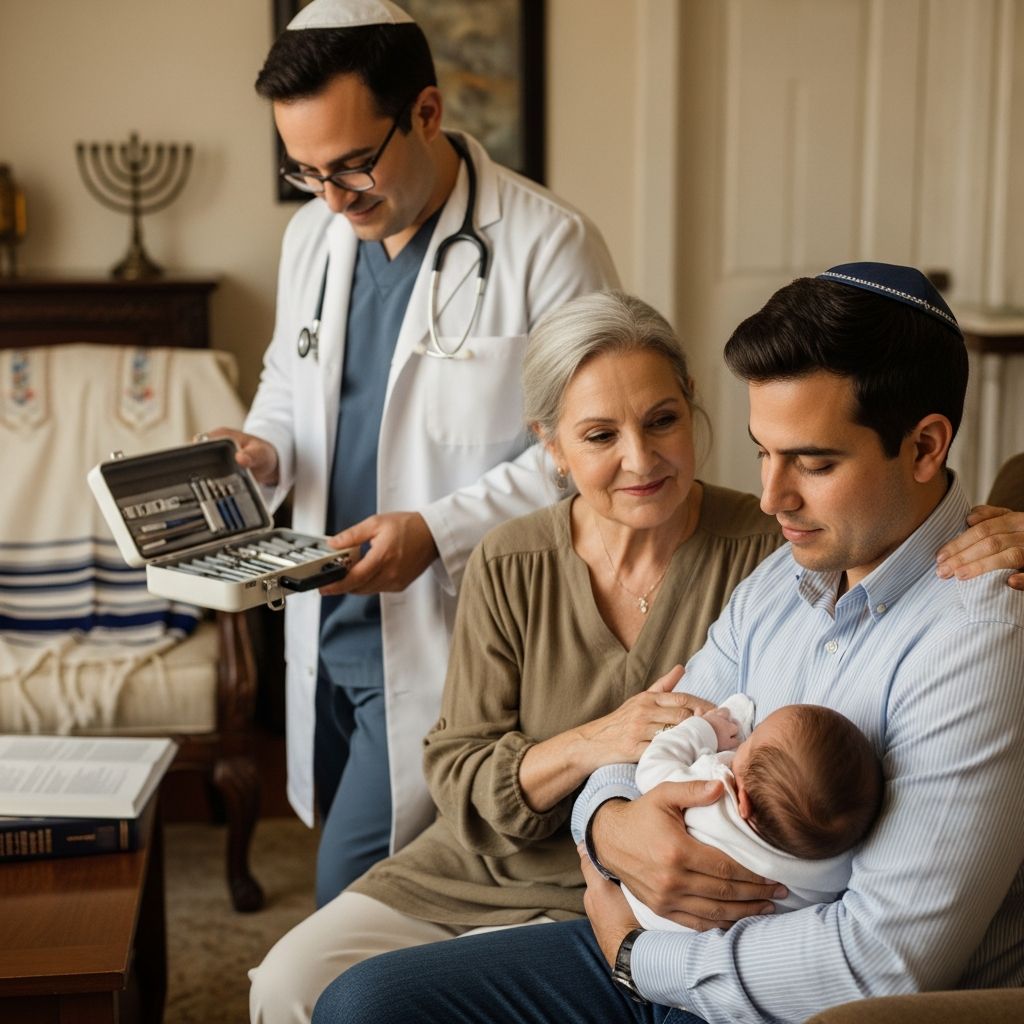
Historically, Jewish circumcision was performed by trained practitioners called mohelim, individuals specifically educated in the religious, ceremonial, and technical aspects of the procedure. The role of the mohel extended beyond mere surgical technique to encompass religious knowledge, blessing recitation, and community connection. This integration of religious and procedural elements distinguishes Jewish circumcision from purely medical approaches in contemporary settings.
Over generations, Jewish communities have maintained this practice across diverse geographical regions and cultural contexts. Whether in Europe, North Africa, the Middle East, or the Americas, Brit Milah remained a cornerstone of Jewish identity and community continuity. Even during periods of persecution or assimilation pressure, many Jewish families preserved this tradition as a fundamental expression of their faith and heritage.
Medical Evidence and Health Considerations
Contemporary medical research has identified numerous health benefits associated with male circumcision, supported by major medical organizations and substantial scientific evidence. The American Academy of Pediatrics Task Force on Circumcision determined that health benefits of the procedure exceed potential risks, though they stopped short of recommending universal newborn circumcision.
Circumcised males demonstrate significantly reduced risk for several conditions:
- Urinary Tract Infections (UTIs): Uncircumcised infants experience substantially higher UTI rates, particularly in the first year of life. The infection risk in uncircumcised males can be up to tenfold higher compared to circumcised males, though absolute risk remains below one percent in healthy infants.
- Sexually Transmitted Infections: Multiple randomized trials conducted in Africa documented that circumcision reduces HIV acquisition risk by 51-60 percent among males. Additional protection extends to genital herpes (28-34% reduction) and human papillomavirus infection (32-35% reduction).
- Penile Cancer: Circumcision provides near-elimination of lifetime penile cancer risk, though this cancer remains exceedingly rare in developed nations.
- Prevention of Inflammation: Circumcision eliminates risk of balanitis and balanoposthitis, inflammatory conditions affecting the foreskin and glans.
- Hygiene Benefits: Circumcision simplifies penile hygiene, eliminating the need for foreskin retraction during cleaning.
Evidence from multiple research centers and medical institutions demonstrates that these benefits extend beyond African populations to developed nations including the United States. Female partners of circumcised men also experience reduced infection risk, including lower incidence of bacterial vaginosis, trichomoniasis, and cervical cancer-causing human papillomavirus.
Assessing Procedural Safety and Complication Rates
When performed by experienced practitioners in appropriate medical settings, circumcision carries minimal complication risk. Research from Israel, where neonatal circumcision remains widespread, documents an overall complication rate of just 0.34 percent. This safety profile positions circumcision among the safest pediatric procedures available.
The most frequently reported complications prove minor and manageable:
- Minor bleeding or oozing at the surgical site
- Local infection responsive to standard treatments
- Scar tissue formation
- Temporary irritation from diaper contact or urine exposure
Major complications remain extraordinarily rare and include penile amputation, antibiotic-resistant infection, or death—events occurring in fewer than one percent of procedures even when complications occur. Petroleum jelly application typically resolves minor post-procedure irritation within days.
An important finding from Israeli research indicates significant differences in complication rates depending on procedural method and practitioner training. When procedures are performed as formal medical operations using local anesthesia by trained physicians, complication rates remain substantially lower compared to ritual ceremonies without medical oversight. This distinction carries important implications for families considering where and by whom their son’s circumcision occurs.
Procedural Approaches: Medical Versus Ritual Methods
Jewish families today can choose between different procedural approaches, each carrying distinct safety, religious, and practical considerations. Understanding these options enables informed decision-making aligned with family values and priorities.
Traditional Ritual Circumcision: Performed by trained mohelim following centuries-old techniques, traditional Brit Milah incorporates religious blessings, ceremony, and community participation. Many mohelim have pursued specialized training, though the extent and nature of medical education varies considerably. This approach prioritizes religious authenticity and ceremonial significance while potentially involving less standardized medical protocols.
Medically-Supervised Circumcision: Increasingly available in Jewish communities, medically-supervised approaches involve physician oversight, sterile surgical environments, local anesthesia, and standardized medical safety protocols. Some mohelim have pursued formal medical training, creating a bridge between religious tradition and contemporary medical standards.
Physician-Performed Circumcision: Hospital or clinic-based circumcision by pediatricians or urologists follows established medical protocols with documented safety records. This approach prioritizes medical standardization, though some families feel it lacks religious or cultural components essential to their experience.
Research evidence suggests that complications increase significantly when procedures lack proper medical training and oversight. Families seeking to honor both religious tradition and medical safety might explore options combining trained mohelim with medical supervision or mohelim who have completed formal medical education.
Religious and Cultural Decision-Making Framework
For many Jewish families, the decision regarding circumcision reflects religious conviction rather than optional medical choice. Observant Jewish parents typically view Brit Milah as a religious obligation rooted in Torah and thousands of years of continuous practice. For these families, the circumcision decision-making process differs fundamentally from families approaching the procedure as a medical choice.
However, even within religiously-committed families, practical questions emerge regarding specific implementation: Which practitioner? What level of medical oversight? How can medical safety be optimized without compromising religious meaning? These questions deserve thoughtful exploration with rabbinical advisors, medical professionals, and experienced community members.
Interfaith families may approach circumcision differently, sometimes embracing the practice to maintain Jewish identity and community connection while others make individual choices. Non-observant Jewish families might emphasize cultural continuity and community belonging rather than strict religious obligation. Regardless of religious perspective, understanding the heritage and significance of Brit Milah provides valuable context for family decision-making.
Evaluating Practitioner Qualifications and Environment
Selecting appropriate practitioners represents a critical decision affecting both safety and satisfaction. Parents should evaluate potential practitioners across multiple dimensions:
- Medical Training: Inquiry whether the practitioner has formal medical education, certification, or ongoing medical oversight. Some mohelim have pursued nursing credentials, physician training, or collaborate with medical professionals.
- Specialized Certification: Investigation of professional organizations, membership, or credentials specific to Jewish circumcision practice and formal training programs completed.
- Experience and Track Record: Understanding the practitioner’s experience level, number of procedures performed, and approach to complication management.
- Sterility Protocols: Confirmation that procedures occur in properly sterilized environments with appropriate infection prevention measures, anesthesia administration, and emergency response capability.
- References and Community Reputation: Consultation with other families, healthcare providers, and community leaders regarding practitioner quality and safety record.
- Communication Style: Assessment of how thoroughly the practitioner discusses procedures, risks, aftercare, and addresses parental concerns.
Parents should feel comfortable asking detailed questions and requesting documentation of qualifications. A qualified practitioner welcomes inquiry about credentials and safety practices, viewing these questions as evidence of parental responsibility rather than challenge to competence.
Post-Procedure Care and Monitoring
Appropriate aftercare significantly influences healing and complication prevention. Healthcare providers or practitioners should furnish detailed written instructions addressing wound care, infection signs, activity restrictions, and expected healing timeline. Generally, circumcision sites heal within 7-10 days, though complete tissue remodeling continues for several weeks.
Essential aftercare components include:
- Gentle cleaning with mild soap and water, without aggressive foreskin manipulation
- Application of petroleum jelly to prevent diaper irritation
- Monitoring for signs of infection including increased redness, warmth, pus, or fever
- Keeping the area dry and protected from prolonged diaper moisture
- Avoiding swimming or submersion until complete healing occurs
- Scheduled follow-up evaluation to assess proper healing
Parents should maintain contact with their healthcare provider or practitioner, reporting any concerning symptoms promptly. Early intervention for complications prevents progression to more serious conditions.
Balancing Tradition, Medicine, and Family Values
The decision regarding Jewish circumcision ultimately reflects family values, religious beliefs, medical considerations, and personal preferences. Rather than a binary choice, families might conceptualize the decision as identifying an approach aligning their priorities: maintaining religious tradition, ensuring medical safety, supporting community connection, and promoting child health.
Modern Jewish communities increasingly recognize that honoring tradition need not require compromising medical safety. Mohelim pursuing formal medical training, physician-supervised ritual procedures, and collaborative medical-religious approaches demonstrate that tradition and medical science need not conflict. Families benefit from engaging qualified practitioners—whether mohelim with medical credentials or physicians knowledgeable about Jewish practice—who take both dimensions seriously.
The substantial health benefits documented by medical research, combined with excellent safety records when procedures are properly performed, support proceeding with circumcision from a medical perspective. From a religious perspective, Brit Milah maintains its ancient significance and continues as a fundamental Jewish practice across denominations.
Frequently Asked Questions
Q: Is circumcision mandatory in Jewish practice?
A: For observant Jewish families following halakha (Jewish law), circumcision on the eighth day represents a religious obligation rooted in Torah. However, Jewish movements and individual families interpret and practice this requirement with varying emphasis. Families should consult with their rabbi regarding their specific tradition’s approach.
Q: What age is circumcision performed in Jewish tradition?
A: Traditional Jewish circumcision occurs on the eighth day of a boy’s life, following Torah prescription. Modern medical practice occasionally defers circumcision due to health concerns, which Jewish law generally permits. Medical conditions requiring delayed circumcision should be discussed with both healthcare providers and rabbinical authorities.
Q: Can mohelim have medical training?
A: Yes, an increasing number of mohelim have pursued medical credentials including nursing degrees, physician training, or formal medical education in circumcision procedures. Families should specifically inquire about a practitioner’s medical background and credentials.
Q: What are the main risks of circumcision?
A: The most common complications are minor bleeding or infection, occurring in less than three percent of procedures. Major complications remain extraordinarily rare. When procedures are performed in sterile environments by trained practitioners, serious complications become exceptionally uncommon.
Q: How long does healing take after circumcision?
A: Most circumcision sites heal visibly within 7-10 days, though complete tissue healing and remodeling continues for several weeks. Proper aftercare with petroleum jelly and gentle cleaning supports optimal healing.
Q: Does circumcision affect sexual function or sensation?
A: Medical evidence does not support claims that circumcision adversely affects sexual pleasure, function, or sensation. This represents a common misconception rather than established medical finding.
References
- Male Circumcision: Integrating Tradition and Medical Evidence — PMC/NIH. 2012. https://pmc.ncbi.nlm.nih.gov/articles/PMC3638798/
- Circumcision: The Health Benefits and Risks — Center for Research. Accessed 2024. https://www.center4research.org/circumcision-health-benefits-risks/
- Circumcision for Children — Barnes-Jewish Hospital Health Library. Accessed 2024. https://www.barnesjewish.org/Health-Library/View-Content?contentTypeId=90&contentId=P03080
- Circumcision: Benefits, Risks, and Procedure — WebMD. Accessed 2024. https://www.webmd.com/sexual-conditions/circumcision
- Circumcision (male) — Mayo Clinic. Accessed 2024. https://www.mayoclinic.org/tests-procedures/circumcision/about/pac-20393550
- Circumcision: Procedure, Benefits, Risks & Recovery — Cleveland Clinic. Accessed 2024. https://my.clevelandclinic.org/health/procedures/circumcision
- Circumcision — Boston Children’s Hospital. Accessed 2024. https://www.childrenshospital.org/conditions-treatments/circumcision