Understanding the Teen Sleep Crisis
Adolescents face a significant challenge when it comes to getting adequate rest. The teenage body undergoes natural circadian rhythm changes that push their internal clocks later, making it difficult to fall asleep at conventional bedtimes. This biological shift, combined with academic pressures, social activities, and screen time, creates a perfect storm for chronic sleep deprivation. Most teenagers require eight to ten hours of sleep per night to support their physical development, cognitive function, and emotional well-being, yet the majority consistently fall short of these targets.
The consequences of insufficient sleep during adolescence extend beyond daytime fatigue. Sleep deprivation impairs academic performance, increases emotional volatility, and can contribute to mental health challenges including depression and anxiety. Understanding how to help teenagers realign their sleep-wake cycles with school schedules has become increasingly important for parents, educators, and healthcare providers.
The Science Behind Circadian Rhythm Disruption in Teens
The human body operates on an approximately 24-hour internal clock regulated by the suprachiasmatic nucleus, a region in the brain that responds directly to light signals. During adolescence, this circadian clock naturally shifts to a later schedule—a phenomenon known as circadian phase delay. This biological change means teenagers’ bodies signal them to feel alert later in the evening and sleepy later in the morning, directly conflicting with early school start times.
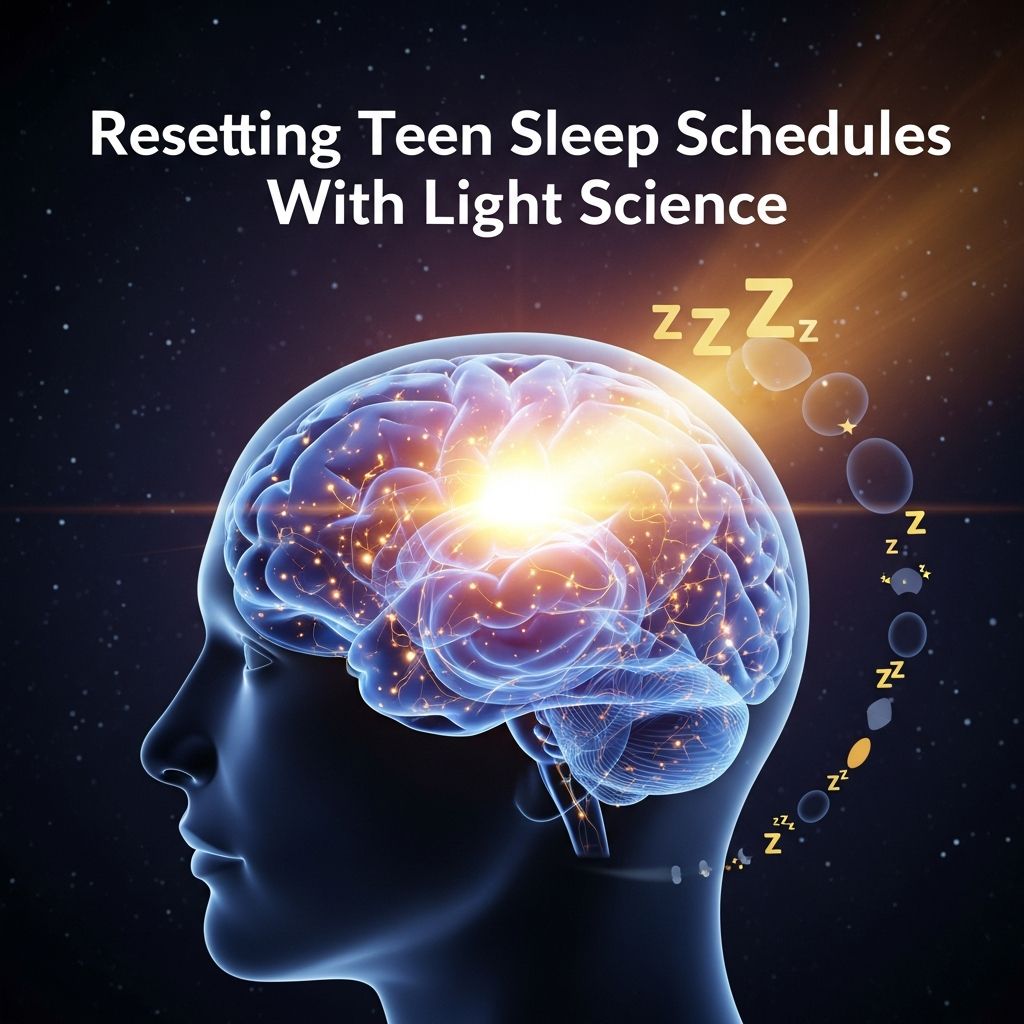
Light serves as the most powerful environmental cue for circadian rhythm regulation. When light reaches the eyes, it sends signals to the brain that influence the production of melatonin, the hormone responsible for inducing sleepiness. Morning light exposure tells the body it is time to be alert, while darkness signals the onset of sleep. For teenagers with delayed circadian rhythms, strategically timed light exposure can recalibrate these internal signals and encourage earlier sleep onset.
How Bright Light Therapy Works
Bright light therapy involves exposure to high-intensity light during specific times of day, typically morning hours. The intensity is measured in lux—a unit describing illumination. Therapeutic bright light typically ranges from 6,000 to 10,000 lux, significantly brighter than standard indoor lighting but not exceeding safe exposure levels.
When teenagers are exposed to bright light in the morning, their circadian clocks advance, or shift earlier. This phase advance creates a cascade of effects: the body begins producing melatonin at an earlier hour in the evening, promoting drowsiness at a socially appropriate bedtime. Additionally, the body’s natural wake time shifts earlier, creating a more synchronized relationship between the teen’s internal clock and their daily obligations.
Recent research demonstrates that brief light exposure during sleep can also reset circadian rhythms without causing awakening. Stanford researchers discovered that three-millisecond light flashes every twenty seconds during the final hours of sleep successfully phase-advanced teenage circadian clocks. This passive approach proves particularly valuable for adolescents resistant to wearing devices or remembering to use light therapy actively.
Research Findings on Teen Sleep Improvement
Multiple clinical studies have documented measurable improvements in adolescent sleep patterns following bright light therapy interventions. A groundbreaking study conducted at Rush University Medical Center examined 46 adolescents aged 14 to 17 over a three-week period. The research protocol involved baseline sleep tracking, progressive bedtime adjustments, and weekend bright light exposure.
The intervention produced striking results. Teenagers who participated shifted their bedtime earlier by up to ninety minutes and increased their total sleep duration by approximately one hour on school nights. Beyond quantitative sleep metrics, participants reported significant qualitative improvements including reduced anxiety, decreased irritability, enhanced concentration, and increased morning alertness.
Stanford University researchers achieved similar outcomes using a combined approach. Their four-week study of 72 teenagers employed both passive light therapy during sleep and cognitive behavioral therapy targeting earlier bedtime adoption. The combined intervention resulted in an additional 43 minutes of sleep per night—a substantial increase that accumulates to over five additional hours weekly.
The durability of these gains suggests that light therapy effects persist beyond the intervention period when combined with behavioral support. Participants maintained improved sleep schedules during subsequent school weeks following weekend light therapy, indicating sustained circadian phase advancement.
Implementing a Structured Intervention Program
Effective bright light therapy for teenagers typically follows a structured protocol rather than casual light exposure. Evidence-based interventions incorporate several key components working synergistically to maximize results.
Progressive Bedtime Adjustment
Successful programs gradually shift teen bedtimes earlier rather than attempting abrupt changes. A two-week progression might involve moving bedtime fifteen minutes earlier every few days until reaching the target earlier time. This gradual approach allows the circadian system to adjust incrementally, reducing the likelihood of rebound late-night behavior or resistance from teenagers.
Strategic Light Exposure Timing
Morning bright light exposure during weekend mornings proves particularly effective for school-week sleep improvement. A typical protocol involves 2.5 hours of bright light exposure (6,000 to 10,000 lux) on weekend mornings. The timing differs from weekday mornings because weekend schedules can accommodate extended light exposure without conflicting with school attendance. The circadian shifts achieved during weekends persist through the following school week.
Behavioral and Time Management Support
Light therapy achieves maximum effectiveness when paired with behavioral modifications. Time management interventions might include limiting after-school activities on certain weekdays, establishing screen-free periods before bed, or creating structured evening routines. These behavioral components address the psychological and practical barriers preventing earlier sleep onset.
Comparing Different Light Therapy Approaches
| Therapy Type | Administration Method | Duration & Frequency | Effectiveness | Practical Considerations |
|---|---|---|---|---|
| Passive Sleep Light | Bedside device emitting brief light pulses | 3-millisecond flashes every 20 seconds during final sleep hours | 43 additional minutes sleep nightly with cognitive support | Completely passive; no device to wear; continuous daily use required |
| Morning Light Box | Stationary lamp positioned at eye level | 30-90 minutes daily, typically weekend mornings | 60+ additional minutes weekly sleep; shifted bedtime 1.5 hours earlier | Requires consistent schedule adherence; flexible intensity adjustment |
| Wearable Light Devices | Personal device worn during morning hours | Variable duration depending on device specifications | Comparable to light boxes in research settings | Requires user compliance; portable for travel |
| Dawn Simulation Devices | Bedroom lighting that gradually brightens before wake time | Automatic operation synchronized to wake time | Limited adolescent research; promising for mild circadian delays | Requires bedroom darkness during sleep; automatic operation |
Optimizing Light Therapy Compliance
Successful implementation depends largely on maintaining consistent light therapy engagement, particularly during weekend sessions. Several strategies enhance compliance among resistant or forgetful adolescents.
- Environmental Integration: Position light therapy devices in spaces where teenagers naturally spend morning time—kitchen tables, study areas, or breakfast nooks—to facilitate habitual use rather than requiring special effort.
- Peer Engagement: Family or group light therapy sessions increase adherence by normalizing the practice and creating social accountability.
- Activity Pairing: Combine light exposure with enjoyable morning activities such as breakfast, phone scrolling, or studying, creating positive associations with therapy time.
- Digital Reminders: Smartphone notifications or smart home device alerts can prompt adolescents to initiate light therapy during target windows.
- Progress Tracking: Visual monitoring of sleep improvements through wearable devices or sleep logs reinforces the connection between light therapy and tangible benefits.
Safety and Practical Considerations
Bright light therapy, when applied appropriately, poses minimal safety risks for adolescents. Typical therapeutic intensities of 6,000 to 10,000 lux remain well below hazardous exposure levels. However, several practical guidelines ensure optimal safety and efficacy.
Light therapy timing proves critical—exposures occurring too late in the day can paradoxically delay sleep rather than advance it by further pushing the circadian rhythm later. Morning and early midday windows typically produce the desired phase advance effect. Additionally, individuals with certain eye conditions or those taking photosensitizing medications should consult healthcare providers before beginning light therapy.
The consistency requirement represents perhaps the most significant practical consideration. Research demonstrates that circadian phase advancement requires continuous exposure. Stopping light therapy typically results in gradual return to delayed circadian timing within days or weeks. For teenagers planning to maintain improved sleep schedules long-term, the intervention requires sustained commitment rather than representing a temporary adjustment.
Beyond Light: Complementary Behavioral Interventions
Bright light therapy achieves superior results when integrated into comprehensive sleep hygiene and behavioral modification programs. Cognitive behavioral therapy components proven effective in research include motivational interviewing to encourage earlier bedtime attempts, problem-solving around specific barriers to sleep, and behavioral contracts establishing concrete sleep goals.
Evening behavioral adjustments prove equally important. Screen time reduction before bed allows the circadian system to respond more sensitively to light signals and permits melatonin production without blue light suppression. Limiting caffeine intake, particularly after mid-afternoon, supports sleep quality independent of circadian timing adjustments.
Long-Term Sustainability and Maintenance
Initial improvements from light therapy intervention typically occur within two to four weeks. The critical question becomes whether these gains persist without ongoing intervention. Current research suggests that weekday sleep improvements remain stable for several weeks following weekend light therapy, indicating that the circadian phase advancement produces durable effects.
Maintenance strategies might involve continuing weekend light therapy at lower frequency or intensity, or transitioning to other circadian-supporting behaviors such as consistent morning outdoor exposure or maintained consistent sleep schedules. Some adolescents benefit from periodic “refresher” light therapy sessions if sleep schedules begin drifting later during high-stress academic periods.
Frequently Asked Questions
At what age can teenagers safely use bright light therapy?
Research has documented safe use in adolescents as young as 14 years old. Most clinical studies focus on ages 14-17, though healthcare providers can assess appropriateness for individual teenagers based on their specific circadian conditions and eye health.
How long does it take to see improvements in sleep with bright light therapy?
Many adolescents experience initial circadian shifts within 3-7 days of beginning light therapy, with more substantial sleep duration improvements apparent within 2-4 weeks of consistent intervention.
Can bright light therapy replace other sleep interventions like medication?
Light therapy addresses circadian rhythm misalignment specifically and works best as part of a comprehensive approach. Teenagers with underlying sleep disorders or mental health conditions should continue medication under medical supervision while exploring light therapy as a complementary intervention.
What light intensity should I choose for a home light therapy lamp?
Research supports therapeutic intensities of 6,000 to 10,000 lux. Higher intensity lamps (10,000 lux) can achieve therapeutic effects in 30-60 minutes, while lower intensity options require longer exposure duration to be effective.
Do weekends really need to involve light therapy if the goal is weekday sleep improvement?
Yes, research specifically shows that weekend light therapy produces the most effective weekday sleep shifts in adolescents. The weekend timing allows teenagers to use light therapy without conflicting with school schedules while establishing circadian changes that persist throughout the week.
What happens if my teen forgets to use light therapy consistently?
Intermittent use reduces effectiveness compared to consistent application. The circadian system gradually returns toward delayed timing if light therapy exposure becomes sporadic. Regular weekend sessions prove more reliable for maintaining improvements than occasional weekday use.
References
- Teens sleep 43 more minutes per night after combo of two treatments — Stanford University School of Medicine. 2019-09-25. https://med.stanford.edu/news/all-news/2019/09/teens-sleep-43-more-minutes-per-night-after-combo-of-two-treatme.html
- Extending weeknight sleep duration in late-sleeping adolescents using morning bright light on weekends: a 3-week maintenance study — Sleep Advances, Crowley SJ, et al. 2024-08-31. https://pubmed.ncbi.nlm.nih.gov/39192267/
- Effect of Light Flashes vs Sham Therapy During Sleep With Adjunct Cognitive Behavioral Therapy on Sleep Quality Among Adolescents: A Randomized Clinical Trial — JAMA Network Open, Kaplan KA, et al. 2019. https://jamanetwork.com/journals/jamanetworkopen/fullarticle/2749446
- Bright Light Therapy — American Academy of Sleep Medicine Sleep Education. 2020-12. https://sleepeducation.org/patients/bright-light-therapy/
- Researchers Find Ways to Help Teens Get More Sleep — Rush University Medical Center. 2022. https://www.rush.edu/news/researchers-find-ways-help-teens-get-more-sleep
- Morning light therapy for juvenile depression and severe mood disturbances — National Center for Biotechnology Information, U.S. National Library of Medicine. 2012. https://pmc.ncbi.nlm.nih.gov/articles/PMC3689601/