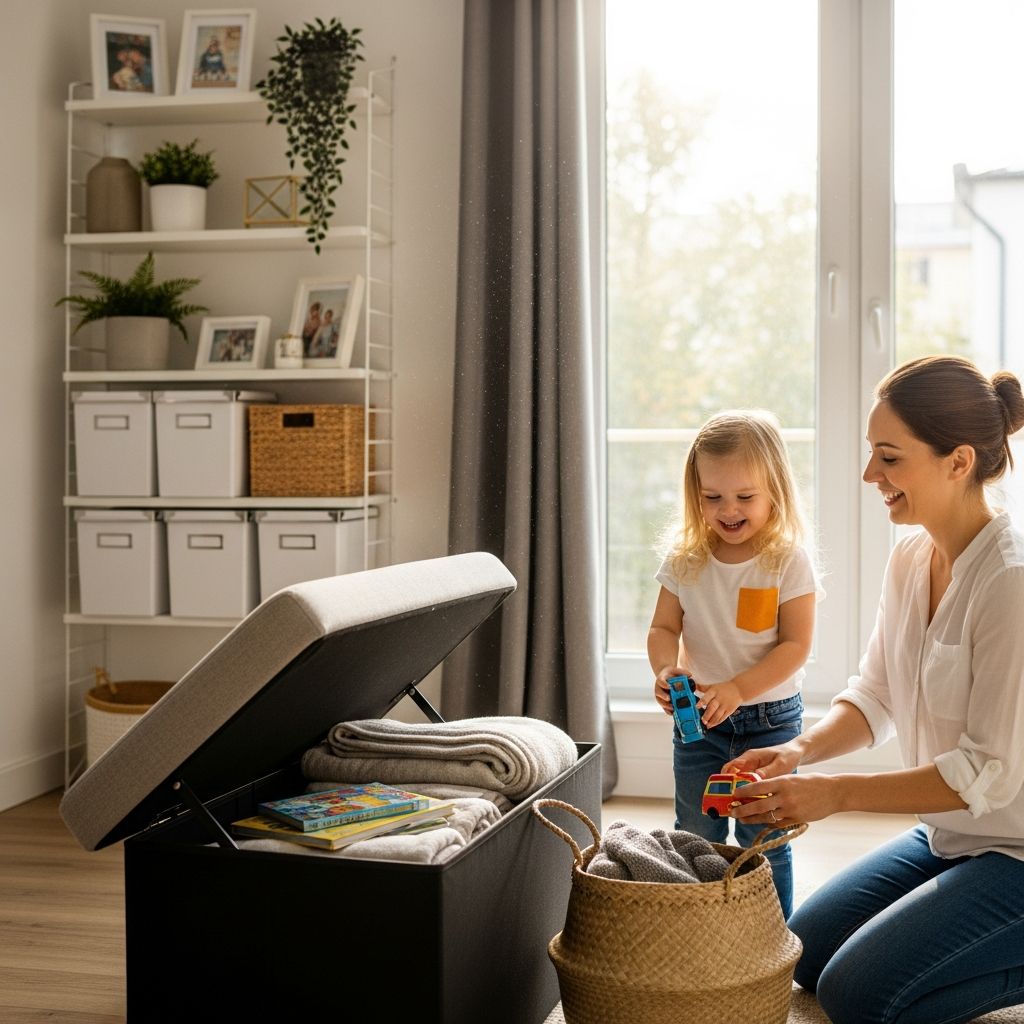
Decluttering transforms chaotic homes into serene spaces, especially for families where toys, clothes, and daily essentials accumulate rapidly. This guide offers original, actionable approaches to reclaim your living areas without overwhelming schedules.
Why Decluttering Matters for Family Well-Being
A cluttered environment can heighten stress levels and disrupt family routines. Research from the Greater Good Science Center at UC Berkeley outlines steps like starting small and eliminating unused items to build momentum and foster mental clarity. For parents, a tidy home supports better focus, reduces decision fatigue, and models healthy habits for children.
Begin by recognizing clutter’s impact: visual disorder signals unfinished tasks to the brain, increasing cortisol. Families benefit from decluttering as it streamlines mornings, eases cleanups, and creates room for meaningful activities like playtime or family meals.
Preparing Your Decluttering Toolkit
Gather essentials before diving in to maintain efficiency. Essential items include:
- A sturdy trash bag for immediate discards.
- Donation bins labeled by category (clothes, toys, books).
- Recycling containers for papers and packaging.
- Cleaning wipes or spray for quick surface refreshes.
- A timer to limit sessions to 15-30 minutes, preventing burnout.
These tools, recommended in room-by-room guides like those from Modern Minimalism, ensure smooth progress. No need for fancy purchases—use household staples to start.
Crafting a Realistic Decluttering Timeline
Tailor your plan to family life. For smaller homes, a three-month cycle works: target one zone weekly. Ambitious families can opt for a one-month intensive with daily 20-minute bursts plus weekend deep cleans.
| Timeline | Focus Areas | Daily Commitment |
|---|---|---|
| One Month | One drawer or shelf per day | 20 minutes + 2-hour weekend |
| Two Months | One room per week | 30 minutes, 5 days/week |
| Three Months | One category bi-weekly | 15 minutes daily |
This structure, inspired by whole-house checklists, breaks overwhelm into achievable steps. Track progress with a simple checklist to celebrate wins.
Mastering the Three-Step Declutter Method
Adopt a proven framework: Simplify, Organize, Systematize. This method from minimalist experts ensures lasting results.
Step 1: Simplify – Clear the Excess
Empty spaces completely to assess inventory. Ask: Do I use it? Love it? Does it fit our current life? Discard broken items, duplicates, and outgrown gear immediately.
- Clothing trick: Flip hangers backward; rehang flipped ones after wear. Donate unflipped items after 30 days.
- Sticker system: Green for keepers, red for releases—ideal for indecisive moments.
This editing mindset frees physical and mental space, aligning with advice to declutter repeatedly for consistency.
Step 2: Organize – Assign Logical Homes
Return only essentials, grouping by function. Use existing bins; label clearly for family compliance.
- Daily-use items at eye level.
- Seasonal storage in labeled, dated boxes.
- Vertical space for towels, pans to maximize room.
Step 3: Systematize – Prevent Re-Clutter
Install habits like ‘one in, one out’ rules and seasonal audits. Schedule monthly resets to maintain order.
Room-by-Room Decluttering Blueprint
Entryway and Mudroom Mastery
Streamline first impressions. Empty hooks and racks; keep seasonal shoes only. Recycle stray papers; store bags in one bin. Wipe surfaces for a fresh entry.
Kitchen Command Center
Tackle pantry first: expire dated foods, consolidate duplicates. Fridge purge: mystery containers out. Under-sink: essentials only. Clear counters for meal prep ease.
Living Areas Refresh
Sort media drawers by category—cords, remotes. Evaluate furniture: if unused, donate. Aim for open, airy vibes with fewer pieces.
Bedrooms and Closets Overhaul
Bedside tables: one notebook, lamp max. Closets: hanger flip test. Linens: keep two sets per bed; rag the rest.
Bathroom Blitz
Expire toiletries, makeup. Medicine cabinet: check dates, dispose safely. Limit linens to match towel needs.
Laundry and Utility Spaces
Edit detergents to favorites. Clear washer tops. Bulk storage: use before buying more.
Home Office and Paper Piles
Surfaces: daily essentials only. Papers: shred, file, or action piles. Downsize supplies.
Kids’ Zones and Toy Taming
Rotate toys in bins; purge unused. Involve kids in decisions for buy-in. Limit to 20-30 active pieces per child.
Quick Wins: Tiny Tasks for Instant Results
Incorporate micro-habits from Be More with Less for momentum:
- Create one clutter-free zone daily, like a nightstand.
- Junk box challenge: seal unknowns for 30 days; unmissed items go.
- Expire bathroom/kitchen items in 15 minutes.
- Sticker sort for tough choices.
These build habits without marathon sessions.
Sustaining a Clutter-Free Family Home
Long-term success requires boundaries:
- Full shelf? Remove before adding.
- Annual storage audit: unopened boxes goodbye.
- Family rules: toys away before new play.
- Weekly 10-minute zones reset.
Greater Good emphasizes impact zones first for motivation. Involve everyone; make it a game.
Frequently Asked Questions (FAQs)
What if I feel attached to items?
Photograph memories, then release. Use the 30-day junk box to test detachment.
How do I declutter with kids around?
Short bursts during naps or playtime. Turn it into a sorting game with rewards.
What’s the fastest way to see results?
Clear one high-traffic surface, like a kitchen counter, in 20 minutes.
How often should I declutter?
Monthly quick scans, seasonal deep cleans, yearly full reset.
Can decluttering save time?
Yes, less stuff means faster cleanups and easier routines.
Advanced Tips for Lasting Minimalism
Embrace ‘declutter for dummies’ consistency: repeat often. Track with apps or journals. For families, designate ‘family donation day’ quarterly.
Consider space constraints: vertical organizers, multi-use furniture. Mindful shopping curbs influx—wait 48 hours before buys.
Psychological benefits: reduced anxiety, better sleep in tidy bedrooms. Families report stronger bonds with less stuff distracting.
References
- How to Declutter Your Home: A Complete Room-by-Room Guide — Modern Minimalism. Accessed 2026. https://modernminimalism.com/how-to-declutter-your-home/
- How To Declutter Your Home with 12 Tiny Tasks — Be More with Less. Accessed 2026. https://bemorewithless.com/tinytasks/
- Decluttering for Dummies Cheat Sheet — Dummies.com. Accessed 2026. https://www.dummies.com/article/home-auto-hobbies/home-improvement-appliances/cleaning-organization/decluttering-for-dummies-cheat-sheet-266144/
- Whole House Decluttering Checklist: A Simple 10-Day Reset — The DIY Playbook. Accessed 2026. https://thediyplaybook.com/organize-declutter-home/
- Six Steps to Decluttering Your Life — Greater Good Science Center, UC Berkeley. Accessed 2026. https://greatergood.berkeley.edu/article/item/six_steps_to_decluttering_your_life