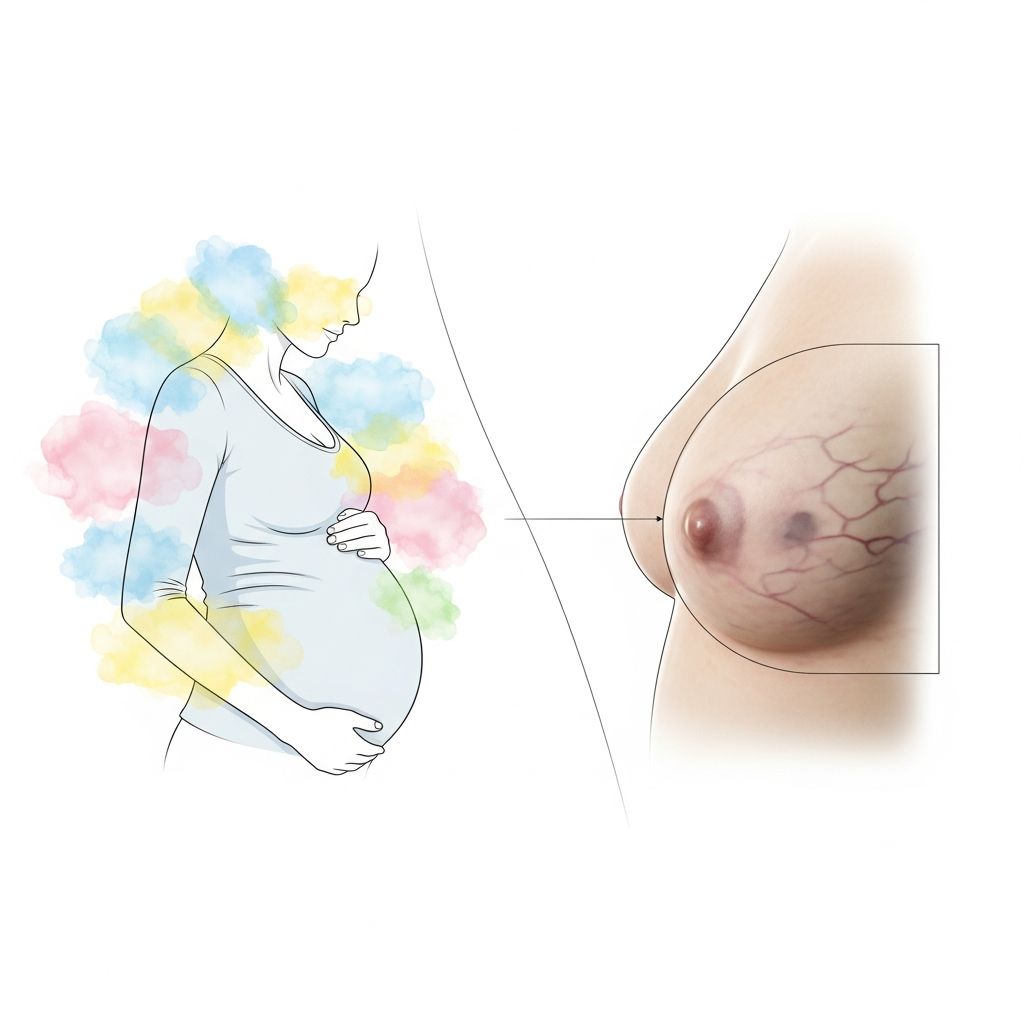
During pregnancy, the body undergoes profound transformations to support fetal development and prepare for lactation. Breasts often lead these changes, becoming fuller, tender, and more prominent due to surging hormones. However, not every woman notices these shifts equally, sparking concerns about normality. This article delves into the science behind breast evolution in pregnancy, addressing why some breasts remain unchanged or pain-free, and offers guidance on monitoring health.
The Science of Breast Adaptation in Pregnancy
Breasts transform primarily through hormonal orchestration. Estrogen drives ductal proliferation, progesterone expands glandular tissue, and prolactin primes milk production. These shifts typically manifest as increased size, sensitivity, and visible vascularity as early as weeks 6-8.
By the first trimester’s end, many report fuller breasts requiring larger bras, alongside darkened areolas for newborn visual cues. Veins may appear more prominent from heightened blood flow, supporting nutrient delivery to developing tissue.
- Increased volume: Breasts enlarge by one or more cup sizes on average, stretching skin and causing itchiness or stretch marks.
- Sensory shifts: Tenderness arises from nerve endings responding to rapid tissue growth.
- Nipple evolution: Areolas widen and darken; Montgomery glands enlarge to lubricate for breastfeeding.
These adaptations peak in the third trimester, with breasts becoming denser and heavier in preparation for colostrum.
Why Some Women Skip the Soreness and Swelling
It’s common to hear stories of intense breast pain as an early pregnancy hallmark, yet up to 30% of women experience minimal or no such symptoms. This variation stems from individual hormonal profiles, prior pregnancies, and genetic factors.
First-time mothers often notice more pronounced changes as breasts develop lactation infrastructure from scratch. Multiparous women may see subtler shifts since ducts and glands are already established. Body mass, age, and even thyroid function influence responsiveness—lower estrogen sensitivity in some reduces perceptible growth.
| Factor | Impact on Changes | Examples |
|---|---|---|
| Hormone Sensitivity | High: Dramatic tenderness; Low: Minimal symptoms | Genetic variations in receptor density |
| Pregnancy Number | First: More growth; Subsequent: Less noticeable | Existing glandular tissue |
| Pre-Pregnancy Breast Density | Dense: Subtle expansion; Fatty: Obvious swelling | Mammogram categorization |
| Overall Health | Balanced: Typical; Imbalanced: Altered | Thyroid or PCOS conditions |
Absence of soreness doesn’t signal issues; bodies adapt uniquely. Persistent worry warrants a check-up to rule out anomalies.
Timeline of Breast Transformations by Trimester
First Trimester: Early Signals
Weeks 1-12 herald initial surges. Tingling or fullness emerges around implantation, mimicking premenstrual symptoms but intensifying. Nipples protrude more, areolas tint darker. Blood volume rises 50%, engorging veins.
Second Trimester: Steady Development
Changes stabilize; tenderness may wane as the body acclimates. Growth continues, often necessitating maternity bras. Colostrum—nutrient-rich first milk—may leak by mid-trimester, signaling prolactin activation.
Third Trimester: Peak Readiness
Breasts reach maximum density, feeling heavy and veined. Nipples flatten or evert for latch ease. Itchiness from stretching responds to fragrance-free lotions. Stretch marks affect 50-90% of pregnancies.
Post-delivery, breasts may enlarge further with milk influx, then adjust based on nursing duration and genetics.
Common Breast Concerns and Benign Lumps
Pregnancy heightens lump awareness. Most are harmless:
- Cysts: Fluid sacs from ductal dilation, soft and movable.
- Galactoceles: Milk-filled post-lactation cysts.
- Fibroadenomas: Solid, rubbery growths enlarging hormonally.
These rarely indicate malignancy; cancer risk doesn’t rise in pregnancy. Self-exams familiarize baselines—report hard, fixed lumps or skin dimpling promptly.
When to Consult Your Healthcare Provider
Most variations are benign, but vigilance matters. Seek evaluation for:
- Unilateral changes (one breast affected).
- Sudden rapid growth or pain.
- Discharge beyond clear colostrum (e.g., bloody).
- Inverted nipples newly or persistently.
- Lumps persisting post-massage.
Prenatal visits include breast assessments. Ultrasound is safe for imaging; mammograms avoided unless critical.
Managing Discomfort and Supporting Breast Health
Alleviate symptoms proactively:
- Support: Wear well-fitted, wire-free bras; sleep in sports bras.
- Moisturize: Apply lanolin or vitamin E oils for dryness.
- Cold compresses reduce swelling; warm for clogged ducts later.
- Diet: Omega-3s and hydration aid tissue health.
Avoid caffeine if tenderness bothers; it constricts vessels.
Postpartum Breast Evolution and Long-Term Outlook
After birth, breasts fluctuate with feeding. Nursing typically returns them near pre-pregnancy size within months, though shape may soften. Formula feeders see quicker deflation. Genetics dictate elasticity—some “snap back,” others retain fullness.
Regular self-checks post-weaning detect baseline shifts. Annual exams ensure ongoing health.
Frequently Asked Questions (FAQs)
Is it normal to have no breast tenderness in early pregnancy?
Yes, many women experience little to no soreness due to varying hormone sensitivity. Monitor other pregnancy signs and consult if concerned.
Do breasts always grow during pregnancy?
Growth is common but not universal; subtle changes suffice for lactation prep. Bra size often increases regardless.
What causes darkened nipples in pregnancy?
Hormonal pigmentation aids newborns’ latching; it’s temporary for most.
Can I ignore breast lumps during pregnancy?
No—most benign, but get checked for cysts or fibroadenomas via ultrasound.
Will my breasts return to normal after pregnancy?
Size and shape often change permanently, influenced by breastfeeding length and genetics.
Key Takeaways for Expectant Mothers
Breast changes signal your body’s miraculous preparations, but diversity rules—no two pregnancies mirror. Embrace variations, prioritize comfort, and partner with providers for reassurance. Knowledge empowers confident navigation of this journey.
References
- Breast changes during or after pregnancy — Breast Cancer Now. 2023-10-15. https://breastcancernow.org/about-breast-cancer/breast-lumps-and-benign-not-cancer-breast-conditions/breast-changes-during-or-after-pregnancy
- Breast Changes During Pregnancy — American Pregnancy Association. 2024-05-20. https://americanpregnancy.org/healthy-pregnancy/changes-in-your-body/breast-changes-during-pregnancy/
- Breast changes during Pregnancy and Breastfeeding — CoppaFeel!. 2023-11-08. https://coppafeel.org/breast-cancer-info-and-advice/understanding-breast-changes/pregnancy/
- Breast Changes During Pregnancy Explained — Roswell Ob/Gyn. 2024-02-14. https://roswellobgyn.org/blog/breast-changes-during-pregnancy-explained/
- Breast Changes in Pregnancy: What to Expect — Healthline. 2024-07-22. https://www.healthline.com/health/pregnancy/pregnant-breast