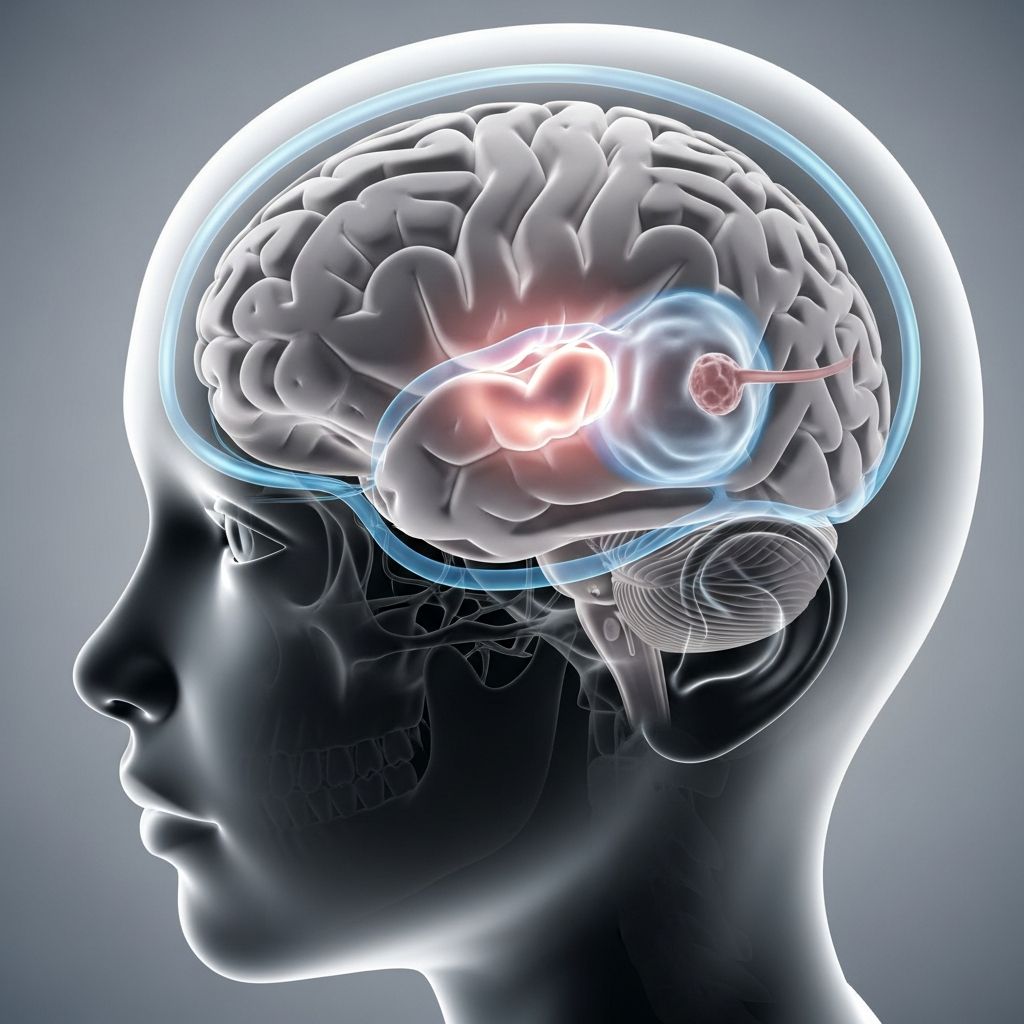
Pressure on a child’s brain, sometimes called compression of the brain, is a medical emergency. It can develop after a head injury, bleeding, brain swelling, infection, or other illnesses that increase the pressure inside the skull. When this happens, the brain cannot work normally and, without rapid treatment, permanent damage or death can occur.
This article explains in simple language what brain compression is, how it happens, what symptoms to look for, how doctors diagnose and treat it, and what families can expect during recovery.
What Does “Compression of the Brain” Mean?
The brain sits inside the skull, surrounded by protective membranes and fluid. Because the skull is hard and cannot stretch, there is only a limited amount of space inside. If something takes up extra room—such as blood, swelling, or a mass—the pressure goes up and squeezes the brain. Doctors often talk about this as:
- Increased intracranial pressure (ICP): higher-than-normal pressure inside the skull.
- Brain compression: when that pressure physically squeezes and shifts brain tissue.
When pressure rises, it can:
- Reduce blood flow to parts of the brain.
- Lower the oxygen the brain receives.
- Damage delicate brain cells.
- Push brain structures out of their normal position (herniation), which is life-threatening.
Common Causes in Babies, Children, and Teens
Many different problems can lead to compression of the brain in children. Some start suddenly after an injury, while others develop more slowly.
1. Traumatic Head Injuries
Head injuries are among the most frequent causes of dangerous pressure in the skull.
- Falls from furniture, stairs, playgrounds, or bikes.
- Sports injuries from football, soccer, hockey, skateboarding, or cheerleading.
- Motor vehicle collisions, including as a passenger, pedestrian, or cyclist.
- Assault or shaken baby syndrome in infants.
A blow to the head can cause:
- Concussion (a mild brain injury that usually does not involve bleeding or major swelling).
- Bleeding inside the skull (epidural, subdural, or intracerebral hemorrhage), which can rapidly increase pressure.
- Bruising and swelling of brain tissue (contusion, cerebral edema).
2. Brain Swelling (Cerebral Edema)
Cerebral edema is the medical term for brain swelling. It can develop after:
- Head trauma.
- Stroke or lack of oxygen.
- Serious infections like meningitis or encephalitis.
- Some metabolic or toxic conditions.
Swollen tissue takes up extra space and increases intracranial pressure, which may compress nearby areas of the brain.
3. Bleeding in or Around the Brain
Bleeding can collect between the brain and skull or within the brain itself. Even a small amount of blood in the closed skull can quickly squeeze the brain.
- Epidural hematoma: bleeding between the skull and the outer covering of the brain.
- Subdural hematoma: bleeding beneath the outer covering, on the brain’s surface.
- Intracerebral hemorrhage: bleeding inside brain tissue.
These may follow trauma but can also occur with bleeding disorders or some vascular malformations.
4. Infections, Tumors, and Other Conditions
- Severe brain infections (for example, meningitis or encephalitis) that cause inflammation and swelling.
- Brain tumors or cysts that slowly occupy space and may block fluid drainage.
- Hydrocephalus (excess cerebrospinal fluid) that stretches and compresses brain tissue.
Early Warning Signs: When Pressure Is Rising
Symptoms of rising pressure in the skull can vary by age and cause. Some signs are subtle at first and become more obvious as pressure worsens.
General Symptoms in Children
When a child’s brain is under pressure, you may notice:
- Headache that may be constant or getting worse.
- Vomiting, sometimes without nausea.
- Drowsiness or trouble thinking clearly.
- Personality or behavior changes, such as irritability or confusion.
- Vision changes (blurred, double vision, or difficulty focusing).
- Problems with balance or coordination, staggering, or clumsiness.
- Seizures (twitching, jerking, or staring spells).
Special Considerations by Age Group
| Age Group | Possible Signs of Brain Compression |
|---|---|
| Infants & Toddlers | Irritability, inconsolable crying, refusing to eat, repeated vomiting, becoming unusually sleepy, loss of developmental skills, bulging soft spot, or increased head size. |
| Preschool & School-Age Children | Worsening headache, dizziness, unsteady walking, behavior changes, confusion, vision problems, vomiting, or seizures. |
| Teens | Severe headache, trouble concentrating, memory problems, mood swings, slowed thinking, drowsiness, or difficulty waking up. |
Emergency Red Flags: Get Help Immediately
Some symptoms signal that compression may be severe and life-threatening. Call emergency services or go to the nearest emergency department right away if your child has recently had a head injury or serious illness and develops any of the following:
- Cannot be fully awakened, or is very hard to arouse.
- Repeated or persistent vomiting.
- A headache that is severe or getting rapidly worse.
- Seizures or convulsions.
- Slurred speech or difficulty speaking.
- Weakness, numbness, or trouble using an arm or leg.
- Loss of balance or falling that is not improving.
- One pupil larger than the other or sudden double vision.
- Unusual agitation, extreme confusion, or behavior that is not like your child at all.
In infants and toddlers, seek urgent care if they:
- Will not stop crying and cannot be comforted.
- Refuse to nurse or eat.
- Seem floppy, very sleepy, or difficult to wake.
How Doctors Check for Brain Compression
In the emergency department or hospital, doctors act quickly to find the cause of the pressure and prevent further damage.
Initial Assessment
- Vital signs: heart rate, blood pressure, breathing, and oxygen levels.
- Level of consciousness: how awake and responsive the child is (sometimes using the Glasgow Coma Scale).
- Neurologic exam: checking pupils, strength, sensation, balance, and reflexes.
Imaging Tests
To see what is happening inside the skull, doctors may order:
- CT (computed tomography) scan: a rapid test that can show bleeding, fractures, and major swelling. It is often the first test in emergencies.
- MRI (magnetic resonance imaging): provides more detail about brain tissue, swelling, and subtle injuries, but usually takes longer than CT.
Other Tests
- Blood tests to look for infection, clotting problems, or metabolic issues.
- Monitoring devices that measure intracranial pressure directly in some severe cases.
Treatment: How Doctors Relieve Pressure on the Brain
Treatment depends on what is causing the compression, how fast it is progressing, and how sick the child is. Care is often provided in an intensive care unit (ICU) with a team that may include pediatric neurologists, neurosurgeons, critical care doctors, and rehabilitation specialists.
Stabilizing Breathing and Circulation
- Ensuring the child has enough oxygen (sometimes with a breathing tube and ventilator).
- Maintaining healthy blood pressure so the brain gets adequate blood flow.
Medication-Based Treatments
- Osmotic medicines to pull extra fluid out of the brain and lower pressure.
- Medicines to control seizures if seizures have occurred or are likely.
- Pain and sedation medicines to keep the child comfortable and reduce agitation, which can raise pressure.
- Antibiotics or antivirals if there is an infection causing swelling.
Surgical and Procedural Options
Some children require urgent procedures to remove what is causing the compression or to help drain fluid.
- Evacuation of blood clots or hematomas (for example, removing an epidural or subdural hematoma).
- Placement of a drain into the fluid spaces of the brain (ventricular drain) to remove cerebrospinal fluid and measure pressure.
- Decompressive craniectomy, in which a section of skull is temporarily removed to give the brain more room to swell.
Life After Brain Compression: Recovery and Rehabilitation
Outcomes vary widely. Some children recover fully, while others may have long-term challenges with thinking, movement, learning, or emotions.
Possible Short-Term Effects
- Headaches and fatigue.
- Problems with attention, memory, or processing speed.
- Sleep disturbances, such as sleeping more or less than usual.
- Changes in mood, including irritability, anxiety, or sadness.
Rehabilitation Services
Many children benefit from follow-up care and therapies, such as:
- Physical therapy for strength, balance, and coordination.
- Occupational therapy to improve daily living skills and fine motor tasks.
- Speech and language therapy for communication, swallowing, or cognitive-communication skills.
- Neuropsychological testing to understand thinking and learning needs and guide school supports.
- Counseling or psychological support for emotional recovery and coping with trauma.
School and Daily Activities
Returning to school and regular activities is a gradual process.
- Some children need reduced school hours, rest breaks, or temporary changes to assignments.
- Sports and high-risk physical activities are usually restricted until specialists say it is safe, especially after brain injury or surgery.
- Parents, teachers, and healthcare providers should communicate closely to adjust expectations as the child heals.
Can Brain Compression Be Prevented?
Not all causes are preventable, but many head injuries and some complications can be reduced with safety measures and prompt care.
Safety Tips to Reduce Head Injuries
- Use properly fitted car seats, booster seats, and seat belts every time your child rides in a vehicle.
- Make sure children wear helmets for biking, skating, skiing, and contact sports.
- Supervise young children on stairs, furniture, and playground equipment.
- Discuss concussion safety with coaches, and ensure injured players are removed from play and medically evaluated.
Medical Steps That Help
- Seek timely treatment for serious infections or high fevers.
- Follow instructions for managing any known bleeding or clotting disorders.
- Keep regular checkups if your child has a condition that might affect the brain (for example, tumors or hydrocephalus).
Frequently Asked Questions (FAQs)
Is every concussion a form of dangerous brain compression?
No. Most concussions are considered mild traumatic brain injuries and do not cause major swelling or bleeding that significantly compresses the brain. However, a few children initially thought to have a simple concussion later turn out to have more serious injuries with bleeding or swelling, which is why careful monitoring and follow-up are important.
How fast can brain compression develop after a head injury?
It can develop within minutes (for example, with rapidly expanding bleeding) or more slowly over hours to days, depending on the cause. Because symptoms can appear late, children with head injuries should be watched closely for new or worsening signs such as severe headache, vomiting, confusion, or difficulty waking up.
Will my child fully recover after treatment for brain compression?
Many children, especially those treated quickly, can recover very well. Others may have lasting difficulties with attention, learning, mood, or movement, depending on the severity and location of the injury. Ongoing rehabilitation, school support, and follow-up with pediatric specialists help maximize recovery.
Can emotional or behavior changes appear long after the injury?
Yes. Some effects of a brain injury become clearer months or years later, particularly as schoolwork becomes more complex or social demands grow. Children may show new attention problems, mood changes, or learning difficulties over time, which should be discussed with their medical team.
When should I go straight to the emergency department?
Go immediately if your child has a recent head injury or serious illness and shows any of these: loss of consciousness, repeated vomiting, seizures, severe or worsening headache, trouble walking, confusion, slurred speech, weakness, or one pupil larger than the other. These can be signs of dangerous pressure on the brain.
References
- Concussion in children: What are the symptoms? — Mayo Clinic. 2023-02-02. https://www.mayoclinic.org/diseases-conditions/concussion/expert-answers/concussion-in-children/faq-20058282
- Brain Injury Signs and Symptoms — Phoenix Children’s Hospital. 2022-03-10. https://phoenixchildrens.org/articles-faqs/blog/brain-injury-signs-and-symptoms
- How to Tell if Your Teen or Child has a Brain Injury — Brain Injury Association of America (BIAA). 2021-06-15. https://biausa.org/public-affairs/media/how-to-tell-if-your-teen-or-child-has-a-brain-injury
- Signs and Symptoms of Concussion — U.S. Centers for Disease Control and Prevention (CDC) HEADS UP. 2023-01-31. https://www.cdc.gov/heads-up/signs-symptoms/index.html
- Traumatic Brain Injury: Symptoms, Treatment & Prevention — Cincinnati Children’s Hospital Medical Center. 2022-07-01. https://www.cincinnatichildrens.org/health/t/traumatic-brain-injury
- Cerebral Edema (Brain Swelling): Symptoms & Treatment — Cleveland Clinic. 2023-05-11. https://my.clevelandclinic.org/health/diseases/cerebral-edema-brain-swelling