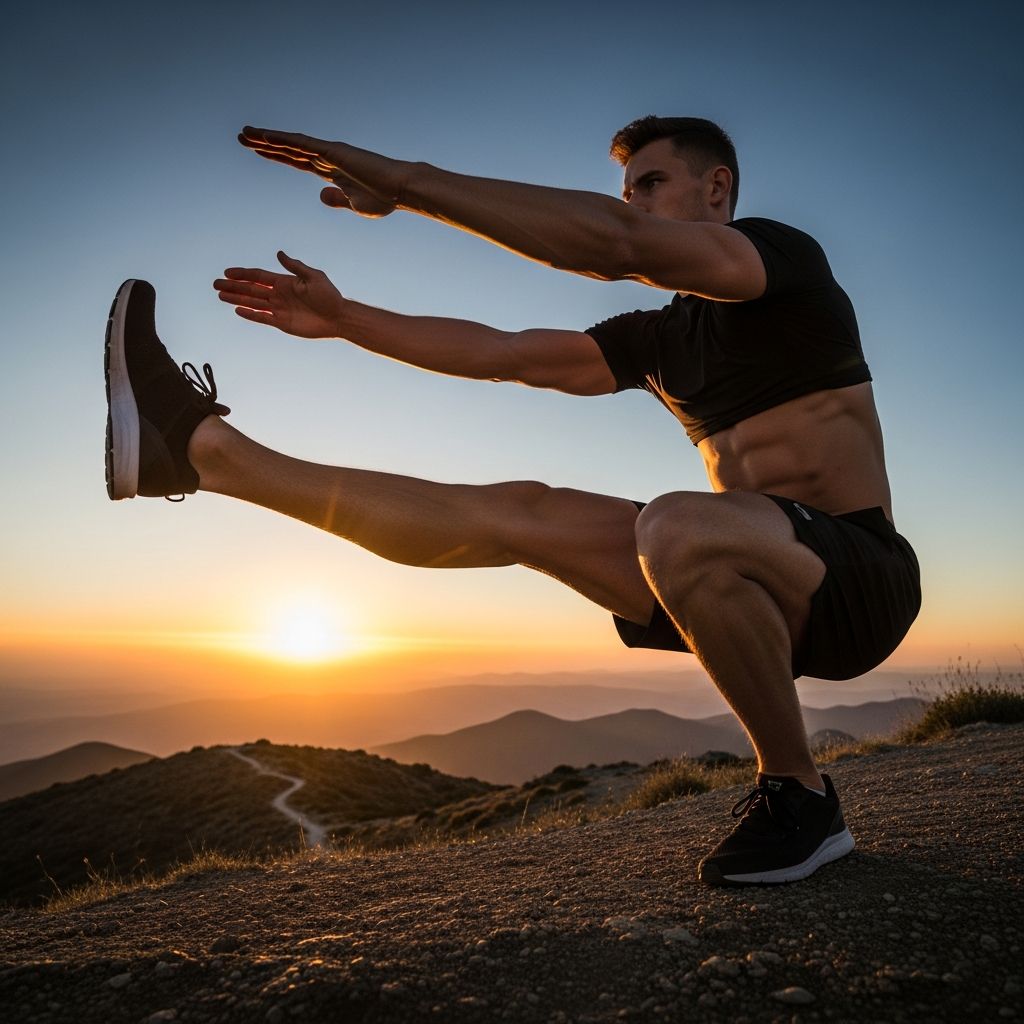
Bodyweight leg training offers a versatile, equipment-free approach to developing lower body strength, targeting muscles like quadriceps, hamstrings, glutes, and calves while engaging the core for stability. These exercises mimic natural movements, promoting functional fitness that translates directly to daily activities such as walking, climbing stairs, or lifting objects.
Why Prioritize Bodyweight Leg Workouts?
Unlike traditional weightlifting, bodyweight exercises emphasize progressive overload through variations, making them accessible for beginners yet challenging for advanced trainees. They build not only muscle but also coordination, balance, and endurance, reducing injury risk by avoiding excessive joint stress. Research supports that such training yields significant gains in explosive lower body strength, comparable to machine-based routines.
Key advantages include improved fat loss due to high calorie burn from multi-muscle engagement, balanced development via unilateral moves, and enhanced real-world mobility—like effortlessly squatting to pick up items or maintaining stability on uneven surfaces.
Essential Muscles Targeted in Leg Sessions
Effective leg workouts activate major groups: quadriceps for knee extension, hamstrings for hip flexion and knee stability, glutes for powerful hip thrusts, and calves for ankle propulsion. Core muscles stabilize throughout, fostering overall postural integrity.
- Quadriceps: Front thigh muscles powering knee extension in squats and lunges.
- Hamstrings: Rear thigh stabilizers, crucial for deceleration and posterior chain strength.
- Glutes: Largest hip extensors, vital for explosive power and injury prevention.
- Calves: Support propulsion and balance in single-leg variations.
Mastering Foundational Bodyweight Movements
Start with basics to build a strong base, progressing to advanced forms as proficiency grows. Focus on controlled reps, full range of motion, and proper breathing to maximize benefits.
Standard Squat
Stand with feet shoulder-width apart, toes slightly out. Lower by bending knees and hips until thighs are parallel to the ground, then drive through heels to stand. Targets quads, glutes, and core; 3 sets of 12-15 reps.
Reverse Lunge
Step one foot back, lowering until both knees form 90-degree angles. Push through front heel to return. Alternates legs to prevent imbalances, emphasizing hamstrings and glutes; 3 sets of 10 per side.
Glute Bridge
Lie on back, knees bent, feet flat. Lift hips by squeezing glutes, hold briefly, then lower. Strengthens posterior chain and core; elevate feet on a step for intensity; 3 sets of 15.
Progressing to Intermediate Challenges
Once basics feel manageable, introduce unilateral and explosive elements to spike difficulty and muscle growth. These demand greater stability, recruiting more stabilizers.
Bulgarian Split Squat
Place rear foot on a stable surface like a chair. Lower front knee toward ground, keeping torso upright. Builds unilateral strength, addressing imbalances; 3 sets of 8-10 per leg.
Jump Squat
Perform a squat, then explode upward into a jump, landing softly. Enhances power and cardiovascular endurance; 3 sets of 10.
| Exercise | Beginner | Intermediate | Advanced |
|---|---|---|---|
| Squat | Assisted (hold wall) | Full depth | Pistol squat progression |
| Lunge | Reverse | Walking | Jump lunge |
| Glute Bridge | Double leg | Single leg | March variation |
Advanced Techniques for Maximum Gains
Elevate your routine with skill-based moves that demand exceptional control and strength, promoting hypertrophy through time under tension.
Pistol Squat
Balance on one leg, extend the other forward, and squat down fully before standing. Ultimate unilateral test; use progressions like box-assisted versions; 3 sets of 5-8 per leg.
Shrimp Squat
Similar to pistol but with rear foot grabbed behind, intensifying hamstring and ankle demands. Builds extreme balance and flexibility.
Sample Weekly Workout Plans
Tailor routines to goals: strength (lower reps, slower tempo), endurance (higher reps, circuits), or hypertrophy (moderate reps with pauses).
Beginner 3-Day Split
- Day 1: Squats 3×15, Glute Bridges 3×12, Calf Raises 3×20
- Day 3: Reverse Lunges 3×10/side, Leg Raises 3×12, Planks 3x30s
- Day 5: Repeat Day 1 with added holds
Advanced Circuit (4 Rounds)
- Pistol Squat Progression: 6/side
- Jump Squats: 12
- Bulgarian Split Squats: 8/side
- Single-Leg Glute Bridge: 10/side
- Rest 2 minutes between rounds
Perform 3-4 sessions weekly, with rest days for recovery. Warm up with dynamic stretches like leg swings.
Nutrition and Recovery Strategies
Fuel leg days with protein-rich meals (1.6-2.2g/kg bodyweight) for muscle repair, carbs for energy, and hydration to combat fatigue. Prioritize sleep and active recovery like walking. Foam rolling and mobility work post-workout enhance flexibility and reduce soreness.
Common Mistakes and How to Avoid Them
- Knee Cave-In: Keep knees tracking over toes by engaging glutes.
- Rounding Back: Maintain neutral spine with core braced.
- Rushing Reps: Slow eccentrics (3-4 seconds down) for better gains.
- Neglecting Progression: Track reps and advance weekly.
Frequently Asked Questions (FAQs)
Can bodyweight exercises build significant leg muscle?
Yes, through progressive variations like pistol squats, they induce hypertrophy by increasing time under tension and recruiting stabilizers, comparable to weighted training.
How often should I train legs with bodyweight?
2-4 times weekly, allowing 48 hours recovery between sessions for optimal growth and injury prevention.
Are these workouts suitable for beginners?
Absolutely; start with modifications like assisted squats to build form and confidence before advancing.
Do bodyweight leg workouts help with fat loss?
They excel here, burning calories via compound moves and forcing adaptations that shed excess fat for better performance.
What if I have knee issues?
Opt for glute bridges, leg raises with bent knees, or reverse lunges to minimize joint stress while strengthening.
Long-Term Benefits for Lifelong Fitness
Consistent bodyweight leg training fosters joint health, metabolic efficiency, and movement quality, reducing fall risk in aging and enhancing athleticism. Integrate into lifestyle for sustained vitality.
References
- Why You Should Choose Calisthenics for Leg Training — Bodyweight Training Arena. 2023. https://bodyweighttrainingarena.com/advantages-of-calisthenics-leg-training/
- 9 Bodyweight Leg Exercises for Every Body — Healthline. 2023-10-15. https://www.healthline.com/nutrition/bodyweight-leg-exercises
- Top 7 Benefits of Bodyweight Exercises for All Fitness Levels — Adrenaline Strength & Performance Training. 2024. https://adrenalinespt.com/benefits-of-bodyweight-exercises/
- Best Bodyweight Exercises for Strong Legs — ISSA. 2023-05-20. https://www.issaonline.com/blog/post/best-bodyweight-exercises-for-strong-legs
- The Benefits of Bodyweight Training — TrainHeroic. 2023. https://www.trainheroic.com/blog/bodyweight-training-benefits/